More like Jem
anchored on:science fictionother star systemsfirst contactspace explorationspace colonization
but
- Dune
series20 books1963
part of Dune Universe
similar byfar futurescience fictionother star systemspolitical intrigue+2 more
Frank Herbert's Dune Chronicles opens with 1965's Dune, set on the desert planet Arrakis where House Atreides takes control of the only source of the vital spice melange and young Paul Atreides is pulled into a struggle over its politics and religion. Herbert carried the story forward across five further novels — Dune Messiah, Children of Dune, God Emperor of Dune, Heretics of Dune, and Chapterhouse: Dune — following Paul's line over the following millennia, before Brian Herbert and Kevin J. Anderson later extended the saga. Many other editions of these six novels are omnibus and box-set repackagings rather than separate stories.
- Moties
series4 books1974
part of CoDominium
similar byfar futurescience fictionother star systemsfirst contactalienspolitical intrigue+2 more
Larry Niven and Jerry Pournelle's The Mote in God's Eye (1974) depicts humanity's first contact with an alien species, the Moties, set within the far-future interstellar setting of Pournelle's codominium future history. The Gripping Hand continues that first-contact crisis years later, and Outies, written by J. R. Pournelle, carries the story forward into a new generation. Together the three books trace an escalating encounter between human and Motie civilizations within the codominium universe.
- Dune Universe
universe78 books1963
Start hereDune · Start here
similar byfar futurescience fictionother star systemspolitical intrigue+2 more
Arrakis. Dune. The desert planet, where empire runs on a single substance: the spice melange, which folds space, prolongs life, and unlocks prescience, and which exists nowhere else in the known universe. Frank Herbert's saga is a meditation dressed as an adventure — feudal houses and a secret sisterhood, engineered messiahs and the patient ecology of a world without water, all turning on the terrible gravity of who commands the spice. It reads like scripture and schemes like a war room, ten thousand years hence, among people who have outlawed the thinking machine and made instruments of themselves instead. At its heart stand Herbert's original six — Dune, Dune Messiah, Children of Dune, God Emperor of Dune, Heretics of Dune, Chapterhouse: Dune — a single deepening arc across millennia, arguing the whole way between prophecy and free will. Around that spine his son Brian Herbert and Kevin J. Anderson have raised a vast prequel architecture: Prelude to Dune, tracing the great houses a generation before Paul; Legends of Dune, reaching back to the crusade that broke the machines; the Schools of Dune cycle on the founding of Bene Gesserit, Mentat, and Navigator; the Caladan Trilogy and Heroes of Dune filling years the originals left in shadow. Many hands, dozens of volumes, one desert. What sets Dune apart is its refusal of the simple: religion is manufactured, heroes are hazards, and the sand itself — worm, water, ecology — acts as a political power. Begin where the universe did, with Frank Herbert's Dune (1965), and read the original six in order; you need nothing else to feel the full weight. The prequels are a country to explore afterward, taken by era. Beginnings are delicate times.
- Heorot
series4 books1987
similar byother star systemsfar futurescience fictionspace colonization+2 more
Larry Niven, Jerry Pournelle and Steven Barnes's The Legacy of Heorot strands human colonists on an idyllic-seeming alien world where they discover apex predators -- grendels -- hidden beneath the surface, forcing them to fight for survival. Beowulf's Children continues the colony a generation later as the children born on the planet clash with their parents over how to live alongside the grendels, and a fourth book, Starborn and Godsons, returns to the settlement decades further on. It's hard-SF creature-horror crossed with generational colony drama.
- Pushing Ice
Alastair Reynoldsstandalone novel2005
similar bytensefar futurescience fictionother star systemsspace explorationfirst contactaliens
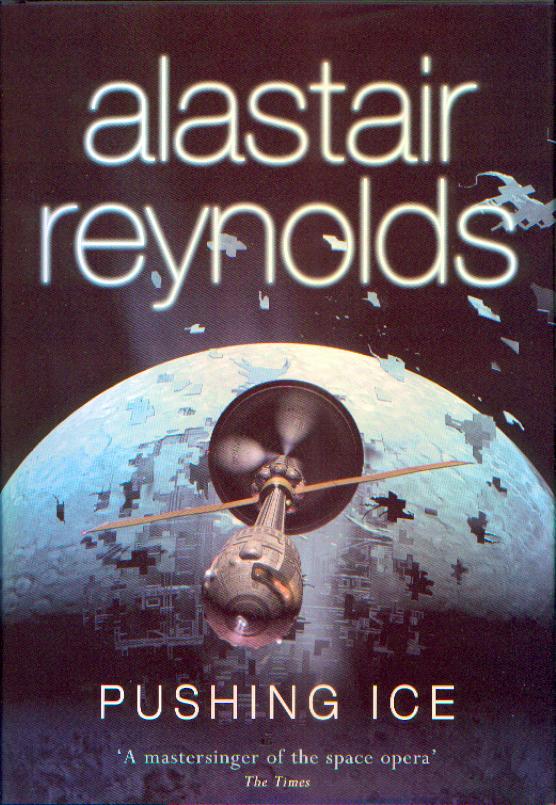
When Saturn's moon Janus suddenly takes off into interstellar space, an ice mining spaceship sent to investigate finds itself swept along into distant space until it ends up trapped in a gigantic alien structure, wherein the crew must prepare to reside for the foreseeable future.
- The Dosadi Experiment
Frank Herbertstandalone novel1977
similar bytenseother star systemsfar futurescience fictionalienspolitical intrigue+2 more
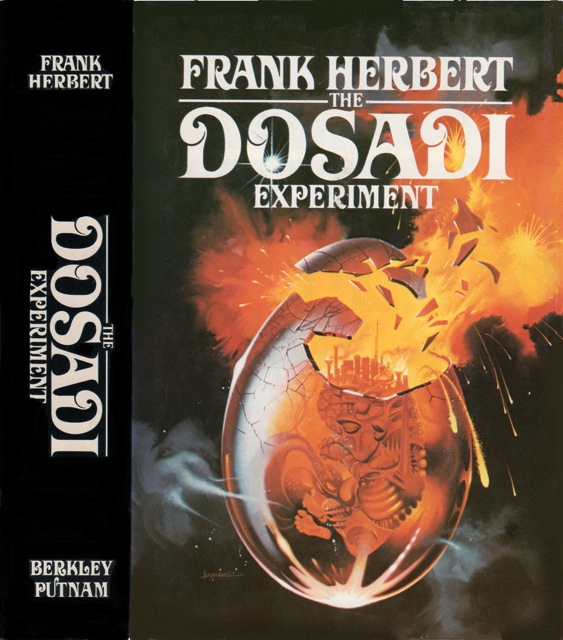
From the flaps of the Berkley Putnam first edition: "In his first new work of science fiction since the best-selling Children of Dune, Frank Herbert returns to his world of Whipping Star, and involves Jorj X. McKie, Saboteur Extraordinary, in a new intrigue. In Whipping Star, McKie discovered that some of the stars in the universe are actually intelligent, super-powerful beings, and was able to befriend one of them, the star Alcyone - affectionately known as Fannie Mae. As The Dosadi Experiment opens, McKie is assigned to investigate the planet Dosadi, which is isolated from the rest of the galaxy by a "god-wall," a barrier set up by one of the intelligent stars. Dosadi is rumored to be an experimental planet, and the experimenters are the froglike Gowachin, whose culture is founded upon a strange legal system in which McKie is the only human ever trained. He learns that humans and Gowachin have been placed on Dosadi, without their consent, for an experiment that could last centuries: an experiment in extreme overcrowding. But this monstrous plot is apparently out of control, and it seems the Gowachin may be prepared to destroy Dosadi rather than expose its secret, thus breaking the peace among the races, and starting the first interstellar war. But this is just the beginning. When McKie finally reaches Dosadi he discovers that the Dosadis have taken control of their own evolution and produced a competitive, highly evolved elite, of both humans and Gowachin, who have been able to extrapolate the existence of a universe beyond the god-wall and hate whoever has imprisoned them like this. They plan to break out and avenge themselves on the galaxy."
- Pandora
series4 books1966
similar byfar futurescience fictionother star systems+3 more
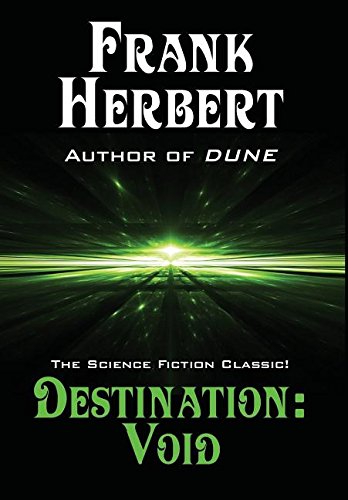
The Pandora Sequence opens with Frank Herbert's solo novel Destination: Void, in which a starship crew must jury-rig a working artificial consciousness after their vessel's control systems fail. Bill Ransom co-writes the three novels that follow, carrying the survivors to the world Pandora, where they must contend with both a manipulative machine intelligence and the planet's own hostile ecology. Across its four books the series moves from a claustrophobic ship-bound crisis to a generations-long struggle over faith, control, and survival on a dangerous new world.
- Tunnel in the Sky
Robert A. Heinleinstandalone novel1955
similar bytenseother star systemsfar futurescience fictionspace exploration
As the final test of a survivalist/explorer class, teenagers are dumped on an alien planet to use their skills while awaiting pickup. But something has gone wrong, and they find they are on their own.
- Forge of God
series2 books1987
completed
similar bytensescience fictiondarkaliens+4 more
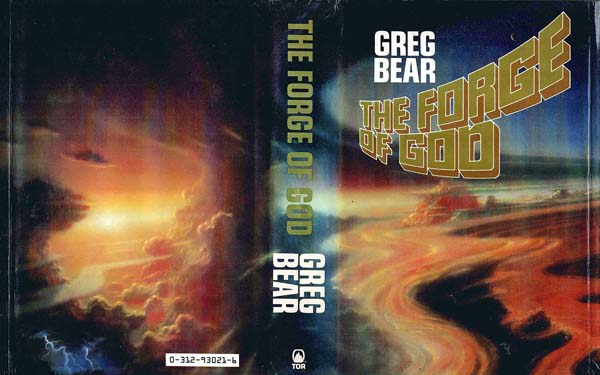
The Forge of God (1987) is Greg Bear's science fiction novel about Earth's discovery that it is the target of an incomprehensible, overwhelming alien attack, following scientists and ordinary people as they try to understand what is destroying the planet. Its 1992 sequel, Anvil of Stars, follows a group of young survivors sent on a mission of interstellar retaliation, continuing directly from the first book's ending.
- The Kassa Gambit
M. C. Planckstandalone novel2013
similar bytenseother star systemsfar futurescience fictionspace colonizationfirst contactaliens+2 more
"Centuries after the ecological collapse of Earth, humanity has spread among the stars. Under the governance of the League, our endless need for resources has driven us to colonize hundreds of planets, all of them devoid of other sentient life. Humanity is apparently alone in the universe. Then comes the sudden, brutal decimation of Kassa, a small farming planet, by a mysterious attacker. The few survivors send out a desperate plea for aid, which is answered by two unlikely rescuers. Prudence Falling is the young captain of a tramp freighter. She and her ragtag crew have been on the run and living job to job for years, eking out a living by making cargo runs that aren't always entirely legal. Lt. Kyle Daspar is a police officer from the wealthy planet of Altair Prime, working undercover as a double agent against the League. He's been undercover so long he can't be trusted by anyone--even himself. While flying rescue missions to extract survivors from the surface of devastated Kassa, they discover what could be the most important artifact in the history of man: an alien spaceship, crashed and abandoned during the attack. But something tells them there is more to the story. Together, they discover the cruel truth about the destruction of Kassa, and that an imminent alien invasion is the least of humanity's concerns. "--
- Doona
series3 books1969
similar byother star systemsfar futurescience fiction+4 more
Decision at Doona begins Anne McCaffrey's series about a human colony that finds a supposedly uninhabited planet is already home to the Hrrubans, a clan-based, cat-like species — a discovery Terran policy treats as forbidden territory after an earlier first-contact attempt ended in another alien race's mass suicide. The colonists and Hrrubans must negotiate an unprecedented, closely governed coexistence rather than the separation their governments would prefer. Later books, continuing with Jody Lynn Nye, follow the two communities as that arrangement is tested by new arrivals and disputes.
- Ender Wiggin
series14 books1977
part of Ender's Game Universe
similar byfar futurescience fictionother star systemsaliens+1 more
Orson Scott Card's Ender's Game (1985, expanded from his 1977 novella) follows child prodigy Andrew "Ender" Wiggin as he is recruited into a military training program built to prepare Earth's defenses for an anticipated third war against an insectoid alien species known as the Formics. The saga continues years later through Speaker for the Dead and Xenocide, following an older Ender as he confronts the moral weight of his role in that earlier conflict, and concludes the core arc in Children of the Mind, with Ender in Exile filling in the years between the first two books. Set within the wider Ender's Game universe, the series shifts from military coming-of-age story to slower, more philosophical science fiction as it progresses.
- Fractalverse
series2 books2020
similar bytensefar futurescience fictionother star systemsspace explorationfirst contactaliens
To Sleep in a Sea of Stars opens Christopher Paolini's Fractalverse with Kira Navárez, a xenobiologist whose survey of an unexplored planet triggers first contact with an ancient alien intelligence, dragging her and the wider human Alliance into a wider interstellar conflict for survival. Fractal Noise, a parallel entry, follows a separate crew investigating a mysterious signal-emitting structure on another world within the same universe. Both books were published between 2020 and 2023.
- West of the Sun
Edgar Pangbornstandalone novel1953
similar byother star systemsfar futurescience fictionspace colonizationaliens+2 more
From the back cover of the Dell first paperback printing: "After eleven years in space the Argo landed... West of the Sun ... on the dangerous planet Lucifer. The crew faced and untamed world of huge carnivorous birds with wolverine heads and flashing black teeth; furred, ten-foot tall men; red-skinned man-eating pygmies. They fought for mere survival but - their duty was to colonize and populate the planet - four men and only two women."
- Nemesis
Isaac Asimovstandalone novel1989
similar byfar futurescience fictionother star systemsspace colonizationecological collapse+1 more
The expanding population and ensuing ecological degradation of Earth leads to the establishment of orbital habitats which continue to compete with each other as well as with Earth, leading one of them to abandon the Solar System entirely, to establish itself around a neighboring star.
- First Foreigner Sequence
series4 books1994
part of Foreigner
similar byother star systemsfar futurescience fictionfirst contact+3 more
C. J. Cherryh's original Foreigner trilogy opens the larger Foreigner series, following Bren Cameron, the sole human translator-diplomat (paidhi) permitted contact with the atevi, an alien people whose loyalties run on a hierarchical bond called man'chi rather than human emotions like love or friendship. Generations after a lost human ship stranded its descendants on the atevi's world, Bren must manage the fraught exchange of human technology just as the starship Phoenix unexpectedly returns, throwing both human and atevi society into crisis. Foreigner, Invader, and Inheritor lay the groundwork for the decades of political intrigue the wider series continues.
- Deathworld
series4 books1960
completed
similar byfar futurescience fictionother star systemsspace colonization+1 more
Deathworld is the name of a series of science fiction novels by American writer Harry Harrison, including the books Deathworld, Deathworld 2 and Deathworld 3, plus the short story "The Mothballed Spaceship". The central hero is a gambler who becomes involved with colonists of an extremely hostile planet.
- Homecoming (Orson Scott Card)
series5 books1992
similar byfar futurescience fictionother star systems+4 more
The Homecoming Saga is a science fiction series by Orson Scott Card. The series is patterned on the Book of Mormon. Some of the names also come from the Book of Mormon.
- Uplift
series5 books1980
part of Uplift Universe
similar byfar futurescience fictionother star systemsaliens+2 more
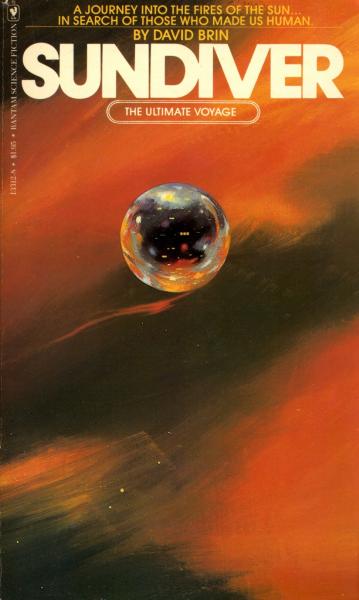
David Brin's Uplift trilogy opens with Sundiver, sending human explorers into the Sun itself, then follows a dolphin-crewed starship on the run from hostile aliens in Startide Rising and a fight over the colony world Garth in The Uplift War. The books sit inside Brin's wider Uplift Universe, built on the idea that spacefaring "patron" species genetically engineer younger "client" species into full sapience, with humanity an anomaly that reached the stars without a patron of its own.
- Wess'har Wars
series7 books2004
similar bytenseother star systemsfar futurescience fictionfirst contactecological collapsealiens
The Wess'har Wars series is a six-book science fiction novel series written by author Karen Traviss and is set several hundred years in the future. It involves humanity's contact with a number of alien species with conflicting interests and beliefs, while her central character, Shan Frankland, is caught in the middle of a coming conflict. The series has a focus on environmental impact. All six novels were published by Eos, an imprint of HarperCollins: City of Pearl, Crossing the Line, The World Before, Matriarch and Ally. The last book of the series, Judge was released on March 25, 2008.
- The Gates of Eden
Brian Stablefordstandalone novel1983
similar byother star systemsfar futurescience fictionspace explorationfirst contactaliens+1 more
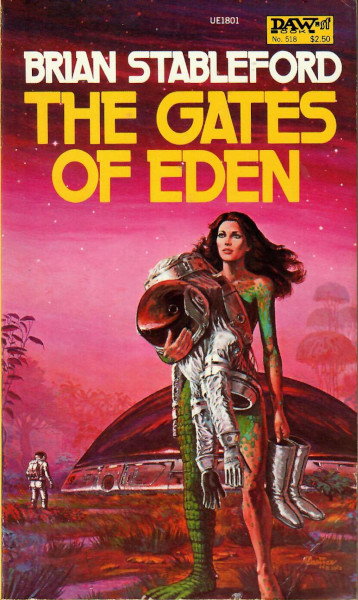
From the back cover of the DAW first edition: "Before the hyper-space vessels could go from planet to planet, stations had to be set up. And that meant manned spaceships cut off from Earth for decades. The explorer vessel Ariadne had gone toward galactic center and was considered lost - until its call was heard appealing for a xeno-biologist. Their new world was all swamp. As far as could be seen there was no intelligent species. Yet this was alarming because all inhabitable planets so far discovered had thinking inhabitants. But the nature of the planet's "people" turned out to be an enigma that had to be solved. For the alien biology there could spell doom to all the civilization of the stars... doom or a terrible unity!"
- Chanur
series7 books1982
part of Alliance-Union Universe
similar bytensefar futurescience fictionother star systemsalienspolitical intrigue+1 more
The Chanur novels are a series of five science fiction novels, forming three separate stories, written by American author C. J. Cherryh and published by DAW Books between 1982 and 1992. The first novel in the series is The Pride of Chanur (1982), which was nominated for both the Hugo and Locus Awards in 1983. The Pride of Chanur, originally a stand-alone story, was followed by the Chanur's Venture trilogy, Chanur's Venture (1984), which was shortlisted for a Locus Award in 1985; The Kif Strike Back (1985) and Chanur's Homecoming (1986). These were followed by a later sequel, Chanur's Legacy (1992). The five novels were also published in two omnibus editions: the first three in The Chanur Saga in 2000 and the next two in Chanur's Endgame in 2007.
- Blindsight / Firefall
series3 books2006
similar bytensefar futurescience fictionfirst contactdarkaliens+2 more
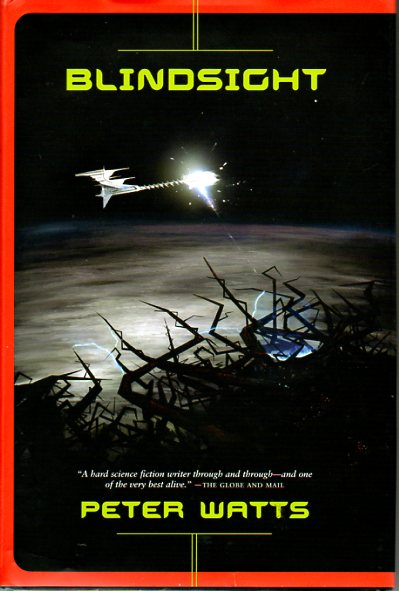
Blindsight sends a crew of radically modified posthumans (including a resurrected, genetically restored vampire) out to the Oort cloud after humanity detects an alien signal, only to make contact with something intelligent, wildly capable, and possibly not conscious at all — a first-contact story built around the question of whether self-awareness is actually useful. Peter Watts's Echopraxia is a same-timeframe "sidequel" rather than a direct sequel, following different characters through the fallout of the same first-contact event.