More like Kaa's Hunting
anchored on:fantasysouth asiajungle19th centuryadventurousadventure+4 more
but
- The People of the Mist
H. Rider Haggardstandalone novel1894
similar byadventurous19th centuryfantasyadventuresurvivalexpeditions
The People of the Mist is a classic lost world fantasy novel written by H. Rider Haggard. It was first published serially in the weekly magazine Tit-Bits, between December 1893 and August 1894; the first edition in book form was published in London by Longman in October, 1894. It was reprinted in December, 1973 by Ballantine Books as the sixty-third paperback volume of the Ballantine Adult Fantasy series.
- Jungle Book Universe
universe44 books1893
Start hereThe Jungle Book · Start here
similar byadventurous19th centuryadventurejunglesouth asia+4 more
The Law of the Jungle is older than any animal reciting it, and a naked man-cub who wandered into a wolf den at dusk will have to learn every clause of it. Mowgli grows up between two peoples and belongs entirely to neither — the pack that took him in, Baloo who teaches him the words, Bagheera who bought his life with a bull, Kaa who is the most dangerous friend a boy ever had, and Shere Khan, who has been waiting since the first page. Rudyard Kipling wrote these as two books of stories, and the stories run well past Mowgli. Rikki-Tikki-Tavi fights cobras in a bungalow garden; a white seal searches the ocean for an island where men do not come; Toomai watches the elephants dance where nobody is meant to see them; and the beasts of the army explain, in Her Majesty's Servants, exactly why they obey. Verse runs between the tales, and the Jungle Books have been reissued, excerpted and adapted ever since. The voice is the whole point — biblical cadence, animal dignity, and a hard moral world in which the Law protects you precisely as far as you keep it. Read The Jungle Book first and take the Mowgli stories in their order within it; the rest stand alone and can be picked up in any mood. It is a children's book that never once talks down.
- The Hobbit
series2 books1937
completed
part of Tolkien's legendarium
similar byadventurousfantasyadventuremiddle grade+1 more
The Hobbit (1937) is J. R. R. Tolkien's children's fantasy novel following the reluctant burglar Bilbo Baggins, who joins a company of dwarves and the wizard Gandalf on a journey to reclaim treasure guarded by the dragon Smaug. It stands as a complete adventure on its own, but shares its setting with the rest of Tolkien's legendarium and leads into the events of The Lord of the Rings.
- Allan Quatermain
series25 books1885
similar byadventurous19th centuryadventureexpeditions+1 more
Allan Quatermain is the protagonist of H. Rider Haggard's 1885 novel King Solomon's Mines, its one sequel Allan Quatermain (1887), twelve prequel novels and four prequel short stories, totalling eighteen works. An English professional big game hunter and adventurer, in film and television he has been portrayed by Richard Chamberlain, Sean Connery, Cedric Hardwicke, Patrick Swayze and Stewart Granger among others.
- Ranger's Apprentice: The Early Years
series3 books2011
completed
part of Ranger's Apprentice
similar byadventurousfantasyadventurefriendshipcoming of age+1 more
Ranger's Apprentice: The Early Years is a book series by John Flanagan. It is a prequel to the original Ranger's Apprentice series. The series follows Halt and Crowley and is preceded by the short story "The Hibernian" in the book The Lost Stories, which is the 11th installment to the Ranger's Apprentice series.
- Airman
Eoin Colferstandalone novel2008
similar byadventurous19th centuryadventuresurvivalcoming of age+1 more
Airman, by Eoin Colfer, is a best-selling historical adventure novel set in the 19th century. It was released in the UK, Ireland and US in January 2008. The novel was shortlisted for the 2009 Carnegie Medal.
- Tarzan
series50 books1912
part of Tarzan Universe
similar byadventurousadventurejungle+2 more
Tarzan is a series of 24 adventure novels written by Edgar Rice Burroughs (1875–1950) and published between 1912 and 1966, followed by several novels either co-written by Burroughs, or officially authorized by his estate. There are also two works written by Burroughs especially for children that are not related to the main series.
- Watership Down
series21 books1972
completed
similar byadventurousfantasysurvival+2 more
Watership Down is Richard Adams's 1972 novel following a group of rabbits who flee the destruction of their warren and cross the English countryside of Hampshire in search of a new home, developing over the journey a full rabbit culture of language, proverbs, and mythology. Adams returned to the same world in 1996 with Tales from Watership Down, a collection of nineteen short stories mixing rabbit folklore with further adventures of characters from the novel.
- Wolves Chronicles
series12 books1962
completed
similar byadventurous19th centuryadventure+2 more
The Wolves Chronicles is Joan Aiken's long-running alternate-history series for young readers, set in a nineteenth-century England ruled by the Stuart dynasty and beset by wolves that have migrated across a Channel land-bridge. It opens with The Wolves of Willoughby Chase, in which two girls outwit a scheming governess sent to ruin them, and expands over twelve books into a sprawling saga of orphans, conspiracies, and journeys through a Britain quite unlike the real one. Aiken kept adding to the same timeline across more than four decades, including later prequels set before the first book.
- King of the Cloud Forests
Michael Morpurgostandalone novel1987
similar byadventurousfantasyadventuresurvivalcoming of age
King of the Cloud Forests is a children's fantasy and adventure novel written by Michael Morpurgo. It was first published in the United Kingdom by Heinemann in 1987. It was released on audiobook in 2007, with Morpurgo providing the narration. It was shortlisted for a Carnegie Medal in 1987, and the novel was also adapted into a thirty-minute animated short in 2002.
- Tyger
S. F. Saidstandalone novel2022
similar byadventurousfantasyadventurefriendshipcoming of agemiddle grade
"Adam has found something incredible in a rubbish dump in London. A mysterious, mythical, magical animal. A TYGER. And the tyger is in danger. Adam and his friend Zadie are determined to help, but it isn't just the tyger's life at stake. Their whole world is on the verge of destruction. Can they learn to use their powers before it's too late?" (toppsta.com)
- Brotherband Chronicles
series9 books2011
completed
part of Ranger's Apprentice
similar byadventurousadventurefantasyfriendship+2 more
Hal, Stig, and a crew of Skandian teenagers considered too unpromising for the elite warrior bands are thrown together as the underdog 'Herons' and forced to compete against tougher rival crews in a brutal open-sea trial that's supposed to be a game. John Flanagan's Brotherband Chronicles, set in the same world as Ranger's Apprentice, follows the Herons as they earn respect the hard way and get pulled into real dangers well beyond the training exercise. Shipboard tactics, seamanship, and team loyalty matter as much as any single hero's skill.
- Narnia
series26 books1950
part of Narnia Universe
similar byadventurousfantasycoming of age+2 more
The Chronicles of Narnia is a series of seven portal fantasy novels by British author C. S. Lewis. Illustrated by Pauline Baynes and originally published between 1950 and 1956, the series is set in the fictional realm of Narnia, a fantasy world of magic, mythical beasts, and talking animals. It narrates the adventures of various children who play central roles in the unfolding history of the Narnian world. Except in The Horse and His Boy, the protagonists are all children from the real world who are magically transported to Narnia, where they are sometimes called upon by the lion Aslan to protect Narnia from evil. The books span the entire history of Narnia, from its creation in The Magician's Nephew to its eventual destruction in The Last Battle.
- The Cave Girl
Edgar Rice Burroughsstandalone novel1925
similar byadventurousadventuresurvivalexpeditions+2 more
The Cave Girl is a lost world novel by American writer Edgar Rice Burroughs. Originally published in two separate stories, The Cave Girl begun in February 1913 and published by "All-Story" in July, August, and September 1913; and The Cave Man begun in 1914 and published by "All-Story Weekly" throughout March and April 1917. The book version was first published by A. C. McClurg on 1925-03-21. In August 1949, Dell Paperback published a version with a map captioned "Wild Island Home of Nadara the Cave Girl Where Violence and Bloodshed Rule."
- The Last Mapmaker
Christina Soontornvatstandalone novel2022
similar byadventurousfantasyadventurecoming of agemiddle gradeexpeditions
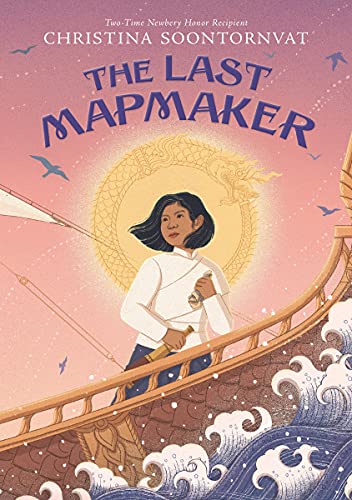
The Last Mapmaker is a 2021 children's fantasy novel written by American author and educator Christina Soontornvat.
- The Ghost in the Noonday Sun
Sid Fleischmanstandalone novel1965
similar byadventurous19th centuryfantasyadventuremiddle grade
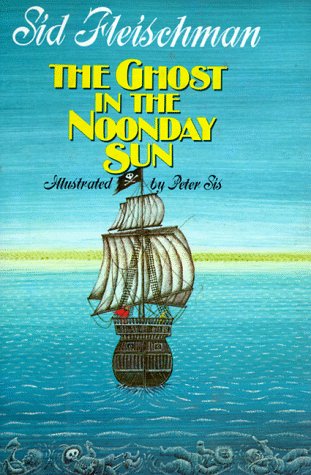
"Because Captain Scratch thinks Oliver Finch can see ghosts, he shanghais the boy abroad a pirate ship bound from Nantucket in search of buried treasure. Devious methods enable Oliver to outwit Scratch." --summary, Worldcat library record {{OCLC|429575904}} "firmly rooted in fantasy and exaggeration" --Mark Taylor LA Times 1965-12-26 m25 "this rollicking tale has more than enough humor and suspense" --Robert Berkvist NY Times 1965-10-24 pBR34
- Dodger
Terry Pratchettstandalone novel2012
similar byadventurous19th centuryadventurecoming of age+2 more
Dodger is a novel written by Terry Pratchett, set in early Victorian London, and inspired by Charles Dickens's character the Artful Dodger. The book was released on 13 September 2012 in the UK.
- Northwood
Brian Falknerstandalone novel2011
similar byadventurousfantasyadventuresurvivalmiddle grade+1 more
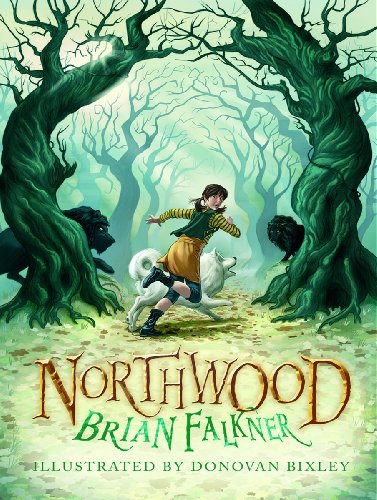
"Cecilia Undergarment likes a challenge. So when she discovers a sad and neglected dog, she is determined to rescue him. But here daring dog rescue lands her lost and alone in the dark forest of Northwood. A forest where ferocious black lions roam. A forest where those who enter never return. But then, Northwood has never seen the likes of Cecilia Undergarment before ..."--Page 4 of cover. Suggested level: primary, intermediate.
- The Clockwork Three
Matthew J. Kirbystandalone novel2010
similar byadventurous19th centuryadventurefriendshipcoming of agemiddle grade
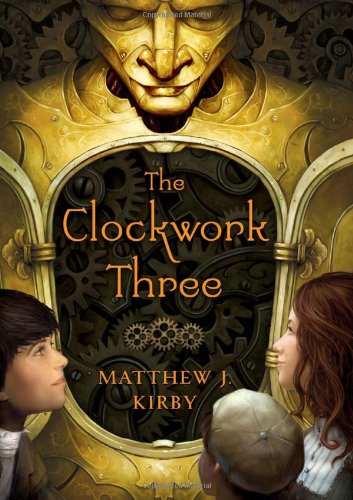
The Clockwork Three is a 2010 novel by American author Matthew J. Kirby. Set in a fictional coastal city in the late nineteenth century, it follows three children: Giuseppe, Hannah, and Frederick who work to solve each other's problems.
- Redwall
series22 books1986
completed
part of Redwall Universe
similar byadventurousfantasymiddle grade+1 more
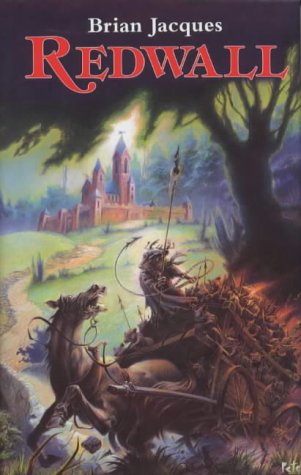
Redwall is Brian Jacques's long-running series of fantasy novels for young readers, set within the redwall-universe of Redwall Abbey and its community of anthropomorphic animals. It opened in 1986 with the mouse Matthias searching for the lost sword of the legendary Martin the Warrior to defend the abbey from the invading rat Cluny the Scourge, and grew across 22 largely stand-alone novels published through 2011, each set in a different generation of the abbey's history and following its mice, otters, badgers, and vermin adversaries.
- Daughter of the Deep
Rick Riordanstandalone novel2021
similar byadventurousfantasyadventurecoming of agemiddle grade
Daughter of the Deep is a middle grade fantasy-adventure novel by Rick Riordan. It was published on October 26, 2021, by Disney-Hyperion, and entered The New York Times Best Seller list.
- A Strange Discovery
Charles Romyn Dakestandalone novel1899
similar byadventurous19th centuryadventuresurvivalexpeditions
A "completion" of Edgar Allan Poe's Narrative of Arthur Gordon Pym (1838). Pym and his companion Dirk Peters are swept into a strange uncharted region in the Antarctic Sea where they find an island utopia inhabited by descendants of fourth-century Romans. The story "combines the further adventures of. Pym with a love story in the manner of Rider Haggard."- Anatomy of Wonder (1981) 1-54. "After Pym and Peters penetrate the veil, they find the city of Hili-li, inhabited by citizens of the Roman empire who fled the barbarian invasions of the fourth century. One ship reached the Antarctic. They represent the height of Greco-Roman culture; though mentally advanced, they have made no practical application of their knowledge. Pym falls in love with Lilama; so great is their devotion that 'the episode of Romeo and Juliet sinks into insignificance' when compared to it. After parental objection, kidnapping by a rival suitor, Ahpilus, and an attack by barbarians, they marry. Within months occurs 'the strange thermal phenomenon' which occasionally devastates the city: the winds shift so that a combination of a hurricane and a blizzard strikes Hili-li. The city is unprepared. Pym goes in search of food and fuel, while Lilama is among those who freeze to death. After her death the Hili-lites permit Pym, highly depressed, and Peters, a troublemaker in Utopia, to depart in a small boat; they are picked up by a ship which takes them to Montevideo, where they separate and never see one another again.
- Dinosaur Summer
Greg Bearstandalone novel1998
similar byadventurousadventuresurvivalexpeditionsjungle+1 more
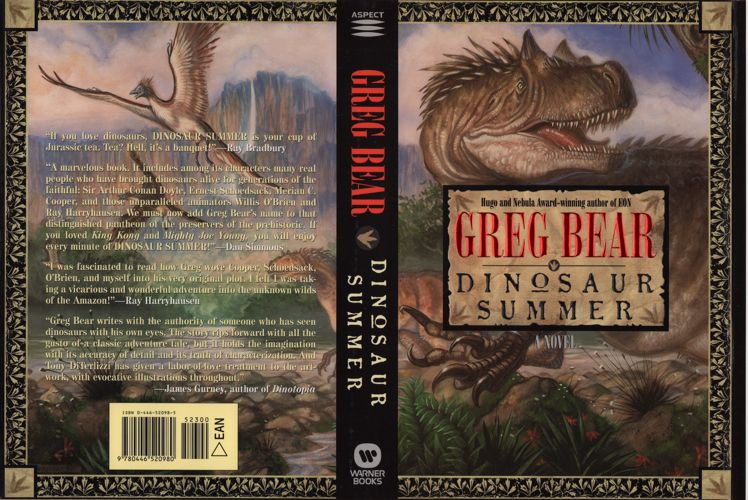
From the flaps of the Warner first edition: "It's the year 1947, and nobody's interested in dinosaurs anymore. Less than fifty years after Professor Challenger's famed journey to the Lost World, America's last dinosaur circus is closing down... but the adventure of a lifetime is about to begin. In a dramatic change of pace, multiple Hugo and Nebula award-winning science fiction master Greg Bear, ... presents a lavishly illustrated thriller that is certain to become a new classic adventure beyond time... Peter Belzoni is dreading summer in Manhattan. Then his father, photojournalist Anthony Belzoni, offers the youth a job, a byline in National Geographic... and a trip to South America. For the Lothar Gluck Circus, once the world's foremost dinosaur attraction, had gone bankrupt. Left behind is a menagerie of avisaurs, centrosaurs, and ankylosaurs, as well as one large predatory raptor named Dagger. And now two filmmakers and the circus trainer plan to return the giants to the wild - with Peter and his dad chronicling the odyssey for Geographic. The task seems impossible. Many have died trying to bring beasts our of the Lost World, the plateau of El Grande in Venezuela, but nobody has ever attempted to transport nearly a dozen full-grown, multiton prehistoric creatures across continents, down rivers, through jungles, and up mountains that has been isolated for 70,000,000 years... The trek will strain the technologies of trains, cargo ships, barges, trucks... en route lurk robbers and hostile, trigger-happy soldiers... and each mile toward freedom excites Dagger toward an unstoppable primal killing frenzy. When the unthinkable threatens to strand Peter and the rest of the crew in an uncharted realm, four modern Americans will face all the unknown dangers, mysteries, and terrors of El Grande..."