More like Lightshed
but
- Narnia
series26 books1950
part of Narnia Universe
similar byadventuroussecondary worldfantasyportal fantasy+2 more
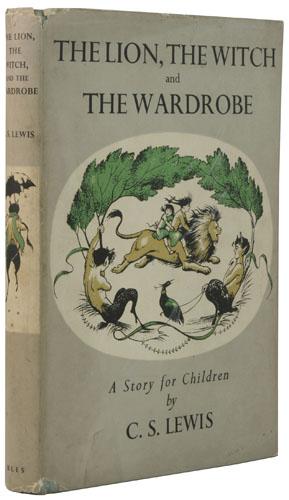
The Chronicles of Narnia is a series of seven portal fantasy novels by British author C. S. Lewis. Illustrated by Pauline Baynes and originally published between 1950 and 1956, the series is set in the fictional realm of Narnia, a fantasy world of magic, mythical beasts, and talking animals. It narrates the adventures of various children who play central roles in the unfolding history of the Narnian world. Except in The Horse and His Boy, the protagonists are all children from the real world who are magically transported to Narnia, where they are sometimes called upon by the lion Aslan to protect Narnia from evil. The books span the entire history of Narnia, from its creation in The Magician's Nephew to its eventual destruction in The Last Battle.
- Three Hearts and Three Lions
series3 books1961
similar byadventuroustransported to another worldsecondary worldfantasy+2 more
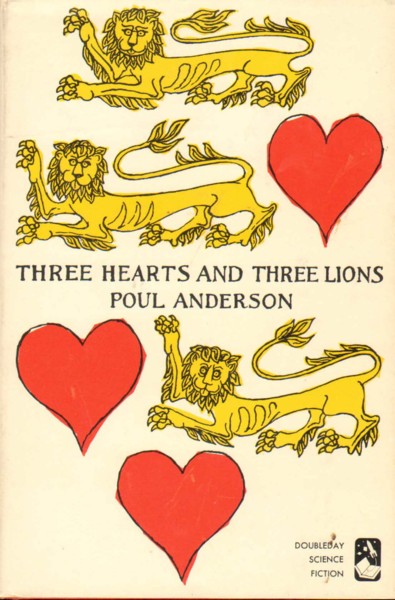
Three Hearts and Three Lions (1961, expanded from a 1953 novella) follows Holger Carlsen, a Danish resistance fighter wounded fighting the Nazis, who wakes in a medieval world of knights, dragons, and sorcery drawn from Carolingian legend. Poul Anderson wrote it as a self-contained portal fantasy; the later story Three Lilies and Three Leopards, by Harry Turtledove and Tad Williams, is a tribute piece published in an anniversary anthology rather than a true narrative sequel.
- Fionavar Universe
series5 books1984
similar bysecondary worldfantasyportal fantasy+3 more
Ysabel is a 2007 standalone contemporary fantasy novel by Guy Gavriel Kay, following teenager Ned Marriner as he stumbles into a centuries-old rivalry playing out around the cathedral of Aix-en-Provence. It marked Kay's turn toward urban fantasy and briefly brings back two adult characters from his earlier Fionavar Tapestry trilogy, though it is not itself part of that trilogy and can be read on its own.
- Magic Kingdom of Landover
series8 books1986
similar bysecondary worldfantasy+3 more
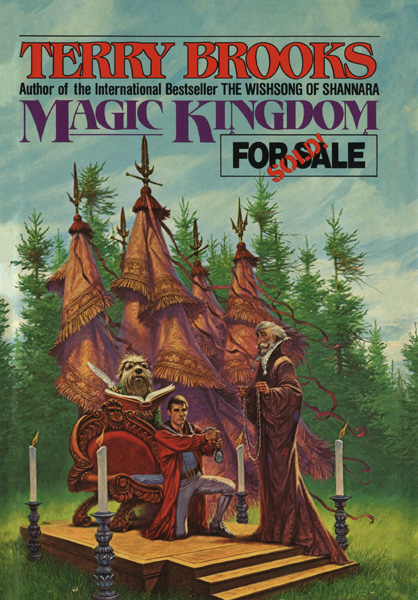
The Magic Kingdom of Landover is a series of six fantasy novels by Terry Brooks following the adventures of a former trial lawyer named Ben Holiday, who purchases a magical kingdom.
- Kairos
series11 books1962
completed
similar by+2 more
The Time Quintet is a science fantasy series of five young adult novels written by American author Madeleine L'Engle and made up of A Wrinkle in Time (1962), A Wind in the Door (1973), A Swiftly Tilting Planet (1978), Many Waters (1986), and An Acceptable Time (1989).
- Spellsinger
series9 books1983
similar byadventurousqueststransported to another worldsecondary worldfantasyportal fantasy
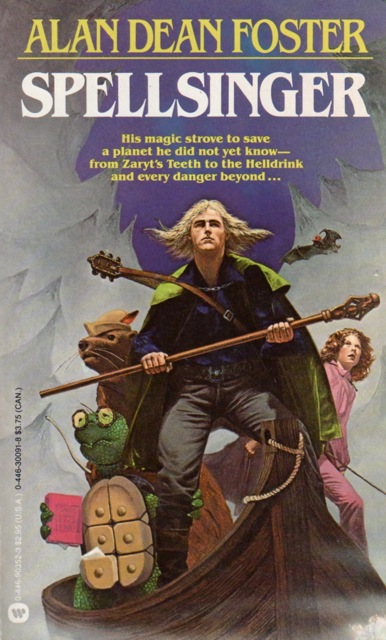
Alan Dean Foster's Spellsinger series follows Jon-Tom, a UCLA law student pulled into a fantasy world by the wizard Clothahump, where he discovers he can cast spells by singing along with his guitar. That world is populated almost entirely by anthropomorphic animals -- otters, rabbits, turtles -- with humans a rare minority, and across eight books published between 1983 and 2004, Jon-Tom and his companions repeatedly clash with the insectoid Plated Folk raiding the western territories.
- The Dragon and the George
series10 books1957
completed
similar byadventuroustransported to another worldsecondary worldfantasyportal fantasy+1 more
The Dragon Knight is a series of fantasy novels begun in 1976 by American writer Gordon R. Dickson. The first book, based on the short story "St. Dragon and the George", was loosely adapted in the 1982 animated movie The Flight of Dragons by Rankin/Bass. The title here refers in part to an in-universe nomenclature, wherein the story's dragons use the name "george" as a synonym or substitute of "human", after 'St. George the Dragon-Slayer', and in part a reference to the latter.
- Darwath
series7 books1982
similar bysecondary worldfantasy+1 more
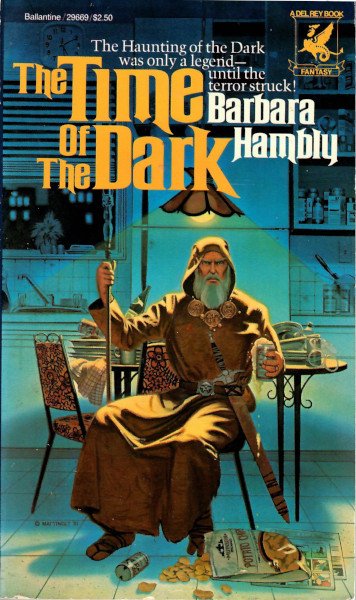
Darwath begins with two modern-day Californians pulled through a portal into a dying medieval world under siege from the Dark, shape-shifting monsters that hunt by night and are driving civilization underground. The Time of the Dark, The Walls of Air, and The Armies of Daylight make up the original trilogy; Barbara Hambly returned to the same characters decades later in Mother of Winter and Icefalcon's Quest. It's portal fantasy built around practical, unglamorous survival rather than chosen-one heroics.
- The Keys to the Kingdom
series7 books2003
similar byadventurousquestsfantasy+2 more
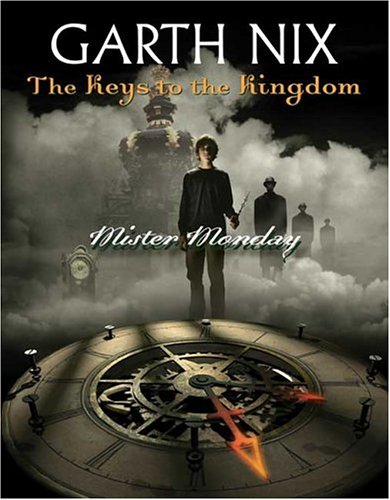
The Keys to the Kingdom is a fantasy-adventure book series written by Garth Nix, comprising seven books published between 2003 and 2010. The series chronicles the adventures of a boy named Arthur, who becomes involved with a magical world called the 'House'; he is on a quest to take back the House from seven antagonistic 'Trustees'.
- The Lord of the Rings
series13 books1954
part of Tolkien's legendarium
similar bysecondary world+3 more
The Lord of the Rings is an epic high fantasy novel written by the English author and scholar J. R. R. Tolkien. Set in Middle-earth, the story began as a sequel to Tolkien's 1937 children's book The Hobbit but eventually developed into a much larger work. Written in stages between 1937 and 1949, The Lord of the Rings is one of the best-selling books ever written, with over 150 million copies sold.
- His Dark Materials Universe
universe13 books1995
Start hereHis Dark Materials · Start here
similar byadventurousfantasy+3 more
In a world like ours and unlike it, every human soul walks outside the body in the shape of an animal — a daemon, who speaks, who cannot be lied to, and who settles into one fixed form only when childhood ends. This is the country of His Dark Materials: a company of parallel worlds across which an invisible dust of consciousness drifts down upon the waking mind; where a Church that calls itself the Magisterium would sooner sever a child's soul than let that Dust be understood; and where a golden instrument, the alethiometer, answers true questions for anyone with the patience to read it. Philip Pullman's design stands in two trilogies and a scatter of shorter tales. His Dark Materials — Northern Lights (published in America as The Golden Compass), The Subtle Knife, and The Amber Spyglass — carries Lyra Belacqua from the rooftops of a shadow Oxford across the borders between worlds. The Book of Dust returns to that same territory: La Belle Sauvage looks back to Lyra as an infant carried through a great flood, while The Secret Commonwealth follows her grown and less certain into adulthood, with a concluding volume closing the arc. Around them sit slim companion books — Lyra's Oxford, Once Upon a Time in the North, Serpentine — and Nicholas Wright's stage adaptation, made with Pullman's blessing. The register is grave and luminous at once, its title lifted from Milton and its quarrel drawn from Blake: a story that takes the side of curiosity, love, and the physical world against any authority that would forbid them. It reads as adventure — armoured bears, aeronauts, knife-cut windows between skies — yet reasons like philosophy. Begin with Northern Lights / The Golden Compass and read the first trilogy through before turning to The Book of Dust, which deepens everything the first has already made you feel.
- Underland Chronicles
series5 books2003
similar byadventurousquestsfantasy+1 more
The Underland Chronicles is a series of five epic fantasy novels by Suzanne Collins, first published between 2003 and 2007. It tells the story of a boy named Gregor and his adventures in the "Underland", a subterranean world located under New York City. The Underland is inhabited by humans who traveled below hundreds of years ago, along with various giant versions of creatures like bats, cockroaches, and rats. According to the author, the series involves many topics relating to war, including biological warfare, genocide, and military intelligence.
- His Dark Materials
series8 books1995
part of His Dark Materials Universe
similar byadventurousfantasy+3 more
His Dark Materials is a trilogy of fantasy novels by Philip Pullman consisting of Northern Lights, The Subtle Knife (1997), and The Amber Spyglass (2000). It follows the coming of age of two children, Lyra Belacqua and Will Parry, as they wander through a series of parallel universes. The novels have won a number of awards, including the Carnegie Medal in 1995 for Northern Lights and the 2001 Whitbread Book of the Year for The Amber Spyglass. In 2003, the trilogy was ranked third on the BBC's The Big Read poll.
- Barsoom
series53 books1917
similar byadventurous+1 more
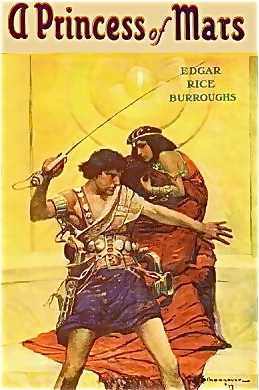
Barsoom is a fictional representation of the planet Mars created by American pulp fiction author Edgar Rice Burroughs. The first Barsoom tale was serialized as Under the Moons of Mars in pulp magazine The All-Story from February to July 1912 and published compiled as a novel as A Princess of Mars in 1917. It features John Carter, a late-19th-century American Confederate veteran who is mysteriously transported from Earth to the dying world of Mars where he meets and romances the beautiful Martian princess Dejah Thoris. Ten sequels followed over the next three decades, further extending his vision of Barsoom and adding other characters.
- Guardians of the Flame
series10 books1983
completed
similar bysecondary world+1 more
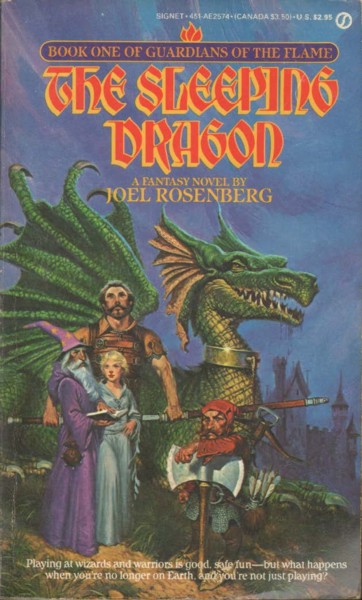
Guardians of the Flame starts with a group of college students magically transported by their own gamemaster into the fantasy world of the tabletop game they had been playing, where survival, not adventure, becomes the immediate problem. Joel Rosenberg's ten-book series follows the same characters over decades of story time, from desperate newcomers to founders of a permanent community built around abolishing slavery, eventually handing the story to a new generation of protagonists in the later books.
- Peter Pan Universe
universe112 books1902
Start herePeter Pan · Start here
similar byfantasy
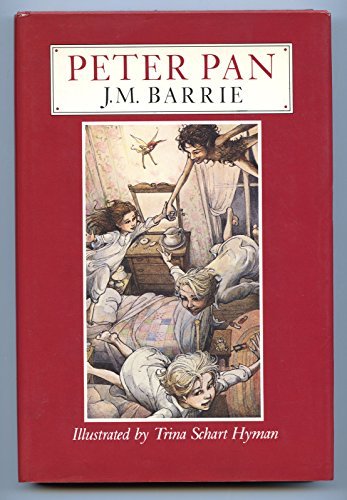
Second star to the right, and straight on till morning — and there it is, the island that every child dreams once and then, growing up, contrives to forget. Neverland: mermaids in the lagoon, a ticking crocodile with a clock in its belly, a pirate nursing his severed hand, and above it all the boy who will not grow up, forever flying, forever heartless in the lovely careless way that only children are. It begins with J. M. Barrie — the 1904 stage play, the chapters of Kensington Gardens, and the novel Peter and Wendy that fixed Peter, Wendy, Tinker Bell, Hook and the Lost Boys in place. From that small window a wide world has flown. Dave Barry and Ridley Pearson supply the how-it-all-began in their Starcatchers books, chasing falling starstuff aboard a doomed ship to explain why one orphan came to fly and never age. A whole bright shelf tends Tinker Bell's Pixie Hollow — the Disney Fairies and Fairy Haven tales, Kiki Thorpe's Never Girls — while Heidi Schulz hands the wheel to Hook's own daughter, and stranger, dimmer corners carry the island into far darker weather. Many hands, one archipelago; no single map governs them all. What sets it apart is the sweetness with a blade in it — wonder shadowed always by the ache of leaving, of mothers who keep the window open and children who fly home too late. Newcomers should begin where it began, with Barrie's Peter and Wendy, then, for the origin, take the Starcatchers books in their own order. The rest of Neverland waits, as it always does, for whoever still remembers how to reach it.
- The Hobbit
series2 books1937
completed
part of Tolkien's legendarium
similar byadventurousquestssecondary worldfantasy
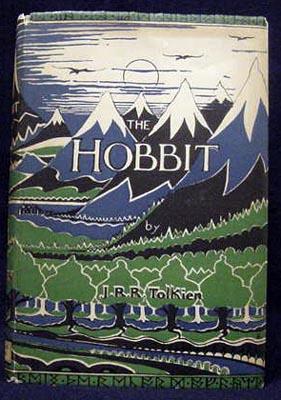
The Hobbit (1937) is J. R. R. Tolkien's children's fantasy novel following the reluctant burglar Bilbo Baggins, who joins a company of dwarves and the wizard Gandalf on a journey to reclaim treasure guarded by the dragon Smaug. It stands as a complete adventure on its own, but shares its setting with the rest of Tolkien's legendarium and leads into the events of The Lord of the Rings.
- The Land of Stories
series13 books2012
similar byadventurousfantasy+4 more
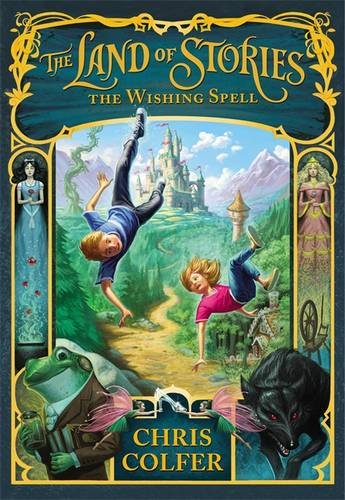
The Land of Stories is a series of children's fiction, adventure, and fantasy books written by American author, actor, and singer Chris Colfer. The first book, The Wishing Spell, was released on July 17, 2012, with the sixth and final book published in July 2017. Colfer started plans for a prequel series in 2016, and has since published three books in this series, beginning with A Tale of Magic... in 2019.
- Quag Keep
series2 books1978
completed
similar byadventurousqueststransported to another worldsecondary worldfantasyportal fantasy
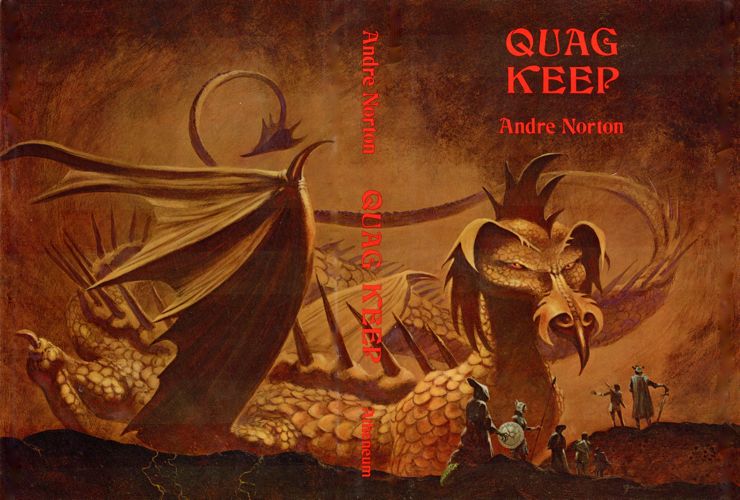
Andre Norton's Quag Keep holds a notable place in gaming history as the first novel set in Gary Gygax's World of Greyhawk, written after Norton took part in an actual Dungeons & Dragons session with Gygax himself. The novel and its later sequel, Return to Quag Keep (finished with Jean Rabe), follow a party of adventurers whose fates are bound to enchanted dice, blurring the line between players and the characters they inhabit.
- Estcarp
series8 books1963
completed
part of Witch World
similar bysecondary world+3 more
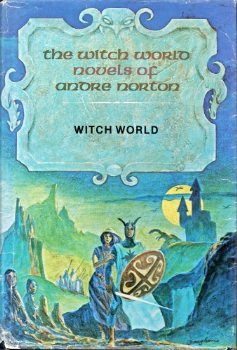
Estcarp is the founding cycle of Andre Norton's Witch World series, beginning with Witch World (1963) and continuing through books such as Web of the Witch World, Three Against the Witch World, and Sorceress of the Witch World. It is set on a world where magic long ago displaced science and, for centuries, was wielded almost exclusively by women, following outsiders and native witches who defend the ancient realm of Estcarp against rival powers from beyond its borders. Norton wrote most of the cycle alone before bringing in collaborators later in her career, as part of the wider Witch World universe.
- Stephen King multiverse
universe46 books1967
Start hereThe Gunslinger · Start here
similar by+3 more
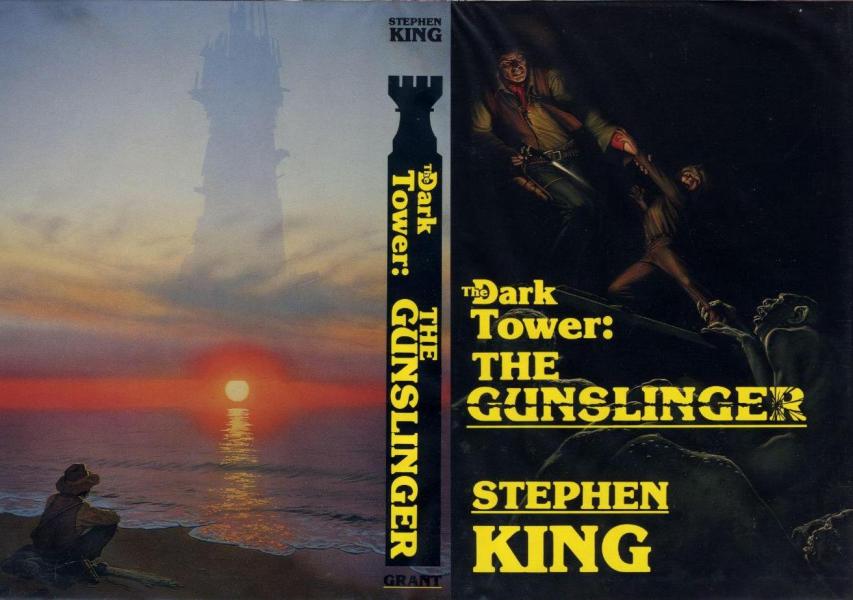
The man in black fled across the desert, and the gunslinger followed. So begins the long walk of Roland Deschain, last of an order of knight-errant pistoleers, across a land that has "moved on" — where the compass points drift, dead machines rot toward sentience, and the weave of what's real wears thin. His quest is the Dark Tower itself: a spire standing at the hub of every world that exists, the linchpin that holds all of them back from ruin. Roland's road runs eight volumes, from The Gunslinger through the closing Dark Tower, with the later, interleaved tale The Wind Through the Keyhole folding a story-within-a-story back into his youth. Along the way he draws a ka-tet — a fellowship bound by fate, not choosing — through doorways between worlds: a heroin-shackled New Yorker, a woman of two minds, a boy who dies twice. The Tower is also the secret axle around which the wider shelf of King's work turns; threads from The Stand, 'Salem's Lot and beyond wind quietly toward it. Expect a mongrel of Western, high fantasy, horror and decayed science fiction, told in a dusty, incantatory dialect all its own — ka, thankee-sai, the world that has moved on. This is King at his most mythic and most personal, a decades-spanning circle that rewards a patient reader. Begin at the beginning: The Gunslinger, then walk forward in publication order. There are other worlds than these — but this door opens first.
- Spearwielder's Tales
series3 books1993
similar byadventurousqueststransported to another worldsecondary worldfantasyportal fantasy
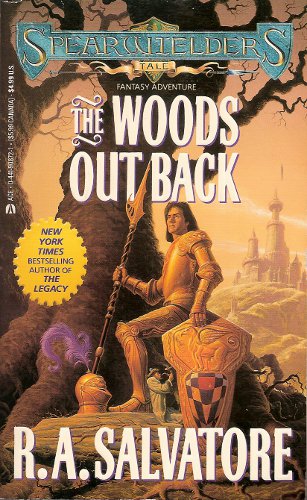
R. A. Salvatore's trilogy follows Gary Leger, bored with life after college, who wanders into the woods behind his house and stumbles into a fantasy world populated by elves, dwarves, witches, and dragons, and finds himself mistaken for the realm's long-lost hero. The Woods Out Back, The Dragon's Dagger, and Dragonslayer's Return follow Gary as he's pulled back into that world again and again, growing into the role thrust on him.
- Dancing Gods
series5 books1984
completed
similar bysecondary worldfantasy+3 more
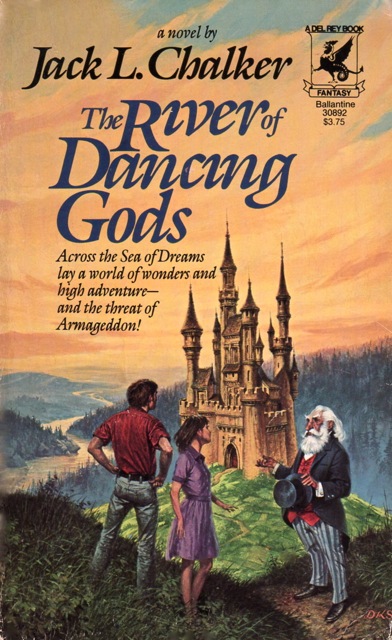
Jack L. Chalker's Dancing Gods opens with The River of Dancing Gods, in which a hero and heroine cross from an ordinary stretch of Texas highway into a world of faerie ruled over by wizards like the memorably named Throckmorton P. Ruddygore. The portal-fantasy setup plays familiar sword-and-sorcery elements for comedy, with the modern-world characters reacting to the fantasy world's rules as outsiders. The sequels keep expanding the cast pulled through into this world across the five-book series.