More like Never Surrender
anchored on:space operaspaceother star systems
but
- Troy Rising
series4 books2010
similar byspace operatensealiensspaceadventurouswarscience fiction+3 more
Troy Rising begins after an alien first-contact attempt nearly destroys Earth, prompting an entrepreneur to trade a valuable alien commodity in order to fund the construction of a massive orbital defense station guarding the planet from further attack. John Ringo's military science fiction trilogy, joined for a later volume by Gray Rinehart, follows the buildup and battles around that station as humanity arms itself against alien threats.
- Have Space Suit - Will Travel
Robert A. Heinleinstandalone novel1958
similar byspace operatensenear futurealiensspaceadventurousscience fiction+1 more
From the back cover of the Del Rey 9th printing: "Skyjacked - Everything happened at once. One minute Kip Russell was walking about in his own backyard, testing out an old space suit and dreaming about going to the moon - and the next he was out cold and the captive of an insidious space pirate. The whole thing seemed like a very bad dream until he discovered he wasn't the only prisoner on board. Then the reality of the situation became inescapable. He - along with the daughter of a world-renowned scientist and a beautiful creature from an alien planet - had been skyjacked by a monstrous extraterrestrial and they were on their way to the Moon... a journey toward a fate worse than death!"
- Tower and the Hive
series7 books1959
completed
part of The Talents
similar byspace operaspaceother star systemsscience fiction+4 more
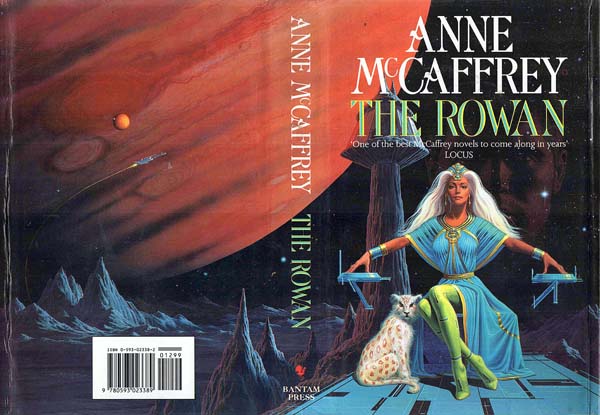
The Tower and the Hive series opens with The Rowan (1990), following an isolated but powerful telepath who is drawn out of her loneliness by a psychic call for help from a distant Talent facing an alien threat. Anne McCaffrey continued the story across four more novels, Damia, Damia's Children, Lyon's Pride, and the concluding The Tower and the Hive (1999), following later generations of a telepathic family staffing the Prime Towers that give a starfaring human civilization instant communication. The series is set later in the same Talents universe as McCaffrey's earlier Pegasus books.
- Moties
series4 books1974
part of CoDominium
similar byspace operaaliensspaceother star systemsscience fiction+3 more
Larry Niven and Jerry Pournelle's The Mote in God's Eye (1974) depicts humanity's first contact with an alien species, the Moties, set within the far-future interstellar setting of Pournelle's codominium future history. The Gripping Hand continues that first-contact crisis years later, and Outies, written by J. R. Pournelle, carries the story forward into a new generation. Together the three books trace an escalating encounter between human and Motie civilizations within the codominium universe.
- Old Man's War
series16 books2005
similar byspace operaspaceother star systemsadventurouswarscience fiction+3 more
The Old Man's War series is a series of science fiction novels by John Scalzi. The first book in the series, Old Man's War, was first published in 2005 by Tor Books, and was nominated for the Hugo Award for Best Novel in 2006. In 2026 it was a finalist for the Hugo Award for Best Series.
- Cities in Flight
series10 books1950
completed
similar byspace operaspace colonizationspacescience fiction+2 more
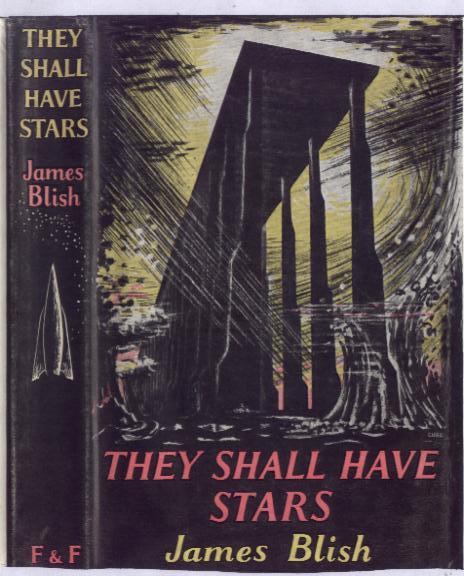
Cities in Flight is a four-volume series of science fiction novels and short stories by American writer James Blish, originally published between 1950 and 1962, which were first known collectively as the "Okie" novels. The series features entire cities that are able to fly through space using an anti-gravity device, the spindizzy. The stories cover roughly two thousand years, from the very near future to the end of the universe. One story, "Earthman, Come Home", won a Retro Hugo Award in 2004 for Best Novelette. Since 1970, the primary edition has been the omnibus volume first published in paperback by Avon Books. Over the years James Blish made many changes to these stories in response to points raised in letters from readers.
- Salvation
series3 books2018
similar byspace operaspaceother star systemsscience fiction+4 more
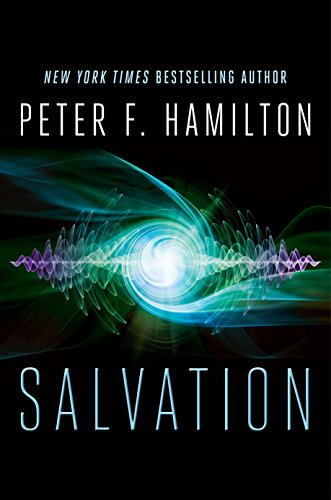
By 2204, instantaneous jump-gate travel has made distance nearly meaningless, connecting Earth to its scattered colonies in a single step -- until a crashed alien ship of unknown origin turns up on a world eighty-nine light years away, carrying something far more dangerous than wreckage. Peter F. Hamilton's Salvation follows the investigation team sent to assess the find, one of whom may not be who they claim, while a second timeline set generations later shows the far-future fallout of what they discover. The trilogy continues through Salvation Lost and The Saints of Salvation.
- Catteni Sequence
series5 books1970
completed
similar byspace operaaliensother star systemsadventurousscience fiction+3 more
The Catteni series is a tetralogy of science fiction novels by American writer Anne McCaffrey. In this universe, humans are slaves of aliens, the humanoid Catteni. Woven through all four of the books are details of the relationship between Kristin Bjornsen, a former slave, and Zainal, a renegade Catteni.
- Starstream
series2 books1989
completed
similar byspace operatensespaceother star systemsscience fiction+3 more
Starstream groups Jeffrey A. Carver's two linked science-fiction novels, From a Changeling Star (1989) and its direct sequel Down the Stream of Stars (1990). The two were published within a year of each other under the same author.
- Uplift Universe
universe13 books1980
Start hereUplift · Start here
similar byspace operaaliensspaceother star systemsadventurousscience fiction+1 more
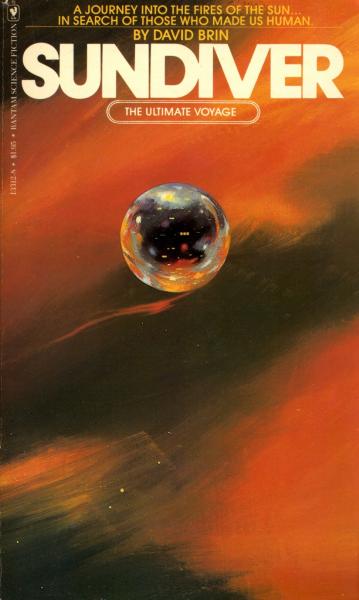
No species, the Galactics insist, ever climbs to sapience alone. For a billion years the elder races have "uplifted" their chosen clients — reshaping some promising animal, gene by patient gene, into a thinking being, then binding it through long ages of indenture. Patron lifts client; client one day becomes patron; and every lineage traces back through the vast Galactic Library to the vanished Progenitors who began it all. Then a ragged band of primates arrives at the stars with no patron to claim them — wolflings, self-made, an affront to a hundred thousand years of law — and worse, these humans have already started uplifting neighbors of their own: the neo-dolphins and neo-chimpanzees of Earthclan. David Brin builds this galaxy across two trilogies. The first — Sundiver, the Hugo- and Nebula-winning Startide Rising, and the Hugo-winning The Uplift War — sends an expedition into the Sun, then follows the dolphin-crewed survey ship Streaker as it flees a discovery that sets fanatical star-clans at war, and a chimp-led resistance on an invaded colony world. The second sequence, Uplift Storm — Brightness Reef, Infinity's Shore, Heaven's Reach — descends to Jijo, a forbidden world where six fallen races hide as illegal settlers, and draws every loose thread toward a reckoning. Short fiction fills the margins. This is space opera with an ecologist's conscience: teeming with invented biologies, wry cross-species banter, and real unease about what we owe the minds we make. Begin with Startide Rising — the saga's beating heart, and readable on its own — or take Sundiver first and read straight through in publication order.
- Heaven Chronicles / Zones of Thought
series8 books1976
similar byspace operaspacescience fiction+3 more
- Legion of Space
series7 books1947
completed
similar byspace operaaliensspaceother star systemsadventurousscience fiction+1 more
The Legion of Space is a space opera science fiction series by American writer Jack Williamson. The story takes place in an era when humans have colonized the Solar System but dare not go farther, as the first extra-solar expedition to Barnard's Star failed and the survivors came back as babbling, grotesque, diseased madmen. They spoke of a gigantic planet, populated by ferocious animals and the single city left of the evil "Medusae". The Medusae bear a vague resemblance to jellyfish, but are actually elephant-sized, four-eyed, flying beings with hundreds of tentacles. The Medusae cannot speak, and communicate with one another via a microwave code.
- Nicholas Seafort
series7 books1994
completed
similar bytensespace operaspacewarscience fiction+3 more
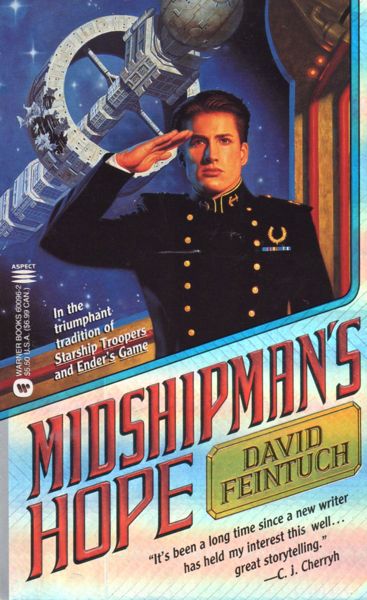
The Seafort Saga is a series of science fiction novels written by American author David Feintuch. The novels are set from the late 22nd century to the mid-23rd century and relate the adventures of Nicholas Seafort, an officer in the (fictional) UNNS| United Nations Naval Service. The series is a collection of personal accounts, usually from the perspective of Nicholas Seafort, describing Seafort's adventures, beginning as a lowly midshipman, to the elected leader of earth, and finally to the captain of the UNNS flagship Olympiad. Although most books in the series are told from a single perspective, usually Seafort's, Voices of Hope is a collection of accounts from several sources: Seafort's son, PT, the son of a friend of Seafort's, and a transient boy named Pook. Additionally, Children of Hope is narrated by Randy Carr, the son of a close friend of Seafort.
- The Outposter
Gordon R. Dicksonstandalone novel1972
similar byspace operatensespace colonizationspaceother star systemsscience fiction+1 more
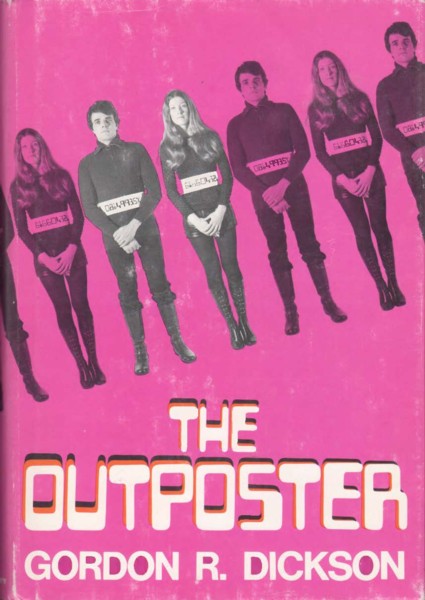
From the flap of the Lippincott first edition: "Rich man, poor man, beggarman, thief - the lottery played no favorites. If your number came up, you joined the rest of the losers marked for exile from overcrowded Earth. Shipped to a raw new outpost in space, you were officially called a colonist. But your whispered name was "garbage," your destination was oblivion, and you had few illusions about your chances of survival. The Outposters - a token band of specially trained personnel - were given the impossible task of guiding and protecting these outcasts in their harsh new environment. Will indifferent support from Earth, supply lines ran thin and raids by hostile aliens were increasing unchecked. Only one young Outposter, Mark Ten Roos, dared to challenge the system and change the odds. To help him, Mark hand-picked a strange assortment of allies from the new shipment of colonists: a brash opportunist, every instinct honed for personal survival; a midget woman with a professorship in philosophy; a widowed mathematician, expert in position astrophysics; an ex-marine with a dishonorable discharge. And help came to Mark from a source he had not expected - the daughter of the Outer Navy's ranking officer. When Mark Ten Roo put his plan into action, he knew he was also putting his life on the line."
- Humanity's Fire
series5 books2009
similar byspace operaother star systemsspacescience fiction+5 more
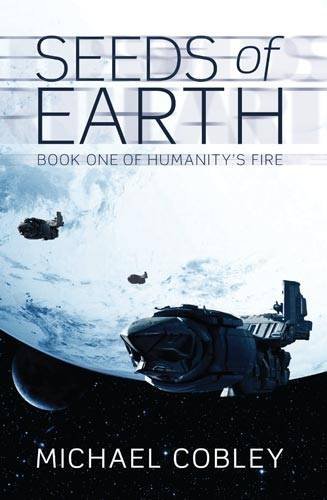
Michael Cobley's Humanity's Fire trilogy, opening with Seeds of Earth, follows the descendants of a human colony that lost contact with Earth generations earlier, who must contend with returning Earth authorities, alien empires, and a buried ancient danger beneath their adopted homeworld. Two further novels, Ancestral Machines and Splintered Suns, continue the setting afterward.
- Chanur
series7 books1982
part of Alliance-Union Universe
similar byspace operatensealiensspaceother star systemsadventurousscience fiction
The Chanur novels are a series of five science fiction novels, forming three separate stories, written by American author C. J. Cherryh and published by DAW Books between 1982 and 1992. The first novel in the series is The Pride of Chanur (1982), which was nominated for both the Hugo and Locus Awards in 1983. The Pride of Chanur, originally a stand-alone story, was followed by the Chanur's Venture trilogy, Chanur's Venture (1984), which was shortlisted for a Locus Award in 1985; The Kif Strike Back (1985) and Chanur's Homecoming (1986). These were followed by a later sequel, Chanur's Legacy (1992). The five novels were also published in two omnibus editions: the first three in The Chanur Saga in 2000 and the next two in Chanur's Endgame in 2007.
- Into the Looking Glass
series4 books2005
similar bytensespace operaaliensspaceother star systemsadventurousscience fiction+2 more
- The Expanse
series18 books2011
similar byspace operatensespaceother star systemsscience fiction+2 more
The Expanse is a series of science fiction novels, and related novellas and short stories by James S. A. Corey, the joint pen name of authors Daniel Abraham and Ty Franck. The first novel, Leviathan Wakes, was nominated for the Hugo Award for Best Novel in 2012. The complete series was nominated for the Hugo Award for Best Series in 2017. It later won, following its second nomination for the same award in 2020.
- Ian Cormac
series6 books2001
part of Polity
similar byspace operatensespaceother star systemsscience fiction+2 more
Neal Asher's Ian Cormac novels (Gridlinked, The Line of Polity, Brass Man, Polity Agent, Line War, plus the earlier-set prequel Shadow of the Scorpion) follow Ian Cormac, an agent of Earth Central Security in Asher's Polity universe. Gridlinked opens with Cormac investigating a destroyed matter-transmitter on a remote colony while wrestling with the personality erosion caused by long-term neural linkage to the Polity's AI network; the following novels escalate into interstellar conflict with the alien Prador. Together they form the core action sequence of Asher's wider Polity series.
- Starplex
Robert J. Sawyerstandalone novel1996
similar byspace operatensenear futurealiensspaceother star systemswarscience fiction
The only novel of its year to be nominated for both the Hugo and Nebula Awards. Starplex won Canada's Aurora Award for best novel of the year. For nearly twenty years Earth's space exploration had exploded outward, thanks to a series of mysterious, artificial wormholes. No one knows who created these interstellar passages, yet they have brought the far reaches of space immediately close. For Starplex Director Keith Lansing, too close. Discovery is superseding understanding. And when an unknown vessel — with no windows, no seams, and no visible means of propulsion — arrives through a new wormhole, an already battle-scarred Starplex could be the starting point of a new interstellar war . . . ROBERT J. SAWYER has won the Hugo, Nebula, John W. Campbell Memorial, Seiun, and Aurora Awards, all for best science fiction novel of the year. His novels include Hominids, Rollback, Wake, and FlashForward (basis for the TV series).
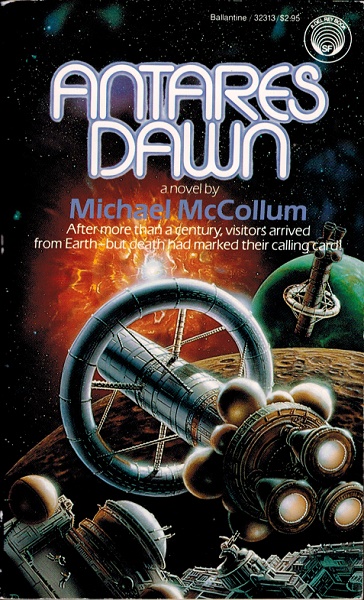
- Antares (Michael McCollum)
series3 books1986
similar byspace operatensespaceother star systemsscience fiction+4 more
- The Chronicles of the Invaders
series3 books2013
similar byspace operatensealiensspacescience fiction+4 more
- Fallen Dragon
Peter F. Hamiltonstandalone novel2001
similar byspace operaspace colonizationspaceother star systemsadventurousscience fiction+1 more
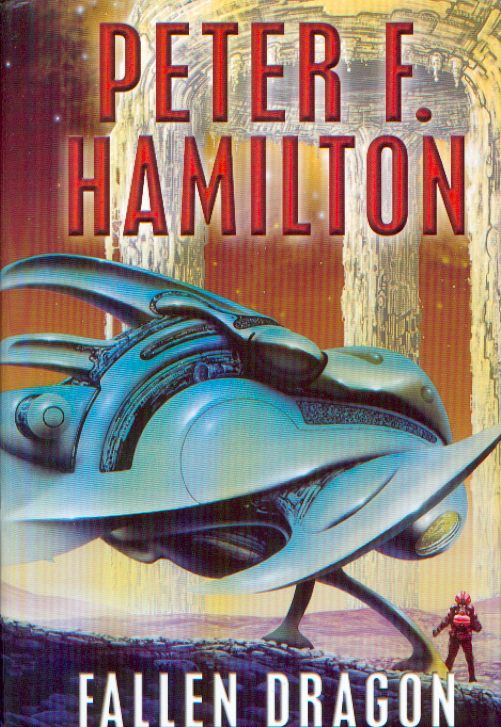
Fallen Dragon is a science fiction novel by British writer Peter F. Hamilton. It was first published in 2001 by Macmillan. It follows the adventures of the mercenary Lawrence Newton as he attempts to capture what he believes is a fabulous treasure, only to find something of much greater importance.