More like NeverSea
but
- Barsoom
series53 books1917
similar by+1 more
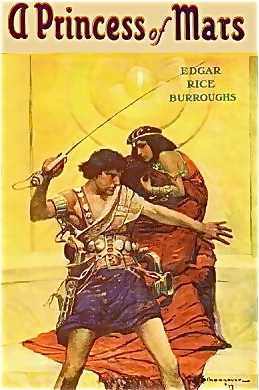
Barsoom is a fictional representation of the planet Mars created by American pulp fiction author Edgar Rice Burroughs. The first Barsoom tale was serialized as Under the Moons of Mars in pulp magazine The All-Story from February to July 1912 and published compiled as a novel as A Princess of Mars in 1917. It features John Carter, a late-19th-century American Confederate veteran who is mysteriously transported from Earth to the dying world of Mars where he meets and romances the beautiful Martian princess Dejah Thoris. Ten sequels followed over the next three decades, further extending his vision of Barsoom and adding other characters.
- The Hobbit
series2 books1937
completed
part of Tolkien's legendarium
similar byfantasyadventure
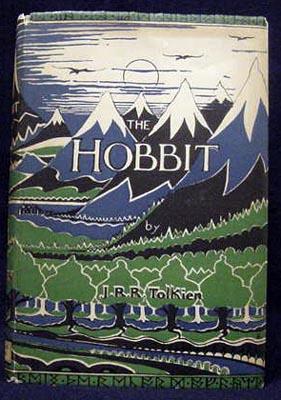
The Hobbit (1937) is J. R. R. Tolkien's children's fantasy novel following the reluctant burglar Bilbo Baggins, who joins a company of dwarves and the wizard Gandalf on a journey to reclaim treasure guarded by the dragon Smaug. It stands as a complete adventure on its own, but shares its setting with the rest of Tolkien's legendarium and leads into the events of The Lord of the Rings.
- Narnia
series26 books1950
part of Narnia Universe
similar byfantasy+1 more
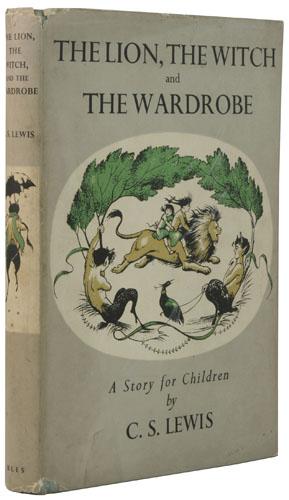
The Chronicles of Narnia is a series of seven portal fantasy novels by British author C. S. Lewis. Illustrated by Pauline Baynes and originally published between 1950 and 1956, the series is set in the fictional realm of Narnia, a fantasy world of magic, mythical beasts, and talking animals. It narrates the adventures of various children who play central roles in the unfolding history of the Narnian world. Except in The Horse and His Boy, the protagonists are all children from the real world who are magically transported to Narnia, where they are sometimes called upon by the lion Aslan to protect Narnia from evil. The books span the entire history of Narnia, from its creation in The Magician's Nephew to its eventual destruction in The Last Battle.
- Watership Down
series21 books1972
completed
similar byfantasy+1 more
Watership Down is Richard Adams's 1972 novel following a group of rabbits who flee the destruction of their warren and cross the English countryside of Hampshire in search of a new home, developing over the journey a full rabbit culture of language, proverbs, and mythology. Adams returned to the same world in 1996 with Tales from Watership Down, a collection of nineteen short stories mixing rabbit folklore with further adventures of characters from the novel.
- His Dark Materials
series8 books1995
part of His Dark Materials Universe
similar byfantasy
His Dark Materials is a trilogy of fantasy novels by Philip Pullman consisting of Northern Lights, The Subtle Knife (1997), and The Amber Spyglass (2000). It follows the coming of age of two children, Lyra Belacqua and Will Parry, as they wander through a series of parallel universes. The novels have won a number of awards, including the Carnegie Medal in 1995 for Northern Lights and the 2001 Whitbread Book of the Year for The Amber Spyglass. In 2003, the trilogy was ranked third on the BBC's The Big Read poll.
- Kairos
series11 books1962
completed
similar by+1 more
The Time Quintet is a science fantasy series of five young adult novels written by American author Madeleine L'Engle and made up of A Wrinkle in Time (1962), A Wind in the Door (1973), A Swiftly Tilting Planet (1978), Many Waters (1986), and An Acceptable Time (1989).
- Universe of Gulliver
universe34 books1726
Start hereGulliver's Travels · Start here
similar by+1 more
A ship's surgeon with appalling luck keeps washing up in countries that have solved the problem of being human in some appalling new way. Lilliput, where the great question of the age is which end of an egg to break. Brobdingnag, where a king hears out a description of Europe and concludes that its inhabitants are the most pernicious race of little odious vermin. Laputa, floating and abstracted above the island it taxes. And the land of the Houyhnhnms, where the horses are rational and the humans are not. Jonathan Swift published it in 1726 as a genuine traveller's account, and the trick worked. What is collected here is that book and its long afterlife: the eighteenth-century continuations printed as further Travels into Several Remote Nations, the Victorian retellings that trimmed it down to a story about a giant tied up by tiny people, and the picture-book Lilliputs that followed. It is satire with a smile on and a knife behind it — precise, patient, and colder the further in you read. The first two voyages are the ones everybody knows; the fourth is the one that changes what the first two meant. Read Gulliver's Travels whole and in order if you can, and treat the abridgements gathered here as what they are: souvenirs from the shallow end.
- The Princess Bride
William Goldmanstandalone novel1973
similar byfantasyadventure
The Princess Bride: S. Morgenstern's Classic Tale of True Love and High Adventure, The "Good Parts" Version is a 1973 fantasy romance novel by American writer William Goldman. The book combines elements of comedy, adventure, fantasy, drama, romance, and fairy tale. It is metafictionally presented as an abridgment of a longer work by the fictional S. Morgenstern, and Goldman's commentary asides are constant throughout. It was originally published in the United States by Harcourt Brace, then later by Random House, while in the United Kingdom it was later published by Bloomsbury.
- His Dark Materials Universe
universe13 books1995
Start hereHis Dark Materials · Start here
similar byfantasy
In a world like ours and unlike it, every human soul walks outside the body in the shape of an animal — a daemon, who speaks, who cannot be lied to, and who settles into one fixed form only when childhood ends. This is the country of His Dark Materials: a company of parallel worlds across which an invisible dust of consciousness drifts down upon the waking mind; where a Church that calls itself the Magisterium would sooner sever a child's soul than let that Dust be understood; and where a golden instrument, the alethiometer, answers true questions for anyone with the patience to read it. Philip Pullman's design stands in two trilogies and a scatter of shorter tales. His Dark Materials — Northern Lights (published in America as The Golden Compass), The Subtle Knife, and The Amber Spyglass — carries Lyra Belacqua from the rooftops of a shadow Oxford across the borders between worlds. The Book of Dust returns to that same territory: La Belle Sauvage looks back to Lyra as an infant carried through a great flood, while The Secret Commonwealth follows her grown and less certain into adulthood, with a concluding volume closing the arc. Around them sit slim companion books — Lyra's Oxford, Once Upon a Time in the North, Serpentine — and Nicholas Wright's stage adaptation, made with Pullman's blessing. The register is grave and luminous at once, its title lifted from Milton and its quarrel drawn from Blake: a story that takes the side of curiosity, love, and the physical world against any authority that would forbid them. It reads as adventure — armoured bears, aeronauts, knife-cut windows between skies — yet reasons like philosophy. Begin with Northern Lights / The Golden Compass and read the first trilogy through before turning to The Book of Dust, which deepens everything the first has already made you feel.
- Redwall
series22 books1986
completed
part of Redwall Universe
similar byfantasy
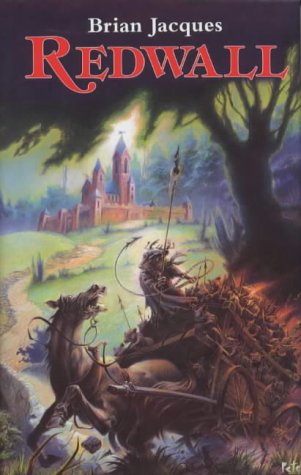
Redwall is Brian Jacques's long-running series of fantasy novels for young readers, set within the redwall-universe of Redwall Abbey and its community of anthropomorphic animals. It opened in 1986 with the mouse Matthias searching for the lost sword of the legendary Martin the Warrior to defend the abbey from the invading rat Cluny the Scourge, and grew across 22 largely stand-alone novels published through 2011, each set in a different generation of the abbey's history and following its mice, otters, badgers, and vermin adversaries.
- Peter Pan Universe
universe112 books1902
Start herePeter Pan · Start here
similar byfantasy
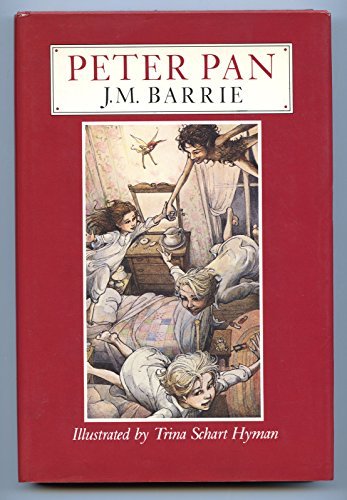
Second star to the right, and straight on till morning — and there it is, the island that every child dreams once and then, growing up, contrives to forget. Neverland: mermaids in the lagoon, a ticking crocodile with a clock in its belly, a pirate nursing his severed hand, and above it all the boy who will not grow up, forever flying, forever heartless in the lovely careless way that only children are. It begins with J. M. Barrie — the 1904 stage play, the chapters of Kensington Gardens, and the novel Peter and Wendy that fixed Peter, Wendy, Tinker Bell, Hook and the Lost Boys in place. From that small window a wide world has flown. Dave Barry and Ridley Pearson supply the how-it-all-began in their Starcatchers books, chasing falling starstuff aboard a doomed ship to explain why one orphan came to fly and never age. A whole bright shelf tends Tinker Bell's Pixie Hollow — the Disney Fairies and Fairy Haven tales, Kiki Thorpe's Never Girls — while Heidi Schulz hands the wheel to Hook's own daughter, and stranger, dimmer corners carry the island into far darker weather. Many hands, one archipelago; no single map governs them all. What sets it apart is the sweetness with a blade in it — wonder shadowed always by the ache of leaving, of mothers who keep the window open and children who fly home too late. Newcomers should begin where it began, with Barrie's Peter and Wendy, then, for the origin, take the Starcatchers books in their own order. The rest of Neverland waits, as it always does, for whoever still remembers how to reach it.
- Ranger's Apprentice: The Early Years
series3 books2011
completed
part of Ranger's Apprentice
similar byfantasyadventure
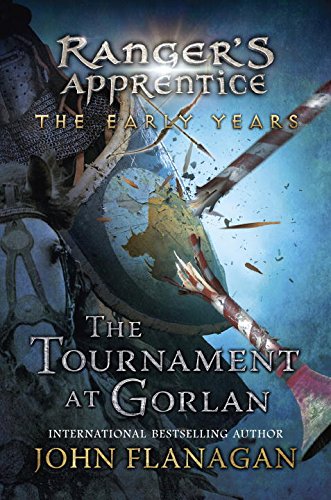
Ranger's Apprentice: The Early Years is a book series by John Flanagan. It is a prequel to the original Ranger's Apprentice series. The series follows Halt and Crowley and is preceded by the short story "The Hibernian" in the book The Lost Stories, which is the 11th installment to the Ranger's Apprentice series.
- Brotherband Chronicles
series9 books2011
completed
part of Ranger's Apprentice
similar byfantasyadventure
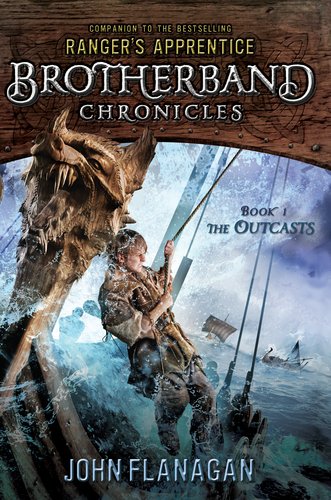
Hal, Stig, and a crew of Skandian teenagers considered too unpromising for the elite warrior bands are thrown together as the underdog 'Herons' and forced to compete against tougher rival crews in a brutal open-sea trial that's supposed to be a game. John Flanagan's Brotherband Chronicles, set in the same world as Ranger's Apprentice, follows the Herons as they earn respect the hard way and get pulled into real dangers well beyond the training exercise. Shipboard tactics, seamanship, and team loyalty matter as much as any single hero's skill.
- Silverwing
series5 books1997
similar byfantasy
Kenneth Oppel's Silverwing novels follow a colony of bats whose society is divided along old lines of species, faction, and belief, forcing young bats to navigate conflicts that adults have inherited rather than chosen. Across four books, the series treats bat colonies as full societies with their own history and politics, using that lens to explore tolerance and freedom of thought. It's popular enough to have been adapted into an animated television series.
- Railsea
China Miévillestandalone novel2012
similar byfantasyadventure
Railsea is a young adult novel written and illustrated by English writer China Miéville, and published in May 2012. Miéville described the novel as "weird fiction", io9 labelled its mix of fantasy and steampunk elements as "salvagepunk" and the story has been seen as an "affectionate parody" of Herman Melville's classic 1851 novel Moby-Dick, also drawing on Robert Louis Stevenson's adventure novels Treasure Island and Kidnapped.
- Seraphina Universe
series6 books2012
similar byfantasy
Among Ghosts (2025) is Rachel Hartman's most recent return to the world she introduced in Seraphina, extending the setting beyond the original duology. It belongs to Hartman's wider Seraphina-world writing rather than continuing as a numbered sequel in the core two-book series.
- Nicholas Graydon
series3 books1923
completed
similar byfantasy+1 more
A. Merritt's Face in the Abyss duology began as a 1923 novelette in Argosy All-Story Weekly, later joined by its serialized 1930 sequel, The Snake Mother; both were combined into the single 1931 novel The Face in the Abyss. The pairing forms a classic lost-world adventure from the pulp era.
- Wings of Fire
series24 books2012
similar byfantasy
Wings of Fire is a children's adventure fantasy novel series about dragons, written by Tui T. Sutherland and published by Scholastic Inc. The series has been translated into over ten languages, with some versions having their own cover art, has sold over 27 million copies worldwide making it one of the most successful fantasy series for young readers, and has been on the New York Times Best Seller list for over 200 weeks. Wings of Fire is rated for ages 7–12 according to Scholastic, Inc. The series has also proven popular with young adults and older audiences.
- Impossible Creatures
series3 books2023
similar byfantasy+1 more
Katherine Rundell's trilogy opens with a boy, Christopher, discovering a hidden Archipelago where mythical creatures long thought imaginary still survive, guarded from the wider world by people who can perform an old magic. He teams up with Mal, a girl with a coat that lets her fly and a secret that makes her a target, to protect the Archipelago as its magic begins failing. The Poisoned King and The Neverfear continue their fight to save the hidden world from the forces working to destroy it.
- Terra Incognita (Kevin J. Anderson)
series4 books2009
similar by+2 more
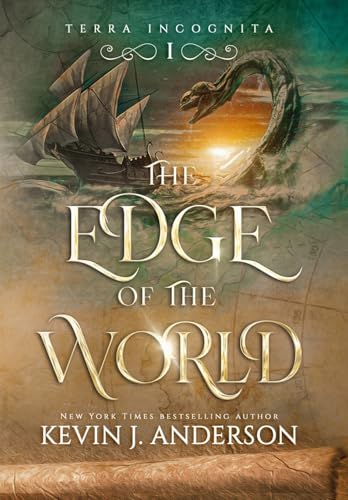
Kevin J. Anderson's Terra Incognita trilogy is set in a fantasy world modeled on the Age of Exploration, following rival seafaring nations sending expeditions in opposite directions around their world's coastline, driven by religious conflict and the search for a fabled promised land. The Edge of the World opens the story, continuing through The Map of All Things and The Key to Creation.
- Castaways of the Flying Dutchman
series3 books2001
completed
similar byfantasy+1 more
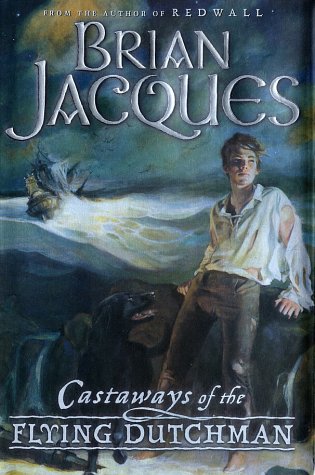
Brian Jacques's Castaways of the Flying Dutchman follows Neb and his dog Denmark, the sole survivors of the cursed ghost ship's crew, condemned to eternal youth and wandering the world to help people in trouble wherever they land. The trilogy continues through The Angel's Command and Voyage of Slaves.
- Legends & Lattes
series9 books2022
similar byfantasy
Travis Baldree's cozy fantasy series follows Viv, a battle-worn orc mercenary who trades her sword for an apron to open the first coffeehouse in the city of Thune, winning over skeptical customers and a rival guild alike. Bookshops & Bonedust returns to her mercenary days as a prequel, and the series has become a byword for low-stakes fantasy built on found family rather than warfare.