More like Orca
anchored on:fantasyassassinssecondary worldsword and sorceryorganized crime
but
- The Hobbit
series2 books1937
completed
part of Tolkien's legendarium
similar byadventuroussecondary worldfantasy
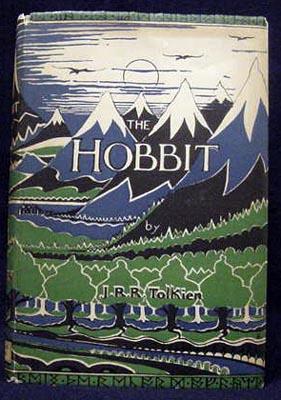
The Hobbit (1937) is J. R. R. Tolkien's children's fantasy novel following the reluctant burglar Bilbo Baggins, who joins a company of dwarves and the wizard Gandalf on a journey to reclaim treasure guarded by the dragon Smaug. It stands as a complete adventure on its own, but shares its setting with the rest of Tolkien's legendarium and leads into the events of The Lord of the Rings.
- Dragaeran Empire
series27 books1983
similar byadventuroussecondary worldfantasypolitical intrigue+2 more
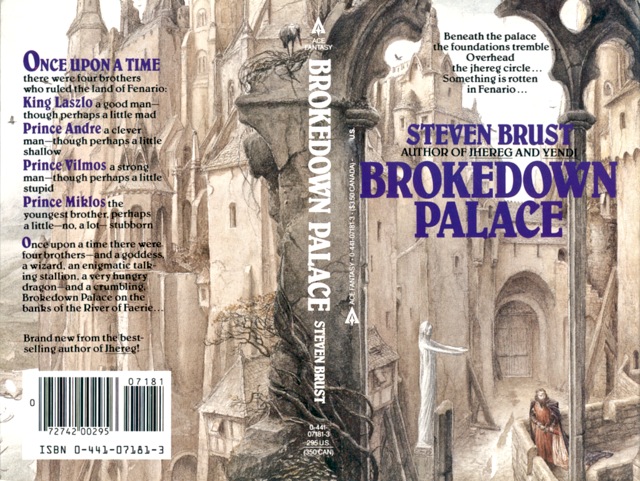
Brokedown Palace is Steven Brust's standalone novel set outside his main Vlad Taltos series but within the same Dragaera world, following four brothers in the human kingdom of Fenario after one of them, a volatile king, gravely wounds another. Brust weaves in interspersed folklore chapters drawing on Hungarian tradition, using the family's crumbling castle as a recurring symbol for both a body and a disintegrating kingdom. The Baron of Magister Valley is a later, separate standalone entry in the same wider Dragaera setting rather than a direct sequel.
- The Lord of the Rings
series13 books1954
part of Tolkien's legendarium
similar bysecondary world+2 more
The Lord of the Rings is an epic high fantasy novel written by the English author and scholar J. R. R. Tolkien. Set in Middle-earth, the story began as a sequel to Tolkien's 1937 children's book The Hobbit but eventually developed into a much larger work. Written in stages between 1937 and 1949, The Lord of the Rings is one of the best-selling books ever written, with over 150 million copies sold.
- Conan Universe
series205 books1932
part of Hyborian Age
similar byadventuroussecondary worldsword and sorceryfantasy
The Conan books are sword and sorcery fantasies featuring the character of Conan the Cimmerian originally created by Robert E. Howard. Written by numerous authors and issued by numerous publishers, they include both novels and short stories, the latter assembled in various combinations over the years by the several publishers. The character has proven durably popular, resulting in Conan stories being produced after Howard's death by such later writers as Poul Anderson, Leonard Carpenter, Lin Carter, L. Sprague de Camp, Roland J. Green, John C. Hocking, Robert Jordan, Sean A. Moore, Björn Nyberg, Andrew J. Offutt, Steve Perry, John Maddox Roberts, Harry Turtledove, and Karl Edward Wagner. Some of these writers finished incomplete Conan manuscripts by Howard, or rewrote Howard stories which originally featured different characters. Most post-Howard Conan stories, however, are completely original works. In total, more than fifty novels and dozens of short stories featuring the Conan character have been written by authors other than Howard. This article describes and discusses notable book editions of the Conan stories.
- Narnia
series26 books1950
part of Narnia Universe
similar byadventuroussecondary worldfantasy
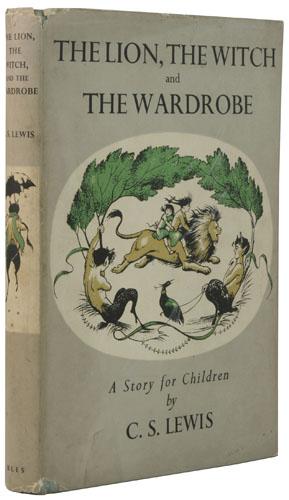
The Chronicles of Narnia is a series of seven portal fantasy novels by British author C. S. Lewis. Illustrated by Pauline Baynes and originally published between 1950 and 1956, the series is set in the fictional realm of Narnia, a fantasy world of magic, mythical beasts, and talking animals. It narrates the adventures of various children who play central roles in the unfolding history of the Narnian world. Except in The Horse and His Boy, the protagonists are all children from the real world who are magically transported to Narnia, where they are sometimes called upon by the lion Aslan to protect Narnia from evil. The books span the entire history of Narnia, from its creation in The Magician's Nephew to its eventual destruction in The Last Battle.
- Mention My Name in Atlantis
John Jakesstandalone novel1972
similar byadventuroussecondary worldfantasysword and sorcerypolitical intrigue
From the back cover of the DAW Books first edition: The continent of Atlantis had troubles enough before Conax the Barbarian washed ashore. For Hoptor the Vintner, who considered himself a citizen of importance, things were going from bad to worse. The king was on his last legs, his generals were plotting, there were those scary lights in the sky, and Hoptor's favorite girl was being put up for auction on the slave block. Then Conax, the self-styled king of Chimeria - a place nobody ever heard of - turned up at the auction with his broadsword, his barbaric manners, and his hair-trigger temper. That wast the last straw. From then on Atlantis was doomed!
- The Immortals
series6 books1992
part of Tortall
similar byadventuroussecondary worldfantasy+1 more
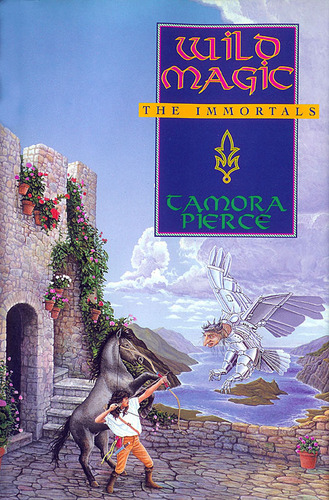
Tamora Pierce's Immortals quartet follows Daine, a young woman whose 'wild magic' lets her communicate with and shapeshift among animals, as she's drawn into the kingdom of Tortall's defense against immortal creatures -- griffins, dragons and darker things -- released back into the world after centuries sealed away. Beginning with Wild Magic, the four books pair Daine's personal coming-of-age with an escalating magical threat, and connect to Pierce's earlier Song of the Lioness quartet through several shared characters.
- The Princess Bride
William Goldmanstandalone novel1973
similar byadventuroussecondary worldfantasy
The Princess Bride: S. Morgenstern's Classic Tale of True Love and High Adventure, The "Good Parts" Version is a 1973 fantasy romance novel by American writer William Goldman. The book combines elements of comedy, adventure, fantasy, drama, romance, and fairy tale. It is metafictionally presented as an abridgment of a longer work by the fictional S. Morgenstern, and Goldman's commentary asides are constant throughout. It was originally published in the United States by Harcourt Brace, then later by Random House, while in the United Kingdom it was later published by Bloomsbury.
- Redwall
series22 books1986
completed
part of Redwall Universe
similar byadventuroussecondary worldfantasy
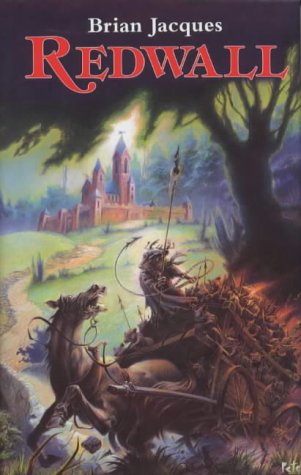
Redwall is Brian Jacques's long-running series of fantasy novels for young readers, set within the redwall-universe of Redwall Abbey and its community of anthropomorphic animals. It opened in 1986 with the mouse Matthias searching for the lost sword of the legendary Martin the Warrior to defend the abbey from the invading rat Cluny the Scourge, and grew across 22 largely stand-alone novels published through 2011, each set in a different generation of the abbey's history and following its mice, otters, badgers, and vermin adversaries.
- Dilvish
series13 books1965
completed
similar byadventuroussecondary worldfantasysword and sorcery
Centuries ago, the half-elf warrior Dilvish tried to stop a dark sorcerer named Jelerak from completing a terrible ritual, and paid for it by being turned to stone and having his soul cast into Hell. Roger Zelazny's Dilvish the Damned stories bring him back when the people he once protected need him again, reuniting him with his strange metal steed Black for a string of sword-and-sorcery adventures built around his long-delayed vengeance against Jelerak. The tales run as short, episodic quests rather than one continuous plot.
- Forgotten Realms: The Legend of Drizzt
series39 books1988
part of Forgotten Realms
similar byadventuroussecondary worldfantasy+1 more
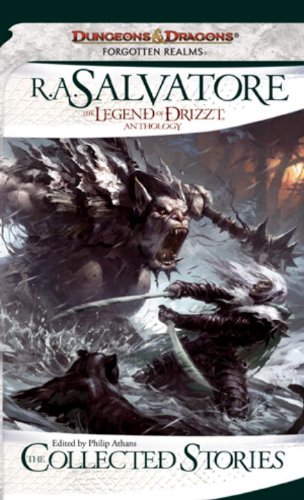
The Legend of Drizzt is a series of fantasy novels by R. A. Salvatore that began in 1988, and consists of 39 books as of August 15, 2023. They are based in the Forgotten Realms setting in the dimension of Abeir-Toril on the continent Faerûn in the Dungeons & Dragons universe currently published and owned by Wizards of the Coast. It combines the series The Dark Elf Trilogy, The Icewind Dale Trilogy, Legacy of the Drow, Paths of Darkness, The Hunter's Blades Trilogy, and other sets into an abridged compilation. Drizzt Do'Urden is the main character of most of the books.
- The Riftwar Universe
universe44 books1982
Start hereRiftwar Saga · Start here
similar bysecondary worldfantasy+2 more
On the world of Midkemia a tear opens in the air itself, a rift hung between stars, and through it march the armies of an empire from another world entirely. So begins the chronicle Raymond E. Feist has kept for three decades: the tale of Pug, a castle kitchen boy apprenticed to a magician on the very day the invasion lands, and of Tomas, his friend, who inherits the armor and the ancient fury of a dead dragon-lord. Around these two the Riftwar Cycle turns, widening book by book from one besieged frontier keep into the whole history of a world of kingdoms, guilds, thieves' dens and mage-towers. The cycle runs to roughly thirty novels, gathered into arcs a newcomer can enter and finish on their own. The founding Riftwar Saga (Magician, Silverthorn, A Darkness at Sethanon) sets the board; the Serpentwar Saga, Krondor's Sons and the Conclave of Shadows carry the story down the generations; the Darkwar, Demonwar and Chaoswar sagas bring it toward its close. Crossing the rift to the rival world of Kelewan, Feist and Janny Wurts wrote the Empire trilogy, opening with Daughter of the Empire, a court intrigue told wholly from the invaders' side and for many the finest thing here. Shorter Legends of the Riftwar and the game-born Riftwar Legacy fill the corners; later still, Feist opens an altogether new world in the Firemane books. Feist writes fantasy in its most companionable key: apprentices who grow into archmages, tavern boys who become spies and dukes, a world you return to the way you return to an old inn. The mood is adventure before dread, friendship and rank and hard-won craft, wars that cost something, all of it rendered plainly and at a gallop. Begin where it began, with Magician, then follow the arcs in the order they were written, and the rift will carry you the rest of the way.
- Sun Wolf and Starhawk
series7 books1984
similar byadventuroussecondary worldfantasysword and sorcery
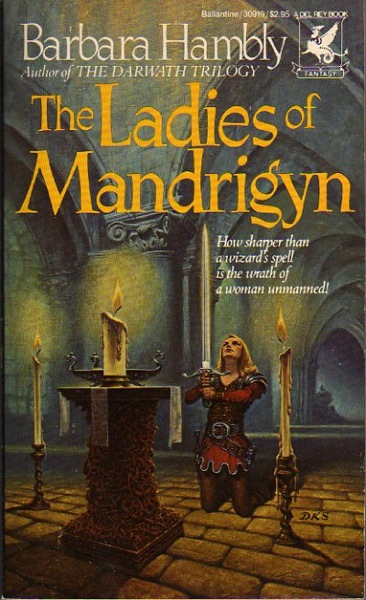
Barbara Hambly's series begins with the city of Mandrigyn conquered and its men enslaved in the mines of the wizard-king Altiokis, forcing surviving noblewoman Sheera Galernas to kidnap the mercenary captain Sun Wolf and press him into training the city's women as fighters. Sun Wolf's partnership with his lieutenant Starhawk carries across The Ladies of Mandrigyn, The Witches of Wenshar, and further volumes as both are drawn deeper into magic neither originally wanted.
- Shadow
Dave Duncanstandalone novel1987
similar byadventuroussecondary worldfantasysword and sorcerypolitical intrigue
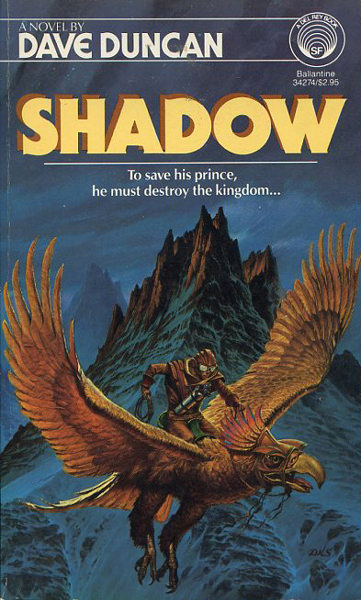
Sald Harl would like nothing more than to soar on the wings of his noble eagle, but his youthful rides in the sky are cut short by an appointment to guard the prince. Sald watches his dreams of flight fade with his name and independence as he takes over his bodyguard duties. During a perilous journey to the edges of the kingdom a dark secret comes to life. Now the great Prince Shadow is accused of treason and Sald must orchestrate a desperate plan of escape or he will lose the one thing he has been ordered to defend. The only option of freedom in sight is a dangerous flight that no one has ever survived. Once again Sald may feel the freedom of souring though the air unchained from the shackles of servitude.
- Magic Kingdom of Landover
series8 books1986
similar bysecondary worldfantasy+2 more
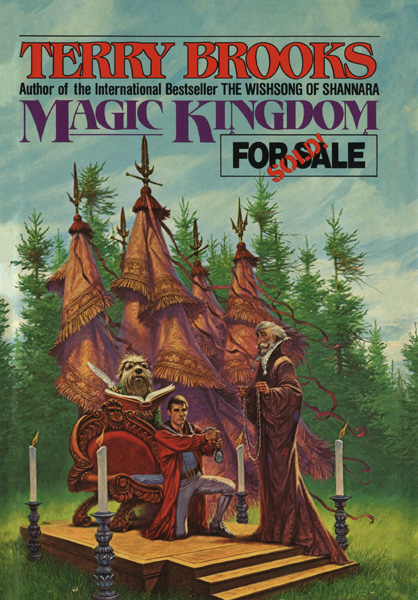
The Magic Kingdom of Landover is a series of six fantasy novels by Terry Brooks following the adventures of a former trial lawyer named Ben Holiday, who purchases a magical kingdom.
- The Black Magician Trilogy
series3 books2001
part of Kyralia series
similar bysecondary worldfantasy+2 more
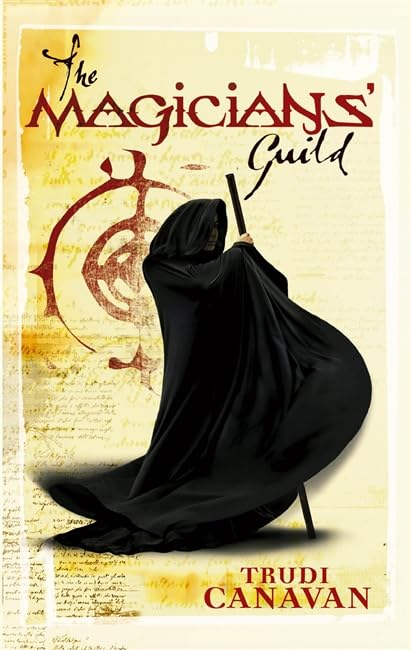
Trudi Canavan's Black Magician Trilogy (The Magicians' Guild, The Novice, The High Lord, 2001-2003) opens in the city of Imardin, where the ruling magicians' guild's annual purge of the slums goes wrong when a street girl named Sonea unknowingly shatters their protective shield with raw, untrained power. The guild must hunt her down and decide whether to control her or train her, and the trilogy follows Sonea's forced initiation into magical society and the guild's internal politics. It's Canavan's best-known trilogy and the founding story of her Kyralia setting.
- Corum
series6 books1971
part of Moorcock's Multiverse
similar byadventuroussecondary worldfantasy+1 more
- The Crescent Moon Kingdoms
series1 book2012
similar byadventuroussecondary worldsword and sorceryfantasy+1 more
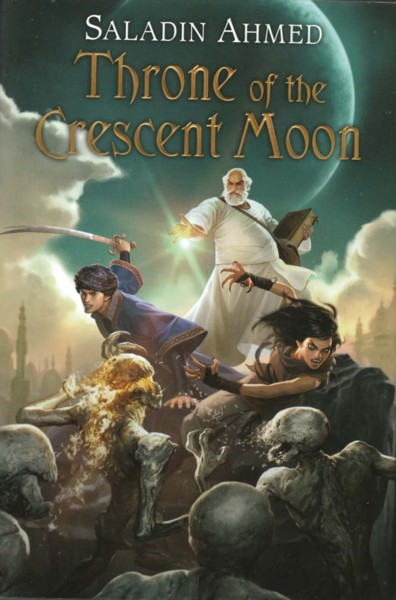
Saladin Ahmed's The Crescent Moon Kingdoms opens with Throne of the Crescent Moon, set in a realm of djenn and ghuls where a power struggle between an iron-fisted Khalif and a mysterious master thief called the Falcon Prince erupts alongside a series of brutal, supernatural murders. A handful of reluctant heroes must uncover the truth behind the killings before the kingdom tears itself apart.
- The Traitor Spy Trilogy
series3 books2010
part of Kyralia series
similar byadventuroussecondary worldfantasypolitical intrigue
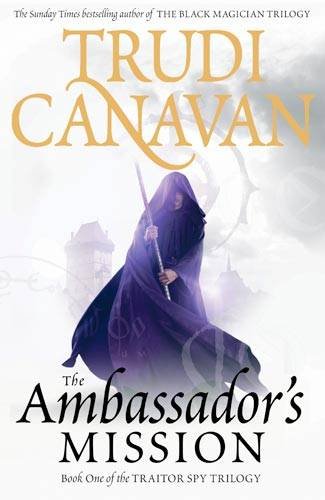
Trudi Canavan is an Australian writer of fantasy novels, best known for her best-selling fantasy trilogies The Black Magician and Age of the Five. While establishing her writing career she worked as a graphic designer. She completed her third trilogy, The Traitor Spy trilogy, in August 2012 with The Traitor Queen. Subsequently, Canavan has written a series called Millennium's Rule, with a completely new setting consisting of multiple worlds which characters can cross between. Though originally planned as a trilogy, a fourth and final book in the Millennium's Rule series was published.
- Sparhawk
universe6 books1989
Start hereElenium · Start here
similar byadventuroussecondary worldfantasy+1 more
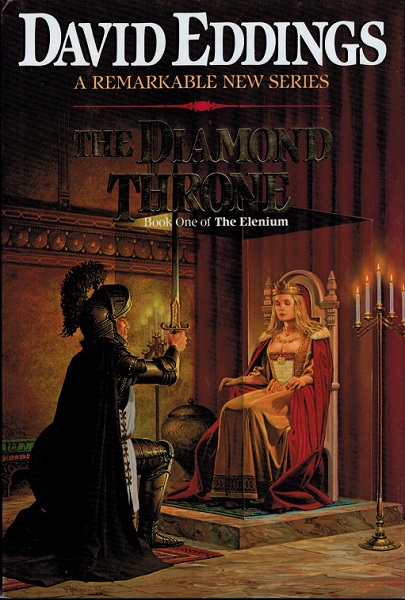
Sir Sparhawk is not a young man, and he has little patience for the pageantry his order pretends to. A Pandion Knight of the militant Elene Church, he rides home from a long exile to find his kingdom rotten with intrigue and his young queen, Ehlana, poisoned — kept alive only inside a shell of living crystal. To wake her he must find Bhelliom, a jewel with the power to remake the world or unmake it. So begins a long ride across the continent of Eosia. This is warm, character-first epic fantasy from David Eddings, told across two trilogies. The Elenium — The Diamond Throne, The Ruby Knight, The Sapphire Rose — pits Sparhawk against a corrupt church and a hungry elder god. The Tamuli — Domes of Fire, The Shining Ones, The Hidden City — carries him east into the vast Tamul Empire, where older enemies stir. Around him gathers a quarrelsome company: the Styric sorceress Sephrenia, the thief-boy Talen, the plain-spoken squire Kurik, and a small, imperious goddess who plays a set of pipes and always, somehow, gets her way. The pleasure here is the talk — grizzled knights trading dry insults between miracles and murders, a hero who solves as many problems with patience as with a sword. It never reaches for grimness or grand obscurity; it wants your good company for a long journey. Newcomers begin with The Diamond Throne and read the six in order: the Elenium stands whole on its own before the Tamuli widens the map.
- Pusadian
series9 books1951
completed
similar byadventuroussecondary worldfantasysword and sorcery
The Pusadian series is a sequence of fantasy stories by L. Sprague de Camp, begun in the early 1950s and written under the influence of Robert E. Howard's Conan stories. The series, also known as the Poseidonis series, prefigured the numerous sword & sorcery settings of the 1960s and 1970s.
- Novaria
series6 books1968
completed
similar byadventuroussecondary worldfantasypolitical intrigue+1 more
The Novarian series is a sequence of fantasy stories by L. Sprague de Camp, published between 1968 and 1989. The series contains some of de Camp's most innovative works of fantasy, featuring explorations of various political systems, an inversion of the "rags to royalty" pattern characteristic of much heroic fantasy, a satiric look at the foibles of humanity through the eyes of a demon, and a consistently wry and ironic take on conventions of the genre that plays out by taking them to their logical conclusions. Another singular feature of the series is its frequent use of folk tales integrated into the plot to painlessly convey something of the background and history of the invented world. This device obviates the need for lengthy appendices, as in The Lord of the Rings.
- Kull of Valusia
series26 books1929
completed
part of Hyborian Age
similar bysecondary worldsword and sorceryfantasy+2 more
Kull of Atlantis or Kull the Conqueror is a fictional character created by American writer Robert E. Howard. The character was more introspective than Howard's subsequent creation, Conan the Barbarian, whose first appearance was in a rewritten version of a rejected Kull story.