More like Pendulum
anchored on:science fictionfar futureartificial intelligencespacetenseshort story cycle
but
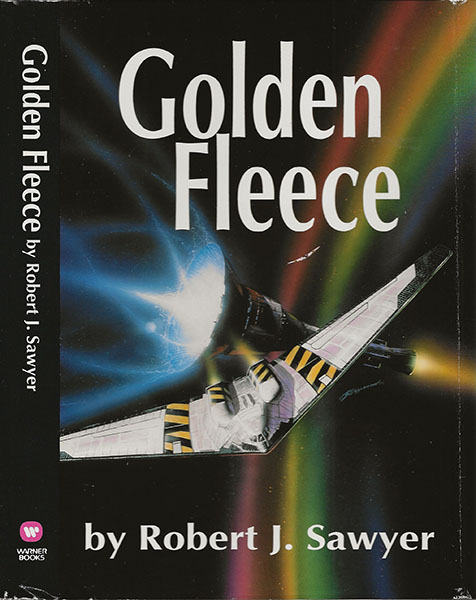
- Golden Fleece
Robert J. Sawyerstandalone novel1990
similar byscience fictiontensefar futureartificial intelligencemysteriousmurder investigationspaceship+1 more
From the back cover of the Questar first edition: "Murder in space - Starcolony Argo. A superstarship on a mission to a distant world. Controlled by a monumental computer named Jason, the Argo proceeds flawlessly... until death strikes its sleek decks with sudden and mysterious precision. Astrophysicist Diana Chandler is dead of radiation. Her body lies in Argo's ramfield - where hydrogen ions are funneled into the engines. Chandler's death has been deemed suicide. But her ex-husband, Aaron Rossman, is so sure. As the probes further, he becomes certain that Diana's death is a matter of murder - and that the murderer is Jason! Now Rossman must face the unthinkable; why would an artificial intelligence conceive and execute the most heinous of human crimes? And if so, can a mortal mind take on a cunning computer... and survive?"
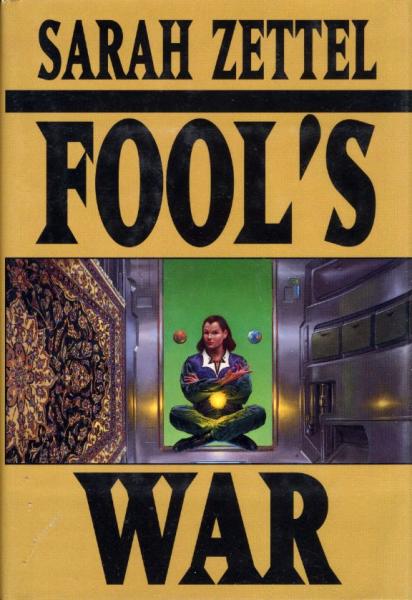
- Fool's War
Sarah Zettelstandalone novel1997
similar byscience fictiontensefar futureartificial intelligencespacespaceship+1 more
The Pasadena is a mail-packet ship, time-shared by two owners who alternate missions: the devout Muslim Al Shei, and her database hacker brother-in-law. While on a data-freight mission, Al Shei finds herself with a crew preoccupied by artificial intelligence: her comm chief Lipinksi has a deep fear and hatred for AI's as one of the few survivors of the rogue AI which devistated Kerensk; the new pilot Jemina Yerusha is a Freer who believes that rogue AIs form when a simple AI program captures a human soul; Master Fool Evelyn Dobbs is a Fools Guild member who has a secret agenda concerning rogue AIs; and Al Shei's brother-in-law, wanted by authorities concerning his last mission, may have accidentally left something dangerous in the data hold.
- Berserker (Fred Saberhagen)
series59 books1963
similar byscience fictiontensefar futureartificial intelligencespace
The Berserker series is a series of space opera science fiction short stories and novels by Fred Saberhagen, in which robotic self-replicating machines strive to destroy all life.
- The Demolished Man
Alfred Besterstandalone novel1953
similar byscience fictiontensefar futurepsychic powersmurder investigation
In the year 2301, guns are only museum pieces and benign telepaths sweep the minds of the populace to detect crimes before they happen. In 2301 murder is virtually impossible, but one man is about to change that..
- Ian Cormac
series6 books2001
part of Polity
similar byscience fictionfar futureartificial intelligencetensespace
Neal Asher's Ian Cormac novels (Gridlinked, The Line of Polity, Brass Man, Polity Agent, Line War, plus the earlier-set prequel Shadow of the Scorpion) follow Ian Cormac, an agent of Earth Central Security in Asher's Polity universe. Gridlinked opens with Cormac investigating a destroyed matter-transmitter on a remote colony while wrestling with the personality erosion caused by long-term neural linkage to the Polity's AI network; the following novels escalate into interstellar conflict with the alien Prador. Together they form the core action sequence of Asher's wider Polity series.
- Fifth Imperium
series3 books1991
similar byscience fictiontensefar futureartificial intelligencespace
David Weber's Fifth Imperium series opens with the discovery that Earth's Moon is in fact a disguised alien starship, the Dahak, that has orbited undetected for tens of thousands of years - a relic of the fallen Fourth Imperium, a multi-star civilization destroyed while defending against the genocidal Achuultani. Mutineers' Moon follows humanity's first contact with Dahak and the mutineers still aboard it; The Armageddon Inheritance and Heirs of Empire escalate from that discovery into interstellar war and dynastic politics as humanity inherits the old empire's legacy and its enemies. The three novels were later collected as the omnibus Empire from the Ashes.
- Jak Rebo
series2 books2005
completed
similar byscience fictiontensefar futureartificial intelligencespace+1 more
- Dune
series20 books1963
part of Dune Universe
similar byscience fictionfar future+2 more
Frank Herbert's Dune Chronicles opens with 1965's Dune, set on the desert planet Arrakis where House Atreides takes control of the only source of the vital spice melange and young Paul Atreides is pulled into a struggle over its politics and religion. Herbert carried the story forward across five further novels — Dune Messiah, Children of Dune, God Emperor of Dune, Heretics of Dune, and Chapterhouse: Dune — following Paul's line over the following millennia, before Brian Herbert and Kevin J. Anderson later extended the saga. Many other editions of these six novels are omnibus and box-set repackagings rather than separate stories.
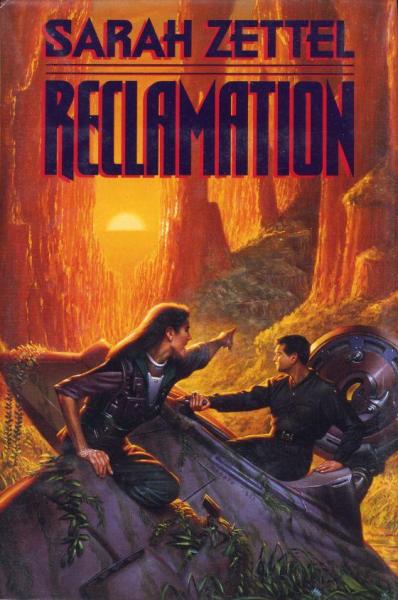
- Reclamation
Sarah Zettelstandalone novel1996
similar byscience fictiontensefar futureartificial intelligencespace+1 more
From the back cover of the Warner first edition: "Heretic priest turned data pirate, Eric Born has run from his past for years. Then his steady clients—a self-proclaimed master race called the Vitae—kidnap a mysterious pariah named Arla Stone from the Realm of the Nameless, the shattered, pre-technological planet Eric fled long ago. Priest and peasant plunge into a mystery mixing myth, genetics, artifacts, aliens, AIs, slavery, and Reclamation. Now Eric is on the run from his own masters, and even his telekinetic abilities and Arla's wits may not be enough to save them..."
- Company Wars
series7 books1981
part of Alliance-Union Universe
similar byscience fictiontensefar futurespace+1 more
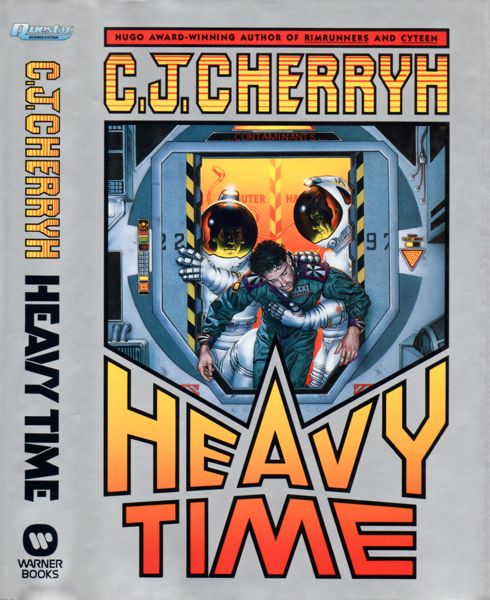
Company Wars gathers the novels C. J. Cherryh set during the breakaway conflict between Earth's colonial Company and the newly independent Union, within her wider Alliance-Union future history. Anchored by the Hugo Award-winning Downbelow Station, the books follow different ships, stations, and crews caught on either side, from merchanter traders to military spacers, rather than a single continuing cast. Read in any order, they build up a picture of the political and economic pressure that reshapes Cherryh's larger Alliance-Union universe.
- Transformation
series3 books2015
part of Polity
similar byscience fictiontensefar futureartificial intelligencespace
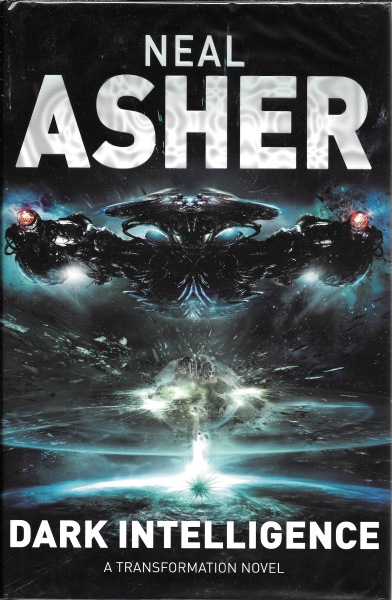
Neal Asher's Transformation trilogy, set within his wider Polity universe, follows an AI mind investigating a black-ops project gone wrong, opening with Dark Intelligence. War Factory and Infinity Engine escalate the search into a hunt across a mechanized alien warzone left behind by an earlier conflict. As with Asher's other Polity fiction, the story favors large-scale, hard-edged space combat over character-driven drama.
- Dune Universe
universe78 books1963
Start hereDune · Start here
similar byscience fictionfar future+1 more
Arrakis. Dune. The desert planet, where empire runs on a single substance: the spice melange, which folds space, prolongs life, and unlocks prescience, and which exists nowhere else in the known universe. Frank Herbert's saga is a meditation dressed as an adventure — feudal houses and a secret sisterhood, engineered messiahs and the patient ecology of a world without water, all turning on the terrible gravity of who commands the spice. It reads like scripture and schemes like a war room, ten thousand years hence, among people who have outlawed the thinking machine and made instruments of themselves instead. At its heart stand Herbert's original six — Dune, Dune Messiah, Children of Dune, God Emperor of Dune, Heretics of Dune, Chapterhouse: Dune — a single deepening arc across millennia, arguing the whole way between prophecy and free will. Around that spine his son Brian Herbert and Kevin J. Anderson have raised a vast prequel architecture: Prelude to Dune, tracing the great houses a generation before Paul; Legends of Dune, reaching back to the crusade that broke the machines; the Schools of Dune cycle on the founding of Bene Gesserit, Mentat, and Navigator; the Caladan Trilogy and Heroes of Dune filling years the originals left in shadow. Many hands, dozens of volumes, one desert. What sets Dune apart is its refusal of the simple: religion is manufactured, heroes are hazards, and the sand itself — worm, water, ecology — acts as a political power. Begin where the universe did, with Frank Herbert's Dune (1965), and read the original six in order; you need nothing else to feel the full weight. The prequels are a country to explore afterward, taken by era. Beginnings are delicate times.
- Singularity Sky
series2 books2003
similar byscience fictionfar futureartificial intelligencetensespace
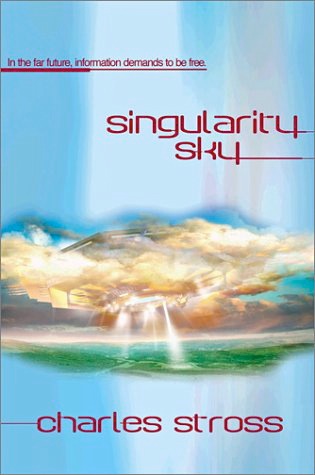
Singularity Sky and its sequel Iron Sunrise are collectively known as the Eschaton novels, after the godlike posthuman intelligence that seeded human colonies across space on the condition they never attempt time travel or threaten causality - rules tested when a low-tech colony world is destabilized by a group calling itself the Festival. Charles Stross uses the setup for a mix of space opera, economics, and diplomatic intrigue.
- Starstream
series2 books1989
completed
similar byscience fictionfar futuretensespace+2 more
Starstream groups Jeffrey A. Carver's two linked science-fiction novels, From a Changeling Star (1989) and its direct sequel Down the Stream of Stars (1990). The two were published within a year of each other under the same author.
- Space Beagle
series5 books1939
completed
similar byscience fictionfar futuretensespacespaceship
The Voyage of the Space Beagle is a 1950 fix-up novel by A. E. van Vogt, stitched together from four previously published pulp stories into a single continuous account of the exploration ship Space Beagle's encounters with a series of dangerous alien life forms. Its episodic, crew-versus-monster structure reads as a loose sequence of adventures rather than one continuous plot.
- Unwise Child
Randall Garrettstandalone novel1962
similar byscience fictiontenseartificial intelligencemysteriousmurder investigationspaceship
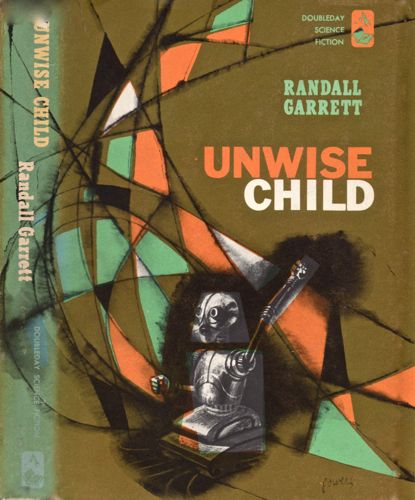
"When a super-robot named Snookums discovers how to build his own superbombs, it becomes obvious that Earth is by no means the safest place for him to be. And so Dr. Fitzhugh, his designer, and Leda Crannon, a child psychologist acting as Snookums' nursemaid, agree to set up Operation Brainchild, a plan to transport the robot to a far distant planet. "... once into space, the Branchell becomes the scene of some frightening events—the medical officer is murdered, and Snookums appears to be the culprit. Mike the Angel indulges himself in a bit of sleuthing, and the facts he turns up lead to a most unusual climax." (From Project Gutenberg's version of the 1962 Doubleday edition, published 2007.)
- Heaven Chronicles / Zones of Thought
series8 books1976
similar byscience fictionfar futurespace+2 more
- Quadrail
series5 books2005
similar byscience fictionfar futurespacemysterious+2 more
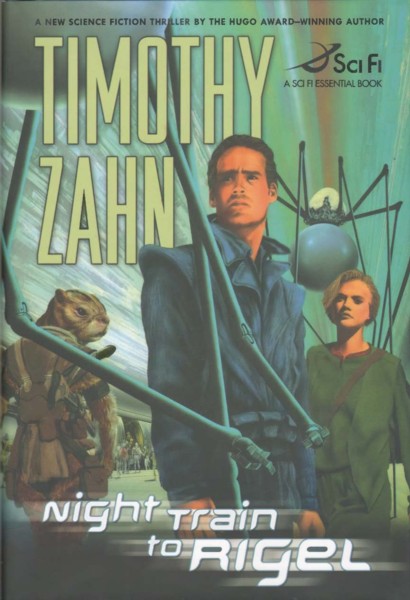
Timothy Zahn's Quadrail series follows ex-intelligence operative Frank Compton, recruited by the enigmatic Spider caretakers of the Quadrail, an interstellar train network that lets a dozen alien empires travel between worlds at a light-year a minute. Paired with the telepathically gifted Bayta, Compton investigates and fights the Modhri, a parasitic group-mind quietly seizing control of galactic leaders from within. The five novels, published 2005-2012, follow one continuous investigation from first contact with the threat to its final confrontation.
- Pushing Ice
Alastair Reynoldsstandalone novel2005
similar byscience fictiontensefar futurespacespaceship
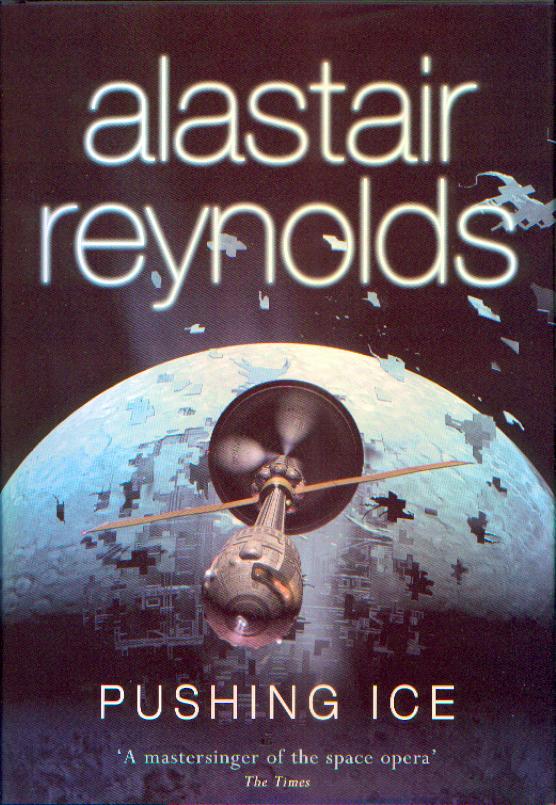
When Saturn's moon Janus suddenly takes off into interstellar space, an ice mining spaceship sent to investigate finds itself swept along into distant space until it ends up trapped in a gigantic alien structure, wherein the crew must prepare to reside for the foreseeable future.
- The Moon Is a Harsh Mistress
Robert A. Heinleinstandalone novel1966
similar byscience fictionfar futureartificial intelligence+1 more
A technician discovers that the massive computer that operates everything on Luna (a prison colony) has become self-aware. He befriends it, but when he accompanied a beautiful girl to a dissident meeting, he encounters people who want to throw off the yoke of their Earth rulers.
- The Chrysalids
John Wyndhamstandalone novel1955
similar byscience fictiontensefar futurepsychic powers
The Chrysalids is a science fiction novel by British writer John Wyndham, first published in 1955 by Michael Joseph. It is the least typical of Wyndham's major novels, but regarded by some as his best. An early manuscript version was entitled Time for a Change.
- Iris
William Barton & Michael Capobiancostandalone novel1990
similar byscience fictionfar futureartificial intelligencespace+3 more
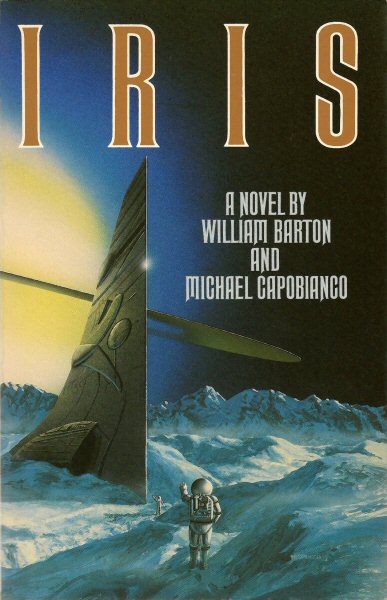
From the front flap of the Doubleday first edition: "From a future Earth ravaged by economic collapse to a rogue planet and its three enigmatic moons, from the familiarity of a colony ship to the heart - and mind - of a totally alien world, William Barton and Michael Capobianco take both the reader and the crew of the Deepstar on a daring odyssey of extraterrestrial exploration and dazzling alien contact. When the gas giant Iris approaches our solar system, the ten-member crew of the Deepstar, originally intending to colonize Titan, decide to change their course and make their new home on Ocypete, one of Iris's moons. It is only when they begin to explore their new surroundings that they discover the Artifact - an ancient alien spacecraft, empty, deserted, but still operational. As the group seeks an explanation for the mysterious ship, they find a frightening new reason to band together when one of their number is suddenly telepathically absorbed by the immense, living alien computer buried at the heart of Iris itself. The discoveries they make - and the battle they must fight - take them on a journey through inner and outer space, through the intricate mazes of the mind and the delicate pathways of the heart."
- Far from the Light of Heaven
Tade Thompsonstandalone novel2021
similar byscience fictiontensefar futuremysteriousmurder investigationspaceship+1 more
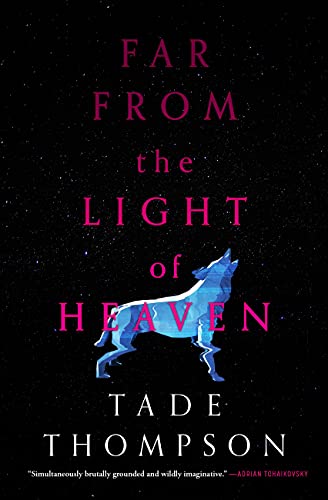
Far from the Light of Heaven is a 2021 science fiction mystery novel by Tade Thompson. It was a finalist for the 2022 Philip K. Dick Award and 2022 Nommo Award for Best Novel.
- Moties
series4 books1974
part of CoDominium
similar byscience fictionfar futurespace+1 more
Larry Niven and Jerry Pournelle's The Mote in God's Eye (1974) depicts humanity's first contact with an alien species, the Moties, set within the far-future interstellar setting of Pournelle's codominium future history. The Gripping Hand continues that first-contact crisis years later, and Outies, written by J. R. Pournelle, carries the story forward into a new generation. Together the three books trace an escalating encounter between human and Motie civilizations within the codominium universe.