Loreful
HomeDiscover
Search series, authors…⌘K
Loreful

Reading orders for SF/F series and shared universes — with your place kept in every one.

Explore

UniversesSeriesWorksAuthorsAtlas

Help

FAQAboutSite map

Account & legal

Sign inCreate accountPrivacyTerms

Data

Built on ISFDB, Wikipedia, Wikidata and Open Library. Curated reading orders carry their reasoning on the page; the rest follow publication order. Data sources & licenses

© Loreful · data: ISFDB · CC BY

More like Peter Pan

anchored on:fantasychildrenotherworldfaewhimsicalpirates+5 more

but

Mood

The mood the book leaves you in.

  • The reading experience is propelled by journeys, exploration, and physical risk; excitement and forward momentum dominate over dread or introspection.
  • Joy and loss are deliberately mixed; the resolution grants characters something real while taking something else away, leaving warmth and sorrow together.
  • The book demands work from the reader — dense prose, difficult structure, unfamiliar ideas, or morally uncomfortable material — as part of its intended effect.
  • Grim events, cruelty, or despair dominate the atmosphere, and the book does not soften them with comfort or comic relief.
  • The atmosphere is quietly unsettling — wrongness, unease, and the uncanny pervade the book without necessarily escalating into overt horror.
  • The book is built to move the reader; character feeling is foregrounded and major scenes aim at a strong emotional response.
  • Humor is a primary aim and the prose plays for laughs — comic situations, wit, or dialogue produce sustained comedy, not occasional levity.
  • The book insists that things can improve; effort and decency are shown to matter, and the arc bends toward better outcomes even through hardship.
  • The book teaches as it goes — real facts, history, science, or craft are conveyed in enough depth that learning is part of the reading experience.
  • The book is designed to uplift and motivate, presenting perseverance or achievement in a way that invites the reader to aspire or act.
  • The overall register is cheerful and easygoing; stakes are kept gentle and the book avoids dwelling on pain or dread.
  • Withheld information drives the experience; the book sustains enigmas and secrets the reader wants resolved, whatever its genre.
  • The book is contemplative and inward-looking, giving more weight to thought, memory, and meaning than to external events.
  • The book works as comfort reading — low tension, a soothing pace, and an atmosphere the reader can unwind in.
  • Grief, loss, or melancholy set the dominant register, and the book lets sorrow stand rather than resolving it into comfort.
  • Sustained suspense is the point; the book keeps the reader braced for what happens next through danger, pressure, or impending revelation.
  • Playful invention and charm define the register — fanciful conceits, light absurdity, and a narration that delights in its own oddity.

About

What the story runs on.

  • Stories in which extraterrestrial beings are central — as characters, cultures, or the object of the plot.
  • Stories about venturing into space to explore — survey missions, astronauts, and the frontier of the unknown beyond Earth.
  • Stories structured as a quest — a journey undertaken to find, deliver, or destroy something of great import.
  • Stories in which staying alive against nature, catastrophe, or scarcity is the central problem.
  • Stories of lovers kept apart by law, family, faith, or station, where the obstacle to love is the plot.
  • Stories in which a friendship — its making, testing, or loss — is the emotional center.
  • Stories of growing up — a young protagonist crossing from childhood into adult knowledge and responsibility.
  • Stories about who a character truly is — self-discovery, doubled lives, and the search for a self.
  • Stories in which a buried family truth — hidden parentage, crimes, or shames — surfaces and reorders the present.
  • Stories driven by maneuvering for power — factions, conspiracies, and statecraft conducted in shadow.
  • Stories in which war itself is the subject — combat, occupation, and what warfare does to soldiers and civilians.
  • Stories organized around investigating a killing — the case, the clues, and the pursuit of the killer, in any genre's clothing.

Shelf

Where it sits in the library.

    • Fiction built on magic or other supernatural elements that have no scientific explanation.
    • Secondary-world fantasy at large scale, where the fate of nations or the world turns on the protagonists' struggle.
    • Fantasy set in a recognizably modern city or contemporary world where the supernatural intrudes on everyday life.
    • Fantasy that blends in horror's atmosphere and imagery, keeping a fantastical frame around grim or frightening material.
    • Action-driven fantasy following warriors or rogues with personal stakes against sorcerous threats, rather than world-spanning conflicts.
    • Fantasy set in a real historical period or a close analogue of one, with magic woven into the era.
    • Fantasy in which protagonists cross from the ordinary world into another world through a portal or similar passage.
    • Fiction that retells or reworks a traditional fairy tale in a new form or setting.
    • Fantasy drawing directly on myths, legends, and folklore, retelling them or building on their figures and logic.
    • Fantasy of ghosts, vampires, shapeshifters, psychics, and similar phenomena, usually set in an otherwise ordinary world.
    • Fiction mixing science-fictional trappings with overtly magical or impossible elements in one setting.
    • Low-stakes fantasy emphasizing comfort, community, and everyday pleasures over conflict and peril.
    • Speculative fiction of pervasive moral ambiguity, violence, and cynicism that rejects heroic conventions — fantasy and SF alike.
      • Fiction that extrapolates from science and technology — future societies, space travel, or speculative inventions — within at least nominally natural laws.
      • Science fiction of interstellar scope — starships, galactic polities, and adventure across star systems.
      • Science fiction committed to scientific rigor, where technical plausibility constrains the story.
      • Science fiction centered on armed forces and warfare, told largely from a military point of view.
      • Science fiction of networked, corporate-dominated near futures, pairing high technology with social decay.
      • Science fiction styled on nineteenth-century steam-powered technology, often in a Victorian or pseudo-Victorian setting.
      • Fiction depicting an oppressive or catastrophic society, presented as a warning.
      • Fiction set after civilization's collapse, following survivors in the ruins of the old world.
      • Fiction in which characters move between past and future, and the mechanics or consequences of that travel drive the plot.
      • Fiction exploring a world where a historical event went differently and history diverged from ours.
      • Science fiction about humanity's first encounter and communication with an alien intelligence.
      • Science fiction in which extraterrestrial forces attack or occupy Earth and humanity resists.
      • Fiction whose primary aim is to frighten or unsettle the reader through dread, menace, or the monstrous.
      • Horror of vast, indifferent, incomprehensible entities before which humanity is insignificant, in the Lovecraft tradition.
      • Horror of decaying houses, buried family secrets, and oppressive atmosphere in the Gothic literary tradition.
      • Horror centered on hauntings and the returning dead.
      • Horror located in the mind — paranoia, obsession, and unreliable perception rather than external monsters.
      • Horror built around the reanimated dead and survival amid their outbreaks.
      • Horror defined by explicit, transgressive gore that refuses to cut away from violence.
      • Speculative fiction of the strange and uncanny that resists both natural explanation and standard genre categories.
      • Fiction organized around solving a crime or puzzle, typically following an investigator toward the identification of a culprit.
      • A puzzle-first mystery that lays out clues so the culprit's identity can be deduced before the reveal.
      • Crime fiction of moral ambiguity, fatalism, and hard-edged style, set among the corrupt and the doomed.
      • A mystery following the realistic routines of police work — forensics, interviews, and case-building.
      • A gentle mystery with an amateur sleuth, a small community, and violence kept off the page.
      • A mystery set in a past era, where the investigation works within that period's methods and society.
      • Fast-paced fiction driven by imminent danger, pursuit, or high-stakes conspiracy, built to sustain tension.
      • A thriller of espionage — agents, tradecraft, and intelligence services in conflict.
      • A thriller centered on lawyers and the courtroom, where litigation carries the suspense.
      • A thriller driven by detailed contemporary or near-future technology, often military or scientific.
      • A thriller whose tension comes from mental states and manipulation between characters rather than external action.
      • Fiction whose central plot is a romantic relationship and its development toward an emotionally satisfying resolution.
      • Romance in which one or both partners are supernatural beings, blending fantasy elements into the love story.
      • A fantasy-romance hybrid in which the romantic arc and the fantasy plot carry equal weight.
      • Romance set in a past era, with courtship shaped by the period's society and manners.
      • Romance set in the present day, without supernatural or historical elements.
      • Fiction set in a real past period, where the historical setting materially shapes characters and events.
        • General and literary fiction emphasizing prose style, character interiority, or formal ambition over genre plot conventions.
        • Fiction in a realistic world where magical events occur and are treated as ordinary, in the tradition of Latin American literature.
        • Fiction that ridicules people, institutions, or society in order to criticize them.
        • Fiction of dreamlike, irrational imagery and logic that breaks from realistic representation.
        • Fiction that plays with narrative convention through metafiction, fragmentation, and self-reference.
        • Fiction propelled by journeys, exploration, and physical peril, where action and survival carry the plot.
        • Adventure fiction of ships and seafaring — naval engagements, voyages, and life at sea.
        • Fiction of the American frontier West — gunmen, ranchers, and lawmen, typically in the late nineteenth century.
        • Fiction centered on soldiers, campaigns, and the experience of warfare, historical or imagined.
          • Fiction written primarily to amuse, using comedic situations, wit, or parody as its organizing principle.
            • Multi-generational fiction following a family or dynasty across decades, with inheritance and kinship as the through-line.
              • Fiction whose world runs on explicit game mechanics — levels, stats, and skills that characters can see and exploit.
                • Fiction about costumed or superpowered heroes and their conflicts with comparable villains.

                Practical

                How long a commitment, whether it stands alone, and whether it has finished.

                Tap a chip to ask for it · tap again to rule it out · once more to clear. Numbers show what would be left.

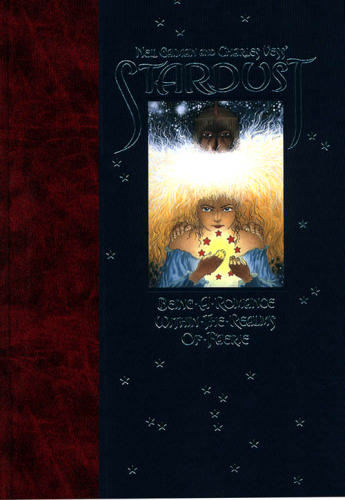
                • Cover of Stardust
                  Stardust

                  Neil Gaiman · standalone novel · 1998

                  similar byfantasyadventurouswhimsicalfaecoming of agefairy tale retelling+1 more

                  Stardust is a 1999 fantasy novel by British writer Neil Gaiman, usually published with illustrations by Charles Vess. Stardust has a different tone and style from most of Gaiman's prose fiction, being consciously written in the tradition of pre-Tolkien English fantasy, following in the footsteps of authors such as Lord Dunsany and Hope Mirrlees. It is concerned with the adventures of a young man from the village of Wall, which borders the magical land of Faerie.

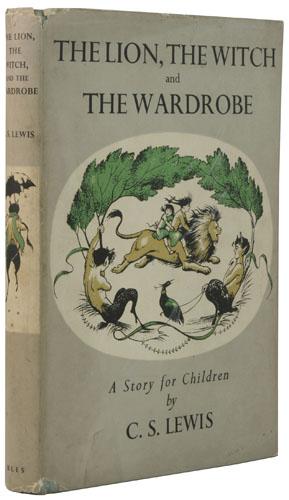
                • Cover of Narnia
                  Narnia

                  series · 26 books · 1950

                  part of Narnia Universe

                  similar byadventurousfantasyportal fantasycoming of agechildren+1 more

                  The Chronicles of Narnia is a series of seven portal fantasy novels by British author C. S. Lewis. Illustrated by Pauline Baynes and originally published between 1950 and 1956, the series is set in the fictional realm of Narnia, a fantasy world of magic, mythical beasts, and talking animals. It narrates the adventures of various children who play central roles in the unfolding history of the Narnian world. Except in The Horse and His Boy, the protagonists are all children from the real world who are magically transported to Narnia, where they are sometimes called upon by the lion Aslan to protect Narnia from evil. The books span the entire history of Narnia, from its creation in The Magician's Nephew to its eventual destruction in The Last Battle.

                • Cover of The Phantom Tollbooth
                  The Phantom Tollbooth

                  Norton Juster · standalone novel · 1961

                  similar bywhimsicalfantasyportal fantasycoming of ageotherworldchildren+1 more

                  A journey through a land where Milo learns the importance of words and numbers provides a cure for his boredom.

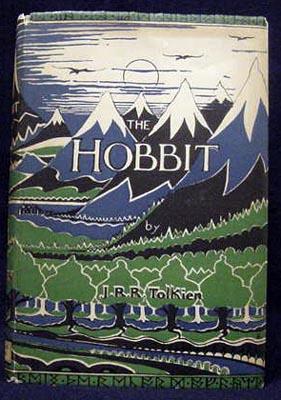
                • Cover of The Hobbit
                  The Hobbit

                  series · 2 books · 1937

                  completed

                  part of Tolkien's legendarium

                  similar byfantasyadventurouswhimsicalfairy tale retelling+2 more

                  The Hobbit (1937) is J. R. R. Tolkien's children's fantasy novel following the reluctant burglar Bilbo Baggins, who joins a company of dwarves and the wizard Gandalf on a journey to reclaim treasure guarded by the dragon Smaug. It stands as a complete adventure on its own, but shares its setting with the rest of Tolkien's legendarium and leads into the events of The Lord of the Rings.

                • Cover of Mopsa the Fairy
                  Mopsa the Fairy

                  Jean Ingelow · standalone novel · 1869

                  similar byfantasyadventurouswhimsicalfaeportal fantasycoming of age

                  "The story tells of a young boy, Jack, who discovers a nest of Fairies and endeavours to return them to Faerie. The journey is via a river – clearly symbolic of the River of life – and en route Jack has many adventures. The fairies grow at a more rapid rate than humankind and, halfway through the novel, Mopsa, who has developed into the Fairy Queen, becomes a dominant character, taking control over Jack's life." "arguably the first feminist Bildungsroman" "an Allegory of lost innocence" --SFE: Encyclopedia of Fantasy (1997), biographical entry by MA (Mike Ashley?)

                • Cover of The Magic City
                  The Magic City

                  E. Nesbit · standalone novel · 1910

                  similar byfantasyadventurouswhimsicalportal fantasyotherworldbritish isles+1 more

                  Publisher's description: An extremely unhappy 10-year-old magically escapes into a city he has built out of books, chessmen, candlesticks, and other household items.

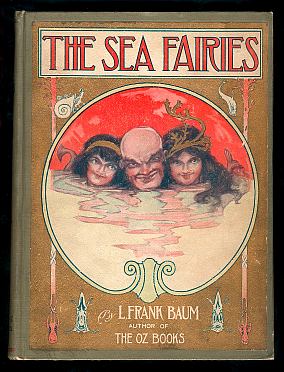
                • Cover of Trot and Cap'n Bill
                  Trot and Cap'n Bill

                  series · 4 books · 1911

                  similar bywhimsicalfantasychildren+4 more

                  L. Frank Baum's Trot and Cap'n Bill duology (The Sea Fairies, 1911; Sky Island, 1912) follows Californian girl Trot and her one-legged sailor companion Cap'n Bill through undersea fairy kingdoms and then to a fantastical island divided between light and dark peoples. Baum conceived it as a rival series to his own Oz books, but both characters were eventually folded into Oz continuity and reappear as regulars in later Oz novels.

                • Cover of Kathasaritsagara (Salman Rushdie)
                  Kathasaritsagara (Salman Rushdie)

                  series · 2 books · 1990

                  similar bywhimsicalfantasyadventurouscoming of age+3 more

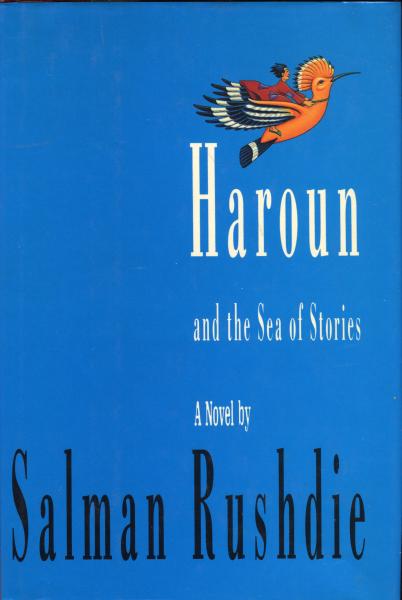
                  Salman Rushdie's Haroun and the Sea of Stories follows a boy who sets out to restore his storyteller father's lost gift by traveling to the source of all stories, a fable Rushdie wrote for his own son while in hiding after the fatwa against him. Its sequel, Luka and the Fire of Life, written more than a decade later for his second son, sends Haroun's younger brother on a parallel quest to save their father's life.

                • Cover of Fairyland
                  Fairyland

                  series · 7 books · 2009

                  similar bywhimsicalfantasyadventurousportal fantasycoming of age+1 more

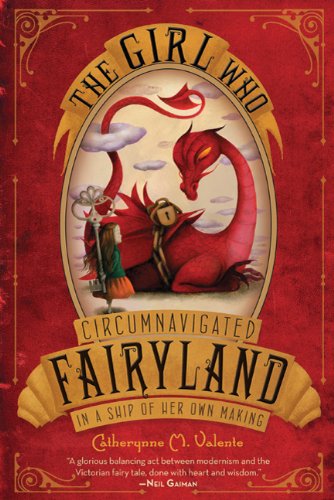
                  Fairyland is a series of fantasy novels by Catherynne M. Valente. The novels follow a 12-year-old girl named September as she is spirited away from her average life to Fairyland.

                • Cover of Un Lun Dun
                  Un Lun Dun

                  China Miéville · standalone novel · 2007

                  similar byfantasyadventurouswhimsicalportal fantasycoming of ageotherworldbritish isles

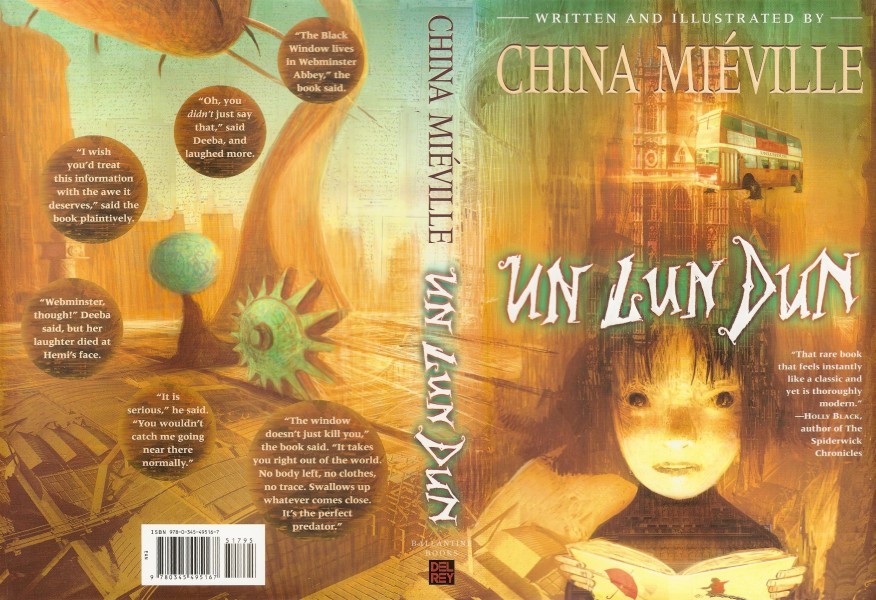
                  Un Lun Dun is a young adult fantasy novel by China Miéville, released in 2007. The title is derived from 'UnLondon,' the name of the alternate realm where the book is set. It also contains illustrations by Miéville. It was first released in January 2007. The novel also won the 2008 Locus Award for Best Young Adult Book.

                • Cover of Abarat
                  Abarat

                  series · 3 books · 2002

                  similar byfantasyadventurousportal fantasycoming of ageislands+2 more

                  The Books of Abarat are a series of young adult fantasy novels written and illustrated by English writer and visual artist Clive Barker. The series is intended to contain five books, three of which have been published from 2002 to 2011. The series takes place on the Abarat, a fictional archipelago consisting of twenty-five islands, one for each hour of the day.

                • Cover of The Neverending Story
                  The Neverending Story

                  Michael Ende · standalone novel · 1979

                  similar byfantasyadventurouswhimsicalportal fantasycoming of age+1 more

                  A boy enters a fantasy world through the pages of an old book, and he sets about trying to save its empress to keep the enchantment alive.

                • Cover of Poison
                  Poison

                  Chris Wooding · standalone novel · 2003

                  similar byfantasyadventurousfaeportal fantasycoming of agefairy tale retelling

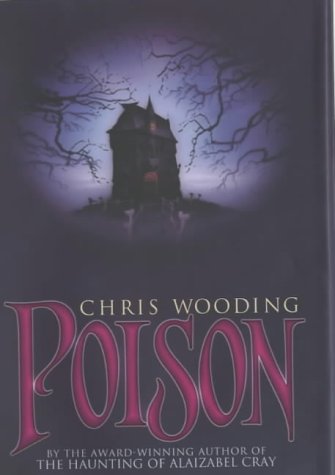
                  Poison (2003) is a young adult English-language fantasy novel written by Chris Wooding, published in 2003. It is a highly metafictional novel which follows the adventures of a young (sixteen-year-old) female protagonist named Poison as she attempts to rescue her sister from the Phaerie Realm. It contains many intertextual references particularly to mythology, fairy tales and secondary world fantasy characteristics.

                • Cover of Howl's Castle
                  Howl's Castle

                  series · 3 books · 1986

                  completed

                  similar byfantasywhimsicaladventurous+2 more

                  Howl's Moving Castle (1986) follows Sophie Hatter, cursed by the Witch of the Waste into an old woman's body, who takes refuge in the wandering castle of the wizard Howl and strikes an uneasy bargain with his fire demon Calcifer while trying to break the spell. Diana Wynne Jones returned to the same magical kingdom in Castle in the Air (1990), following a new lead character, Abdullah, with Sophie and Howl appearing in supporting roles, and again in House of Many Ways (2008).

                • Cover of Five Children Universe
                  Five Children Universe

                  series · 27 books · 1902

                  completed

                  similar byfantasyearly 20th centurybritish isles+4 more

                  Two separate modern continuations of E. Nesbit's Psammead stories were written decades apart by different authors: Helen Cresswell's The Return of the Psammead (1992) brings the wish-granting sand fairy back for a new set of children, while Kate Saunders's Five Children on the Western Front (2014) follows the now-grown Lamb and his siblings as the First World War arrives, in a more somber sequel to Nesbit's original trilogy. Neither book is by Nesbit herself, and the two have no direct connection to each other beyond both drawing on her creation. Later writers have kept returning to Nesbit's premise long after her own trilogy ended.

                • Cover of The Enchanted Island of Yew: Whereon Prince Marvel Encountered the High Ki of Twi and Other Surprising People
                  The Enchanted Island of Yew: Whereon Prince Marvel Encountered the High Ki of Twi and Other Surprising People

                  L. Frank Baum · standalone novel · 1903

                  similar byfantasyadventurouswhimsicalfaeotherworld

                  A fairy is transformed into a human prince for one year while he and his friends have many adventures.

                • Cover of The Admiral's Caravan
                  The Admiral's Caravan

                  Charles E. Carryl · standalone novel · 1892

                  similar bywhimsicalfantasyadventurousportal fantasychildrenotherworld

                  The Admiral's Caravan is a novel by Charles E. Carryl, written in 1891 and published by the Century Company of New York in 1892. It is one of many literary "imitations" inspired by Lewis Carroll's two books, Alice's Adventures in Wonderland (1865) and Through the Looking-Glass (1871). It appeared in serialized form in the children's periodical St Nicholas beginning in 1891.

                • Cover of The Princess and the Goblin
                  The Princess and the Goblin

                  series · 2 books · 1871

                  completed

                  similar byfantasyadventurouscoming of age

                • Cover of Jim Knopf
                  Jim Knopf

                  series · 1 book · 1960

                  similar byfantasyadventurouswhimsicalcoming of ageislands+1 more

                • Cover of Nevermoor / Morrigan Crow
                  Nevermoor / Morrigan Crow

                  series · 4 books · 2017

                  similar bywhimsicalfantasyadventurouscoming of age+1 more

                  The Nevermoor Series is a fantasy children's book series written by Australian author Jessica Townsend. The series centres around Morrigan Crow, a cursed child living in the Wintersea Republic fated to die on the last day of the year, Eventide. When it comes time for her to die on Eventide day, she is saved by Jupiter North and taken to the city of Nevermoor, where Jupiter is a hotel owner and member of the Wundrous Society, a prestigious institution where each member has a "knack", a supernatural ability that allows them to be better than average.

                • Cover of The Scarecrow and His Servant
                  The Scarecrow and His Servant

                  Philip Pullman · standalone novel · 2004

                  similar bywhimsicalfantasyadventurous+2 more

                  The Scarecrow and his Servant is a 2004 children's novel by Philip Pullman. It tells the story of a scarecrow who comes alive after being struck by lightning and sets out on a quest with Jack, an orphan he hires as his servant. As he goes on his quest he tries to reach Spring Valley to claim it for his own. He has many troubles along the way such as a bird who ate his brain and being on a deserted island.

                • Cover of Furthermore Universe
                  Furthermore Universe

                  series · 2 books · 2016

                  similar byfantasywhimsicalportal fantasycoming of age+2 more

                • Cover of Faerie Wars
                  Faerie Wars

                  series · 5 books · 2003

                  completed

                  similar byfantasyadventurousfaeportal fantasy

                  The Faerie Wars Chronicles is a fantasy action young adult novel series written by James Herbert Brennan. The first book in the series, Faerie Wars was published in the United Kingdom in February 2003 by Bloomsbury Publishing. As of 2011, there are five books in the ongoing series.

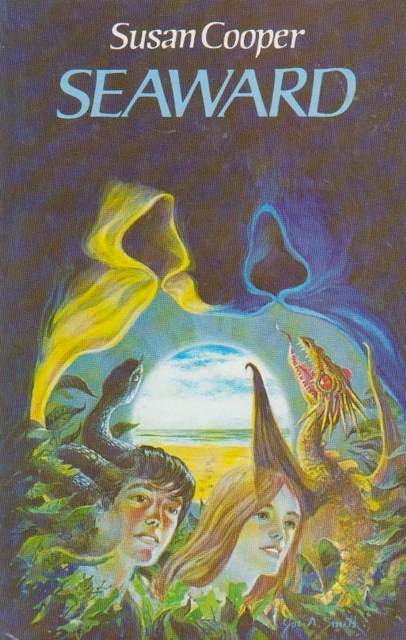
                • Cover of Seaward
                  Seaward

                  Susan Cooper · standalone novel · 1983

                  similar byfantasyadventurousportal fantasycoming of ageotherworld

                  His name is West. Her name is Cally. They speak different languages and come from different countries thousands of miles apart, but they do not know that. What they do know are the tragedies that took their parents, then wrenched the two of them out of reality, into a strange and perilous world through which they must travel together, knowing only that they must reach the sea. Together West and Cally embark upon a strange and sometimes terrifying quest, learning to survive and to love and, at last, the real secret of their journey.