More like Rally Point
anchored on:fantasywarsecondary worldtensemilitary science fictionsurvival+1 more
but
- A Song of Ice and Fire
series14 books1996
part of World of Ice and Fire
similar bysecondary worldwarfantasydark+1 more
A Song of Ice and Fire is a series of high fantasy novels by the American author George R. R. Martin. Martin began writing the first volume, A Game of Thrones, in 1991, and published it in 1996. Martin, who originally envisioned the series as a trilogy, has released five out of seven planned volumes. The most recent entry in the series, A Dance with Dragons, was published in 2011. Since then, Martin has been working on the sixth novel, titled The Winds of Winter. A seventh novel, A Dream of Spring, is planned to follow.
- The Lost Regiment
series9 books1990
similar bywarsurvivalmilitary science fictionsecondary worldtenseadventurous
William R. Forstchen's Lost Regiment series begins with Rally Cry, in which a Civil War Union regiment is swept onto a distant world where humans transplanted from many eras and cultures are farmed as food by an alien race. Arriving with nineteenth-century gunpowder weapons and organized tactics, the regiment's survivors fight to build a defensible nation and turn the war back on their captors, a conflict that escalates across nine novels of technology, politics, and generations.
- The Codex Alera
series6 books2004
similar bysecondary worldwarfantasyadventuroustense
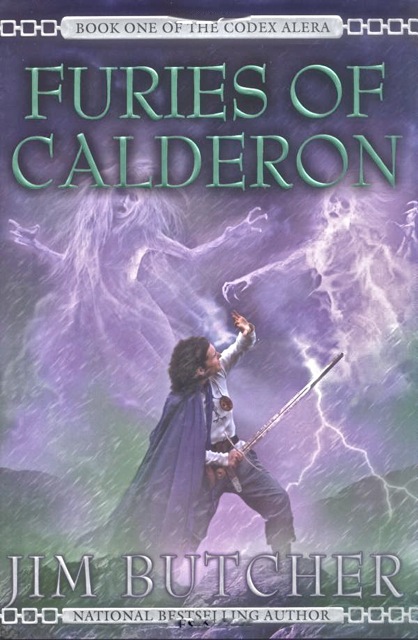
Furies of Calderon opens The Codex Alera in a Rome-flavored fantasy world where nearly everyone commands elemental spirits called furies, except Tavi, a teenager with none, whose resourcefulness becomes the series' recurring answer to raw magical power. Jim Butcher's six-book series, continuing through Academ's Fury, Cursor's Fury, Captain's Fury, Princeps' Fury, and First Lord's Fury, builds from small-scale political maneuvering into full-scale war.
- The Poppy War
series4 books2018
similar bywarsecondary worldtensefantasydark
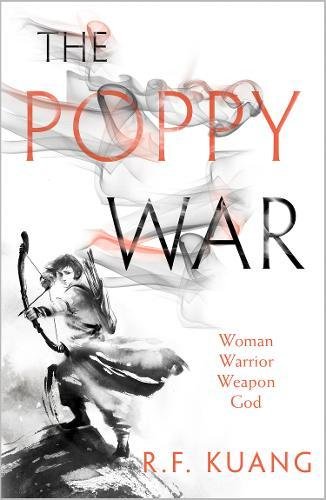
The Poppy War follows Rin, a war orphan who tests into an elite military academy and discovers a talent for shamanic power tied to a pantheon of vengeful gods. R. F. Kuang's trilogy reworks the Second Sino-Japanese War and its atrocities into an epic fantasy that grows darker and more morally compromised as it goes. It's told across The Poppy War, The Dragon Republic, and The Burning God.
- Malazan Book of the Fallen
series20 books1999
part of Malazan
similar bysecondary worldwarfantasydark+2 more
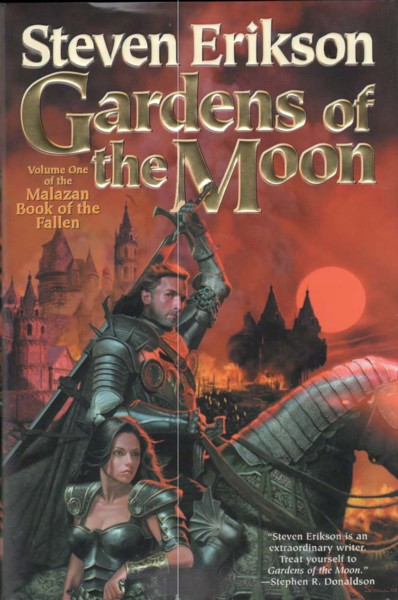
The Malazan Book of the Fallen is a series of epic fantasy novels written by the Canadian author Steven Erikson. The series, published by Bantam Books in the U.K. and Tor Books in the U.S., consists of ten volumes, beginning with Gardens of the Moon (1999) and concluding with The Crippled God (2011). Erikson's series presents the narratives of a large cast of characters spanning thousands of years across multiple continents.
- Guardians of Ga'hoole
series17 books2003
similar bysecondary worldfantasywaradventurous
Guardians of Ga'Hoole is a fantasy book series written by Kathryn Lasky and published by Scholastic. The series contains a total of 16 books, and although it was originally intended to conclude with the 2008 publication of The War of the Ember, it has a prequel, The Rise of a Legend, published in 2013. Apart from the main series, there are a few more books and spin-offs set in the same universe. The first three books of the series were adapted into the 2010 animated 3D film Legend of the Guardians: The Owls of Ga'Hoole, directed by Zack Snyder.
- The Hobbit
series2 books1937
completed
part of Tolkien's legendarium
similar bysecondary worldfantasyadventurous
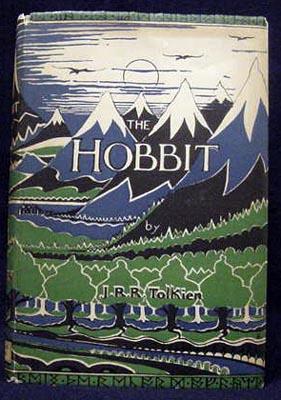
The Hobbit (1937) is J. R. R. Tolkien's children's fantasy novel following the reluctant burglar Bilbo Baggins, who joins a company of dwarves and the wizard Gandalf on a journey to reclaim treasure guarded by the dragon Smaug. It stands as a complete adventure on its own, but shares its setting with the rest of Tolkien's legendarium and leads into the events of The Lord of the Rings.
- Almuric
series1 book1964
similar bysecondary worldfantasysurvivaladventurous
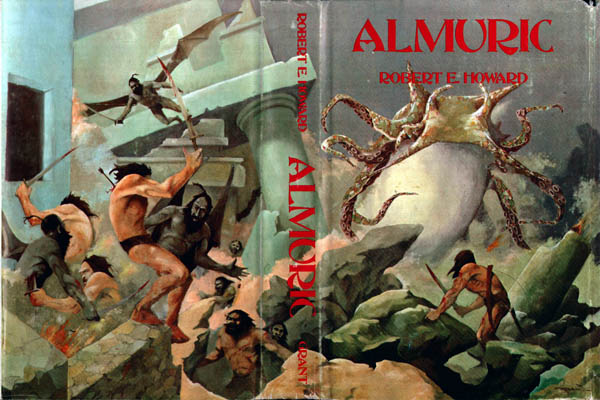
Published posthumously in 1964, Robert E. Howard's Almuric is a single planetary-romance novel rather than an ongoing series: Earthman Esau Cairn is transported to the savage world of Almuric, where he fights beast-men and wins the love of Altha, in a story indebted to Edgar Rice Burroughs' Barsoom books.
- The Questing Road
Lyn McConchiestandalone novel2010
similar bysecondary worldfantasysurvivalwaradventurous+1 more
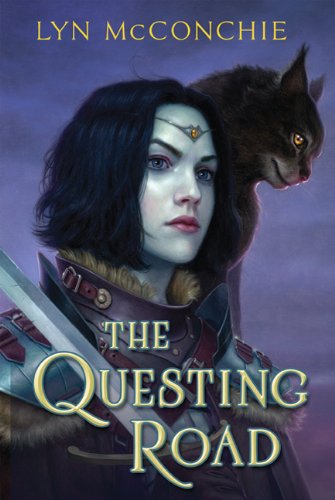
Acolytes to a dark god have crossed the gulf between worlds to abduct an innocent tariling, not even a year old, dooming it to become a sacrifice in a ceremony that will unleash an army of supernatural creatures upon an unsuspecting kingdom. Yoros and Kyrryl know that this is no mere animal, but to its own (felinoid) kind is a cherished child. With their warrior niece, Ashara, they follow its trail through a dimensional gate, little realizing their simple quest will become a desperate fight for survival in the middle of an all-out war. They can't know of the atrocities that decimated the plains tribes of the strange world beyond the gate. Nor can they know of the massive revenge that threatens an entire civilization. If they are to save themselves and their lost tariling, they must follow its magic through the unknown terrors of a bizarre world of alien creatures and mortal perils beyond their wildest imagining.
- The Acacia Trilogy
series3 books2007
similar bywarsecondary worldfantasydark+2 more
Acacia: The War with the Mein begins with an empire's ruling Akaran children fleeing after assassins from an exiled people kill their father, scattering the heirs into a wider world whose comfortable myths — and the drug trade and slavery underwriting the empire's peace — turn out to be far uglier than they were raised to believe. David Anthony Durham's trilogy, continuing through The Other Lands and The Sacred Band, follows the siblings as each confronts a different piece of the empire's hidden machinery.
- Redwall
series22 books1986
completed
part of Redwall Universe
similar bysecondary worldfantasyadventurous+1 more
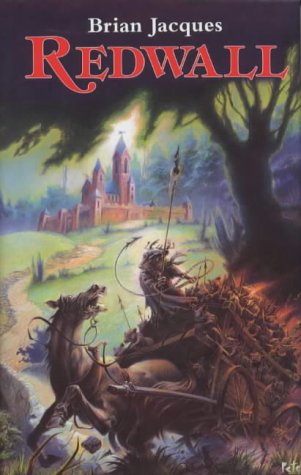
Redwall is Brian Jacques's long-running series of fantasy novels for young readers, set within the redwall-universe of Redwall Abbey and its community of anthropomorphic animals. It opened in 1986 with the mouse Matthias searching for the lost sword of the legendary Martin the Warrior to defend the abbey from the invading rat Cluny the Scourge, and grew across 22 largely stand-alone novels published through 2011, each set in a different generation of the abbey's history and following its mice, otters, badgers, and vermin adversaries.
- Riftwar Saga
series7 books1982
part of The Riftwar Universe
similar bysecondary worldwarfantasyadventurous
The Riftwar Saga is Raymond E. Feist's debut fantasy trilogy, opening with Magician, in which an orphaned apprentice named Pug is swept up when otherworldly invaders emerge through a dimensional rift into the frontier kingdom of Midkemia. Silverthorn and A Darkness at Sethanon carry the resulting war to its close, and the trilogy became the founding entry of Feist's much larger Riftwar Cycle.
- The Drenai Saga
series15 books1984
completed
similar bysecondary worldfantasywaradventurous+1 more
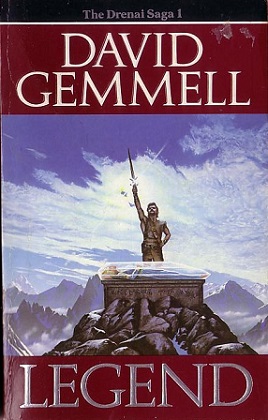
David Andrew Gemmell was a British author of heroic fantasy, best known for his debut novel, Legend. A former journalist and newspaper editor, Gemmell had his first work of fiction published in 1984. He went on to write over thirty novels. Gemmell's works display violence, yet also explore themes of honour, loyalty and redemption. There is always a strong heroic theme but nearly always the heroes are flawed in some way. With over one million copies sold, his work continues to sell worldwide.
- Demontech
series7 books2002
completed
similar bywarsecondary worldtensefantasy+4 more
David Sherman was an American novelist who dealt overwhelmingly with military themes at the small-unit tactical level. His experiences as a United States Marine informed his writings.
- The Scholomance
series3 books2020
similar bysecondary worldfantasysurvivaltensedark
The Scholomance Trilogy is a series of three fantasy novels written by American author Naomi Novik. The books follow the adventures of Galadriel "El" Higgins during and after attending a dangerous and magical boarding school for wizards named after the magic school Scholomance from Romanian folklore.
- The Powder Mage
universe19 books2013
Start hereThe Powder Mage Trilogy · Start here
similar bysecondary worldwarfantasytense+1 more
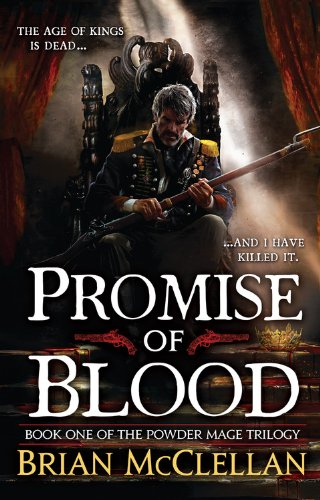
Load your powder, and pray your sorcery outruns their cannon. Here the age of kings is ending at musket-point: a world where black powder is not merely fired but eaten, and the men and women called powder mages snort a pinch of it to burn a trance across the battlefield — igniting an enemy's cartridges from a mile off, bending a bullet mid-flight, reading a room by the taste of the air. Against them stand the Privileged, glove-fingered sorcerers of the old order who summon fire and frost, and above both, gods who have not finished walking the earth. Brian McClellan builds this flintlock world across two linked trilogies. The Powder Mage Trilogy — Promise of Blood, The Crimson Campaign, The Autumn Republic — opens with a field marshal's coup against a rotten monarchy and the invasion, revolution, and divine reckoning that follow. Gods of Blood and Powder — Sins of Empire, Wrath of Empire, Blood of Empire — crosses the ocean a decade on to the colonial frontier of Fatrasta, where old soldiers, spies, and a heretic goddess collide. A run of novellas and short stories fills the corners between. Expect grapeshot and gunsmoke, siege lines and back-alley intrigue, generals and con men given equal weight. Begin at Promise of Blood and read in publication order — the trilogies run in sequence, and the short work is seasoning, not prerequisite.
- Narnia
series26 books1950
part of Narnia Universe
similar bysecondary worldfantasyadventurous+1 more
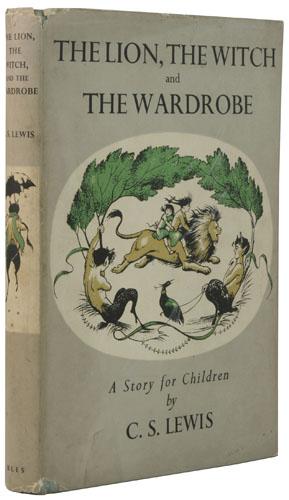
The Chronicles of Narnia is a series of seven portal fantasy novels by British author C. S. Lewis. Illustrated by Pauline Baynes and originally published between 1950 and 1956, the series is set in the fictional realm of Narnia, a fantasy world of magic, mythical beasts, and talking animals. It narrates the adventures of various children who play central roles in the unfolding history of the Narnian world. Except in The Horse and His Boy, the protagonists are all children from the real world who are magically transported to Narnia, where they are sometimes called upon by the lion Aslan to protect Narnia from evil. The books span the entire history of Narnia, from its creation in The Magician's Nephew to its eventual destruction in The Last Battle.
- Malazan
universe36 books1999
Start hereMalazan Book of the Fallen · Start here
similar bysecondary worldwardark+2 more
Pity the historian who tries to map this world; pity more the god who thinks he rules it. The Malazan Empire marches across continents on the boots of its common soldiers, and above them move Ascendants — mortals grown into something like gods, and gods worn thin as old coin. Magic is drawn from Warrens, roads of power threaded through reality; the dead keep their grudges; and every empire, however vast, is a wager against time. This is epic fantasy told from the mud, where a sapper cracking a joke weighs as much as an immortal settling a feud older than the human race. The world began as a tabletop campaign two friends built in the 1980s, and it still moves by two hands. Steven Erikson's ten-volume Malazan Book of the Fallen is the spine — Gardens of the Moon, Deadhouse Gates, Memories of Ice, on through The Crippled God — each book a near-standalone campaign that only later reveals how it locks together. Ian C. Esslemont walks the same years from a different vantage in his Novels of the Malazan Empire (Night of Knives, Return of the Crimson Guard onward). Around them stand the prequels: Erikson's Kharkanas Trilogy, archaic and elegiac, chronicling a doomed elder people, and Esslemont's brisker Path to Ascendancy, following two adventurers before they became legends. Erikson's Witness sequence carries the tale forward, and novellas of the genial necromancers Bauchelain and Korbal Broach supply the gallows comedy. Nothing is explained to you; comprehension is earned, and that is the pleasure. The themes run deep — compassion set against cruelty, the toll empires charge, civilizations that fall and are mourned. Begin where the saga does, with Erikson's Gardens of the Moon, and read the ten in publication order; the prequels are for the already-initiated. Trust that confusion is the price of entry.
- The Silvered
Tanya Huffstandalone novel2012
similar bysecondary worldfantasywaradventuroustense
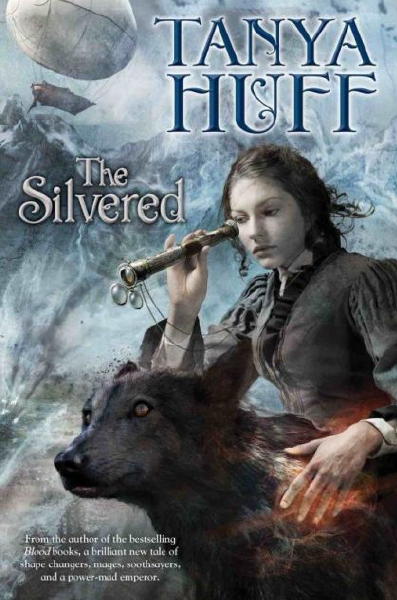
The Empire has declared war on the small, were-ruled kingdom of Aydori, capturing five women of the Mage-pack, including the wife of the were pack-leader. With the pack off defending the border, it falls to Mirian Maylin and Tomas Hagen--she a low-level mage, he younger brother to the pack-leader--to save them.
- The Way Past Winter
Kiran Millwood Hargravestandalone novel2018
similar bysecondary worldfantasysurvivaladventuroustense
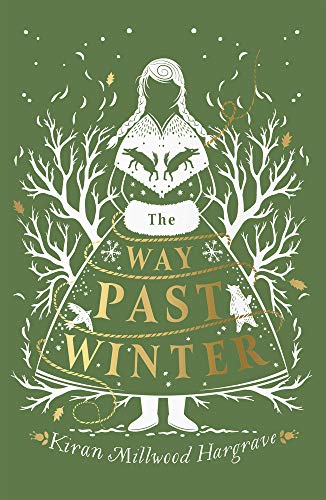
"Mila and her sisters live with their brother Oskar in a small forest cabin in the snow. One night, a fur-clad stranger arrives seeking shelter for himself and his men. But by the next morning, they've gone - taking Oskar with them. Fearful for his safety, Mila and her sisters set out to bring Oskar back - even it means going north, crossing frozen wild-lands to find a way past an eternal winter." (toppsta.com)
- The Lord of the Rings
series13 books1954
part of Tolkien's legendarium
similar bysecondary world+3 more
The Lord of the Rings is an epic high fantasy novel written by the English author and scholar J. R. R. Tolkien. Set in Middle-earth, the story began as a sequel to Tolkien's 1937 children's book The Hobbit but eventually developed into a much larger work. Written in stages between 1937 and 1949, The Lord of the Rings is one of the best-selling books ever written, with over 150 million copies sold.
- The Darkness
series6 books1999
similar bywarsecondary worldfantasytensedark
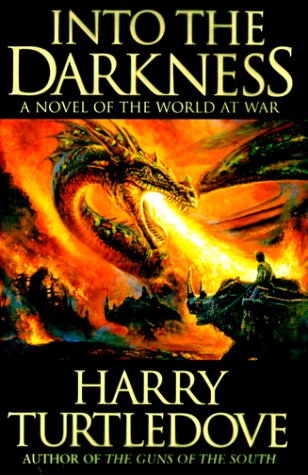
Darkness, also known as World at War, is a series of six fantasy novels by Harry Turtledove.
- The Gods and Their Machines
Oisin McGannstandalone novel2004
similar bysecondary worldsurvivalwarmilitary science fictionadventuroustense
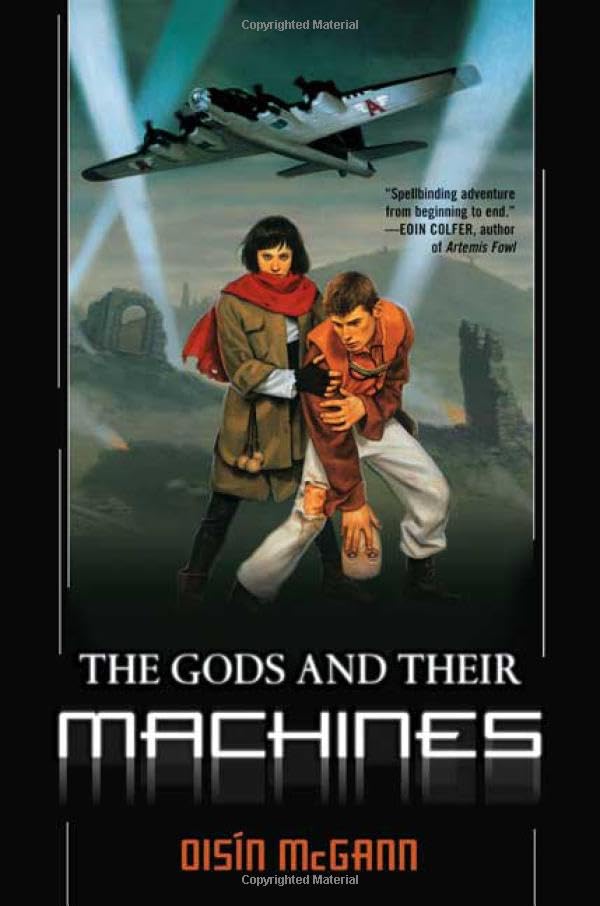
Trainee fighter pilot Chamus Aranson makes an emergency landing in enemy territory and his survival depends on Riadni, a tomboy who wants to become a soldier despite her nation's oppression of women, as Benyan, one of her countrymen, prepares to become a martyr dedicated to killing Chamus's grandfather.
- Dragon Trilogies
series6 books1988
similar bysecondary worldfantasytense+2 more
The Dragon Prince and Dragon Star trilogies comprise six connected fantasy novels written by Melanie Rawn. The Dragon Prince trilogy focuses on Prince Rohan of the Desert and his Sunrunner wife, Sioned, while the Dragon Star trilogy focuses on their son, Pol. The Dragon Prince trilogy consists of novels Dragon Prince, The Star Scroll, and Sunrunner's Fire. The books in the Dragon Star trilogy are Stronghold, The Dragon Token, and Skybowl.