More like Renegade Evolution
anchored on:science fictionfar futurespace operaspaceother star systems
but
- Moties
series4 books1974
part of CoDominium
similar byfar futurescience fictionspace operaspaceother star systems+3 more
Larry Niven and Jerry Pournelle's The Mote in God's Eye (1974) depicts humanity's first contact with an alien species, the Moties, set within the far-future interstellar setting of Pournelle's codominium future history. The Gripping Hand continues that first-contact crisis years later, and Outies, written by J. R. Pournelle, carries the story forward into a new generation. Together the three books trace an escalating encounter between human and Motie civilizations within the codominium universe.
- Dune Universe
universe78 books1963
Start hereDune · Start here
similar byfar futurescience fictionspace operaother star systems
Arrakis. Dune. The desert planet, where empire runs on a single substance: the spice melange, which folds space, prolongs life, and unlocks prescience, and which exists nowhere else in the known universe. Frank Herbert's saga is a meditation dressed as an adventure — feudal houses and a secret sisterhood, engineered messiahs and the patient ecology of a world without water, all turning on the terrible gravity of who commands the spice. It reads like scripture and schemes like a war room, ten thousand years hence, among people who have outlawed the thinking machine and made instruments of themselves instead. At its heart stand Herbert's original six — Dune, Dune Messiah, Children of Dune, God Emperor of Dune, Heretics of Dune, Chapterhouse: Dune — a single deepening arc across millennia, arguing the whole way between prophecy and free will. Around that spine his son Brian Herbert and Kevin J. Anderson have raised a vast prequel architecture: Prelude to Dune, tracing the great houses a generation before Paul; Legends of Dune, reaching back to the crusade that broke the machines; the Schools of Dune cycle on the founding of Bene Gesserit, Mentat, and Navigator; the Caladan Trilogy and Heroes of Dune filling years the originals left in shadow. Many hands, dozens of volumes, one desert. What sets Dune apart is its refusal of the simple: religion is manufactured, heroes are hazards, and the sand itself — worm, water, ecology — acts as a political power. Begin where the universe did, with Frank Herbert's Dune (1965), and read the original six in order; you need nothing else to feel the full weight. The prequels are a country to explore afterward, taken by era. Beginnings are delicate times.
- Uplift Universe
universe13 books1980
Start hereUplift · Start here
similar byadventurousfar futurescience fictionspace operaspaceother star systems+1 more
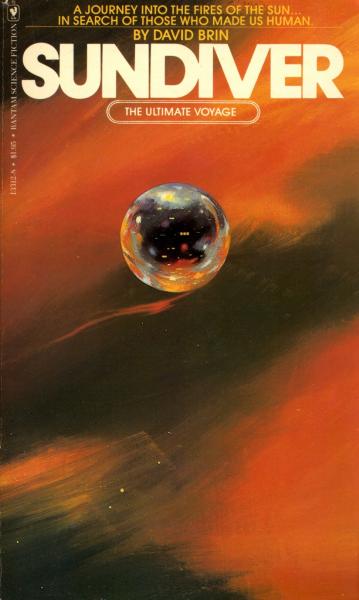
No species, the Galactics insist, ever climbs to sapience alone. For a billion years the elder races have "uplifted" their chosen clients — reshaping some promising animal, gene by patient gene, into a thinking being, then binding it through long ages of indenture. Patron lifts client; client one day becomes patron; and every lineage traces back through the vast Galactic Library to the vanished Progenitors who began it all. Then a ragged band of primates arrives at the stars with no patron to claim them — wolflings, self-made, an affront to a hundred thousand years of law — and worse, these humans have already started uplifting neighbors of their own: the neo-dolphins and neo-chimpanzees of Earthclan. David Brin builds this galaxy across two trilogies. The first — Sundiver, the Hugo- and Nebula-winning Startide Rising, and the Hugo-winning The Uplift War — sends an expedition into the Sun, then follows the dolphin-crewed survey ship Streaker as it flees a discovery that sets fanatical star-clans at war, and a chimp-led resistance on an invaded colony world. The second sequence, Uplift Storm — Brightness Reef, Infinity's Shore, Heaven's Reach — descends to Jijo, a forbidden world where six fallen races hide as illegal settlers, and draws every loose thread toward a reckoning. Short fiction fills the margins. This is space opera with an ecologist's conscience: teeming with invented biologies, wry cross-species banter, and real unease about what we owe the minds we make. Begin with Startide Rising — the saga's beating heart, and readable on its own — or take Sundiver first and read straight through in publication order.
- Uplift
series5 books1980
part of Uplift Universe
similar byadventurousfar futurescience fictionspace operaother star systemsspace+1 more
David Brin's Uplift trilogy opens with Sundiver, sending human explorers into the Sun itself, then follows a dolphin-crewed starship on the run from hostile aliens in Startide Rising and a fight over the colony world Garth in The Uplift War. The books sit inside Brin's wider Uplift Universe, built on the idea that spacefaring "patron" species genetically engineer younger "client" species into full sapience, with humanity an anomaly that reached the stars without a patron of its own.
- Ringworld
series5 books1970
part of Known Space
similar byadventurousfar futurescience fictionspace operaspace explorationspaceother star systems
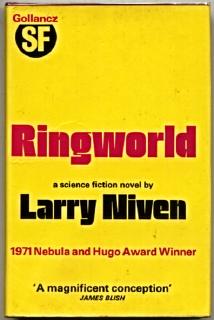
The Ringworld series is a series of science fiction novels written by American author Larry Niven. It is part of his Known Space series of stories. Its backdrop is the Ringworld, a giant artifact 3 million times the surface area of Earth circling a star. The series is composed of four standalone science fiction novels, the original award-winning book and its three sequels:1970: Ringworld 1979: The Ringworld Engineers 1996: The Ringworld Throne 2004: Ringworld's Children
- Heaven Chronicles / Zones of Thought
series8 books1976
similar byfar futurescience fictionspace operaspace+1 more
- Fifth Imperium
series3 books1991
similar byadventurousfar futurescience fictionspace operawarspace+1 more
David Weber's Fifth Imperium series opens with the discovery that Earth's Moon is in fact a disguised alien starship, the Dahak, that has orbited undetected for tens of thousands of years - a relic of the fallen Fourth Imperium, a multi-star civilization destroyed while defending against the genocidal Achuultani. Mutineers' Moon follows humanity's first contact with Dahak and the mutineers still aboard it; The Armageddon Inheritance and Heirs of Empire escalate from that discovery into interstellar war and dynastic politics as humanity inherits the old empire's legacy and its enemies. The three novels were later collected as the omnibus Empire from the Ashes.
- Starman Jones
Robert A. Heinleinstandalone novel1953
similar byadventurousfar futurescience fictionspace operaspace explorationspaceother star systems
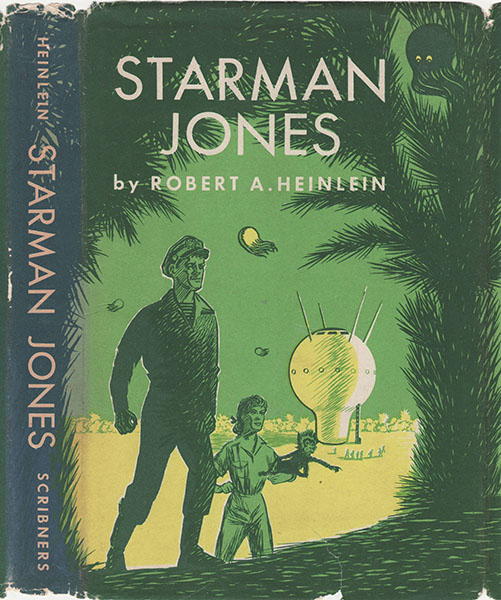
Starman Jones, a 1953 science fiction novel by Robert A. Heinlein, features a farm boy who wants to go to the stars. Charles Scribner's Sons published the book as part of the Heinlein juveniles series.
- Honorverse
universe83 books1993
Start hereHonor Harrington · Start here
similar byfar futurescience fictionspace operaother star systemsspace+2 more
The wedge comes up, the sidewalls burn to life, and two walls of battle close across light-minutes of empty vacuum trading missile broadsides — because in the Honorverse, war is still fought by the doctrine of the age of sail, only the ocean is the interstellar void and the ships-of-the-line are dreadnoughts. This is David Weber's future, two millennia on: a galaxy of star nations bound by treaty, trade, and old grudges, where the small, wealthy Star Kingdom of Manticore holds a wormhole junction the commerce of humanity runs through, and the expansionist People's Republic of Haven means to take it. At the center stands one officer, Honor Harrington — captain, then something far larger — and the six-limbed empathic treecat who rides her shoulder. The spine is the Honor Harrington novels, more than a dozen books that carry her from an overlooked frontier picket up through fleet command and the knife-politics of a monarchy at war. Around that spine branch parallel lines, several written with collaborators: the Saganami Island books follow a younger generation of officers in the contested Talbott Cluster; the Wages of Sin novels, with Eric Flint, chase the genetic-slave trade to its source on Mesa; Manticore Ascendant, with Timothy Zahn, reaches back centuries to the Navy's shaky founding; and the Star Kingdom books, with Jane Lindskold, tell how humans and treecats first met. Anthologies fill the seams. Weber writes competence and consequence — dense hardware, denser politics, victories that cost, and a heroine whose defining virtue is her refusal to spend lives cheaply or duck the ones she must. Begin with On Basilisk Station: one ship, one thankless posting, one impossible situation. Read the main line in publication order; the collaborating branches reward you later, once the map of Manticore is yours.
- Citizen of the Galaxy
Robert A. Heinleinstandalone novel1957
similar byadventurousfar futurescience fictionspace operaspaceother star systems+1 more
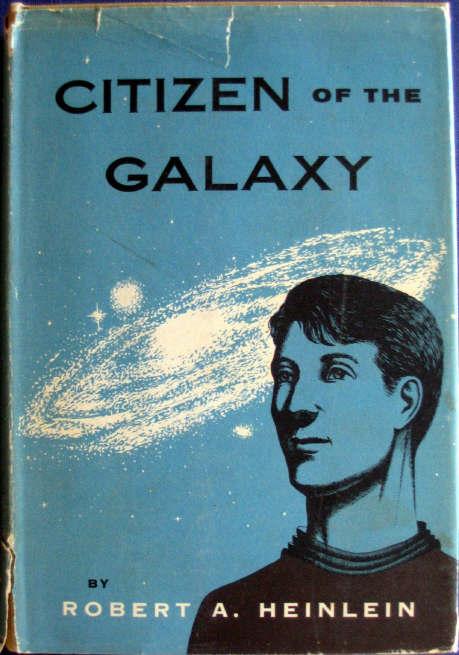
On a planet far distant from Earth, a lame beggar buys a young boy slave who has forgotten his origins. The beggar is more than he seems, and gives the boy an extensive education while employing him as an observer of activity in their city. Years later, the beggar is captured by the government, and the youth must escape the planet.
- Humanity's Fire
series5 books2009
similar byfar futurescience fictionspace operaother star systemsspace+2 more
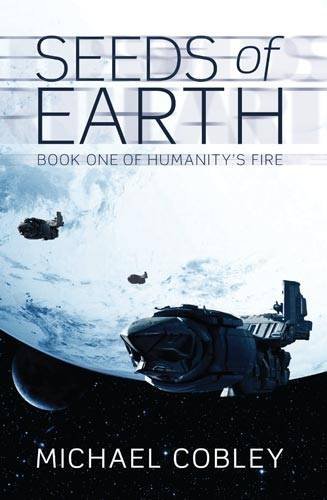
Michael Cobley's Humanity's Fire trilogy, opening with Seeds of Earth, follows the descendants of a human colony that lost contact with Earth generations earlier, who must contend with returning Earth authorities, alien empires, and a buried ancient danger beneath their adopted homeworld. Two further novels, Ancestral Machines and Splintered Suns, continue the setting afterward.
- Thistledown
series5 books1978
completed
similar byfar futurescience fictionspace explorationspace+2 more
- Dune
series20 books1963
part of Dune Universe
similar byfar futurescience fictionspace operaother star systems
Frank Herbert's Dune Chronicles opens with 1965's Dune, set on the desert planet Arrakis where House Atreides takes control of the only source of the vital spice melange and young Paul Atreides is pulled into a struggle over its politics and religion. Herbert carried the story forward across five further novels — Dune Messiah, Children of Dune, God Emperor of Dune, Heretics of Dune, and Chapterhouse: Dune — following Paul's line over the following millennia, before Brian Herbert and Kevin J. Anderson later extended the saga. Many other editions of these six novels are omnibus and box-set repackagings rather than separate stories.
- Tower and the Hive
series7 books1959
completed
part of The Talents
similar byfar futurescience fictionspace operaspaceother star systems+2 more
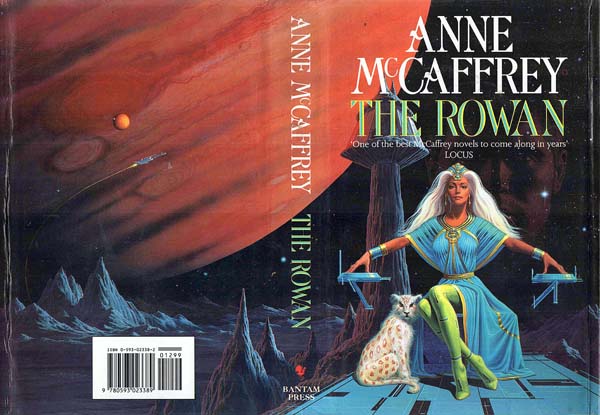
The Tower and the Hive series opens with The Rowan (1990), following an isolated but powerful telepath who is drawn out of her loneliness by a psychic call for help from a distant Talent facing an alien threat. Anne McCaffrey continued the story across four more novels, Damia, Damia's Children, Lyon's Pride, and the concluding The Tower and the Hive (1999), following later generations of a telepathic family staffing the Prime Towers that give a starfaring human civilization instant communication. The series is set later in the same Talents universe as McCaffrey's earlier Pegasus books.
- RCN
series15 books1998
completed
similar byadventurousfar futurescience fictionspace operawarspaceother star systems
David Drake's RCN series follows Daniel Leary, an officer in the Republic of Cinnabar Navy, and Adele Mundy, a librarian who moonlights as a spy, across a run of standalone-but-connected novels beginning with With the Lightnings. Drake and reviewers alike have framed it as an SF version of Patrick O'Brian's Aubrey/Maturin novels, and it plays that way: political intrigue and shipboard command dynamics carry as much weight as the space battles. It's more character-driven than Drake's harder-edged Hammer's Slammers work.
- Nova
Samuel R. Delanystandalone novel1968
similar byadventurousfar futurescience fictionspace operaspaceother star systems+1 more
Nоva is a science fiction novel by American writer Samuel R. Delany published in 1968. The plot concerns the spaceship captain Lorq Von Ray's search for a nova, which will produce the essential power source Illyrion, and his vendetta with the Red family, who seek to kill him. Nominally space opera, it explores the politics and culture of a future where cyborg technology is universal, yet making major decisions can involve using tarot cards. It has strong mythological overtones, relating to both the Grail Quest and Jason's quest for the Golden Fleece.
- The Stars My Destination
Alfred Besterstandalone novel1956
similar byadventurousfar futurescience fictionspace operaspaceother star systems+1 more
When a passing spaceship refuses to rescue the lone survivor from the drifting wreck of another ship, he dedicates his life to discovering who made that decision and exacting his revenge, in the process altering human history and his own character.
- Catteni Sequence
series5 books1970
completed
similar byadventurousfar futurescience fictionspace operaother star systems+2 more
The Catteni series is a tetralogy of science fiction novels by American writer Anne McCaffrey. In this universe, humans are slaves of aliens, the humanoid Catteni. Woven through all four of the books are details of the relationship between Kristin Bjornsen, a former slave, and Zainal, a renegade Catteni.
- Heechee
series19 books1972
completed
similar byfar futurescience fictionspace explorationspace operaspaceother star systems+1 more
The Heechee Saga, also known as the Gateway series, is a series of science fiction novels and short stories by Frederik Pohl. The Heechee are an advanced alien race that visited the Solar System hundreds of millennia ago and then mysteriously disappeared. They left behind bases containing artifacts, including working starships, which are discovered and exploited by humanity.
- Ian Cormac
series6 books2001
part of Polity
similar byfar futurescience fictionspace operaspaceother star systems+1 more
Neal Asher's Ian Cormac novels (Gridlinked, The Line of Polity, Brass Man, Polity Agent, Line War, plus the earlier-set prequel Shadow of the Scorpion) follow Ian Cormac, an agent of Earth Central Security in Asher's Polity universe. Gridlinked opens with Cormac investigating a destroyed matter-transmitter on a remote colony while wrestling with the personality erosion caused by long-term neural linkage to the Polity's AI network; the following novels escalate into interstellar conflict with the alien Prador. Together they form the core action sequence of Asher's wider Polity series.
- The Universe After
series3 books2018
similar byfar futurescience fictionspace operaspaceother star systems+2 more
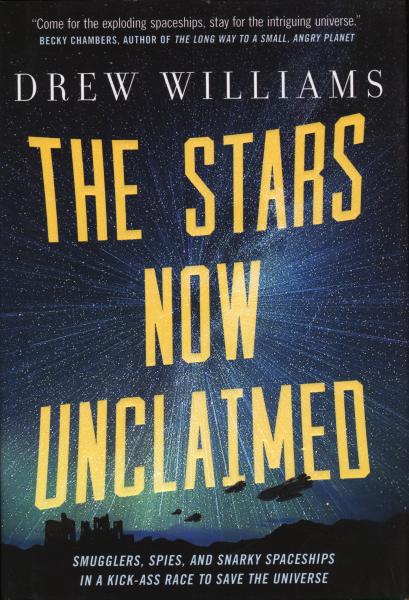
In The Stars Now Unclaimed, Justified operative Jane Kamali is sent to retrieve a teenage girl named Esa whose latent abilities make her a target for the raiders and cults competing to control the last working technology in a galaxy where a mysterious cataclysm wiped out most advanced civilizations centuries ago. Drew Williams' Universe After trilogy follows Jane and Esa across A Chain Across the Dawn and The Firmament of Flame as the stakes widen from one rescue to the fate of the galaxy's remaining worlds.
- Legion of Space
series7 books1947
completed
similar byadventurousfar futurescience fictionspace operaspaceother star systems+1 more
The Legion of Space is a space opera science fiction series by American writer Jack Williamson. The story takes place in an era when humans have colonized the Solar System but dare not go farther, as the first extra-solar expedition to Barnard's Star failed and the survivors came back as babbling, grotesque, diseased madmen. They spoke of a gigantic planet, populated by ferocious animals and the single city left of the evil "Medusae". The Medusae bear a vague resemblance to jellyfish, but are actually elephant-sized, four-eyed, flying beings with hundreds of tentacles. The Medusae cannot speak, and communicate with one another via a microwave code.
- The Final Architecture
series6 books2021
similar byadventurousfar futurescience fictionspace operaspace explorationwarspaceother star systems
The Final Architecture is a series of science fiction novels by British writer Adrian Tchaikovsky. It contains the books Shards of Earth, Eyes of the Void, and Lords of Uncreation. The series focuses on a group of humans fighting against the mysterious Architects, who destroy inhabited planets. The series has been well-received critically, with Shards of Earth winning the 2021 BSFA Award for Best Novel. The entire series was a finalist for the 2024 Hugo Award for Best Series.
- Janissaries
series4 books1979
similar byadventurousfar futurescience fictionwarother star systems+2 more
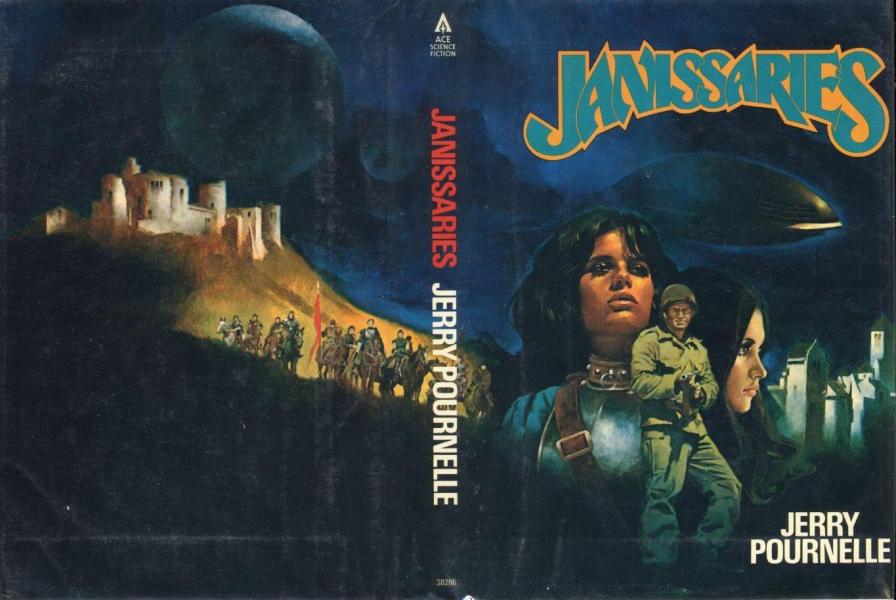
Janissaries are an American series of military and political-based science fiction novels are set in an interstellar confederation of races, in which humans are a slave race entrusted with military affairs and law enforcement. They were written by Jerry Pournelle, with Roland J. Green co-authoring the second two books.