More like Retaliation
anchored on:science fictionother star systems
but
- H. G. Wells' War of the Worlds
universe65 books1898
Start hereThe War of the Worlds · Start here
similar byscience fiction+2 more
No one would have believed, in the closing years of the nineteenth century, that human affairs were being watched keenly and closely from the timeless worlds of space. And then the cylinders fell. H. G. Wells' War of the Worlds opens in the quiet of the Surrey commons, where a falling star proves to be the first Martian craft — and from the pit rise the towering tripods, the Heat-Ray, the choking Black Smoke and the creeping red weed, wielded by minds that regard mankind much as we regard the creatures we boil for supper. This is invasion rendered as natural disaster: cold, methodical, and vast beyond argument. Wells' 1898 novel is the seed; everything else grows from that Martian soil. The catalogue gathers direct sequels and continuations alongside a wide field of other hands. In War of the Worlds: Global Dispatches the invasion is retold across the whole planet through the eyes of Twain, Verne, Tolstoy, Lowell and Kipling; in the Manly Wade and Wade Wellman crossover, Sherlock Holmes, Watson and Professor Challenger take the field against the machines; and Scott Washburn's Great Martian War stretches the fighting into a decades-long alternate history of steam, artillery and grinding attrition. It is a loose shared world — no single decreed sequence, many voices answering one calamity. What sets this world apart is its refusal of heroics: the invaders fall not to generals but to the smallest things of Earth, humbling and indifferent. Begin, always, with Wells' original novel — it is short, and it is the ground every later book stands upon. From there follow your appetite: Global Dispatches for the panorama, the Holmes campaign for adventure, Washburn for the long war.
- Forever War
series10 books1972
similar byscience fictionmilitary science fiction+3 more
Joe Haldeman's The Forever War (1974) follows a soldier conscripted into a centuries-long interstellar war against the alien Taurans, using relativistic space travel so that months spent in transit correspond to years or decades passing back on Earth. Haldeman later returned to the same conflict in Forever Peace (1997), a thematically connected but separate story, and Forever Free (1999), a direct sequel set years after the original war's end. The first novel won the Hugo, Nebula, and Locus awards and is considered a foundational work of military science fiction.
- Moties
series4 books1974
part of CoDominium
similar byscience fictionaliensother star systems+3 more
Larry Niven and Jerry Pournelle's The Mote in God's Eye (1974) depicts humanity's first contact with an alien species, the Moties, set within the far-future interstellar setting of Pournelle's codominium future history. The Gripping Hand continues that first-contact crisis years later, and Outies, written by J. R. Pournelle, carries the story forward into a new generation. Together the three books trace an escalating encounter between human and Motie civilizations within the codominium universe.
- Tower and the Hive
series7 books1959
completed
part of The Talents
similar byscience fictionother star systems+4 more
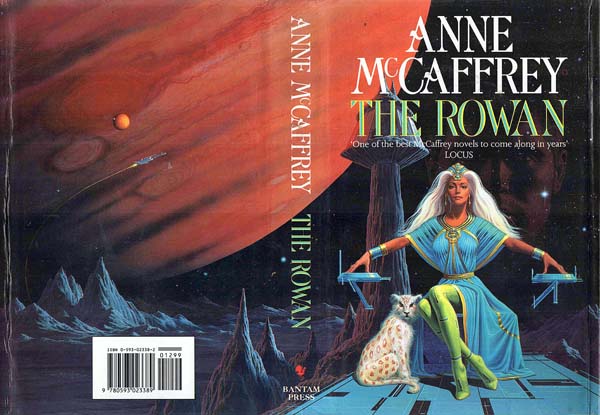
The Tower and the Hive series opens with The Rowan (1990), following an isolated but powerful telepath who is drawn out of her loneliness by a psychic call for help from a distant Talent facing an alien threat. Anne McCaffrey continued the story across four more novels, Damia, Damia's Children, Lyon's Pride, and the concluding The Tower and the Hive (1999), following later generations of a telepathic family staffing the Prime Towers that give a starfaring human civilization instant communication. The series is set later in the same Talents universe as McCaffrey's earlier Pegasus books.
- Salvation
series3 books2018
similar byscience fictionother star systems+5 more
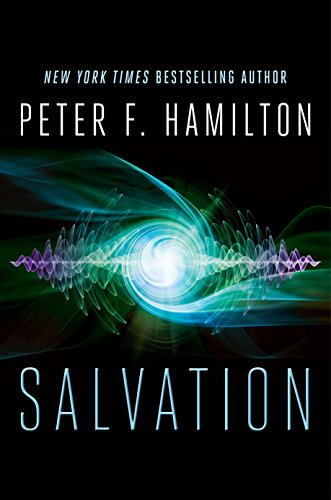
By 2204, instantaneous jump-gate travel has made distance nearly meaningless, connecting Earth to its scattered colonies in a single step -- until a crashed alien ship of unknown origin turns up on a world eighty-nine light years away, carrying something far more dangerous than wreckage. Peter F. Hamilton's Salvation follows the investigation team sent to assess the find, one of whom may not be who they claim, while a second timeline set generations later shows the far-future fallout of what they discover. The trilogy continues through Salvation Lost and The Saints of Salvation.
- Old Man's War
series16 books2005
similar byscience fictionwarother star systemsadventurousmilitary science fiction+2 more
The Old Man's War series is a series of science fiction novels by John Scalzi. The first book in the series, Old Man's War, was first published in 2005 by Tor Books, and was nominated for the Hugo Award for Best Novel in 2006. In 2026 it was a finalist for the Hugo Award for Best Series.
- Ender's Shadow
series5 books1999
part of Ender's Game Universe
similar byscience fictiontensewar+2 more
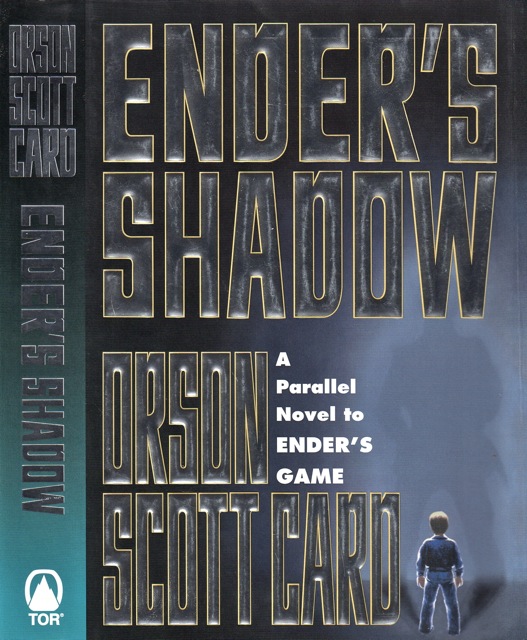
Orson Scott Card's Ender's Shadow retells the events of Ender's Game from the perspective of Bean, a physically stunted but ferociously intelligent street child recruited into the same Battle School program as Ender Wiggin. It launches the Shadow series, which follows Bean and other secondary Battle School characters into the political aftermath of the Formic Wars back on Earth, running parallel to and eventually past the timeline of Card's main Ender Quintet.
- Orphan Universe
series9 books2004
similar byscience fictiontensealienswarother star systemsmilitary science fiction+1 more
- Ender Wiggin
series14 books1977
part of Ender's Game Universe
similar byscience fictionaliensother star systems+1 more
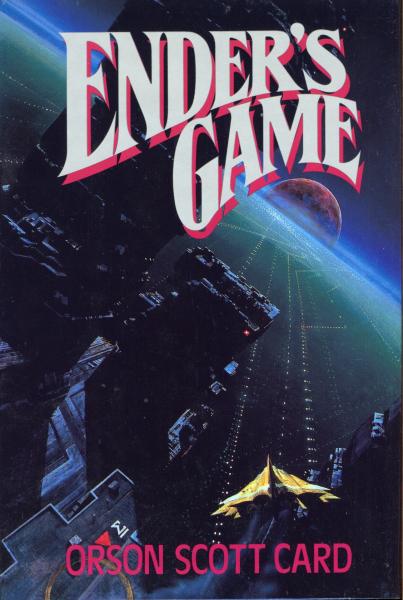
Orson Scott Card's Ender's Game (1985, expanded from his 1977 novella) follows child prodigy Andrew "Ender" Wiggin as he is recruited into a military training program built to prepare Earth's defenses for an anticipated third war against an insectoid alien species known as the Formics. The saga continues years later through Speaker for the Dead and Xenocide, following an older Ender as he confronts the moral weight of his role in that earlier conflict, and concludes the core arc in Children of the Mind, with Ender in Exile filling in the years between the first two books. Set within the wider Ender's Game universe, the series shifts from military coming-of-age story to slower, more philosophical science fiction as it progresses.
- Dune Universe
universe78 books1963
Start hereDune · Start here
similar byscience fictionother star systems+1 more
Arrakis. Dune. The desert planet, where empire runs on a single substance: the spice melange, which folds space, prolongs life, and unlocks prescience, and which exists nowhere else in the known universe. Frank Herbert's saga is a meditation dressed as an adventure — feudal houses and a secret sisterhood, engineered messiahs and the patient ecology of a world without water, all turning on the terrible gravity of who commands the spice. It reads like scripture and schemes like a war room, ten thousand years hence, among people who have outlawed the thinking machine and made instruments of themselves instead. At its heart stand Herbert's original six — Dune, Dune Messiah, Children of Dune, God Emperor of Dune, Heretics of Dune, Chapterhouse: Dune — a single deepening arc across millennia, arguing the whole way between prophecy and free will. Around that spine his son Brian Herbert and Kevin J. Anderson have raised a vast prequel architecture: Prelude to Dune, tracing the great houses a generation before Paul; Legends of Dune, reaching back to the crusade that broke the machines; the Schools of Dune cycle on the founding of Bene Gesserit, Mentat, and Navigator; the Caladan Trilogy and Heroes of Dune filling years the originals left in shadow. Many hands, dozens of volumes, one desert. What sets Dune apart is its refusal of the simple: religion is manufactured, heroes are hazards, and the sand itself — worm, water, ecology — acts as a political power. Begin where the universe did, with Frank Herbert's Dune (1965), and read the original six in order; you need nothing else to feel the full weight. The prequels are a country to explore afterward, taken by era. Beginnings are delicate times.
- Dune
series20 books1963
part of Dune Universe
similar byscience fictionother star systems+1 more
Frank Herbert's Dune Chronicles opens with 1965's Dune, set on the desert planet Arrakis where House Atreides takes control of the only source of the vital spice melange and young Paul Atreides is pulled into a struggle over its politics and religion. Herbert carried the story forward across five further novels — Dune Messiah, Children of Dune, God Emperor of Dune, Heretics of Dune, and Chapterhouse: Dune — following Paul's line over the following millennia, before Brian Herbert and Kevin J. Anderson later extended the saga. Many other editions of these six novels are omnibus and box-set repackagings rather than separate stories.
- Ocean / Galactic Center
series12 books1972
similar byscience fictionaliens+4 more
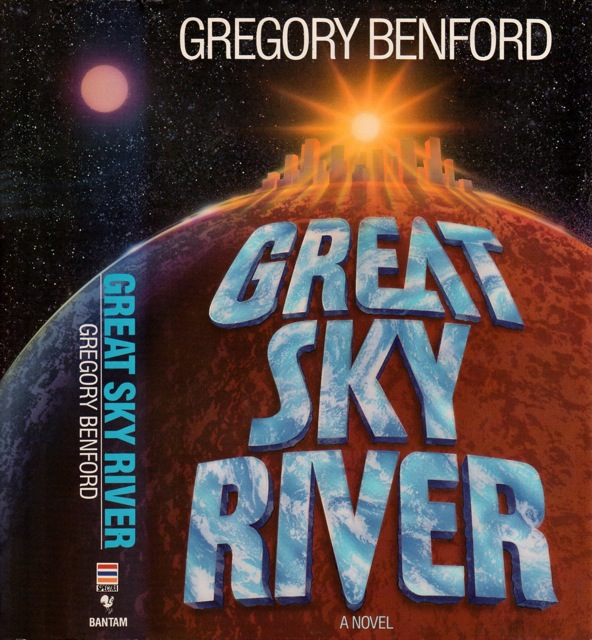
The Galactic Center Saga is a series of books by author Gregory Benford detailing a galactic war between mechanical and biological life.In the Ocean of Night (1977) — 1977 Nebula Award nominee, 1978 Locus Award nominee Across the Sea of Suns (1984) Great Sky River (1987) — 1988 Nebula Nominee Tides of Light (1989) — 1990 Locus Award nominee Furious Gulf (1994) Sailing Bright Eternity (1996) "A Hunger for the Infinite" a novella published in the anthology Far Horizons
- Troy Rising
series4 books2010
similar byscience fictiontensealienswaradventurousmilitary science fiction+2 more
Troy Rising begins after an alien first-contact attempt nearly destroys Earth, prompting an entrepreneur to trade a valuable alien commodity in order to fund the construction of a massive orbital defense station guarding the planet from further attack. John Ringo's military science fiction trilogy, joined for a later volume by Gray Rinehart, follows the buildup and battles around that station as humanity arms itself against alien threats.
- Janissaries
series4 books1979
similar byscience fictiontensewarother star systemsadventurousmilitary science fiction+1 more
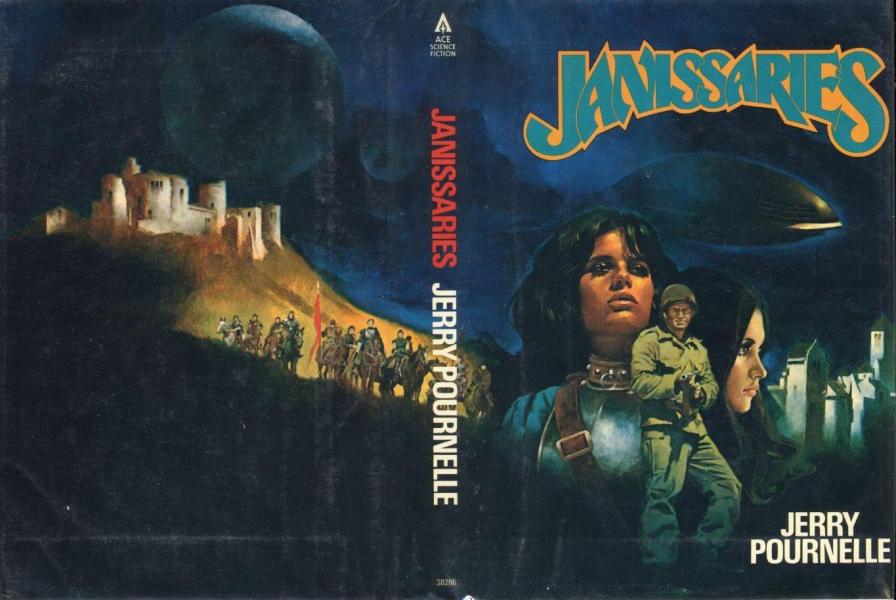
Janissaries are an American series of military and political-based science fiction novels are set in an interstellar confederation of races, in which humans are a slave race entrusted with military affairs and law enforcement. They were written by Jerry Pournelle, with Roland J. Green co-authoring the second two books.
- Berserker (Fred Saberhagen)
series59 books1963
similar byscience fictiontensewarother star systems+1 more
The Berserker series is a series of space opera science fiction short stories and novels by Fred Saberhagen, in which robotic self-replicating machines strive to destroy all life.
- Ian Cormac
series6 books2001
part of Polity
similar byscience fictiontenseother star systems+3 more
Neal Asher's Ian Cormac novels (Gridlinked, The Line of Polity, Brass Man, Polity Agent, Line War, plus the earlier-set prequel Shadow of the Scorpion) follow Ian Cormac, an agent of Earth Central Security in Asher's Polity universe. Gridlinked opens with Cormac investigating a destroyed matter-transmitter on a remote colony while wrestling with the personality erosion caused by long-term neural linkage to the Polity's AI network; the following novels escalate into interstellar conflict with the alien Prador. Together they form the core action sequence of Asher's wider Polity series.
- Into the Looking Glass
series4 books2005
similar byscience fictiontensealiensother star systemsadventurousmilitary science fiction+2 more
- Uplift
series5 books1980
part of Uplift Universe
similar byscience fictionaliensother star systemsadventurous+1 more
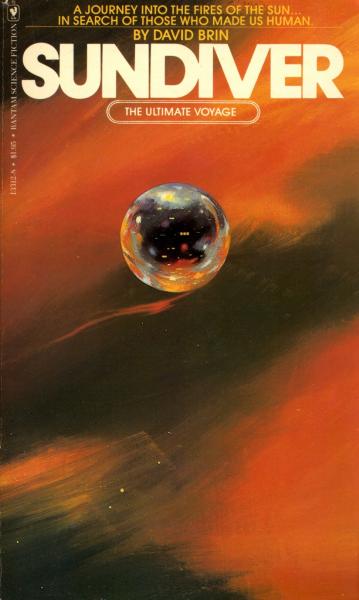
David Brin's Uplift trilogy opens with Sundiver, sending human explorers into the Sun itself, then follows a dolphin-crewed starship on the run from hostile aliens in Startide Rising and a fight over the colony world Garth in The Uplift War. The books sit inside Brin's wider Uplift Universe, built on the idea that spacefaring "patron" species genetically engineer younger "client" species into full sapience, with humanity an anomaly that reached the stars without a patron of its own.
- Man-Kzin Wars
series84 books1986
part of Known Space
similar byscience fictiontensealienswarother star systemsmilitary science fiction+1 more
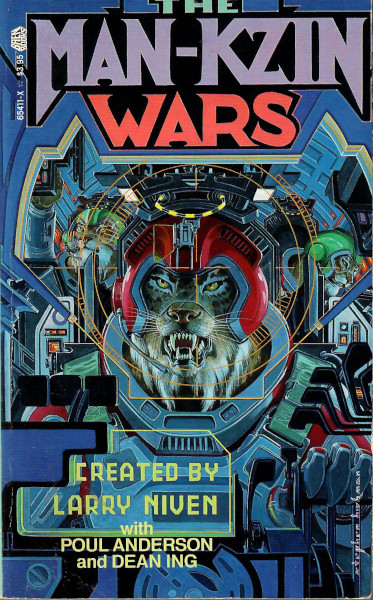
The Man–Kzin Wars is the name of a series of military science fiction anthologies as well as the name of the first book in the series. The short stories detail the eponymous conflicts between mankind and the Kzinti, set in Larry Niven's Known Space universe. However, Niven himself has written only a small number of the stories; most were written by other science fiction writers, as Niven opened this part of the Known Space to collaboration in the form of a shared universe. The cover art for the books in the series is created by Stephen Hickman.
- Galactic Milieu
series10 books1981
completed
similar byscience fictiontensealiens+1 more
Galactic Milieu is a series of science fiction novels by Julian May. It is linked to her previously published series, the Saga of Pliocene Exile; and through the fantastical device of time-travel, acts as both a prequel and a sequel to this earlier series. The "Galactic Milieu" of the title is an interplanetary federation, and Earth's membership of it is a central plot concern.
- War Dogs
series3 books2014
completed
similar byscience fictionmilitary science fiction+5 more
Greg Bear's trilogy opens with humanity fighting an entrenched, technologically superior alien presence across the Solar System, following a soldier drafted into a war whose true stakes he only gradually understands. War Dogs (later reissued as War Dogs: Ares Rising) was followed by Killing Titan and Take Back the Sky as the scope of the alien threat, and the deceptions surrounding it, widens.
- The Tau Ceti Agenda
series7 books2005
similar byscience fictionother star systemsmilitary science fiction+5 more