More like Slac//
but
- Moties
series4 books1974
part of CoDominium
similar byfirst contactother star systems
Larry Niven and Jerry Pournelle's The Mote in God's Eye (1974) depicts humanity's first contact with an alien species, the Moties, set within the far-future interstellar setting of Pournelle's codominium future history. The Gripping Hand continues that first-contact crisis years later, and Outies, written by J. R. Pournelle, carries the story forward into a new generation. Together the three books trace an escalating encounter between human and Motie civilizations within the codominium universe.
- The Gods Themselves
Isaac Asimovstandalone novel1972
similar byother star systems+1 more
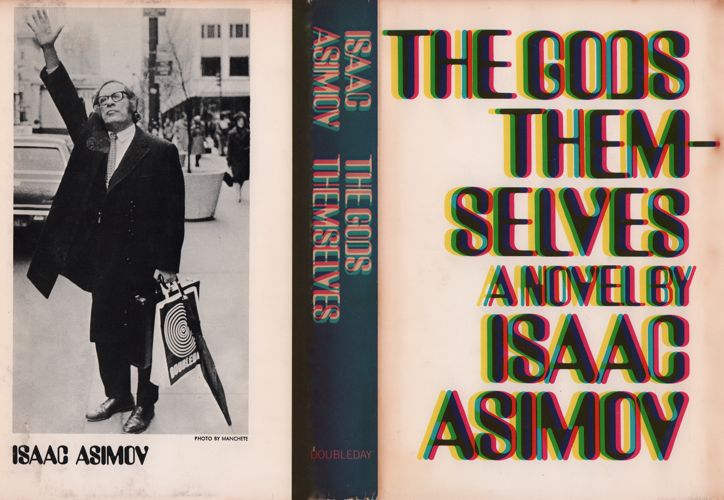
The Gods Themselves is a 1972 science fiction novel written by Isaac Asimov, and his first original novel in fifteen years. It won the Nebula Award for Best Novel in 1972, and the Hugo Award for Best Novel in 1973.
- Doona
series3 books1969
similar byother star systems+1 more
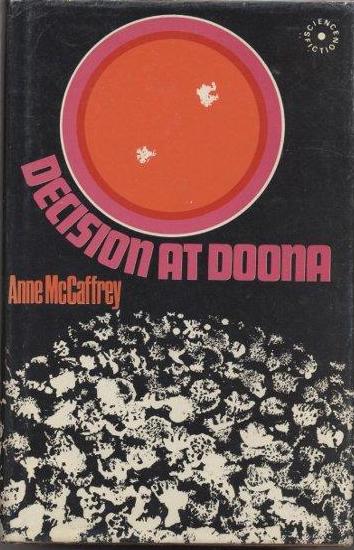
Decision at Doona begins Anne McCaffrey's series about a human colony that finds a supposedly uninhabited planet is already home to the Hrrubans, a clan-based, cat-like species — a discovery Terran policy treats as forbidden territory after an earlier first-contact attempt ended in another alien race's mass suicide. The colonists and Hrrubans must negotiate an unprecedented, closely governed coexistence rather than the separation their governments would prefer. Later books, continuing with Jody Lynn Nye, follow the two communities as that arrangement is tested by new arrivals and disputes.
- After Such Knowledge
series7 books1953
completed
similar by+2 more
After Such Knowledge is James Blish's loosely linked trilogy on the costs of forbidden or dangerous knowledge. It opens with A Case of Conscience, in which a Jesuit scientist studying a seemingly sinless alien race is forced to weigh what he finds against his own faith, continues with the historical novel Doctor Mirabilis about the medieval friar and scientist Roger Bacon, and closes with the two-part Black Easter, in which a magician is hired to loose Hell's demons upon the world for a single day. The three books share a theme rather than a continuous plot or cast.
- Forge of God
series2 books1987
completed
similar by+2 more
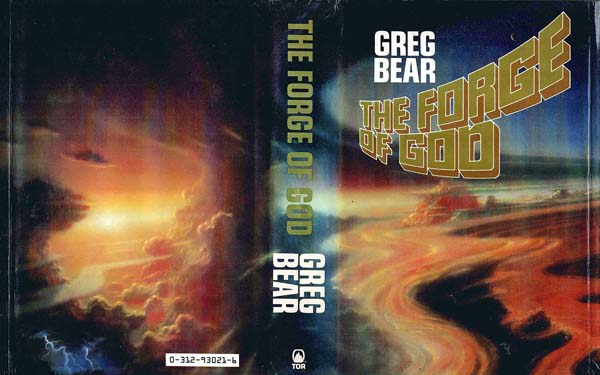
The Forge of God (1987) is Greg Bear's science fiction novel about Earth's discovery that it is the target of an incomprehensible, overwhelming alien attack, following scientists and ordinary people as they try to understand what is destroying the planet. Its 1992 sequel, Anvil of Stars, follows a group of young survivors sent on a mission of interstellar retaliation, continuing directly from the first book's ending.
- Have Space Suit - Will Travel
Robert A. Heinleinstandalone novel1958
similar by+2 more
From the back cover of the Del Rey 9th printing: "Skyjacked - Everything happened at once. One minute Kip Russell was walking about in his own backyard, testing out an old space suit and dreaming about going to the moon - and the next he was out cold and the captive of an insidious space pirate. The whole thing seemed like a very bad dream until he discovered he wasn't the only prisoner on board. Then the reality of the situation became inescapable. He - along with the daughter of a world-renowned scientist and a beautiful creature from an alien planet - had been skyjacked by a monstrous extraterrestrial and they were on their way to the Moon... a journey toward a fate worse than death!"
- The Wanderer
Fritz Leiberstandalone novel1964
similar by+2 more
The Wanderer is a science fiction novel by American writer Fritz Leiber, published as a paperback original by Ballantine Books in 1964. It won the 1965 Hugo Award for Best Novel.
- Contact
Carl Saganstandalone novel1985
similar byfirst contact+1 more
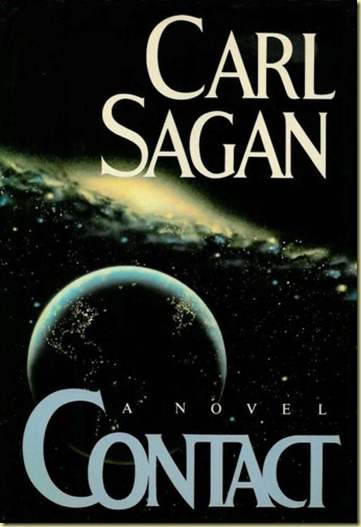
From the front flap of the Simon and Schuster first edition: For centuries humanity has dreamed of life and intelligence beyond the Earth; for decades scientists have searched for it in every corner of the sky; for years Project Argus, a vast, sophisticated complex of radio telescopes, has listened for a signal indicating the existence, somewhere in the universe, of extraterrestrial intelligence. Then, one afternoon, the course of human history is changed, abruptly and forever. The Message, awaited for so long, its very possibility doubted by so many, arrives. Contact has been made. Life, intelligence, someone, something beyond Earth, 26 light-years away, in the vicinity of the star Vega, is calling, beaming across space a wholly unexpected message to say that we are not - have never been - alone. In Contact, Carl Sagan, whose Cosmos enthralled millions of readers and television viewers, has brilliantly employed the freedom of fiction to imagine the greatest adventure of all - humanity's first encounter with other intelligent beings. But the novel is not only about contact between humans and extraterrestrials; it is also about contact, down here on Earth, with each other and ourselves. At its center is a brilliant scientist, Eleanor Arroway, director of Project Argos, who is the first to realize that chapter one of human history is over. It is she who is instrumental in decoding the Message - and in persuading world leaders not to treat it as a threat - she who finds her own life changed by the immense challenge of responding to the Message; she who finally journeys out to experience, in circumstances at once profoundly religious and scientific, the most fateful encounter in human history.
- Project Hail Mary
Andy Weirstandalone novel2021
similar byfirst contact+1 more
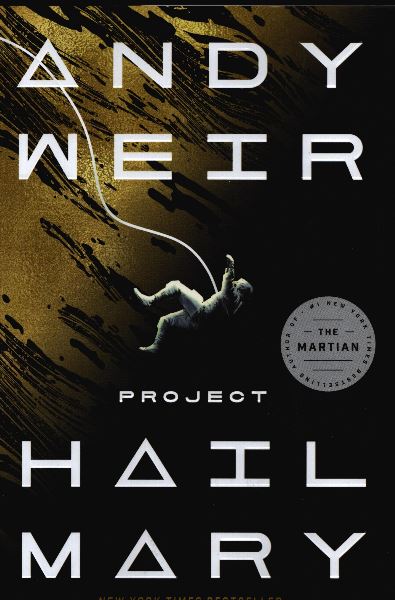
Project Hail Mary is a 2021 hard science fiction novel by American writer Andy Weir. It centers on science teacher and former biologist Ryland Grace, who wakes up aboard a spacecraft, afflicted with amnesia.
- Pushing Ice
Alastair Reynoldsstandalone novel2005
similar byfirst contactother star systems
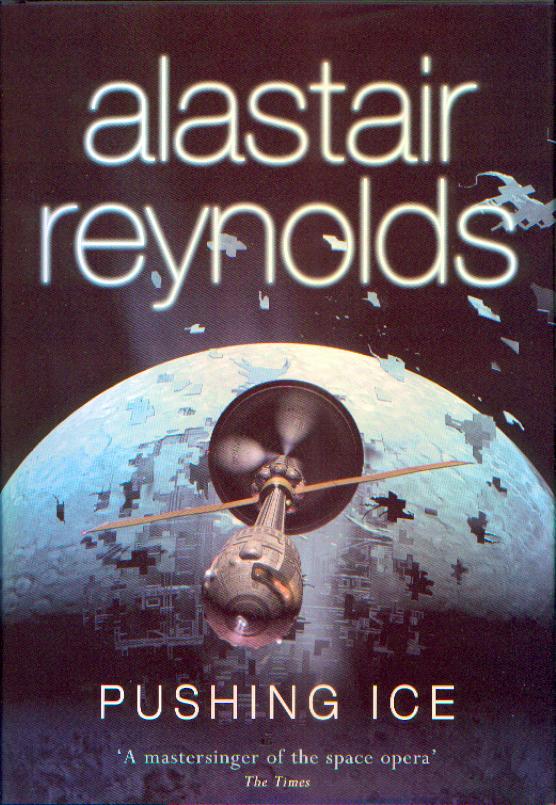
When Saturn's moon Janus suddenly takes off into interstellar space, an ice mining spaceship sent to investigate finds itself swept along into distant space until it ends up trapped in a gigantic alien structure, wherein the crew must prepare to reside for the foreseeable future.
- Xenogenesis / Lilith's Brood
series4 books1987
completed
similar byfirst contact+1 more
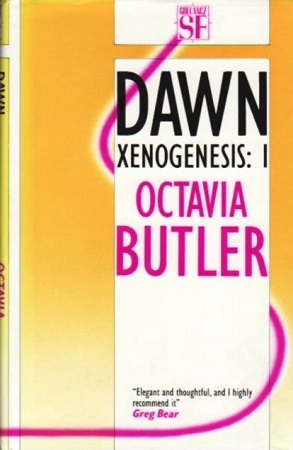
Lilith's Brood, previously known as the Xenogenesis Trilogy, is a collection of three science fiction works by Octavia E. Butler: Dawn, Adulthood Rites, and Imago.
- Chanur
series7 books1982
part of Alliance-Union Universe
similar byother star systems+1 more
The Chanur novels are a series of five science fiction novels, forming three separate stories, written by American author C. J. Cherryh and published by DAW Books between 1982 and 1992. The first novel in the series is The Pride of Chanur (1982), which was nominated for both the Hugo and Locus Awards in 1983. The Pride of Chanur, originally a stand-alone story, was followed by the Chanur's Venture trilogy, Chanur's Venture (1984), which was shortlisted for a Locus Award in 1985; The Kif Strike Back (1985) and Chanur's Homecoming (1986). These were followed by a later sequel, Chanur's Legacy (1992). The five novels were also published in two omnibus editions: the first three in The Chanur Saga in 2000 and the next two in Chanur's Endgame in 2007.
- Dragon's Egg
series3 books1980
completed
similar byfirst contactother star systems
Robert L. Forward's Dragon's Egg (1980) follows first contact with the cheela, intelligent beings the size of sesame seeds living on the surface of a neutron star, where crushing gravity and fast-moving physics let them evolve from primitive agriculture to advanced technology in about a month of Earth time while human observers watch from orbit. The sequel Starquake (1985) follows the cheela's own development of space travel and a catastrophic starquake that devastates their neutron-star home, alongside the continuing story of the human crew observing them.
- Sparrow
series2 books1996
similar byfirst contactother star systems
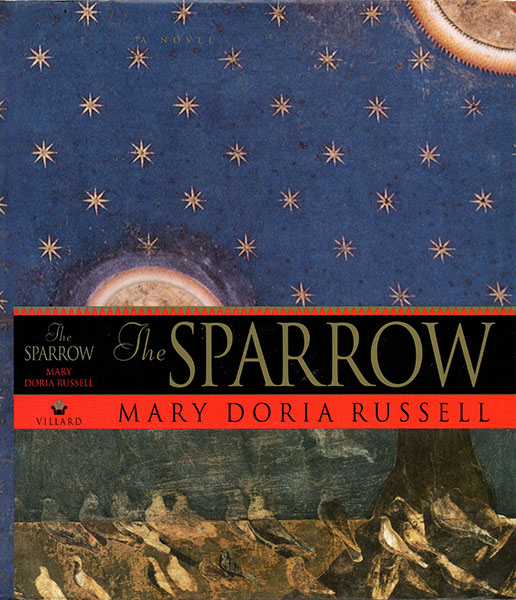
Mary Doria Russell's The Sparrow (1996) follows a Jesuit-led mission to the planet Rakhat after radio signals from Alpha Centauri reveal it hosts intelligent life, alternating between the expedition and the traumatized return of its sole survivor, Father Emilio Sandoz, as he tries to explain what happened. The sequel Children of God (1998) follows Sandoz back to Rakhat and continues working out the theological and political fallout of first contact between humans and the planet's two native species.
- Jem
Frederik Pohlstandalone novel1979
similar byfirst contactother star systems
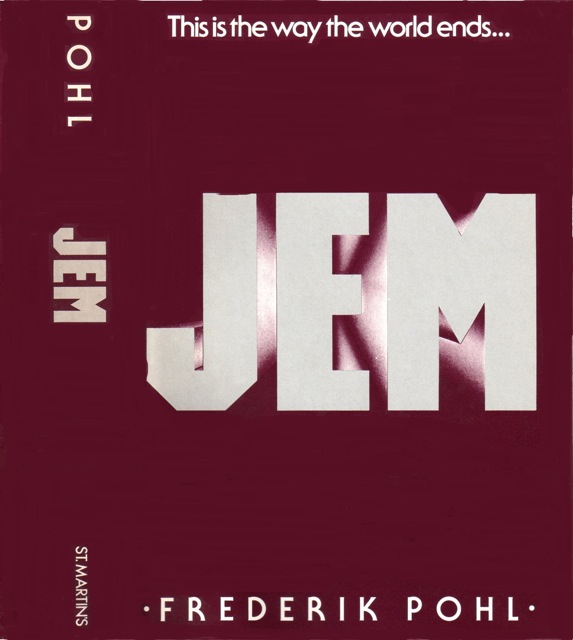
The discovery of another habitable world might spell salvation to the three (Food Bloc, Fuel Bloc & People Bloc) bitterly competing power blocs of the war torn & resource-starved 21st century. But when their representatives arrive on Jem, with its three intelligent species, they discover instead the perfect situation into which to export their rivalries. Subtitled, with savage irony, 'The Making of a Utopia', Jem is one of Frederik Pohl's most powerful novels.
- Fifth Planet
Fred Hoyle & Geoffrey Hoylestandalone novel1963
similar byfirst contactother star systems
Fifth Planet is a science fiction novel written by astrophysicist Sir Fred Hoyle and his son Geoffrey Hoyle.
- First Foreigner Sequence
series4 books1994
part of Foreigner
similar byfirst contactother star systems
C. J. Cherryh's original Foreigner trilogy opens the larger Foreigner series, following Bren Cameron, the sole human translator-diplomat (paidhi) permitted contact with the atevi, an alien people whose loyalties run on a hierarchical bond called man'chi rather than human emotions like love or friendship. Generations after a lost human ship stranded its descendants on the atevi's world, Bren must manage the fraught exchange of human technology just as the starship Phoenix unexpectedly returns, throwing both human and atevi society into crisis. Foreigner, Invader, and Inheritor lay the groundwork for the decades of political intrigue the wider series continues.
- Shakespeare's Planet
Clifford D. Simakstandalone novel1976
similar byfirst contactother star systems
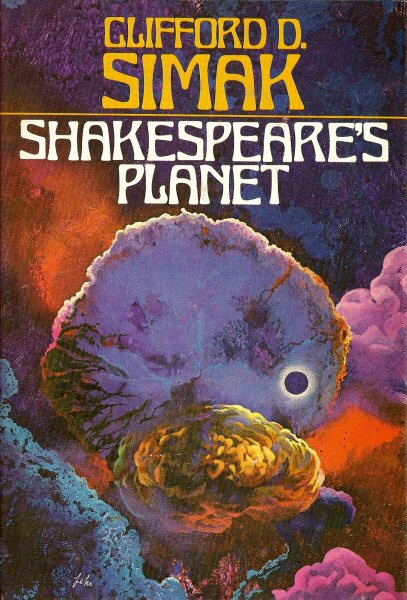
Woken after a thousand-year voyage meant to find humanity a new home, Carter Horton finds his ship stranded for good, tended by the disembodied minds of three volunteers who gave up their bodies to fly it. Outside waits a world already crowded with strangers: a robot named Nicodemus, and an alien called the Carnivore who claims to have known a human, once, called Shakespeare, and to have arrived here through a tunnel across time. As more travelers arrive through that same tunnel, Horton has to work out what kind of planet he has actually landed on. A standalone novel from Clifford D. Simak.
- Academy / Priscilla (Hutch) Hutchins
series16 books1983
similar byother star systems+1 more
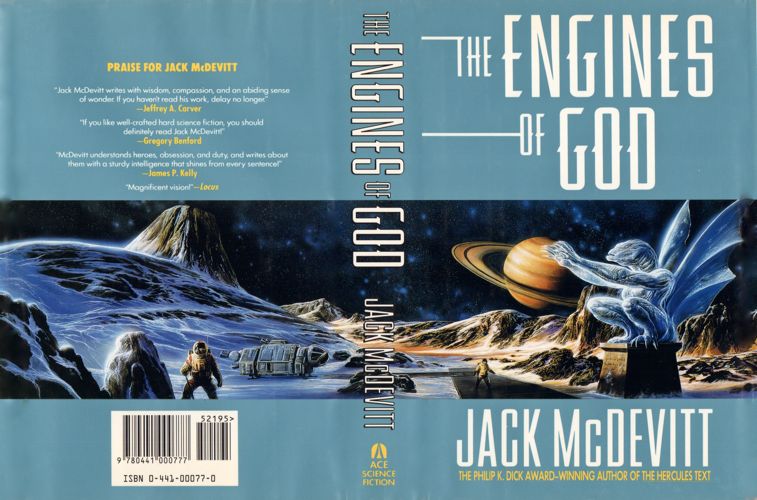
Jack McDevitt's Academy novels follow Priscilla 'Hutch' Hutchins, a starship pilot turned administrator, across a series of archaeological mysteries involving vanished alien civilizations and inexplicable ancient artifacts scattered through human space. Beginning with The Engines of God, the series treats deep time and the near-total absence of intelligent alien life as its central mystery, favoring slow-burn discovery over action. McDevitt returned to Hutch across three decades of publication.
- Cycle of Fire
Hal Clementstandalone novel1957
similar byother star systems+1 more
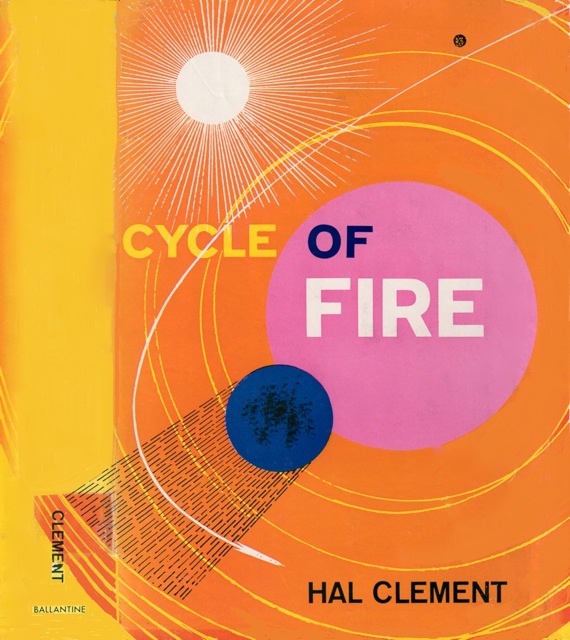
After his ship crashed on the inhospitable planet Abyorman, Nils Kruger had spent weeks wandering across the face of the planet.suffering from blistering heat, the searing cold of an alien climate. Now he had found a fellow wanderer, Dar, an alien castaway. They may both die. The human opts to do something about it. Dar, who knows the time of his death in advance, opts to do nothing. Which of them is right? Perhaps both
- Salvation
series3 books2018
similar byother star systems+1 more
By 2204, instantaneous jump-gate travel has made distance nearly meaningless, connecting Earth to its scattered colonies in a single step -- until a crashed alien ship of unknown origin turns up on a world eighty-nine light years away, carrying something far more dangerous than wreckage. Peter F. Hamilton's Salvation follows the investigation team sent to assess the find, one of whom may not be who they claim, while a second timeline set generations later shows the far-future fallout of what they discover. The trilogy continues through Salvation Lost and The Saints of Salvation.
- Blindsight / Firefall
series3 books2006
similar byfirst contact+1 more
Blindsight sends a crew of radically modified posthumans (including a resurrected, genetically restored vampire) out to the Oort cloud after humanity detects an alien signal, only to make contact with something intelligent, wildly capable, and possibly not conscious at all — a first-contact story built around the question of whether self-awareness is actually useful. Peter Watts's Echopraxia is a same-timeframe "sidequel" rather than a direct sequel, following different characters through the fallout of the same first-contact event.