More like Starfishers
anchored on:science fictionfar futurespace operaspace
but
- Moties
series4 books1974
part of CoDominium
similar byaliensfar futurescience fictionspacespace operaother star systems+2 more
Larry Niven and Jerry Pournelle's The Mote in God's Eye (1974) depicts humanity's first contact with an alien species, the Moties, set within the far-future interstellar setting of Pournelle's codominium future history. The Gripping Hand continues that first-contact crisis years later, and Outies, written by J. R. Pournelle, carries the story forward into a new generation. Together the three books trace an escalating encounter between human and Motie civilizations within the codominium universe.
- Heaven Chronicles / Zones of Thought
series8 books1976
similar byfar futurescience fictionspacespace opera+3 more
- Ender Wiggin
series14 books1977
part of Ender's Game Universe
similar byaliensfar futurescience fictionother star systems+3 more
Orson Scott Card's Ender's Game (1985, expanded from his 1977 novella) follows child prodigy Andrew "Ender" Wiggin as he is recruited into a military training program built to prepare Earth's defenses for an anticipated third war against an insectoid alien species known as the Formics. The saga continues years later through Speaker for the Dead and Xenocide, following an older Ender as he confronts the moral weight of his role in that earlier conflict, and concludes the core arc in Children of the Mind, with Ender in Exile filling in the years between the first two books. Set within the wider Ender's Game universe, the series shifts from military coming-of-age story to slower, more philosophical science fiction as it progresses.
- Transformation
series3 books2015
part of Polity
similar byfar futurescience fictionspacetensespace opera+3 more
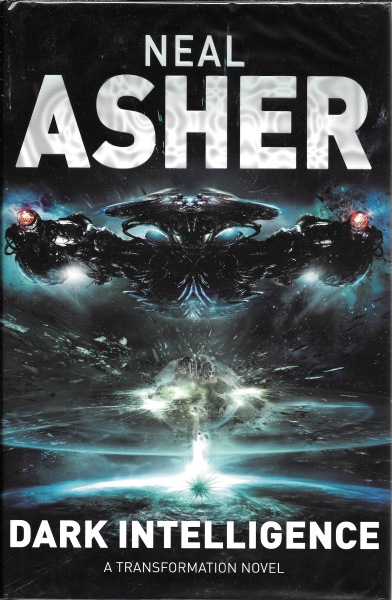
Neal Asher's Transformation trilogy, set within his wider Polity universe, follows an AI mind investigating a black-ops project gone wrong, opening with Dark Intelligence. War Factory and Infinity Engine escalate the search into a hunt across a mechanized alien warzone left behind by an earlier conflict. As with Asher's other Polity fiction, the story favors large-scale, hard-edged space combat over character-driven drama.
- Tower and the Hive
series7 books1959
completed
part of The Talents
similar byfar futurescience fictionspacespace operaother star systems+3 more
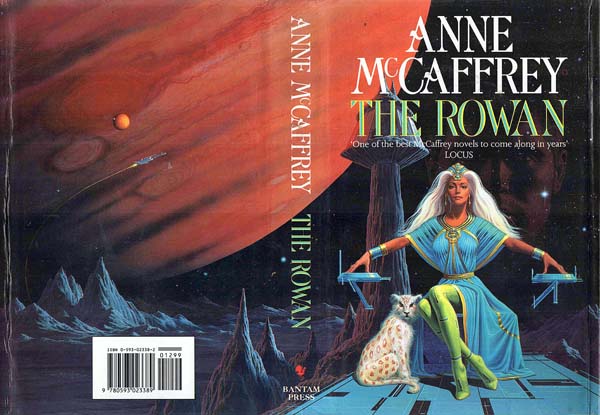
The Tower and the Hive series opens with The Rowan (1990), following an isolated but powerful telepath who is drawn out of her loneliness by a psychic call for help from a distant Talent facing an alien threat. Anne McCaffrey continued the story across four more novels, Damia, Damia's Children, Lyon's Pride, and the concluding The Tower and the Hive (1999), following later generations of a telepathic family staffing the Prime Towers that give a starfaring human civilization instant communication. The series is set later in the same Talents universe as McCaffrey's earlier Pegasus books.
- Old Man's War
series16 books2005
similar byfar futurescience fictionspacespace operawarother star systems+2 more
The Old Man's War series is a series of science fiction novels by John Scalzi. The first book in the series, Old Man's War, was first published in 2005 by Tor Books, and was nominated for the Hugo Award for Best Novel in 2006. In 2026 it was a finalist for the Hugo Award for Best Series.
- Uplift
series5 books1980
part of Uplift Universe
similar byaliensfar futurescience fictionspacespace operaother star systems+1 more
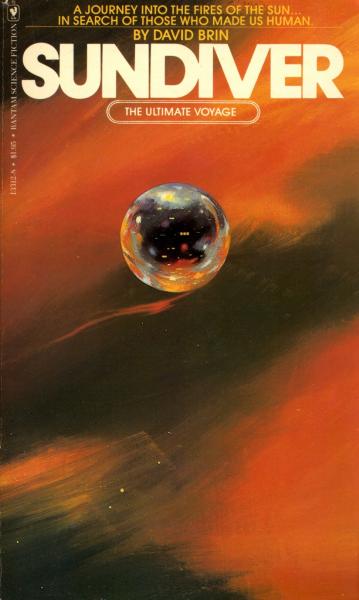
David Brin's Uplift trilogy opens with Sundiver, sending human explorers into the Sun itself, then follows a dolphin-crewed starship on the run from hostile aliens in Startide Rising and a fight over the colony world Garth in The Uplift War. The books sit inside Brin's wider Uplift Universe, built on the idea that spacefaring "patron" species genetically engineer younger "client" species into full sapience, with humanity an anomaly that reached the stars without a patron of its own.
- Uplift Universe
universe13 books1980
Start hereUplift · Start here
similar byaliensfar futurescience fictionspacespace operaother star systems+1 more
No species, the Galactics insist, ever climbs to sapience alone. For a billion years the elder races have "uplifted" their chosen clients — reshaping some promising animal, gene by patient gene, into a thinking being, then binding it through long ages of indenture. Patron lifts client; client one day becomes patron; and every lineage traces back through the vast Galactic Library to the vanished Progenitors who began it all. Then a ragged band of primates arrives at the stars with no patron to claim them — wolflings, self-made, an affront to a hundred thousand years of law — and worse, these humans have already started uplifting neighbors of their own: the neo-dolphins and neo-chimpanzees of Earthclan. David Brin builds this galaxy across two trilogies. The first — Sundiver, the Hugo- and Nebula-winning Startide Rising, and the Hugo-winning The Uplift War — sends an expedition into the Sun, then follows the dolphin-crewed survey ship Streaker as it flees a discovery that sets fanatical star-clans at war, and a chimp-led resistance on an invaded colony world. The second sequence, Uplift Storm — Brightness Reef, Infinity's Shore, Heaven's Reach — descends to Jijo, a forbidden world where six fallen races hide as illegal settlers, and draws every loose thread toward a reckoning. Short fiction fills the margins. This is space opera with an ecologist's conscience: teeming with invented biologies, wry cross-species banter, and real unease about what we owe the minds we make. Begin with Startide Rising — the saga's beating heart, and readable on its own — or take Sundiver first and read straight through in publication order.
- The Gap
series5 books1990
similar byaliensfar futurescience fictionspacedarktensespace opera+1 more
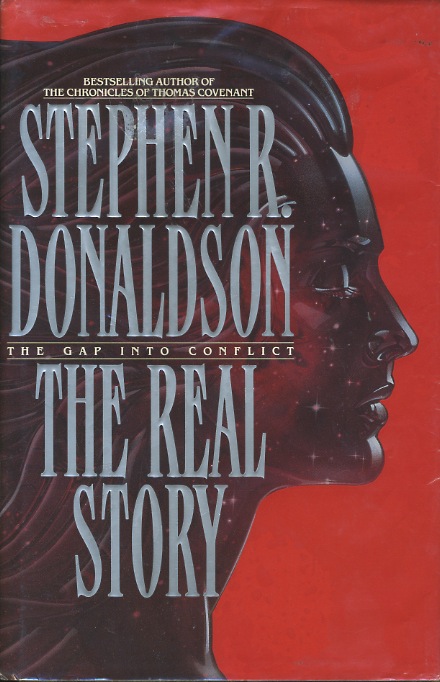
The Gap Cycle is a series of science fiction novels by Stephen R. Donaldson, more usually known for his works of epic fantasy. The series was originally published between 1991 and 1996 by Bantam Books and was reprinted by Gollancz in 2008 in the UK. Here, Donaldson gave a loose retelling of Wagner's Ring cycle.
- Ian Cormac
series6 books2001
part of Polity
similar byfar futurescience fictionspacetensespace operaother star systems+1 more
Neal Asher's Ian Cormac novels (Gridlinked, The Line of Polity, Brass Man, Polity Agent, Line War, plus the earlier-set prequel Shadow of the Scorpion) follow Ian Cormac, an agent of Earth Central Security in Asher's Polity universe. Gridlinked opens with Cormac investigating a destroyed matter-transmitter on a remote colony while wrestling with the personality erosion caused by long-term neural linkage to the Polity's AI network; the following novels escalate into interstellar conflict with the alien Prador. Together they form the core action sequence of Asher's wider Polity series.
- Chanur
series7 books1982
part of Alliance-Union Universe
similar byaliensfar futurescience fictionspacetensespace operaother star systems
The Chanur novels are a series of five science fiction novels, forming three separate stories, written by American author C. J. Cherryh and published by DAW Books between 1982 and 1992. The first novel in the series is The Pride of Chanur (1982), which was nominated for both the Hugo and Locus Awards in 1983. The Pride of Chanur, originally a stand-alone story, was followed by the Chanur's Venture trilogy, Chanur's Venture (1984), which was shortlisted for a Locus Award in 1985; The Kif Strike Back (1985) and Chanur's Homecoming (1986). These were followed by a later sequel, Chanur's Legacy (1992). The five novels were also published in two omnibus editions: the first three in The Chanur Saga in 2000 and the next two in Chanur's Endgame in 2007.
- Sun Eater
series36 books2018
similar byfar futurescience fictiondarkspace operawar+4 more
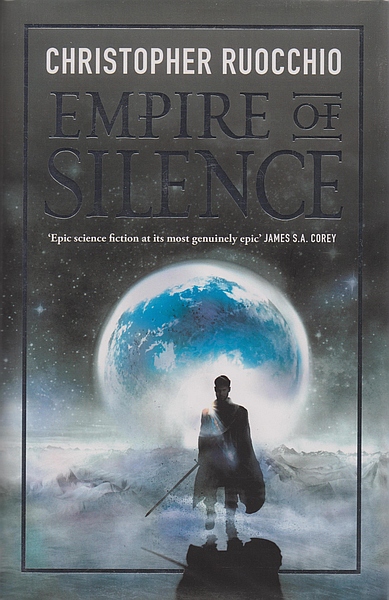
The Sun Eater is a science fiction novel series written by American author Christopher Ruocchio. Not including short stories and novellas, the series consists of the following novels: Empire of Silence (2018), Howling Dark (2019), Demon in White (2020), Kingdoms of Death (2022), Ashes of Man (2022), Disquiet Gods (2024), and Shadows Upon Time (2025).
- Berserker (Fred Saberhagen)
series59 books1963
similar byfar futurescience fictionspacetensespace operawarother star systems+1 more
The Berserker series is a series of space opera science fiction short stories and novels by Fred Saberhagen, in which robotic self-replicating machines strive to destroy all life.
- Ocean / Galactic Center
series12 books1972
similar byaliensscience fictionfar future+6 more
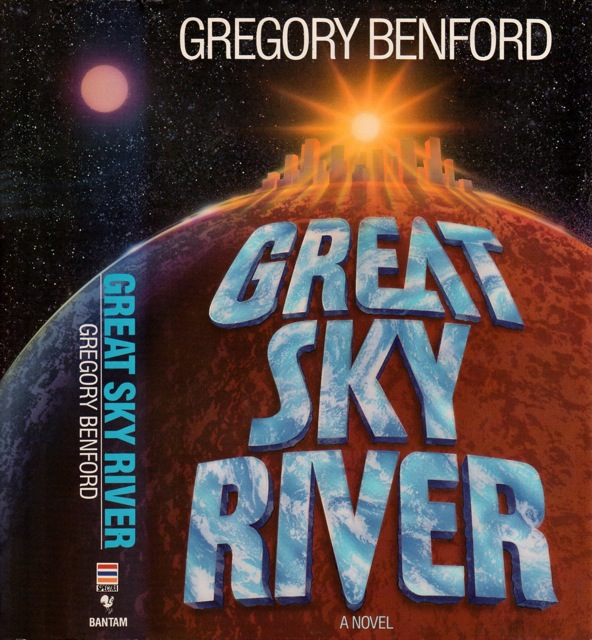
The Galactic Center Saga is a series of books by author Gregory Benford detailing a galactic war between mechanical and biological life.In the Ocean of Night (1977) — 1977 Nebula Award nominee, 1978 Locus Award nominee Across the Sea of Suns (1984) Great Sky River (1987) — 1988 Nebula Nominee Tides of Light (1989) — 1990 Locus Award nominee Furious Gulf (1994) Sailing Bright Eternity (1996) "A Hunger for the Infinite" a novella published in the anthology Far Horizons
- Ringworld
series5 books1970
part of Known Space
similar byaliensfar futurescience fictionspacespace operaother star systems
The Ringworld series is a series of science fiction novels written by American author Larry Niven. It is part of his Known Space series of stories. Its backdrop is the Ringworld, a giant artifact 3 million times the surface area of Earth circling a star. The series is composed of four standalone science fiction novels, the original award-winning book and its three sequels:1970: Ringworld 1979: The Ringworld Engineers 1996: The Ringworld Throne 2004: Ringworld's Children
- Providence
Max Barrystandalone novel2020
similar byaliensfar futurescience fictionspacetensespace operawar+1 more
Providence is the sixth novel by Australian science fiction author Max Barry. It was published in March 2020 by Putnam.
- Shoal Sequence
series4 books2007
similar byaliensfar futurescience fictionspacetensespace operaother star systems+1 more
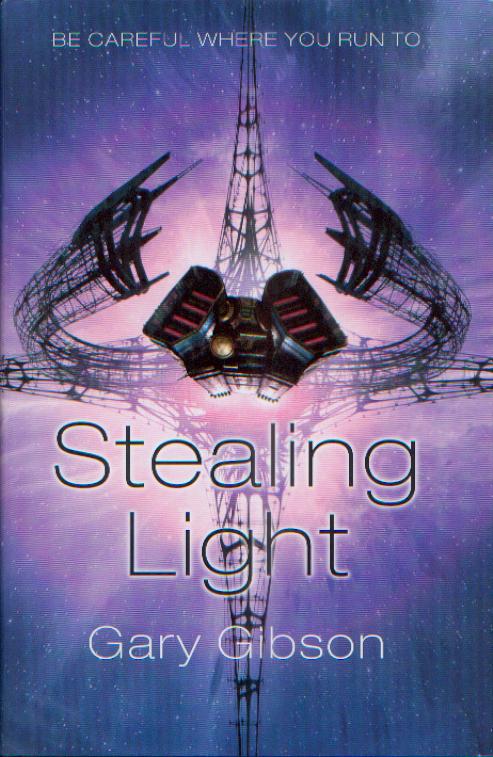
Gary Gibson's Shoal Sequence opens with Stealing Light, set two centuries into humanity's uneasy dependence on the Shoal, an alien race that alone holds the secret of faster-than-light travel. Military pilot Dakota Merrick, having witnessed the Shoal's atrocities, is drawn into events around a derelict starship that threaten to upend that arrangement across the four-book series.
- Fifth Imperium
series3 books1991
similar byaliensfar futurescience fictionspacetensespace operawar+1 more
David Weber's Fifth Imperium series opens with the discovery that Earth's Moon is in fact a disguised alien starship, the Dahak, that has orbited undetected for tens of thousands of years - a relic of the fallen Fourth Imperium, a multi-star civilization destroyed while defending against the genocidal Achuultani. Mutineers' Moon follows humanity's first contact with Dahak and the mutineers still aboard it; The Armageddon Inheritance and Heirs of Empire escalate from that discovery into interstellar war and dynastic politics as humanity inherits the old empire's legacy and its enemies. The three novels were later collected as the omnibus Empire from the Ashes.
- Azean Empire
series2 books1987
similar byfar futurescience fictiondarktensespace operawar+3 more
C. S. Friedman's Azean Empire novels are set in a distant-future conflict between two competing human societies, the Azeans and the Braxins, contesting interstellar dominance. In Conquest Born, her debut, works as space opera and military SF with an anthropological bent, using the two societies' opposed cultures and reproductive philosophies as the real engine of the conflict rather than just the battles themselves. The Wilding continues the same interstellar rivalry.
- Xan-Sskarn War
series1 book2010
similar byaliensfar futurescience fictionspacedarktensespace operawar+1 more
- Commonwealth Saga
series2 books2004
part of Commonwealth Universe
similar byaliensfar futurescience fictiontensespace opera+2 more
The Commonwealth Saga is a series of science fiction novels by British science fiction writer Peter F. Hamilton. This saga consists of the novels Pandora's Star (2004) and Judas Unchained (2005). Hamilton has also written several books set in the same literary universe. Misspent Youth (2002) takes place 340 years before the events of Pandora's Star. The Void Trilogy, consisting of The Dreaming Void (2008), The Temporal Void (2009), and The Evolutionary Void (2010), takes place 1,200 years after the events of Judas Unchained; several of the main characters from Judas Unchained and Pandora's Star also appear in the Void trilogy.
- Rise of the Jain
series3 books2018
part of Polity
similar byaliensfar futurespacetensescience fictionspace operawarother star systems+1 more
- The Dosadi Experiment
Frank Herbertstandalone novel1977
similar byaliensfar futurescience fictiontensespace operaother star systems+1 more
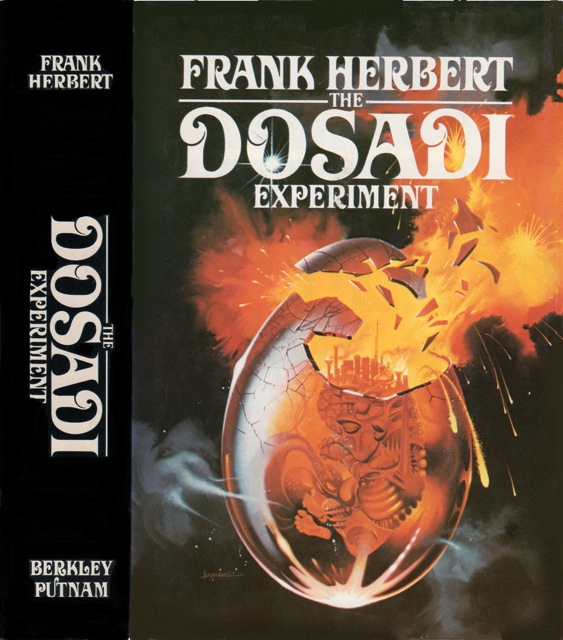
From the flaps of the Berkley Putnam first edition: "In his first new work of science fiction since the best-selling Children of Dune, Frank Herbert returns to his world of Whipping Star, and involves Jorj X. McKie, Saboteur Extraordinary, in a new intrigue. In Whipping Star, McKie discovered that some of the stars in the universe are actually intelligent, super-powerful beings, and was able to befriend one of them, the star Alcyone - affectionately known as Fannie Mae. As The Dosadi Experiment opens, McKie is assigned to investigate the planet Dosadi, which is isolated from the rest of the galaxy by a "god-wall," a barrier set up by one of the intelligent stars. Dosadi is rumored to be an experimental planet, and the experimenters are the froglike Gowachin, whose culture is founded upon a strange legal system in which McKie is the only human ever trained. He learns that humans and Gowachin have been placed on Dosadi, without their consent, for an experiment that could last centuries: an experiment in extreme overcrowding. But this monstrous plot is apparently out of control, and it seems the Gowachin may be prepared to destroy Dosadi rather than expose its secret, thus breaking the peace among the races, and starting the first interstellar war. But this is just the beginning. When McKie finally reaches Dosadi he discovers that the Dosadis have taken control of their own evolution and produced a competitive, highly evolved elite, of both humans and Gowachin, who have been able to extrapolate the existence of a universe beyond the god-wall and hate whoever has imprisoned them like this. They plan to break out and avenge themselves on the galaxy."