More like System Harbinger
anchored on:science fictionmilitary science fiction
but
- Forever War
series10 books1972
similar byfar futurescience fictionmilitary science fictionspace+4 more
Joe Haldeman's The Forever War (1974) follows a soldier conscripted into a centuries-long interstellar war against the alien Taurans, using relativistic space travel so that months spent in transit correspond to years or decades passing back on Earth. Haldeman later returned to the same conflict in Forever Peace (1997), a thematically connected but separate story, and Forever Free (1999), a direct sequel set years after the original war's end. The first novel won the Hugo, Nebula, and Locus awards and is considered a foundational work of military science fiction.
- Ender Wiggin
series14 books1977
part of Ender's Game Universe
similar byaliensfar futurescience fictionother star systems+2 more
Orson Scott Card's Ender's Game (1985, expanded from his 1977 novella) follows child prodigy Andrew "Ender" Wiggin as he is recruited into a military training program built to prepare Earth's defenses for an anticipated third war against an insectoid alien species known as the Formics. The saga continues years later through Speaker for the Dead and Xenocide, following an older Ender as he confronts the moral weight of his role in that earlier conflict, and concludes the core arc in Children of the Mind, with Ender in Exile filling in the years between the first two books. Set within the wider Ender's Game universe, the series shifts from military coming-of-age story to slower, more philosophical science fiction as it progresses.
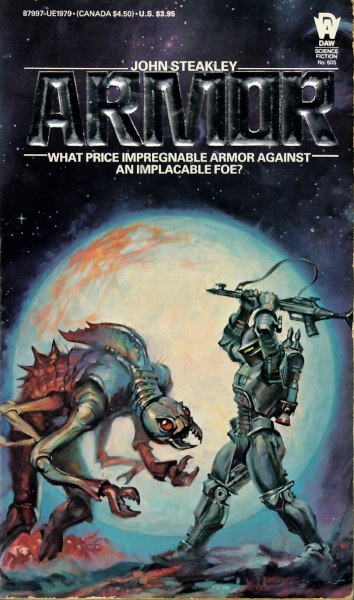
- Armor
John Steakleystandalone novel1984
similar bydarkalienswarfar futurescience fictionmilitary science fictionother star systemstense
Armor is a military science fiction novel by John Steakley. It features the military use of exoskeletons and insect-like alien enemies but concentrates on the psychological effects of violence on human beings.
- Berserker (Fred Saberhagen)
series59 books1963
similar bywarfar futurescience fictionspaceother star systemstense+2 more
The Berserker series is a series of space opera science fiction short stories and novels by Fred Saberhagen, in which robotic self-replicating machines strive to destroy all life.
- Death's Head (David Gunn)
series3 books2007
similar bydarkwarfar futurescience fictionmilitary science fictionspacetense+1 more
Death's Head is a noir military science fiction series written by David Gunn. The series follows the antihero Sven Tveskoeg, an ex-sergeant of The Legion, in service to the Octovian Empire.
- Ocean / Galactic Center
series12 books1972
similar byaliensfar futurescience fiction+5 more
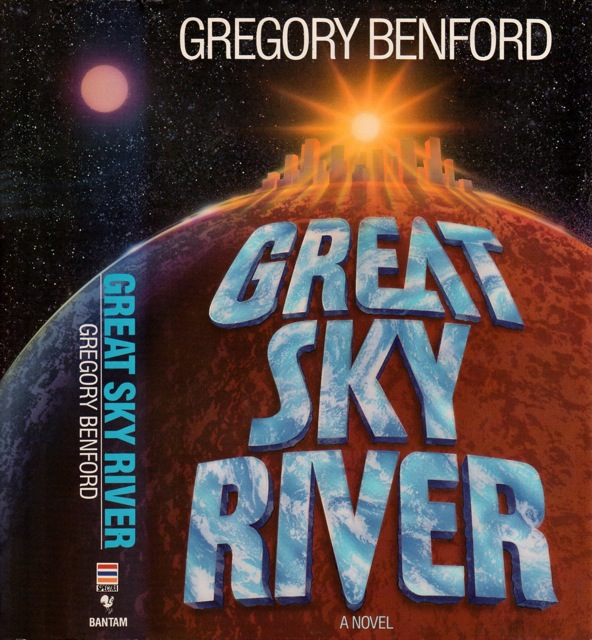
The Galactic Center Saga is a series of books by author Gregory Benford detailing a galactic war between mechanical and biological life.In the Ocean of Night (1977) — 1977 Nebula Award nominee, 1978 Locus Award nominee Across the Sea of Suns (1984) Great Sky River (1987) — 1988 Nebula Nominee Tides of Light (1989) — 1990 Locus Award nominee Furious Gulf (1994) Sailing Bright Eternity (1996) "A Hunger for the Infinite" a novella published in the anthology Far Horizons
- Nicholas Seafort
series7 books1994
completed
similar bywarfar futurescience fictionmilitary science fictionspacetense+3 more
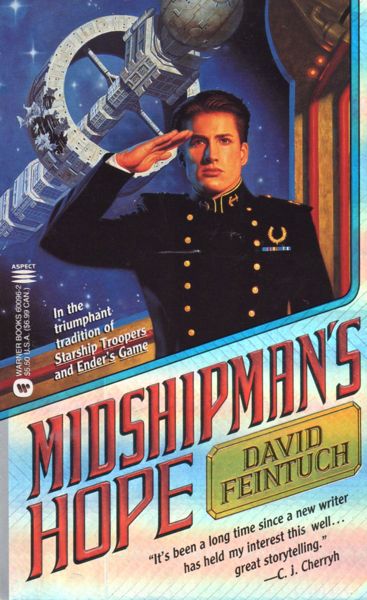
The Seafort Saga is a series of science fiction novels written by American author David Feintuch. The novels are set from the late 22nd century to the mid-23rd century and relate the adventures of Nicholas Seafort, an officer in the (fictional) UNNS| United Nations Naval Service. The series is a collection of personal accounts, usually from the perspective of Nicholas Seafort, describing Seafort's adventures, beginning as a lowly midshipman, to the elected leader of earth, and finally to the captain of the UNNS flagship Olympiad. Although most books in the series are told from a single perspective, usually Seafort's, Voices of Hope is a collection of accounts from several sources: Seafort's son, PT, the son of a friend of Seafort's, and a transient boy named Pook. Additionally, Children of Hope is narrated by Randy Carr, the son of a close friend of Seafort.
- Dune
series20 books1963
part of Dune Universe
similar byfar futurescience fictionother star systems+2 more
Frank Herbert's Dune Chronicles opens with 1965's Dune, set on the desert planet Arrakis where House Atreides takes control of the only source of the vital spice melange and young Paul Atreides is pulled into a struggle over its politics and religion. Herbert carried the story forward across five further novels — Dune Messiah, Children of Dune, God Emperor of Dune, Heretics of Dune, and Chapterhouse: Dune — following Paul's line over the following millennia, before Brian Herbert and Kevin J. Anderson later extended the saga. Many other editions of these six novels are omnibus and box-set repackagings rather than separate stories.
- Night's Dawn Trilogy
series9 books1996
part of Confederation Universe
similar byfar futurescience fictionspace+3 more
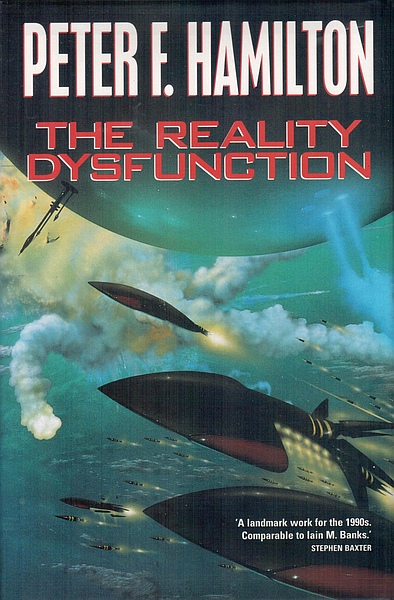
British author Peter F. Hamilton's The Night's Dawn Trilogy consists of three science fiction novels: The Reality Dysfunction (1996), The Neutronium Alchemist (1997), and The Naked God (1999). A collection of short stories, A Second Chance at Eden, shares the same universe, and The Confederation Handbook documents that universe in non-fiction style.
- Sun Eater
series36 books2018
similar bydarkwarfar futurescience fiction+5 more
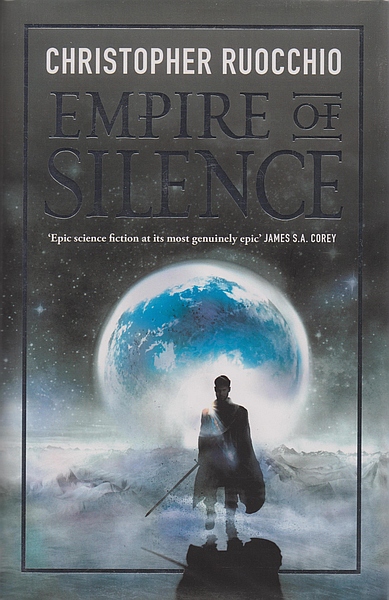
The Sun Eater is a science fiction novel series written by American author Christopher Ruocchio. Not including short stories and novellas, the series consists of the following novels: Empire of Silence (2018), Howling Dark (2019), Demon in White (2020), Kingdoms of Death (2022), Ashes of Man (2022), Disquiet Gods (2024), and Shadows Upon Time (2025).
- Dune Universe
universe78 books1963
Start hereDune · Start here
similar byfar futurescience fictionother star systems+2 more
Arrakis. Dune. The desert planet, where empire runs on a single substance: the spice melange, which folds space, prolongs life, and unlocks prescience, and which exists nowhere else in the known universe. Frank Herbert's saga is a meditation dressed as an adventure — feudal houses and a secret sisterhood, engineered messiahs and the patient ecology of a world without water, all turning on the terrible gravity of who commands the spice. It reads like scripture and schemes like a war room, ten thousand years hence, among people who have outlawed the thinking machine and made instruments of themselves instead. At its heart stand Herbert's original six — Dune, Dune Messiah, Children of Dune, God Emperor of Dune, Heretics of Dune, Chapterhouse: Dune — a single deepening arc across millennia, arguing the whole way between prophecy and free will. Around that spine his son Brian Herbert and Kevin J. Anderson have raised a vast prequel architecture: Prelude to Dune, tracing the great houses a generation before Paul; Legends of Dune, reaching back to the crusade that broke the machines; the Schools of Dune cycle on the founding of Bene Gesserit, Mentat, and Navigator; the Caladan Trilogy and Heroes of Dune filling years the originals left in shadow. Many hands, dozens of volumes, one desert. What sets Dune apart is its refusal of the simple: religion is manufactured, heroes are hazards, and the sand itself — worm, water, ecology — acts as a political power. Begin where the universe did, with Frank Herbert's Dune (1965), and read the original six in order; you need nothing else to feel the full weight. The prequels are a country to explore afterward, taken by era. Beginnings are delicate times.
- War Dogs
series3 books2014
completed
similar byscience fictionmilitary science fictionspace+5 more
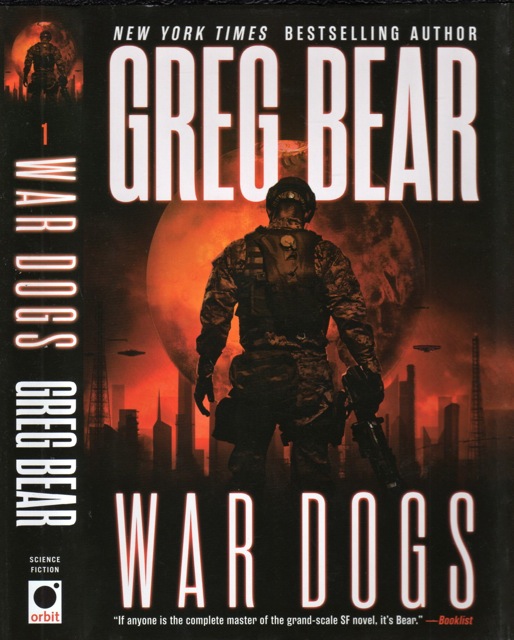
Greg Bear's trilogy opens with humanity fighting an entrenched, technologically superior alien presence across the Solar System, following a soldier drafted into a war whose true stakes he only gradually understands. War Dogs (later reissued as War Dogs: Ares Rising) was followed by Killing Titan and Take Back the Sky as the scope of the alien threat, and the deceptions surrounding it, widens.
- Starship Troopers
Robert A. Heinleinstandalone novel1959
similar byalienswarfar futurescience fictionmilitary science fictionspaceother star systems
Starship Troopers is a military science fiction novel by American writer Robert A. Heinlein. Written in a few weeks in reaction to the US suspending nuclear tests, the story was first published as a two-part serial in The Magazine of Fantasy & Science Fiction as Starship Soldier, and published as a book by G. P. Putnam's Sons on November 5, 1959.
- Old Man's War
series16 books2005
similar bywarfar futurescience fictionmilitary science fictionspaceother star systems+2 more
The Old Man's War series is a series of science fiction novels by John Scalzi. The first book in the series, Old Man's War, was first published in 2005 by Tor Books, and was nominated for the Hugo Award for Best Novel in 2006. In 2026 it was a finalist for the Hugo Award for Best Series.
- Azean Empire
series2 books1987
similar bydarkwarfar futurescience fictiontense+4 more
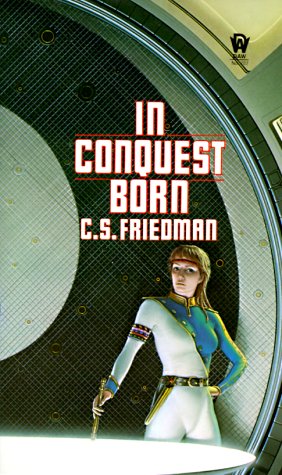
C. S. Friedman's Azean Empire novels are set in a distant-future conflict between two competing human societies, the Azeans and the Braxins, contesting interstellar dominance. In Conquest Born, her debut, works as space opera and military SF with an anthropological bent, using the two societies' opposed cultures and reproductive philosophies as the real engine of the conflict rather than just the battles themselves. The Wilding continues the same interstellar rivalry.
- Hammer's Slammers
series35 books1974
similar byfar futurescience fictionmilitary science fictionother star systems+3 more
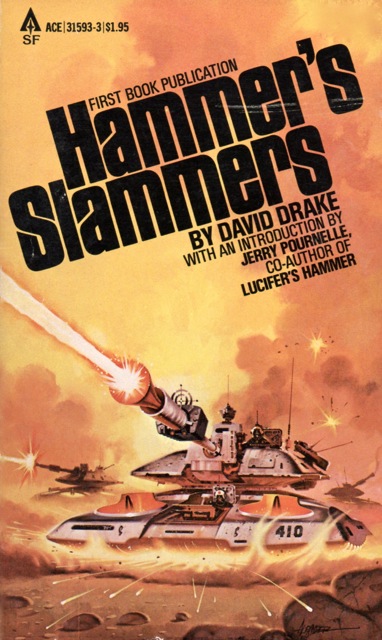
Hammer's Slammers follows an armored mercenary tank regiment, originally raised by the government of Friesland to crush a colonial rebellion, that goes on to sell its services across a scattering of future worlds under the hard-nosed Colonel Alois Hammer. David Drake, drawing directly on his own Vietnam-era service with the 11th Armored Cavalry, writes the unit's campaigns with a deliberately unglamorous, close-to-the-ground feel, treating mercenary war as dirty business rather than adventure. The series runs across many novels and story collections rather than one continuous arc.
- Forbidden Borders
series3 books1991
similar bywarfar futurescience fictionmilitary science fictionspaceother star systemstense+1 more
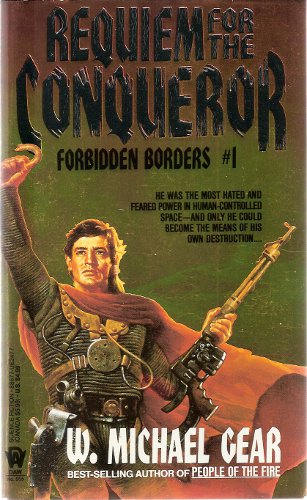
William Michael Gear, better known as W. Michael Gear, is an American writer and archaeologist. He is the author of North America's Forgotten Past series, co-written with his wife Kathleen O'Neal Gear. His novels have been published in 29 languages.
- Transformation
series3 books2015
part of Polity
similar byfar futurescience fictionspacetense+4 more
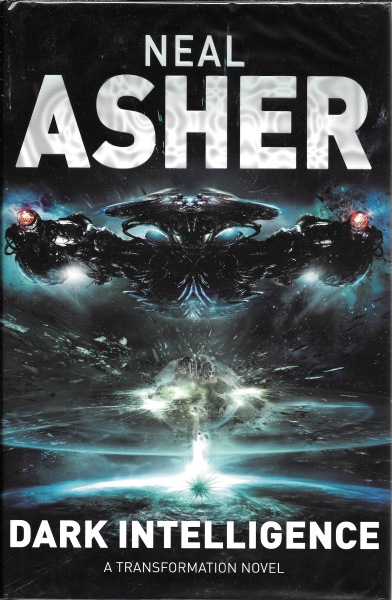
Neal Asher's Transformation trilogy, set within his wider Polity universe, follows an AI mind investigating a black-ops project gone wrong, opening with Dark Intelligence. War Factory and Infinity Engine escalate the search into a hunt across a mechanized alien warzone left behind by an earlier conflict. As with Asher's other Polity fiction, the story favors large-scale, hard-edged space combat over character-driven drama.
- Halo
series66 books2001
part of Halo Universe
similar byfar futurescience fictionmilitary science fictionspaceother star systems+3 more
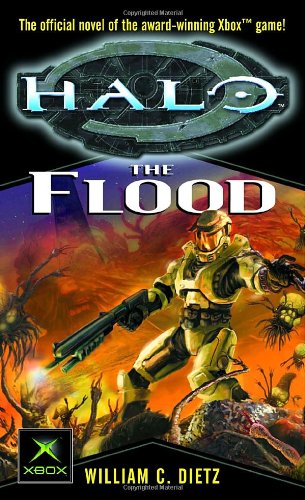
Halo's tie-in novels expand the video-game franchise's war between humanity and the alien Covenant, and later the ancient Forerunners, across dozens of books by a rotating slate of authors overseen by the franchise's owner (Bungie, then 343 Industries). Eric Nylund's The Fall of Reach, chronicling the Master Chief's childhood conscription into the Spartan program, launched the line alongside the first game in 2001, and it has since grown to cover side characters, prequels, and new eras of the setting. It's licensed franchise fiction rather than a single authored series.
- Culture
series15 books1987
completed
part of The Culture
similar byfar futurescience fiction+3 more
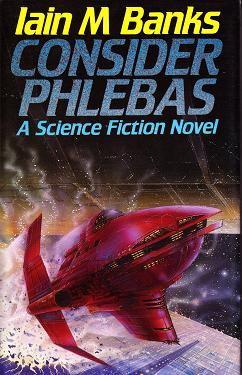
The Culture series is a science fiction series written by Scottish author Iain M. Banks and released from 1987 until 2012. The stories centre on The Culture, a utopian, post-scarcity space society of humanoid aliens and advanced superintelligent artificial intelligences living in artificial habitats spread across the Milky Way galaxy. The main themes of the series are the dilemmas that an idealistic, more-advanced civilization faces in dealing with smaller, less-advanced civilizations that do not share its ideals, and whose behaviour it sometimes finds barbaric. In some of the stories, action takes place mainly in non-Culture environments, and the leading characters are often on the fringes of the Culture, sometimes acting as agents of the Culture in its plans to civilize the galaxy. Each novel is a self-contained story with new characters, although reference is occasionally made to the events of previous novels.
- Xan-Sskarn War
series1 book2010
similar bydarkalienswarfar futurescience fictionmilitary science fictionspaceother star systems+1 more
- Rise of the Jain
series3 books2018
part of Polity
similar byalienswarfar futurescience fictionmilitary science fictionspaceother star systemstense+1 more
- Dangerous Visions
series7 books1967
completed
similar byscience fiction+3 more
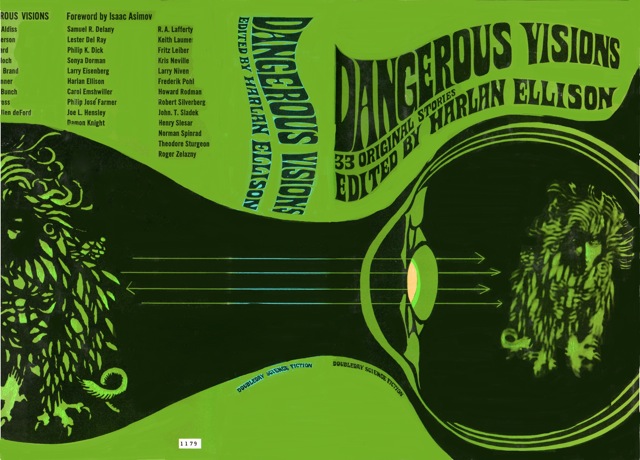
Dangerous Visions (1967), Again, Dangerous Visions (1972), and the posthumously finished The Last Dangerous Visions (2024) are Harlan Ellison's landmark science fiction anthologies of original, previously unpublished stories, each conceived to push past the genre's conventional boundaries of its time. Ellison edited and introduced all three, though his death in 2018 left the final volume to be completed and published by others years later. The three books form a loosely connected set of era-defining anthologies spanning nearly six decades rather than a continuous story.