Loreful
HomeDiscover
Search series, authors…⌘K
Loreful

Series-first reading tracker: what you've read, what's next, and what you're missing.

Explore

UniversesSeriesWorksAuthorsAtlas

Help

FAQAboutSite map

Account & legal

Sign inCreate accountPrivacyTerms

Data

Built on ISFDB, Wikipedia, Wikidata and Open Library. Every reading order is hand-picked, with a rationale on the page. Data sources & licenses

© Loreful · data: ISFDB · CC BY

More like The Bands of Mourning

anchored on:fantasysteampunkmagical artifactssecondary worldquestsbig city+2 more

but

Mood

The mood the book leaves you in.

  • The reading experience is propelled by journeys, exploration, and physical risk; excitement and forward momentum dominate over dread or introspection.
  • Joy and loss are deliberately mixed; the resolution grants characters something real while taking something else away, leaving warmth and sorrow together.
  • The book demands work from the reader — dense prose, difficult structure, unfamiliar ideas, or morally uncomfortable material — as part of its intended effect.
  • Grim events, cruelty, or despair dominate the atmosphere, and the book does not soften them with comfort or comic relief.
  • The atmosphere is quietly unsettling — wrongness, unease, and the uncanny pervade the book without necessarily escalating into overt horror.
  • The book is built to move the reader; character feeling is foregrounded and major scenes aim at a strong emotional response.
  • Humor is a primary aim and the prose plays for laughs — comic situations, wit, or dialogue produce sustained comedy, not occasional levity.
  • The book insists that things can improve; effort and decency are shown to matter, and the arc bends toward better outcomes even through hardship.
  • The book teaches as it goes — real facts, history, science, or craft are conveyed in enough depth that learning is part of the reading experience.
  • The book is designed to uplift and motivate, presenting perseverance or achievement in a way that invites the reader to aspire or act.
  • The overall register is cheerful and easygoing; stakes are kept gentle and the book avoids dwelling on pain or dread.
  • Withheld information drives the experience; the book sustains enigmas and secrets the reader wants resolved, whatever its genre.
  • The book is contemplative and inward-looking, giving more weight to thought, memory, and meaning than to external events.
  • The book works as comfort reading — low tension, a soothing pace, and an atmosphere the reader can unwind in.
  • Grief, loss, or melancholy set the dominant register, and the book lets sorrow stand rather than resolving it into comfort.
  • Sustained suspense is the point; the book keeps the reader braced for what happens next through danger, pressure, or impending revelation.
  • Playful invention and charm define the register — fanciful conceits, light absurdity, and a narration that delights in its own oddity.

About

What the story runs on.

  • Stories in which extraterrestrial beings are central — as characters, cultures, or the object of the plot.
  • Stories about venturing into space to explore — survey missions, astronauts, and the frontier of the unknown beyond Earth.
  • Stories structured as a quest — a journey undertaken to find, deliver, or destroy something of great import.
  • Stories in which staying alive against nature, catastrophe, or scarcity is the central problem.
  • Stories of lovers kept apart by law, family, faith, or station, where the obstacle to love is the plot.
  • Stories in which a friendship — its making, testing, or loss — is the emotional center.
  • Stories of growing up — a young protagonist crossing from childhood into adult knowledge and responsibility.
  • Stories about who a character truly is — self-discovery, doubled lives, and the search for a self.
  • Stories in which a buried family truth — hidden parentage, crimes, or shames — surfaces and reorders the present.
  • Stories driven by maneuvering for power — factions, conspiracies, and statecraft conducted in shadow.
  • Stories in which war itself is the subject — combat, occupation, and what warfare does to soldiers and civilians.
  • Stories organized around investigating a killing — the case, the clues, and the pursuit of the killer, in any genre's clothing.

Shelf

Where it sits in the library.

    • Fiction built on magic or other supernatural elements that have no scientific explanation.
    • Secondary-world fantasy at large scale, where the fate of nations or the world turns on the protagonists' struggle.
    • Fantasy set in a recognizably modern city or contemporary world where the supernatural intrudes on everyday life.
    • Fantasy that blends in horror's atmosphere and imagery, keeping a fantastical frame around grim or frightening material.
    • Action-driven fantasy following warriors or rogues with personal stakes against sorcerous threats, rather than world-spanning conflicts.
    • Fantasy set in a real historical period or a close analogue of one, with magic woven into the era.
    • Fantasy in which protagonists cross from the ordinary world into another world through a portal or similar passage.
    • Fiction that retells or reworks a traditional fairy tale in a new form or setting.
    • Fantasy drawing directly on myths, legends, and folklore, retelling them or building on their figures and logic.
    • Fantasy of ghosts, vampires, shapeshifters, psychics, and similar phenomena, usually set in an otherwise ordinary world.
    • Fiction mixing science-fictional trappings with overtly magical or impossible elements in one setting.
    • Low-stakes fantasy emphasizing comfort, community, and everyday pleasures over conflict and peril.
    • Speculative fiction of pervasive moral ambiguity, violence, and cynicism that rejects heroic conventions — fantasy and SF alike.
      • Fiction that extrapolates from science and technology — future societies, space travel, or speculative inventions — within at least nominally natural laws.
      • Science fiction of interstellar scope — starships, galactic polities, and adventure across star systems.
      • Science fiction committed to scientific rigor, where technical plausibility constrains the story.
      • Science fiction centered on armed forces and warfare, told largely from a military point of view.
      • Science fiction of networked, corporate-dominated near futures, pairing high technology with social decay.
      • Science fiction styled on nineteenth-century steam-powered technology, often in a Victorian or pseudo-Victorian setting.
      • Fiction depicting an oppressive or catastrophic society, presented as a warning.
      • Fiction set after civilization's collapse, following survivors in the ruins of the old world.
      • Fiction in which characters move between past and future, and the mechanics or consequences of that travel drive the plot.
      • Fiction exploring a world where a historical event went differently and history diverged from ours.
      • Science fiction about humanity's first encounter and communication with an alien intelligence.
      • Science fiction in which extraterrestrial forces attack or occupy Earth and humanity resists.
      • Fiction whose primary aim is to frighten or unsettle the reader through dread, menace, or the monstrous.
      • Horror of vast, indifferent, incomprehensible entities before which humanity is insignificant, in the Lovecraft tradition.
      • Horror of decaying houses, buried family secrets, and oppressive atmosphere in the Gothic literary tradition.
      • Horror centered on hauntings and the returning dead.
      • Horror located in the mind — paranoia, obsession, and unreliable perception rather than external monsters.
      • Horror built around the reanimated dead and survival amid their outbreaks.
      • Horror defined by explicit, transgressive gore that refuses to cut away from violence.
      • Speculative fiction of the strange and uncanny that resists both natural explanation and standard genre categories.
      • Fiction organized around solving a crime or puzzle, typically following an investigator toward the identification of a culprit.
      • A puzzle-first mystery that lays out clues so the culprit's identity can be deduced before the reveal.
      • Crime fiction of moral ambiguity, fatalism, and hard-edged style, set among the corrupt and the doomed.
      • A mystery following the realistic routines of police work — forensics, interviews, and case-building.
      • A gentle mystery with an amateur sleuth, a small community, and violence kept off the page.
      • A mystery set in a past era, where the investigation works within that period's methods and society.
      • Fast-paced fiction driven by imminent danger, pursuit, or high-stakes conspiracy, built to sustain tension.
      • A thriller of espionage — agents, tradecraft, and intelligence services in conflict.
      • A thriller centered on lawyers and the courtroom, where litigation carries the suspense.
      • A thriller driven by detailed contemporary or near-future technology, often military or scientific.
      • A thriller whose tension comes from mental states and manipulation between characters rather than external action.
      • Fiction whose central plot is a romantic relationship and its development toward an emotionally satisfying resolution.
      • Romance in which one or both partners are supernatural beings, blending fantasy elements into the love story.
      • A fantasy-romance hybrid in which the romantic arc and the fantasy plot carry equal weight.
      • Romance set in a past era, with courtship shaped by the period's society and manners.
      • Romance set in the present day, without supernatural or historical elements.
      • Fiction set in a real past period, where the historical setting materially shapes characters and events.
        • General and literary fiction emphasizing prose style, character interiority, or formal ambition over genre plot conventions.
        • Fiction in a realistic world where magical events occur and are treated as ordinary, in the tradition of Latin American literature.
        • Fiction that ridicules people, institutions, or society in order to criticize them.
        • Fiction of dreamlike, irrational imagery and logic that breaks from realistic representation.
        • Fiction that plays with narrative convention through metafiction, fragmentation, and self-reference.
        • Fiction propelled by journeys, exploration, and physical peril, where action and survival carry the plot.
        • Adventure fiction of ships and seafaring — naval engagements, voyages, and life at sea.
        • Fiction of the American frontier West — gunmen, ranchers, and lawmen, typically in the late nineteenth century.
        • Fiction centered on soldiers, campaigns, and the experience of warfare, historical or imagined.
          • Fiction written primarily to amuse, using comedic situations, wit, or parody as its organizing principle.
            • Multi-generational fiction following a family or dynasty across decades, with inheritance and kinship as the through-line.
              • Fiction whose world runs on explicit game mechanics — levels, stats, and skills that characters can see and exploit.
                • Fiction about costumed or superpowered heroes and their conflicts with comparable villains.

                Practical

                How long a commitment, whether it stands alone, and whether it has finished.

                Tap a chip to ask for it · tap again to rule it out · once more to clear. Numbers show what would be left.

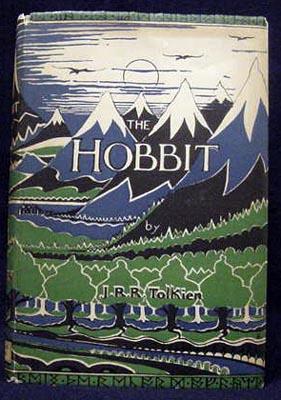
                • The Hobbit

                  series · 2 books · 1937

                  completed

                  part of Tolkien's legendarium

                  similar byadventurousfantasyquestssecondary worldepic fantasy+1 more

                  The Hobbit (1937) is J. R. R. Tolkien's children's fantasy novel following the reluctant burglar Bilbo Baggins, who joins a company of dwarves and the wizard Gandalf on a journey to reclaim treasure guarded by the dragon Smaug. It stands as a complete adventure on its own, but shares its setting with the rest of Tolkien's legendarium and leads into the events of The Lord of the Rings.

                • The Ivory Key

                  series · 2 books · 2022

                  similar bymagical artifactsadventurousfantasyquestssecondary worldepic fantasy+1 more

                • The Quest of the Riddle-Master

                  series · 3 books · 1976

                  completed

                  similar byadventurousfantasyquestssecondary worldepic fantasy+1 more

                  Patricia A. McKillip's Riddle-Master trilogy follows Morgon, prince of the small island of Hed, whose discovery of three star-shaped birthmarks on his forehead draws him into a search for his own hidden identity and a confrontation with ancient, shape-shifting powers. Drawing on Celtic myth, the three books are prized for their lyrical prose and riddle-based magic, and are often cited among the best high fantasy of the 1970s.

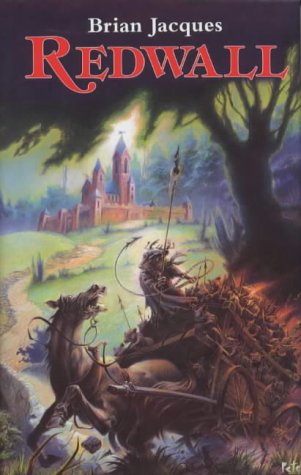
                • Redwall

                  series · 22 books · 1986

                  completed

                  part of Redwall Universe

                  similar byadventurousfantasyquestssecondary world+1 more

                  Redwall is Brian Jacques's long-running series of fantasy novels for young readers, set within the redwall-universe of Redwall Abbey and its community of anthropomorphic animals. It opened in 1986 with the mouse Matthias searching for the lost sword of the legendary Martin the Warrior to defend the abbey from the invading rat Cluny the Scourge, and grew across 22 largely stand-alone novels published through 2011, each set in a different generation of the abbey's history and following its mice, otters, badgers, and vermin adversaries.

                • The Fire's Stone

                  Tanya Huff · standalone novel · 1990

                  similar bymagical artifactsadventurousfantasyquestssecondary worldepic fantasy+1 more

                  From the back cover of the DAW Books first edition: Thief, Swordsman, and Wizardess... Aaron - Clan Heir, he had fled his people when his beloved was slain by his own father's command, abandoning his training, duty, and beliefs to become a thief. A master of his trade, he now dared the odds in Ischia, city of the volcano, where the price of being caught was death. Darvish - prince of Ischia, third son of a king who had no intention of giving up his throne. The prince was a drunkard, a lover, and a wastrel, yet was gifted with sword skills and with the ability to charm all around him. But not even his charm could free him from the political marriage now being planned. Chandra - born a princess, she had chosen to become a Wizard of the Nine, that rarest of beings, able to master all the forms that sorcery could take. Now, promised as Darvish's bride, she undertook a desperate journey to Ischia to convince him they must not wed. Aaron, Darvish, Chandra - three strangers whose fates were about to become intertwined. For someone had stolen The Stone, the magical talisman which stood between Ischia and the volcano's wrath. And unless the three could learn to work together on a quest to the The Stone, Ischia would drown in a sea of lava...

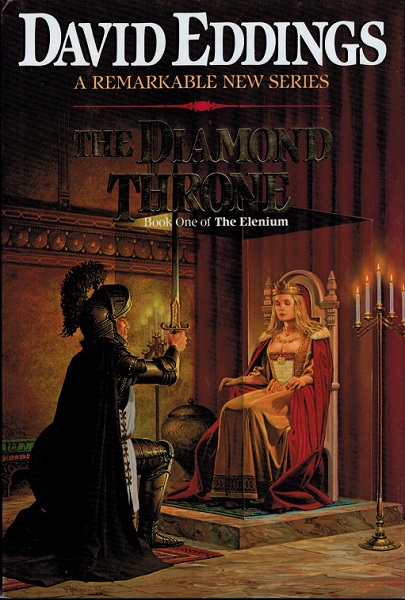
                • Sparhawk

                  universe · 6 books · 1989

                  Start hereElenium · Start here

                  similar byadventurousquestssecondary worldfantasyepic fantasy+2 more

                  Sir Sparhawk is not a young man, and he has little patience for the pageantry his order pretends to. A Pandion Knight of the militant Elene Church, he rides home from a long exile to find his kingdom rotten with intrigue and his young queen, Ehlana, poisoned — kept alive only inside a shell of living crystal. To wake her he must find Bhelliom, a jewel with the power to remake the world or unmake it. So begins a long ride across the continent of Eosia. This is warm, character-first epic fantasy from David Eddings, told across two trilogies. The Elenium — The Diamond Throne, The Ruby Knight, The Sapphire Rose — pits Sparhawk against a corrupt church and a hungry elder god. The Tamuli — Domes of Fire, The Shining Ones, The Hidden City — carries him east into the vast Tamul Empire, where older enemies stir. Around him gathers a quarrelsome company: the Styric sorceress Sephrenia, the thief-boy Talen, the plain-spoken squire Kurik, and a small, imperious goddess who plays a set of pipes and always, somehow, gets her way. The pleasure here is the talk — grizzled knights trading dry insults between miracles and murders, a hero who solves as many problems with patience as with a sword. It never reaches for grimness or grand obscurity; it wants your good company for a long journey. Newcomers begin with The Diamond Throne and read the six in order: the Elenium stands whole on its own before the Tamuli widens the map.

                • Elenium

                  series · 3 books · 1989

                  completed

                  part of Sparhawk

                  similar byadventurousquestssecondary worldfantasyepic fantasy+1 more

                  The Elenium is a series of fantasy novels by American writer David Eddings. The series consists of three volumes: The Diamond Throne, The Ruby Knight, and The Sapphire Rose. The series is followed by The Tamuli. The Elenium is Eddings' third fantasy series.

                • The Lord of the Rings

                  series · 13 books · 1954

                  part of Tolkien's legendarium

                  similar bysecondary worldepic fantasy+4 more

                  The Lord of the Rings is an epic high fantasy novel written by the English author and scholar J. R. R. Tolkien. Set in Middle-earth, the story began as a sequel to Tolkien's 1937 children's book The Hobbit but eventually developed into a much larger work. Written in stages between 1937 and 1949, The Lord of the Rings is one of the best-selling books ever written, with over 150 million copies sold.

                • Narnia

                  series · 26 books · 1950

                  part of Narnia Universe

                  similar byadventurousfantasysecondary world+2 more

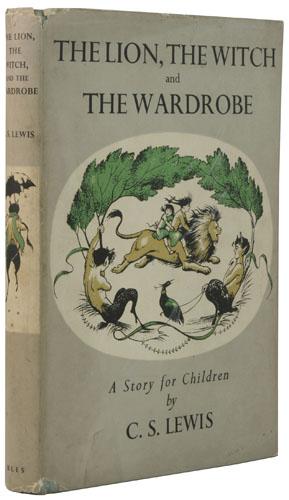
                  The Chronicles of Narnia is a series of seven portal fantasy novels by British author C. S. Lewis. Illustrated by Pauline Baynes and originally published between 1950 and 1956, the series is set in the fictional realm of Narnia, a fantasy world of magic, mythical beasts, and talking animals. It narrates the adventures of various children who play central roles in the unfolding history of the Narnian world. Except in The Horse and His Boy, the protagonists are all children from the real world who are magically transported to Narnia, where they are sometimes called upon by the lion Aslan to protect Narnia from evil. The books span the entire history of Narnia, from its creation in The Magician's Nephew to its eventual destruction in The Last Battle.

                • The Princess and the Goblin

                  series · 2 books · 1871

                  completed

                  similar byadventurousfantasyquestssecondary world

                • D
                  Deltora milieu

                  series · 53 books · 1993

                  similar byadventurousfantasyquestssecondary world+3 more

                • The Well at the World's End

                  William Morris · standalone novel · 1896

                  similar byadventurousquestssecondary worldfantasyepic fantasy+1 more

                  The Well at the World's End is a high fantasy novel by the British textile designer, poet, and author William Morris. It was first published in 1896 and has been reprinted repeatedly since, most notably in two parts as the 20th and 21st volumes of the Ballantine Adult Fantasy series, in August and September 1970.

                • The White Mists of Power

                  Kristine Kathryn Rusch · standalone novel · 1991

                  similar byadventurousfantasyquestssecondary worldpolitical intrigueepic fantasy+1 more

                  Synopsis -An innocent excited boy, a prince and heir, takes his first journey to the city. It is like nothing he imagined. Hands pound against his carriage: voices call for a coin, Sir just one, spare me some money, sir, I haven’t eaten in days. The streets teem with merchants in velvet robes, magicians, half mad preachers, with life and colour and noise. He doesn’t want to miss any of it. But it is the last journey of his life as a prince. Soon he will be abandoned and declared dead. Soon with survival and what will be the driving force of his life: the quest to recover his stolen inheritance, his usurped throne. His home. A story of cities and palaces, of power hungry lords and ladies scheming inside a magically threatened land...Intricate, compelling.

                • Sovereign Stone

                  series · 4 books · 1999

                  similar byadventurousquestsmagical artifactssecondary worldfantasyepic fantasy+1 more

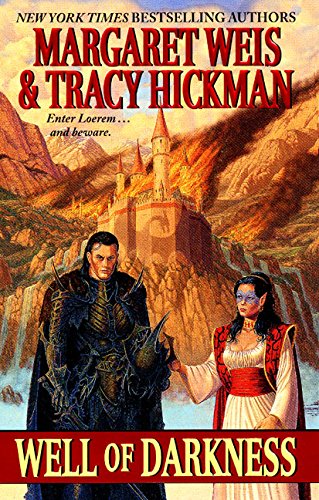
                  The Sovereign Stone series is a trilogy of fantasy novels: Well of Darkness (2000), Guardians of the Lost (2001), and Journey into the Void (2003), set in the same universe of the Sovereign Stone role-playing game. Both the books and the game were primarily written by Margaret Weis and Tracy Hickman.

                • The Princess Bride

                  William Goldman · standalone novel · 1973

                  similar byadventurousfantasyquestssecondary world

                  The Princess Bride: S. Morgenstern's Classic Tale of True Love and High Adventure, The "Good Parts" Version is a 1973 fantasy romance novel by American writer William Goldman. The book combines elements of comedy, adventure, fantasy, drama, romance, and fairy tale. It is metafictionally presented as an abridgment of a longer work by the fictional S. Morgenstern, and Goldman's commentary asides are constant throughout. It was originally published in the United States by Harcourt Brace, then later by Random House, while in the United Kingdom it was later published by Bloomsbury.

                • C
                  Corum

                  series · 6 books · 1971

                  part of Moorcock's Multiverse

                  similar byadventuroussecondary worldmagical artifactsfantasyepic fantasy+1 more

                • The Keepers (Lian Tanner)

                  series · 3 books · 2010

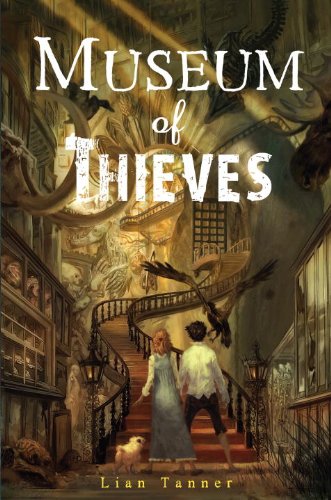
                  similar byadventurousfantasymysterioussecondary worldbig city+1 more

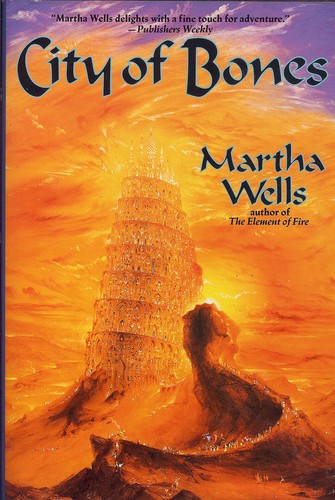
                • City of Bones

                  Martha Wells · standalone novel · 1995

                  similar byadventurousquestssecondary worldfantasybig city+1 more

                  From the dust jacket laps of the Tor first edition: "....With City of Bones, Wells shapes a fabled and mysterious Arabian Nights wonderland in which science and magic meet in a head-on clash. it is a place that has been devastated by an ancient holocaust, and where not of the world's water has evaporated. But out of the ashes, a bizarre and wonderful civilization arises. Sand ship now traverse the routes once used by the great war galleons, and a glittering chain of city-states dot the Great Waste. And the greatest of them all is Charisat. Charisat, Imperial seat and wonder of wonders, a great monolithic structure towering over the desert. Charisat, a phantasmagorical place where silken courtesans and beggars weave lies side by side, where any man's dreams can be fulfilled at the whisper of a genie, and where the tier that you live on determines how high up the food (or more importantly, water) chain you are. Charisat, the goal of every schemer, treasure hunter, and madman intent on finding his hearts content. For if it can't be had in Charisat, it's not worth having. A beautiful woman and a handsome thief try to unravel the mysteries of an age-old technology to stop a fanatical cult before its members unleash an evil that will topple Charisat. And destroy all the water in the world."

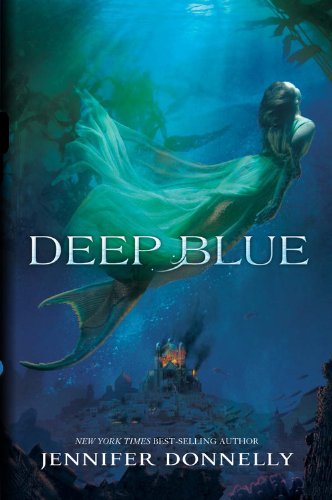
                • Waterfire Saga

                  series · 4 books · 2014

                  similar byadventurousfantasyquestssecondary world+3 more

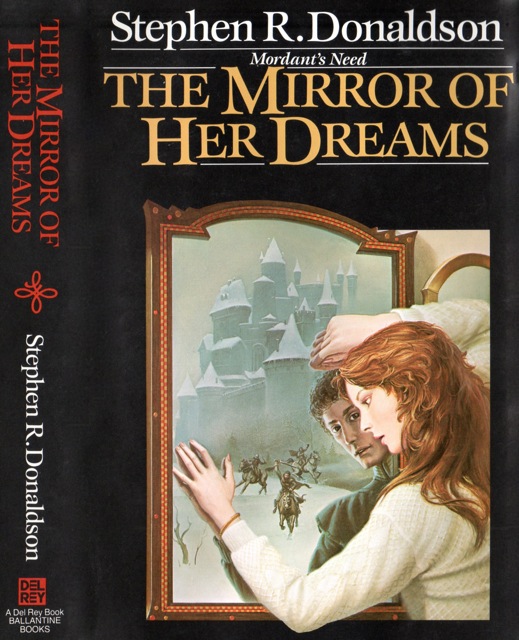
                • Mordant's Need

                  series · 2 books · 1986

                  similar byadventurousfantasysecondary worldpolitical intrigue+2 more

                  Mordant's Need is a fantasy two-part book series by American writer Stephen R. Donaldson, comprising the novels The Mirror of Her Dreams (1986) and A Man Rides Through (1987).

                • Rithmatist

                  series · 1 book · 2013

                  similar byadventurousmysteriousfantasysecondary world+1 more

                  The Rithmatist series is a young adult fantasy series written by American author Brandon Sanderson. At least two books are planned in the series: The Rithmatist (2013) and a second volume, titled The Aztlanian, is planned.

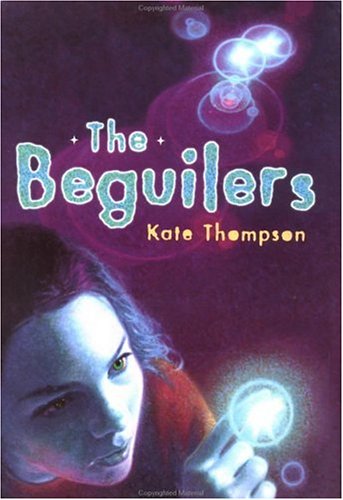
                • The Beguilers

                  Kate Thompson · standalone novel · 2001

                  similar byadventurousmysteriousfantasyquestssecondary world

                  A mystical tale from the multi-award-winning author of The Switchers Trilogy and The New Policeman. There is a dire warning never to peep out at them. There are stories of people who succumbed to their voices and walked out into the night, never to be seen again. But Rilka, frustrated by the culture of her people, is determined to catch a Beguiler and solve the mystery of their existence and so she embarks on an adventure that will change her life, and the lives of those around her, for ever.This novel confirms Kate Thompson's position as a writer of rare imagination and power.

                • Railsea

                  China Miéville · standalone novel · 2012

                  similar byadventurousquestssecondary worldfantasysteampunk

                  Railsea is a young adult novel written and illustrated by English writer China Miéville, and published in May 2012. Miéville described the novel as "weird fiction", io9 labelled its mix of fantasy and steampunk elements as "salvagepunk" and the story has been seen as an "affectionate parody" of Herman Melville's classic 1851 novel Moby-Dick, also drawing on Robert Louis Stevenson's adventure novels Treasure Island and Kidnapped.

                • Trillium / World of the Three Moons

                  series · 5 books · 1990

                  similar byadventuroussecondary worldfantasyepic fantasy+2 more

                  Trillium is a series of five fantasy novels by Marion Zimmer Bradley, Julian May, and Andre Norton, each with the word "trillium" in the title. They take place in a post-holocaust world that is hinted to be a colony of earth on another planet where magic works.