More like The Bare Essentials
anchored on:science fiction
but
- Pip & Flinx
series18 books1972
part of Humanx Commonwealth
similar byaliensscience fictionother star systemsfar future
The Pip & Flinx novels follow Flinx, a young man with an unusual, mysterious origin, and his ever-present animal companion Pip, across Alan Dean Foster's Humanx Commonwealth setting. Beginning with The Tar-Aiym Krang (1972) — chronologically the second entry, since Foster later filled in Flinx's earlier life — the series grew to fifteen novels published between 1972 and 2017, mixing planetary adventure with a slowly unfolding personal mystery.
- Viagens Interplanetarias
series23 books1949
completed
similar byaliensscience fictionother star systemsfar future
The Viagens Interplanetarias series is a sequence of science fiction stories by L. Sprague de Camp, begun in the late 1940s and written under the influence of contemporary space opera and sword and planet stories, particularly Edgar Rice Burroughs's Martian novels. Set in the future in the 21st and 22nd centuries, the series is named for the quasi-public Terran agency portrayed as monopolizing interstellar travel, the Brazilian-dominated Viagens Interplanetarias. It is also known as the Krishna series, as the majority of the stories belong to a sequence set on a fictional planet of that name. While de Camp started out as a science fiction writer and his early reputation was based on his short stories in the genre, the Viagens tales represent his only extended science fiction series.
- Hainish
series33 books1964
completed
similar byscience fictionother star systemsfar future+1 more
The Hainish Cycle consists of a number of science fiction novels and stories by Ursula K. Le Guin. The cycle is set in a future history that features civilizations of human beings on planets orbiting a number of nearby stars, including Terra ("Earth"); these humans are contacting each other for the first time and establishing diplomatic relations, as well as setting up a confederacy under the guidance of the oldest of the human worlds, the peaceful planet Hain. In this history, human beings did not evolve on Earth, but they were instead the result of interstellar colonies planted by Hain in the distant past, after which interstellar travel ceased for an extended period. Some of the human races have new genetic traits, a result of ancient Hainish experiments in genetic engineering; this includes people who can dream while awake, and a world of hermaphroditic people who only enter active sexuality once per month, not knowing which sex will manifest in them. In keeping with Le Guin's narrative approach, she uses varied social and environmental settings to explore the anthropological and sociological outcomes of human evolution in those environments. The author often discounted the characterization of a so-called "Hainish Cycle".
- Starship Troopers
Robert A. Heinleinstandalone novel1959
similar byaliensscience fictionother star systemsfar future
Starship Troopers is a military science fiction novel by American writer Robert A. Heinlein. Written in a few weeks in reaction to the US suspending nuclear tests, the story was first published as a two-part serial in The Magazine of Fantasy & Science Fiction as Starship Soldier, and published as a book by G. P. Putnam's Sons on November 5, 1959.
- Ender Wiggin
series14 books1977
part of Ender's Game Universe
similar byaliensscience fictionother star systemsfar future
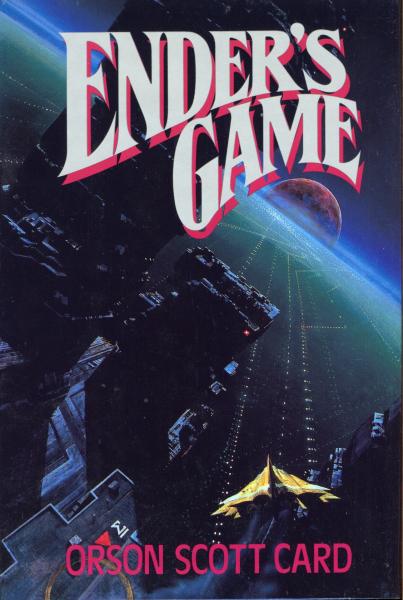
Orson Scott Card's Ender's Game (1985, expanded from his 1977 novella) follows child prodigy Andrew "Ender" Wiggin as he is recruited into a military training program built to prepare Earth's defenses for an anticipated third war against an insectoid alien species known as the Formics. The saga continues years later through Speaker for the Dead and Xenocide, following an older Ender as he confronts the moral weight of his role in that earlier conflict, and concludes the core arc in Children of the Mind, with Ender in Exile filling in the years between the first two books. Set within the wider Ender's Game universe, the series shifts from military coming-of-age story to slower, more philosophical science fiction as it progresses.
- Ringworld
series5 books1970
part of Known Space
similar byaliensscience fictionother star systemsfar future
The Ringworld series is a series of science fiction novels written by American author Larry Niven. It is part of his Known Space series of stories. Its backdrop is the Ringworld, a giant artifact 3 million times the surface area of Earth circling a star. The series is composed of four standalone science fiction novels, the original award-winning book and its three sequels:1970: Ringworld 1979: The Ringworld Engineers 1996: The Ringworld Throne 2004: Ringworld's Children
- Hoka
series33 books1951
completed
similar byaliensscience fictionother star systemsfar future
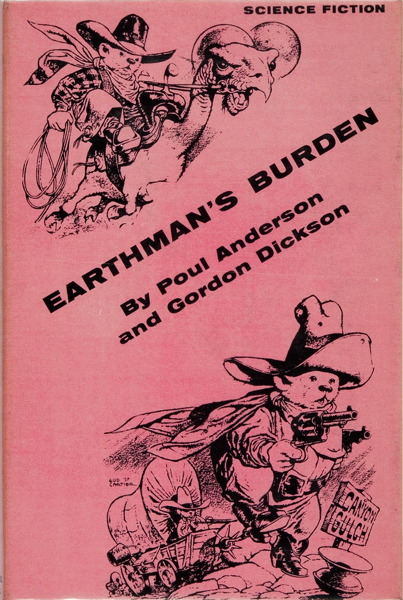
Poul Anderson and Gordon R. Dickson's Hoka stories follow the Hokas, a teddy-bear-like alien race who enthusiastically role-play human genres and history, to comic effect. Beginning with the linked collection Earthman's Burden (1957) and its sequel Hoka!, the stories and the novel Star Prince Charlie were later gathered into omnibus editions such as Hoka! Hoka! Hoka! and The Sound & the Furry.
- Karres
series5 books1949
similar byother star systemsfar future+1 more
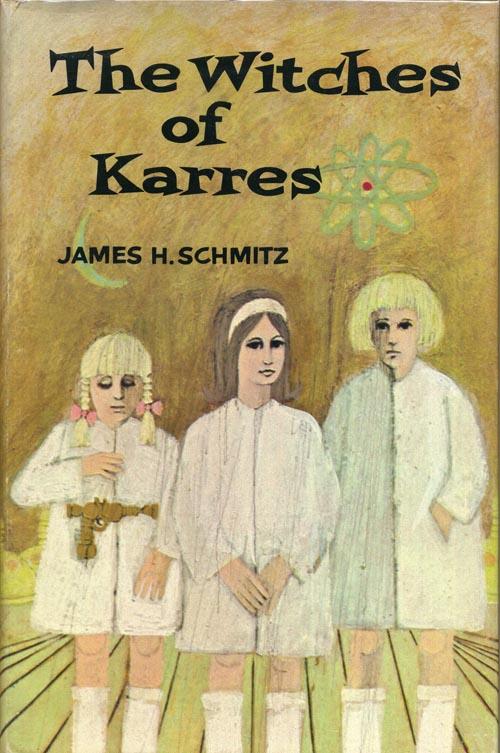
The Witches of Karres, James H. Schmitz's 1966 space opera, follows a young merchant-ship captain who impulsively frees three strange sisters from indentured servitude and finds himself dragged into interdimensional invaders, space pirates, and magic far stranger than his cargo runs prepared him for. Schmitz never wrote a follow-up himself, but the story was continued decades later by other hands — The Wizard of Karres, The Sorceress of Karres, The Shaman of Karres — carrying Captain Pausert and the Karres witches forward.
- Hitchhiker's Guide to the Galaxy
series16 books1979
part of The Hitchhiker's Guide to the Galaxy Universe
similar byscience fictionfar future+2 more
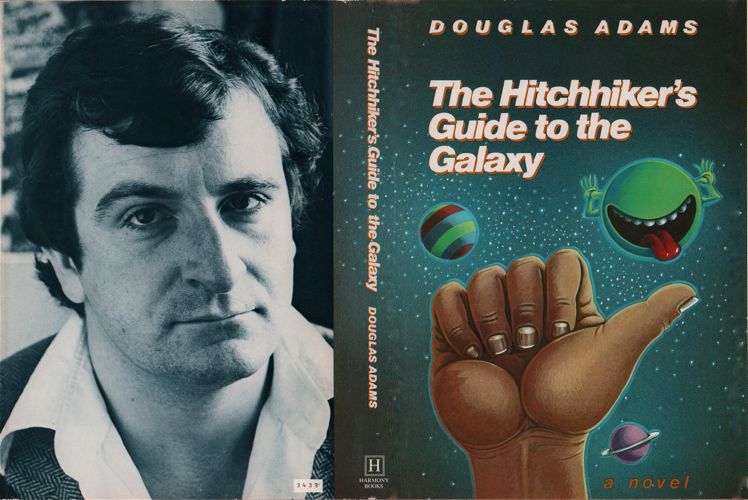
The Hitchhiker's Guide to the Galaxy is a comedy science fiction franchise created by Douglas Adams. Originally a radio sitcom broadcast over two series on BBC Radio 4 between 1978 and 1980, it was soon adapted to other formats, including both novels and comic books, a 1981 BBC television series, a 1984 text adventure game, stage shows and a 2005 feature film.
- Forever War
series10 books1972
similar byscience fictionfar future+1 more
Joe Haldeman's The Forever War (1974) follows a soldier conscripted into a centuries-long interstellar war against the alien Taurans, using relativistic space travel so that months spent in transit correspond to years or decades passing back on Earth. Haldeman later returned to the same conflict in Forever Peace (1997), a thematically connected but separate story, and Forever Free (1999), a direct sequel set years after the original war's end. The first novel won the Hugo, Nebula, and Locus awards and is considered a foundational work of military science fiction.
- Moties
series4 books1974
part of CoDominium
similar byaliensscience fictionother star systemsfar future
Larry Niven and Jerry Pournelle's The Mote in God's Eye (1974) depicts humanity's first contact with an alien species, the Moties, set within the far-future interstellar setting of Pournelle's codominium future history. The Gripping Hand continues that first-contact crisis years later, and Outies, written by J. R. Pournelle, carries the story forward into a new generation. Together the three books trace an escalating encounter between human and Motie civilizations within the codominium universe.
- Sector General
series36 books1957
similar byaliensscience fictionfar future
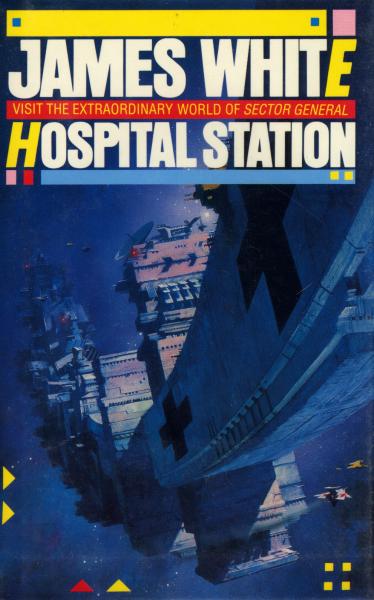
Sector General is a series of twelve science fiction novels and various short stories (1957–1999) by the Northern Irish author James White. The series derives its name from the setting of the majority of the books, the Sector 12 General Hospital, a large hospital space station located in deep space, designed to treat a wide variety of life forms with a wide range of ailments and life-support requirements, and to house an equally diverse staff. The Hospital was founded to promote peace after humanity's first interstellar war, and in the fourth book the authorities conclude that its emergency services are the most effective way to make peaceful contact with new species.
- Terro-Human Future History
universe48 books1952
Start hereFuzzy Sequence · Start here
similar byscience fictionother star systemsfar future
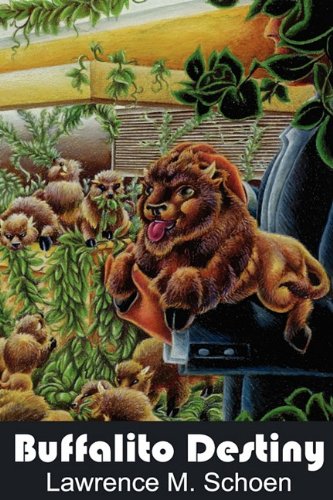
History does not repeat, Piper's chroniclers are fond of saying — it rhymes, and it rhymes in iron. Reckon the years from the first atomic pile, 1942, Year One of the Atomic Era, and follow the ledger forward some six thousand years: out of a nuclear war that nearly ended everything, up through the Terran Federation and its reach into the stars, down again through collapse and a long neobarbaric dark, and back up into the enlightened empires that rise from the ruins. It is one continuous future history — not a plot but a chronicle, worlds and centuries sharing a single unbroken timeline. H. Beam Piper assembled it in pieces through the 1950s and 60s, novels and novellas bound by chronology rather than by recurring heroes. The anchors are Little Fuzzy, a courtroom argument over whether a small golden native of Zarathustra is a person; Space Viking, raid and revenge amid the wreckage of the interregnum; and the Federation-era Four-Day Planet, The Cosmic Computer, and Uller Uprising. The eras sort cleanly — Federation, the System States War, the Space Vikings of the long dark, the Empire. After Piper's death in 1964 other hands took up the ledger: John F. Carr, who arranged the short fiction into the chronological Federation and Empire collections and carried on the Tanith and Space Viking line, plus Wolfgang Diehr's Fuzzy sequels and Dietmar Arthur Wehr's additions. The register is sober and engineer-eyed — competent men solving hard problems, empires ruled by benign despots, the cool conviction that civilizations rise and fall to the same recurring script. It ranges from the sunlit warmth of the Fuzzy books to the cold steel of a Viking raid. Newcomers start with Little Fuzzy, the warmest and most self-contained, or with Space Viking.
- Starman Jones
Robert A. Heinleinstandalone novel1953
similar byscience fictionother star systemsfar future+1 more
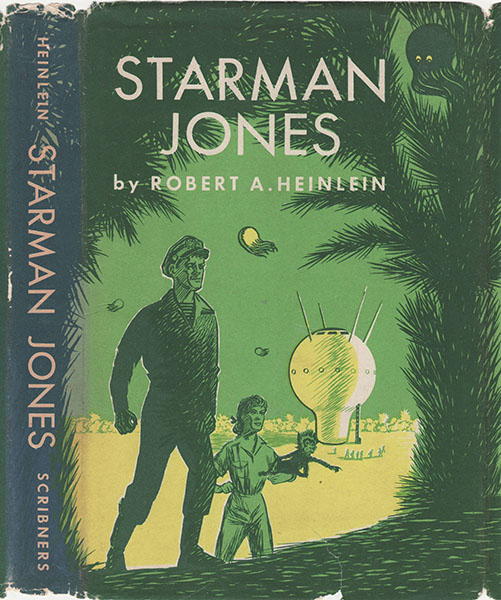
Starman Jones, a 1953 science fiction novel by Robert A. Heinlein, features a farm boy who wants to go to the stars. Charles Scribner's Sons published the book as part of the Heinlein juveniles series.
- The Gods Themselves
Isaac Asimovstandalone novel1972
similar byaliensscience fictionother star systemsfar future
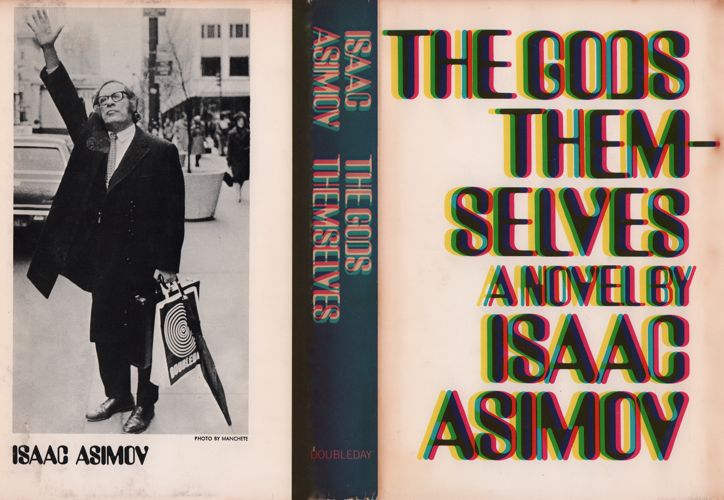
The Gods Themselves is a 1972 science fiction novel written by Isaac Asimov, and his first original novel in fifteen years. It won the Nebula Award for Best Novel in 1972, and the Hugo Award for Best Novel in 1973.
- Heechee
series19 books1972
completed
similar byaliensscience fictionother star systemsfar future
The Heechee Saga, also known as the Gateway series, is a series of science fiction novels and short stories by Frederik Pohl. The Heechee are an advanced alien race that visited the Solar System hundreds of millennia ago and then mysteriously disappeared. They left behind bases containing artifacts, including working starships, which are discovered and exploited by humanity.