More like The Centauri Device
anchored on:science fictionspacefar futurespace operalast of their kindother star systems+1 more
but
- The Stars My Destination
Alfred Besterstandalone novel1956
similar bydarkfar futurescience fictionspace operaspaceadventurousother star systems
When a passing spaceship refuses to rescue the lone survivor from the drifting wreck of another ship, he dedicates his life to discovering who made that decision and exacting his revenge, in the process altering human history and his own character.
- The Last Man
Mary Shelleystandalone novel1826
similar bylast of their kinddarkfar futurescience fiction
The Last Man is an apocalyptic, dystopian science fiction novel by Mary Shelley, first published in 1826. The narrative concerns Europe in the late 21st century, ravaged by the rise of a bubonic plague pandemic that rapidly sweeps across the entire globe, ultimately resulting in the near-extinction of humanity. It also includes discussion of the British state as a republic, for which Shelley sat in meetings of the House of Commons to gain insight to the governmental system of the Romantic era. The novel includes many fictive allusions to her husband Percy Bysshe Shelley, who drowned in a shipwreck four years before the book's publication, as well as their close friend Lord Byron, who had died two years previously.
- Last Legionary
series5 books1979
completed
similar bylast of their kindfar futurescience fictionspace operaadventurousother star systems+1 more
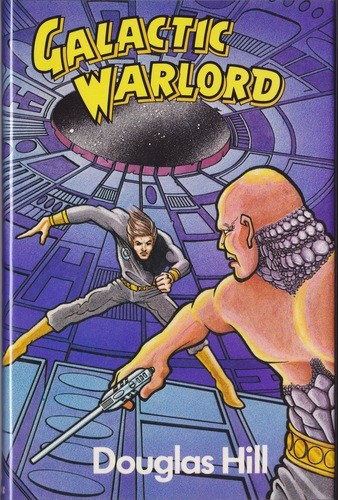
Douglas Hill's Last Legionary quartet follows Keill Randor, the sole survivor of the Morosians after his people are wiped out by a mysterious tyrant known as the Warlord. A twice-champion of his planet's martial arts and a trained mercenary bound by a code that limited his people to defensive contracts, Randor sets out for vengeance across Galactic Warlord, Deathwing Over Veynaa, Day of the Starwind, and Planet of the Warlord, with the prequel Young Legionary added later. Critics have noted the series' debt to E. E. Smith's Lensman space operas.
- Ringworld
series5 books1970
part of Known Space
similar byfar futurescience fictionspace operaadventurousspaceother star systems
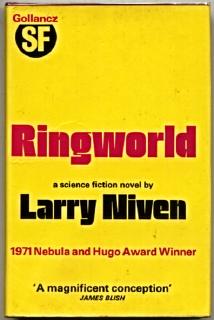
The Ringworld series is a series of science fiction novels written by American author Larry Niven. It is part of his Known Space series of stories. Its backdrop is the Ringworld, a giant artifact 3 million times the surface area of Earth circling a star. The series is composed of four standalone science fiction novels, the original award-winning book and its three sequels:1970: Ringworld 1979: The Ringworld Engineers 1996: The Ringworld Throne 2004: Ringworld's Children
- Starman Jones
Robert A. Heinleinstandalone novel1953
similar byfar futurescience fictionspace operaspaceadventurousother star systems
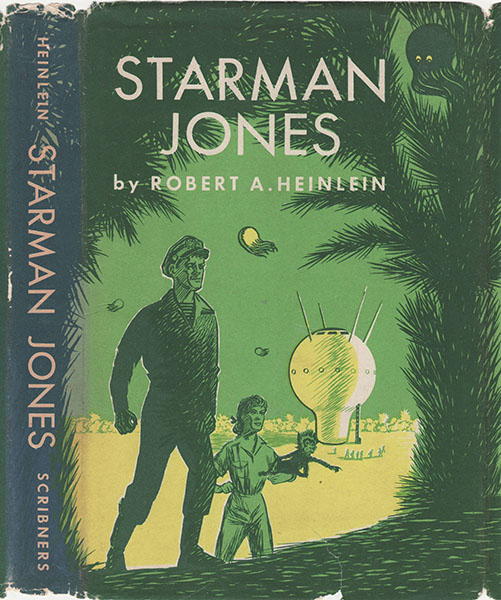
Starman Jones, a 1953 science fiction novel by Robert A. Heinlein, features a farm boy who wants to go to the stars. Charles Scribner's Sons published the book as part of the Heinlein juveniles series.
- Hell Ship
Philip Palmerstandalone novel2011
similar bylast of their kinddarkfar futurescience fictionspace operaspace
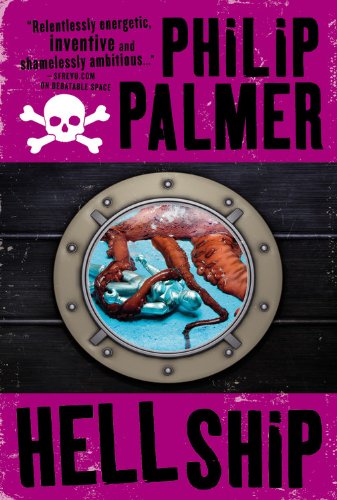
The Hell Ship hurtles through space. Inside the ship are thousands of slaves, each the last of their race. One man refuses to accept his fate. Sharrock, reduced from hero to slave in one blow, has sworn a mighty vengeance.
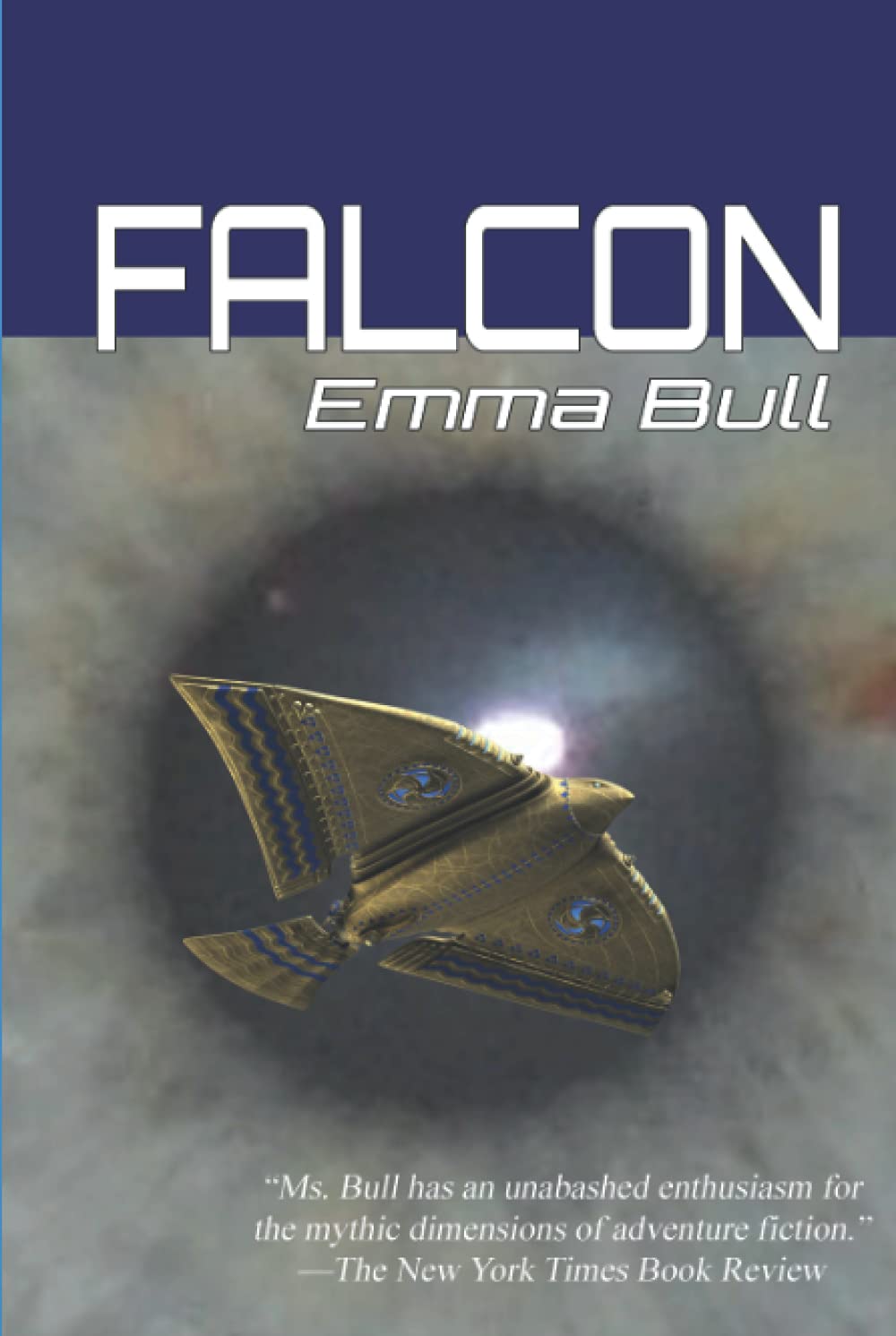
- Falcon
Emma Bullstandalone novel1989
similar bydarkfar futurescience fictionspace operaspaceother star systems+1 more
FOR NIKI FALCON, LIFE IS A RACE AGAINST TIME. AND TIME IS WINNING His planet was stolen, besieged by agents of the Central Worlds Concorde. His family was destroyed, and his world shattered before his eyes... Now Niki Falcon must fight his way to glory living on the cutting edge of danger to become one of the great star-pilots. And he's the last. For behind the young pilot's fighting power lies a deadly drug that systematically destroys his body's defenses. That gives him the strength to defend a planet—and renders him helpless to save himself.
- Thorns
Robert Silverbergstandalone novel1967
similar bydarkfar futurescience fictionspace operaspaceother star systems
From the back cover of the Ballantine first edition: "Lona Kelvin - naive orphan. And at seventeen, mother of one hundred children. Minner Burris - starman. Whose butchered body had been put together by aliens, with artificial and alien replacements. Horror stalked just beneath the surface of these two lonely creatures. Duncan Chalk - a vulture, carrion eater of other people's emotions, feeding on pain, fear, anger, hatred, jealousy, terror; typifying in the appetites of his vast body the sick delight that millions took in the tragedies he skillfully arranged. Lona Kelvin - Minner Burris - Duncan Chalk - Surely the strangest triangle the worlds had ever seen."
- Beyond Infinity
Gregory Benfordstandalone novel2004
similar byfar futurescience fictionspace operaspaceadventurousother star systems+1 more
From the flaps of the Warner Aspect first edition: "Billions of years from now, the last true human must find her place - and her destiny - within the inconceivable vastness of multiple universes. ... Cley is an Original, a genetically pure member of the most ancient Ur-Human beings. Like others of her forest-dwelling tribe, she expects to spend her few centuries working in the great subterranean Library of Life. Then catastrophe strikes when strange transdimensional life-forms obliterate the Library and kill all of Earth's Originals - except for Cley. These uncanny beings also attack the planet's most advanced human species, the highly evolved Supras, who cannot reconstruct the knowledge and DNA lost in the Library's ruins. Nor can they protect Cley... Forced to flee, Cley must begin a desperate quest for survival, answers, and hope. Joined by a raccoonlike companion called Seeker, she will journey across the myriad environments of her wildly transformed world... and then far, far beyond. For somewhere - past planets that have been reengineered, past sentient ship-worlds evolving deep between stars, past creatures the size of solar systems - waits the Malign. A being so powerful that it can escape a black hole, the Malign is destroying the galaxy as it hunts down the one thing it fears... Cley."
- Dune
series20 books1963
part of Dune Universe
similar byfar futurescience fictionspace operaother star systems+1 more
Frank Herbert's Dune Chronicles opens with 1965's Dune, set on the desert planet Arrakis where House Atreides takes control of the only source of the vital spice melange and young Paul Atreides is pulled into a struggle over its politics and religion. Herbert carried the story forward across five further novels — Dune Messiah, Children of Dune, God Emperor of Dune, Heretics of Dune, and Chapterhouse: Dune — following Paul's line over the following millennia, before Brian Herbert and Kevin J. Anderson later extended the saga. Many other editions of these six novels are omnibus and box-set repackagings rather than separate stories.
- Nova
Samuel R. Delanystandalone novel1968
similar byfar futurescience fictionspace operaspaceadventurousother star systems
Nоva is a science fiction novel by American writer Samuel R. Delany published in 1968. The plot concerns the spaceship captain Lorq Von Ray's search for a nova, which will produce the essential power source Illyrion, and his vendetta with the Red family, who seek to kill him. Nominally space opera, it explores the politics and culture of a future where cyborg technology is universal, yet making major decisions can involve using tarot cards. It has strong mythological overtones, relating to both the Grail Quest and Jason's quest for the Golden Fleece.
- Dune Universe
universe78 books1963
Start hereDune · Start here
similar byfar futurescience fictionspace operaother star systems+1 more
Arrakis. Dune. The desert planet, where empire runs on a single substance: the spice melange, which folds space, prolongs life, and unlocks prescience, and which exists nowhere else in the known universe. Frank Herbert's saga is a meditation dressed as an adventure — feudal houses and a secret sisterhood, engineered messiahs and the patient ecology of a world without water, all turning on the terrible gravity of who commands the spice. It reads like scripture and schemes like a war room, ten thousand years hence, among people who have outlawed the thinking machine and made instruments of themselves instead. At its heart stand Herbert's original six — Dune, Dune Messiah, Children of Dune, God Emperor of Dune, Heretics of Dune, Chapterhouse: Dune — a single deepening arc across millennia, arguing the whole way between prophecy and free will. Around that spine his son Brian Herbert and Kevin J. Anderson have raised a vast prequel architecture: Prelude to Dune, tracing the great houses a generation before Paul; Legends of Dune, reaching back to the crusade that broke the machines; the Schools of Dune cycle on the founding of Bene Gesserit, Mentat, and Navigator; the Caladan Trilogy and Heroes of Dune filling years the originals left in shadow. Many hands, dozens of volumes, one desert. What sets Dune apart is its refusal of the simple: religion is manufactured, heroes are hazards, and the sand itself — worm, water, ecology — acts as a political power. Begin where the universe did, with Frank Herbert's Dune (1965), and read the original six in order; you need nothing else to feel the full weight. The prequels are a country to explore afterward, taken by era. Beginnings are delicate times.
- Moties
series4 books1974
part of CoDominium
similar byfar futurescience fictionspace operaspaceother star systems+1 more
Larry Niven and Jerry Pournelle's The Mote in God's Eye (1974) depicts humanity's first contact with an alien species, the Moties, set within the far-future interstellar setting of Pournelle's codominium future history. The Gripping Hand continues that first-contact crisis years later, and Outies, written by J. R. Pournelle, carries the story forward into a new generation. Together the three books trace an escalating encounter between human and Motie civilizations within the codominium universe.
- Heechee
series19 books1972
completed
similar byfar futurescience fictionspace operaspaceother star systems+1 more
The Heechee Saga, also known as the Gateway series, is a series of science fiction novels and short stories by Frederik Pohl. The Heechee are an advanced alien race that visited the Solar System hundreds of millennia ago and then mysteriously disappeared. They left behind bases containing artifacts, including working starships, which are discovered and exploited by humanity.
- Berserker (Fred Saberhagen)
series59 books1963
similar byfar futurescience fictionspace operaspaceother star systems+1 more
The Berserker series is a series of space opera science fiction short stories and novels by Fred Saberhagen, in which robotic self-replicating machines strive to destroy all life.
- Citizen of the Galaxy
Robert A. Heinleinstandalone novel1957
similar byfar futurescience fictionspace operaadventurousspaceother star systems
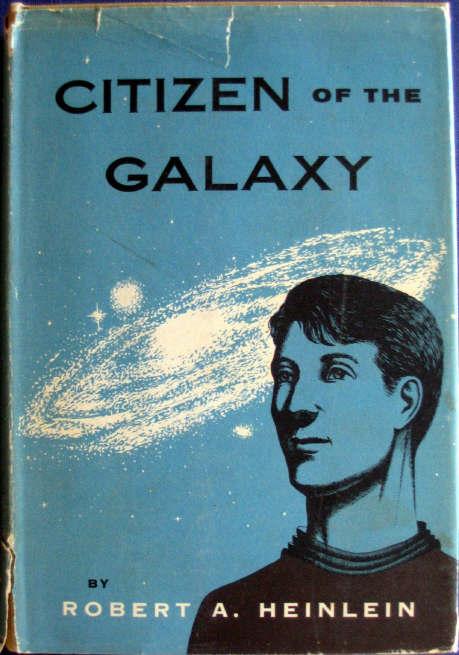
On a planet far distant from Earth, a lame beggar buys a young boy slave who has forgotten his origins. The beggar is more than he seems, and gives the boy an extensive education while employing him as an observer of activity in their city. Years later, the beggar is captured by the government, and the youth must escape the planet.
- Spatterjay
series3 books2002
part of Polity
similar byfar futurescience fictiondarkspace operaother star systems+2 more
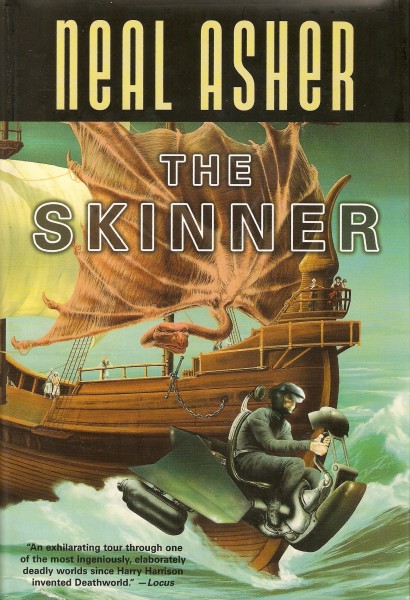
Spatterjay is set on the ocean world of the same name within Neal Asher's Polity future history: a planet whose ecology is uniquely dangerous, drawing soldiers, monsters, and old enemies of the Polity into its waters across the trilogy's three books (The Skinner, The Voyage of the Sable Keech, Orbus). It continues Asher's interest in body horror and extreme biology set against a backdrop of AI-run human space.
- Humanity Prime
Bruce McAllisterstandalone novel1971
similar byfar futurescience fictionspace operaadventurousother star systems+3 more
When Man's emerging star-empire met that of the savage Cromanths, the alien hordes began a war of extinction against humankind. So overwhelming was their power that Earth's outposts and finally the Earth itself were utterly destroyed. But one starship managed to escape, carrying colonists for some distant Earthlike planet... if such a place existed... and if the Cromanths didn't find the human colony. The mission was successful and the colony established. Mankind began to adapt to its new world, developed new abilities, and forgot much of the past. But then a Cromanth ship landed on the new planet- the last remnants of humanity were discovered. Could they somehow survive a new onslaught by the Cromanth Empire? (adapted from the back cover of the first edition)
- Suleniar's Enigma
series3 books2020
similar bylast of their kinddarkfar futurescience fictionspace operaother star systems
- Uplift Universe
universe13 books1980
Start hereUplift · Start here
similar byfar futurescience fictionspace operaadventurousspaceother star systems
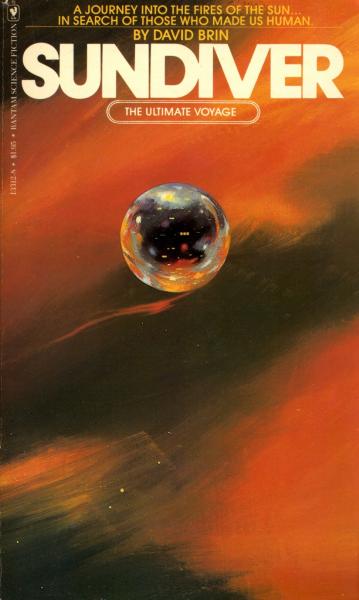
No species, the Galactics insist, ever climbs to sapience alone. For a billion years the elder races have "uplifted" their chosen clients — reshaping some promising animal, gene by patient gene, into a thinking being, then binding it through long ages of indenture. Patron lifts client; client one day becomes patron; and every lineage traces back through the vast Galactic Library to the vanished Progenitors who began it all. Then a ragged band of primates arrives at the stars with no patron to claim them — wolflings, self-made, an affront to a hundred thousand years of law — and worse, these humans have already started uplifting neighbors of their own: the neo-dolphins and neo-chimpanzees of Earthclan. David Brin builds this galaxy across two trilogies. The first — Sundiver, the Hugo- and Nebula-winning Startide Rising, and the Hugo-winning The Uplift War — sends an expedition into the Sun, then follows the dolphin-crewed survey ship Streaker as it flees a discovery that sets fanatical star-clans at war, and a chimp-led resistance on an invaded colony world. The second sequence, Uplift Storm — Brightness Reef, Infinity's Shore, Heaven's Reach — descends to Jijo, a forbidden world where six fallen races hide as illegal settlers, and draws every loose thread toward a reckoning. Short fiction fills the margins. This is space opera with an ecologist's conscience: teeming with invented biologies, wry cross-species banter, and real unease about what we owe the minds we make. Begin with Startide Rising — the saga's beating heart, and readable on its own — or take Sundiver first and read straight through in publication order.
- Old Man's War
series16 books2005
similar byfar futurescience fictionspace operaadventurousspaceother star systems
The Old Man's War series is a series of science fiction novels by John Scalzi. The first book in the series, Old Man's War, was first published in 2005 by Tor Books, and was nominated for the Hugo Award for Best Novel in 2006. In 2026 it was a finalist for the Hugo Award for Best Series.
- Pip & Flinx
series18 books1972
part of Humanx Commonwealth
similar byfar futurescience fictionspace operaadventurousspaceother star systems
The Pip & Flinx novels follow Flinx, a young man with an unusual, mysterious origin, and his ever-present animal companion Pip, across Alan Dean Foster's Humanx Commonwealth setting. Beginning with The Tar-Aiym Krang (1972) — chronologically the second entry, since Foster later filled in Flinx's earlier life — the series grew to fifteen novels published between 1972 and 2017, mixing planetary adventure with a slowly unfolding personal mystery.
- Bio of a Space Tyrant
series6 books1983
similar byfar futurescience fictiondarkspace operaspace
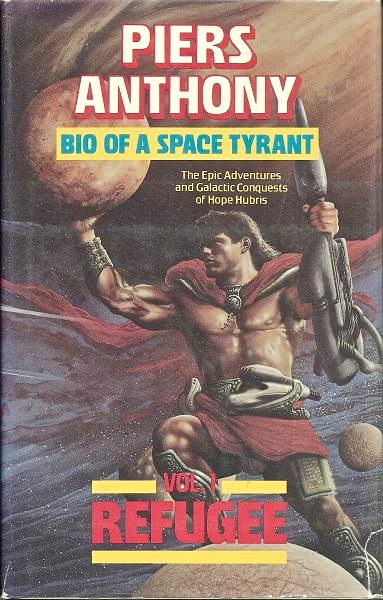
Bio of a Space Tyrant series is a six-book science-fiction series by Piers Anthony based within the Solar System. The series revolves around the character Hope Hubris and his family, and charts Hope's ascent from poor Hispanic refugee to Tyrant of Jupiter, a single person heading the Executive, Judicial and Legislative branches of the government. It is considerably more adult-themed than many of Anthony's earlier works.
- Ian Cormac
series6 books2001
part of Polity
similar byfar futurescience fictionspace operaspaceother star systems+1 more
Neal Asher's Ian Cormac novels (Gridlinked, The Line of Polity, Brass Man, Polity Agent, Line War, plus the earlier-set prequel Shadow of the Scorpion) follow Ian Cormac, an agent of Earth Central Security in Asher's Polity universe. Gridlinked opens with Cormac investigating a destroyed matter-transmitter on a remote colony while wrestling with the personality erosion caused by long-term neural linkage to the Polity's AI network; the following novels escalate into interstellar conflict with the alien Prador. Together they form the core action sequence of Asher's wider Polity series.