More like The Hate
but
- The Lord of the Rings
series13 books1954
part of Tolkien's legendarium
similar by+2 more
The Lord of the Rings is an epic high fantasy novel written by the English author and scholar J. R. R. Tolkien. Set in Middle-earth, the story began as a sequel to Tolkien's 1937 children's book The Hobbit but eventually developed into a much larger work. Written in stages between 1937 and 1949, The Lord of the Rings is one of the best-selling books ever written, with over 150 million copies sold.
- Sarantine Universe
series8 books1995
similar by+3 more
Guy Gavriel Kay's Sarantine-world novels are loosely connected historical fantasies sharing one invented history rather than a fixed cast: The Lions of Al-Rassan (1995, an analogue of medieval Spain), The Last Light of the Sun (2004, drawing on the Viking-age raids of Alfred the Great's Britain), Children of Earth and Sky (2016, a world modeled on Venice, Istanbul, and the Balkans in the 15th century), its prequel A Brightness Long Ago (2019), and its sequel All the Seas of the World (2022, set amid wars between Christendom and the Ottoman Empire). Each novel stands alone, but together they trace centuries of the same fictional world, distinct from Kay's separate Sarantine Mosaic duology.
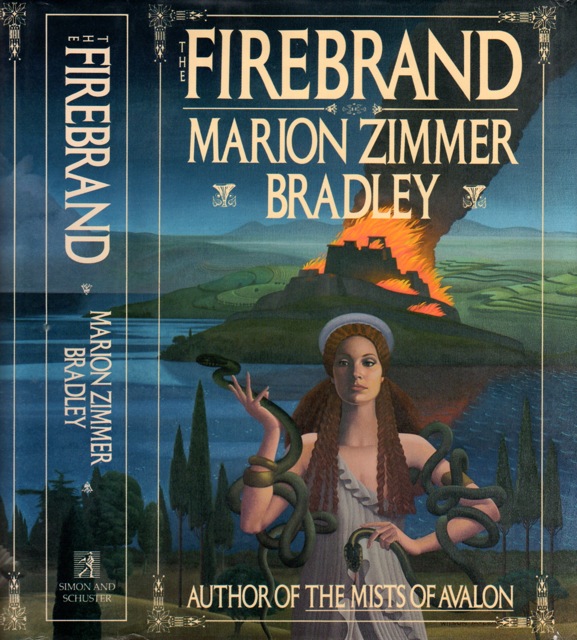
- The Firebrand
Marion Zimmer Bradleystandalone novel1987
similar bywarfantasymediterranean
The Firebrand is a 1987 historical fantasy novel by American author Marion Zimmer Bradley. Set in the ancient city of Troy, the novel is a retelling of Homer's epic poem the Iliad. The Firebrand is written from the point of view of Kassandra, the prophet daughter of King Priam of Troy, and also features other prominent characters from Greek mythology. As in the Iliad, Kassandra foresees catastrophe for her city, but few pay heed to her warnings. In Bradley's story, Kassandra is presented as a strong and insightful woman rather than as a sufferer of insanity.
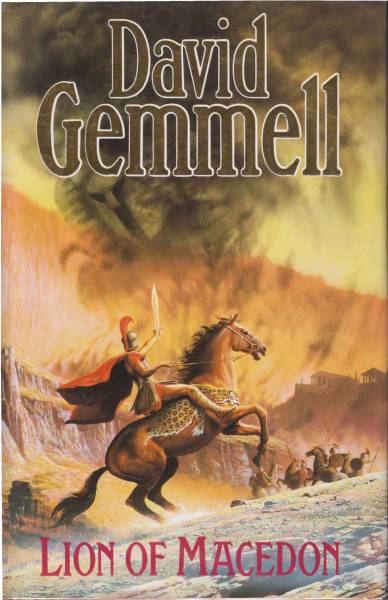
- Macedon
series2 books1990
completed
similar byfantasy+2 more
David Gemmell's Lion of Macedon and its sequel Dark Prince follow Parmenion, a gifted but despised half-Spartan general in ancient Macedon, whose military genius is bound up with a dark, supernatural pact that threatens to consume him. Gemmell layers his heroic-fantasy staples - flawed, morally compromised heroes and mystical forces at war - onto a loosely historical Macedonian setting adjacent to the era of Philip and Alexander. The duology sits alongside Gemmell's more purely secondary-world fantasy as one of his forays into history-inflected fantasy.
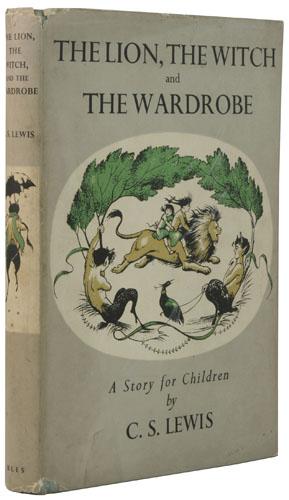
- Narnia
series26 books1950
part of Narnia Universe
similar byfantasy+1 more
The Chronicles of Narnia is a series of seven portal fantasy novels by British author C. S. Lewis. Illustrated by Pauline Baynes and originally published between 1950 and 1956, the series is set in the fictional realm of Narnia, a fantasy world of magic, mythical beasts, and talking animals. It narrates the adventures of various children who play central roles in the unfolding history of the Narnian world. Except in The Horse and His Boy, the protagonists are all children from the real world who are magically transported to Narnia, where they are sometimes called upon by the lion Aslan to protect Narnia from evil. The books span the entire history of Narnia, from its creation in The Magician's Nephew to its eventual destruction in The Last Battle.
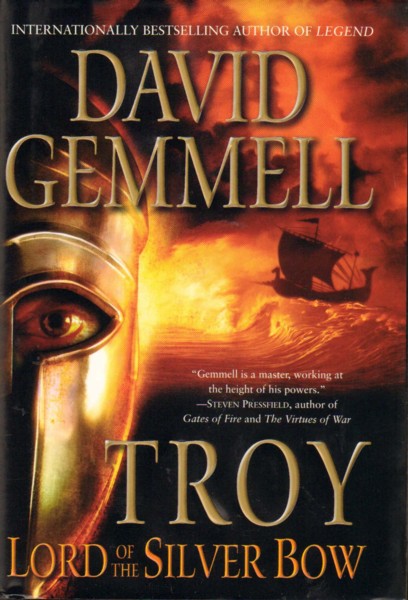
- Troy
series3 books2005
similar bywarfantasymediterranean
David Gemmell's retelling of the Trojan War, completed by his wife Stella Gemmell after his death, follows a traumatized young prince, an independent priestess, and a vengeance-driven warrior as their lives converge on a city consumed by betrayal, ambition, and the armies gathering beyond its walls. Lord of the Silver Bow, Shield of Thunder, and Fall of Kings strip away Homer's gods in favor of a grounded, character-driven war story.
- A Song of Ice and Fire
series14 books1996
part of World of Ice and Fire
similar bywarfantasy
A Song of Ice and Fire is a series of high fantasy novels by the American author George R. R. Martin. Martin began writing the first volume, A Game of Thrones, in 1991, and published it in 1996. Martin, who originally envisioned the series as a trilogy, has released five out of seven planned volumes. The most recent entry in the series, A Dance with Dragons, was published in 2011. Since then, Martin has been working on the sixth novel, titled The Winds of Winter. A seventh novel, A Dream of Spring, is planned to follow.
- Troy
Adèle Gerasstandalone novel2000
similar bywarfantasymediterranean
From the back cover of a Harcourt advance reading copy: "The siege of Troy has lasted almost ten years. Inside the walled city, food is growing scarce and the death toll is rising. From the heights of Mount Olympus, the Gods watch with interest. Bored with the endless, dreary war, Aphrodite, Goddess of Love, turns her attention to two sisters: Marpessa, who is gifted with God-sight and serves as handmaiden to Helen, the most beautiful woman in the world; and Xanthe, who is kind and loving and tends the wounded soldiers in the Blood Room. When Eros Eros fits and arrow to his bow and lets it fly, neither sister will escape its power."
- Redwall
series22 books1986
completed
part of Redwall Universe
similar byfantasy+1 more
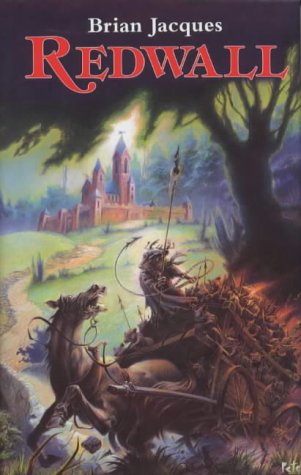
Redwall is Brian Jacques's long-running series of fantasy novels for young readers, set within the redwall-universe of Redwall Abbey and its community of anthropomorphic animals. It opened in 1986 with the mouse Matthias searching for the lost sword of the legendary Martin the Warrior to defend the abbey from the invading rat Cluny the Scourge, and grew across 22 largely stand-alone novels published through 2011, each set in a different generation of the abbey's history and following its mice, otters, badgers, and vermin adversaries.
- A Thousand Ships
Natalie Haynesstandalone novel2019
similar bywarmediterranean+1 more
A Thousand Ships is a 2019 novel by Natalie Haynes which retells the mythology of the Trojan War from the perspective of the women involved. It was shortlisted for the 2020 Women's Prize for Fiction.
- Malazan
universe36 books1999
Start hereMalazan Book of the Fallen · Start here
similar bywar+1 more
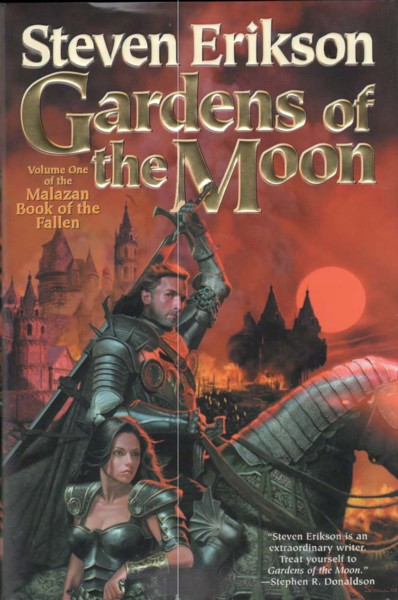
Pity the historian who tries to map this world; pity more the god who thinks he rules it. The Malazan Empire marches across continents on the boots of its common soldiers, and above them move Ascendants — mortals grown into something like gods, and gods worn thin as old coin. Magic is drawn from Warrens, roads of power threaded through reality; the dead keep their grudges; and every empire, however vast, is a wager against time. This is epic fantasy told from the mud, where a sapper cracking a joke weighs as much as an immortal settling a feud older than the human race. The world began as a tabletop campaign two friends built in the 1980s, and it still moves by two hands. Steven Erikson's ten-volume Malazan Book of the Fallen is the spine — Gardens of the Moon, Deadhouse Gates, Memories of Ice, on through The Crippled God — each book a near-standalone campaign that only later reveals how it locks together. Ian C. Esslemont walks the same years from a different vantage in his Novels of the Malazan Empire (Night of Knives, Return of the Crimson Guard onward). Around them stand the prequels: Erikson's Kharkanas Trilogy, archaic and elegiac, chronicling a doomed elder people, and Esslemont's brisker Path to Ascendancy, following two adventurers before they became legends. Erikson's Witness sequence carries the tale forward, and novellas of the genial necromancers Bauchelain and Korbal Broach supply the gallows comedy. Nothing is explained to you; comprehension is earned, and that is the pleasure. The themes run deep — compassion set against cruelty, the toll empires charge, civilizations that fall and are mourned. Begin where the saga does, with Erikson's Gardens of the Moon, and read the ten in publication order; the prequels are for the already-initiated. Trust that confusion is the price of entry.
- The Riftwar Universe
universe44 books1982
Start hereRiftwar Saga · Start here
similar byfantasy+1 more
On the world of Midkemia a tear opens in the air itself, a rift hung between stars, and through it march the armies of an empire from another world entirely. So begins the chronicle Raymond E. Feist has kept for three decades: the tale of Pug, a castle kitchen boy apprenticed to a magician on the very day the invasion lands, and of Tomas, his friend, who inherits the armor and the ancient fury of a dead dragon-lord. Around these two the Riftwar Cycle turns, widening book by book from one besieged frontier keep into the whole history of a world of kingdoms, guilds, thieves' dens and mage-towers. The cycle runs to roughly thirty novels, gathered into arcs a newcomer can enter and finish on their own. The founding Riftwar Saga (Magician, Silverthorn, A Darkness at Sethanon) sets the board; the Serpentwar Saga, Krondor's Sons and the Conclave of Shadows carry the story down the generations; the Darkwar, Demonwar and Chaoswar sagas bring it toward its close. Crossing the rift to the rival world of Kelewan, Feist and Janny Wurts wrote the Empire trilogy, opening with Daughter of the Empire, a court intrigue told wholly from the invaders' side and for many the finest thing here. Shorter Legends of the Riftwar and the game-born Riftwar Legacy fill the corners; later still, Feist opens an altogether new world in the Firemane books. Feist writes fantasy in its most companionable key: apprentices who grow into archmages, tavern boys who become spies and dukes, a world you return to the way you return to an old inn. The mood is adventure before dread, friendship and rank and hard-won craft, wars that cost something, all of it rendered plainly and at a gallop. Begin where it began, with Magician, then follow the arcs in the order they were written, and the rift will carry you the rest of the way.
- The Broken Sword
Poul Andersonstandalone novel1954
similar byfantasy+1 more
The Broken Sword is a fantasy novel by American writer Poul Anderson, originally published on 5 November 1954. A revised edition was issued by Ballantine Books in January 1971 as the twenty-fourth volume of their Ballantine Adult Fantasy series. The original text was reissued by Gollancz in 2002. Set during the Viking Age, the novel features numerous references to Norse mythology.
- Zimiamvian Trilogy
series4 books1922
completed
similar byfantasy+1 more
The Zimiamvian Trilogy is a series of fantasy novels by English author E. R. Eddison.Mistress of Mistresses (1935) A Fish Dinner in Memison (1941) The Mezentian Gate (1958)
- Malazan Book of the Fallen
series20 books1999
part of Malazan
similar bywarfantasy
The Malazan Book of the Fallen is a series of epic fantasy novels written by the Canadian author Steven Erikson. The series, published by Bantam Books in the U.K. and Tor Books in the U.S., consists of ten volumes, beginning with Gardens of the Moon (1999) and concluding with The Crippled God (2011). Erikson's series presents the narratives of a large cast of characters spanning thousands of years across multiple continents.
- The Circle of the World
universe29 books2006
Start hereThe Blade Itself · Start here
similar byfantasy+1 more
You want heroes? Best look elsewhere. The Circle of the World has kings and wizards and famous barbarians enough, but scratch any of them and you'll find a coward, a schemer, or a killer who's simply better at it than the rest. This is Joe Abercrombie's fantasy world: a grimy, blood-soaked continent where the fat and corrupt Union squats between the savage North and the scheming South, and where every noble cause turns out to have a knife hidden behind it. It opens with the First Law trilogy — The Blade Itself, Before They Are Hanged, Last Argument of Kings — following a crippled torturer with a razor wit, a weary Northman who would dearly like to stop fighting and can't, and a bald old wizard whose plans run older and colder than anyone guesses. Three self-contained standalones share the same ground and a familiar face or two: Best Served Cold takes its revenge across sunlit, murderous Styria; The Heroes crushes a whole war into three days over one worthless hill; Red Country rides the frontier. Short pieces (Sharp Ends) fill the gaps, and a generation on, the Age of Madness trilogy drags the old survivors into an age of factories, mobs, and revolution. What sets it apart is the honesty of its cynicism — close, sardonic points of view, gallows humour, and a flat refusal to let anyone stay clean. Violence carries a cost here; victory rarely settles anything; the wheel just turns and grinds someone new under it. Abercrombie recommends reading in publication order, and it's the right call: begin with The Blade Itself and let the world curdle around you. You have to be realistic about these things.
- Riftwar Saga
series7 books1982
part of The Riftwar Universe
similar bywarfantasy
The Riftwar Saga is Raymond E. Feist's debut fantasy trilogy, opening with Magician, in which an orphaned apprentice named Pug is swept up when otherworldly invaders emerge through a dimensional rift into the frontier kingdom of Midkemia. Silverthorn and A Darkness at Sethanon carry the resulting war to its close, and the trilogy became the founding entry of Feist's much larger Riftwar Cycle.
- Sparhawk
universe6 books1989
Start hereElenium · Start here
similar byfantasy+1 more
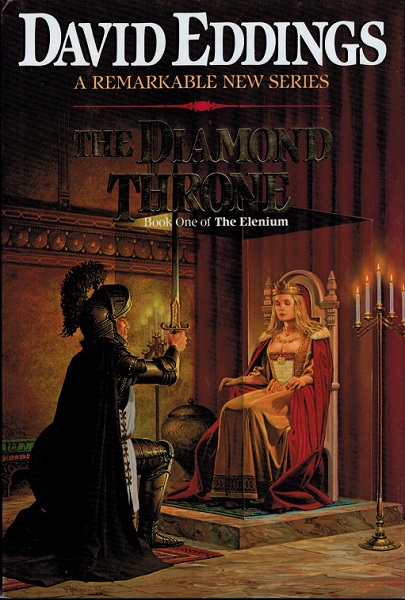
Sir Sparhawk is not a young man, and he has little patience for the pageantry his order pretends to. A Pandion Knight of the militant Elene Church, he rides home from a long exile to find his kingdom rotten with intrigue and his young queen, Ehlana, poisoned — kept alive only inside a shell of living crystal. To wake her he must find Bhelliom, a jewel with the power to remake the world or unmake it. So begins a long ride across the continent of Eosia. This is warm, character-first epic fantasy from David Eddings, told across two trilogies. The Elenium — The Diamond Throne, The Ruby Knight, The Sapphire Rose — pits Sparhawk against a corrupt church and a hungry elder god. The Tamuli — Domes of Fire, The Shining Ones, The Hidden City — carries him east into the vast Tamul Empire, where older enemies stir. Around him gathers a quarrelsome company: the Styric sorceress Sephrenia, the thief-boy Talen, the plain-spoken squire Kurik, and a small, imperious goddess who plays a set of pipes and always, somehow, gets her way. The pleasure here is the talk — grizzled knights trading dry insults between miracles and murders, a hero who solves as many problems with patience as with a sword. It never reaches for grimness or grand obscurity; it wants your good company for a long journey. Newcomers begin with The Diamond Throne and read the six in order: the Elenium stands whole on its own before the Tamuli widens the map.
- Hawkmoon
series7 books1967
part of Moorcock's Multiverse
similar by+2 more
The History of the Runestaff is an omnibus collection of four fantasy novels by British writer Michael Moorcock, consisting of The Jewel in the Skull, The Mad God's Amulet, The Sword of the Dawn, and The Runestaff. Charting the adventures of Dorian Hawkmoon, a version of the Eternal Champion, it takes place in a far-future version of Europe in which the insane rulers of the Dark Empire of Granbretan are engaged in conquering the continent. Written between 1967 and 1969, it is considered a classic of the genre, and has proven highly influential in shaping subsequent authors' works.
- Shattered Sea
series4 books2014
similar byfantasy+1 more
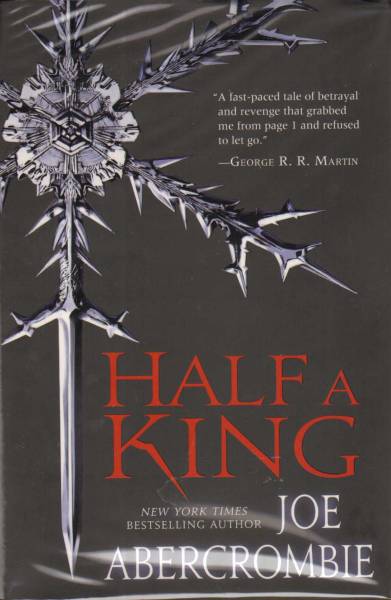
Shattered Sea is a young adult fantasy series written by the British author Joe Abercrombie. The trilogy was published by Del Rey in the United States and Harper Voyager in the UK.
- A Song for Arbonne
Guy Gavriel Kaystandalone novel1992
similar bywarfantasy
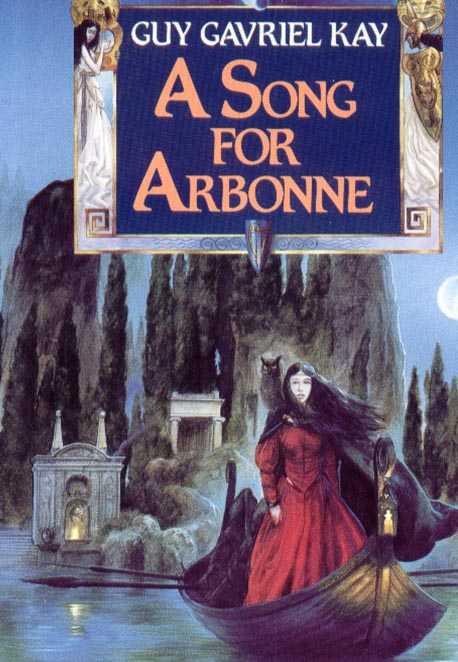
A Song for Arbonne is a novel by Canadian writer Guy Gavriel Kay published in 1992. It is set in a fantasy world with two moons and is loosely based on 12th-century Provence and the Albigensian Crusade.
- The Saga of Recluce
series48 books1991
similar byfantasy+1 more
The Saga of Recluce is a series of fantasy novels written by L. E. Modesitt Jr. The initial novel in the series, The Magic of Recluce, was published in 1991. The series is still in publication with the latest novel published in June 2026. In 2015 Modesitt stated that the (then) 20 novels in the Recluce series had sold nearly three million copies.