More like The Protector Project
but
- Kairos
series11 books1962
completed
similar byscience fictionyoung adult+3 more
The Time Quintet is a science fantasy series of five young adult novels written by American author Madeleine L'Engle and made up of A Wrinkle in Time (1962), A Wind in the Door (1973), A Swiftly Tilting Planet (1978), Many Waters (1986), and An Acceptable Time (1989).
- Dangerous Visions
series7 books1967
completed
similar byscience fiction
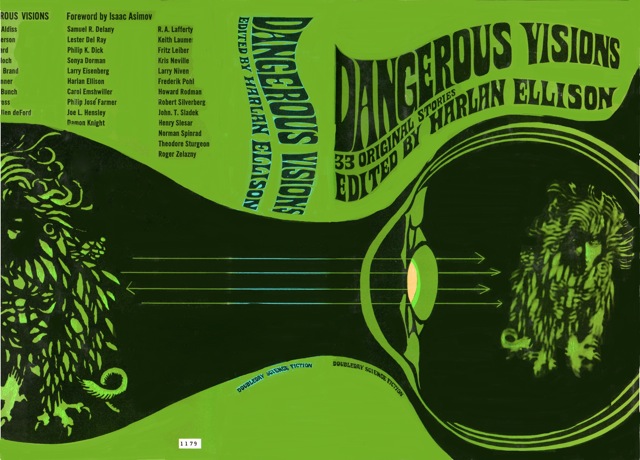
Dangerous Visions (1967), Again, Dangerous Visions (1972), and the posthumously finished The Last Dangerous Visions (2024) are Harlan Ellison's landmark science fiction anthologies of original, previously unpublished stories, each conceived to push past the genre's conventional boundaries of its time. Ellison edited and introduced all three, though his death in 2018 left the final volume to be completed and published by others years later. The three books form a loosely connected set of era-defining anthologies spanning nearly six decades rather than a continuous story.
- His Dark Materials Universe
universe13 books1995
Start hereHis Dark Materials · Start here
similar byyoung adultfantasy+1 more
In a world like ours and unlike it, every human soul walks outside the body in the shape of an animal — a daemon, who speaks, who cannot be lied to, and who settles into one fixed form only when childhood ends. This is the country of His Dark Materials: a company of parallel worlds across which an invisible dust of consciousness drifts down upon the waking mind; where a Church that calls itself the Magisterium would sooner sever a child's soul than let that Dust be understood; and where a golden instrument, the alethiometer, answers true questions for anyone with the patience to read it. Philip Pullman's design stands in two trilogies and a scatter of shorter tales. His Dark Materials — Northern Lights (published in America as The Golden Compass), The Subtle Knife, and The Amber Spyglass — carries Lyra Belacqua from the rooftops of a shadow Oxford across the borders between worlds. The Book of Dust returns to that same territory: La Belle Sauvage looks back to Lyra as an infant carried through a great flood, while The Secret Commonwealth follows her grown and less certain into adulthood, with a concluding volume closing the arc. Around them sit slim companion books — Lyra's Oxford, Once Upon a Time in the North, Serpentine — and Nicholas Wright's stage adaptation, made with Pullman's blessing. The register is grave and luminous at once, its title lifted from Milton and its quarrel drawn from Blake: a story that takes the side of curiosity, love, and the physical world against any authority that would forbid them. It reads as adventure — armoured bears, aeronauts, knife-cut windows between skies — yet reasons like philosophy. Begin with Northern Lights / The Golden Compass and read the first trilogy through before turning to The Book of Dust, which deepens everything the first has already made you feel.
- Space Demons
series4 books1986
similar byscience fictionour worldcontemporaryyoung adult+1 more
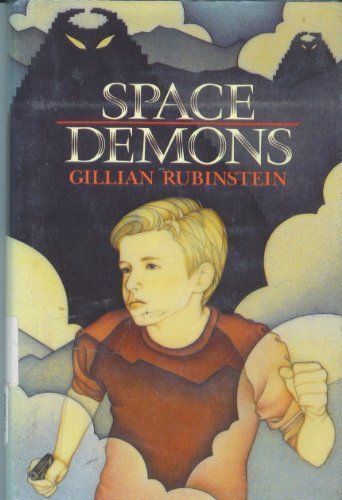
Gillian Rubinstein's Space Demons follows a group of Australian schoolkids drawn into a mysterious video game that starts pulling them physically into its world, with consequences that follow them home. The story continues across two more novels, Skymaze and Shinkei, following the same characters into further games.
- After Such Knowledge
series7 books1953
completed
similar by+4 more
After Such Knowledge is James Blish's loosely linked trilogy on the costs of forbidden or dangerous knowledge. It opens with A Case of Conscience, in which a Jesuit scientist studying a seemingly sinless alien race is forced to weigh what he finds against his own faith, continues with the historical novel Doctor Mirabilis about the medieval friar and scientist Roger Bacon, and closes with the two-part Black Easter, in which a magician is hired to loose Hell's demons upon the world for a single day. The three books share a theme rather than a continuous plot or cast.
- Frankenstein
universe128 books1818
Start hereFrankenstein, or, The Modern Prometheus · Start here
similar by+1 more
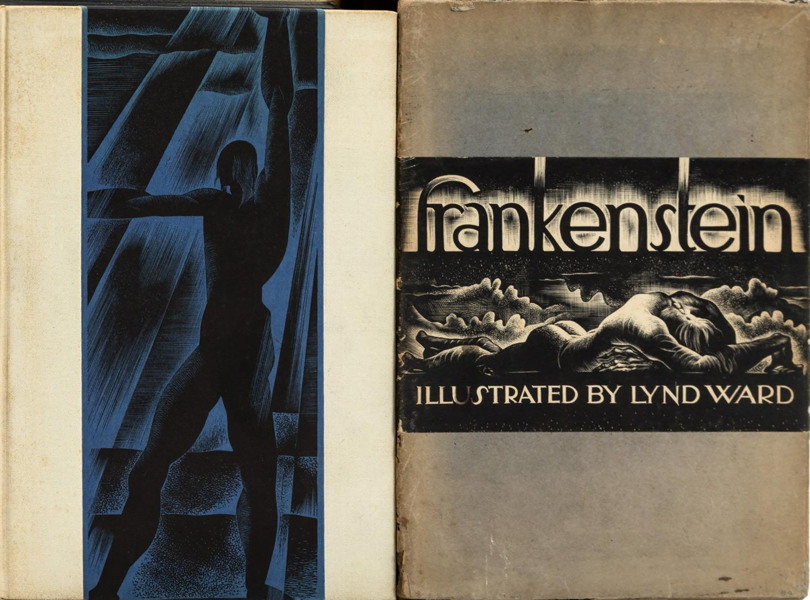
Light a candle against the November dark and consider what a single spark, rightly applied to dead matter, might wake. In a laboratory at Ingolstadt a student named Victor Frankenstein learns the secret of animating lifeless flesh, assembles a being from the harvest of charnel houses and graves, and, at the moment it draws breath, flees the thing he has made. What he abandons does not stay abandoned. This is the world Mary Shelley opened in 1818 with Frankenstein; or, The Modern Prometheus: the story of a maker and his unmothered creation, and the long ruin each works upon the other. Shelley's novel arrives as a nest of confessions, an explorer's letters from the frozen north enclosing Victor's account, which in turn encloses the Creature's own, an articulate and wounded voice that has read Milton and wants only not to be alone. From that single volume two centuries of other hands have built outward, not as one continuity but as a gathering of independent returns to the same fire. Dean Koontz transplants the myth to modern New Orleans across a five-book cycle, Prodigal Son through The Dead Town, where the original Creature, now called Deucalion, hunts a Victor who never died. Donald F. Glut's New Adventures and Frank Schildiner's Quest of Frankenstein run the monster through pulp adventure; the mid-century French novels published as Benoit Becker chase him across a ruined Europe; Scott Sonneborn's Frankenstein Journals and the comic Frankenstein's Aunt turn the legend toward younger and lighter readers. What binds them is the question the book asks and never settles: which is the monster, the forsaken creature who kills, or the man whose ambition and cowardice made and abandoned him? Expect little comfort and few clean villains; the abiding note is grief, sublime and articulate, set against Alpine ice and candlelit hubris. Begin where it began, with Shelley's own novel; the later cycles reward you only once you have heard the Creature speak for himself.
- The Time Traveler's Wife
Audrey Niffeneggerstandalone novel2003
similar byscience fictionour worldcontemporary+1 more
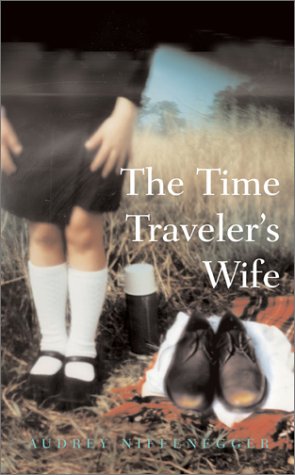
The Time Traveler's Wife is the debut novel by American author Audrey Niffenegger, published in 2003. It is a love story about Henry, a man with a genetic disorder that causes him to time travel unpredictably, and about Clare, his wife, an artist who has to cope with his frequent absences. Niffenegger, who was frustrated with love when she began the novel, wrote the story as a metaphor for her failed relationships. The tale's central relationship came to Niffenegger suddenly and subsequently supplied the novel's title. The novel has been classified as both science fiction and romance.
- The Silver Crown
Robert C. O'Brienstandalone novel1968
similar byscience fictionour worldcontemporary+2 more
The Silver Crown is a children's science-fiction book by Robert C. O'Brien. Published in 1968, it was his first novel.
- Chocky
series2 books1968
similar byscience fictioncontemporary+1 more
Chocky (1968) is John Wyndham's science fiction novel about an eleven-year-old boy, Matthew, whose parents grow alarmed by his conversations with an unseen presence that feeds him unsettling insights into mathematics and human progress, building toward the reveal of what, or who, Chocky really is. Mark Daniel's Chocky's Challenge (1986), published after Wyndham's death, is an authorized continuation that carries the story forward.
- Dirk Gently
series3 books1987
completed
part of The Hitchhiker's Guide to the Galaxy Universe
similar byscience fictioncontemporary+2 more
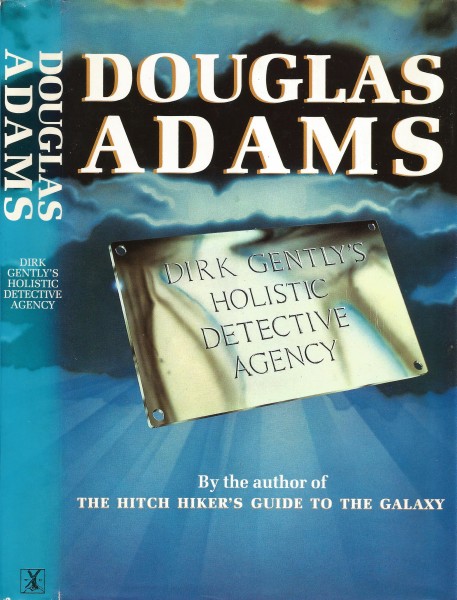
Dirk Gently's Holistic Detective Agency (1987) introduces Douglas Adams's eccentric investigator, whose approach treats all events and objects as ultimately connected however implausibly, as a case involving time travel, a ghost, and a Cambridge murder tangles into one plot. Adams completed one further full novel, The Long Dark Tea-Time of the Soul (1988), before his death; The Salmon of Doubt (2002) later collected his unfinished notes toward a third book alongside essays and other writing, rather than completing the story.
- Hexwood
Diana Wynne Jonesstandalone novel1993
similar bycontemporaryyoung adultfantasy+2 more
Hexwood is a 1993 fantasy/science fiction novel for young adults, written by British author Diana Wynne Jones.
- Seeker
series3 books2015
similar byscience fictionyoung adultfantasy+2 more
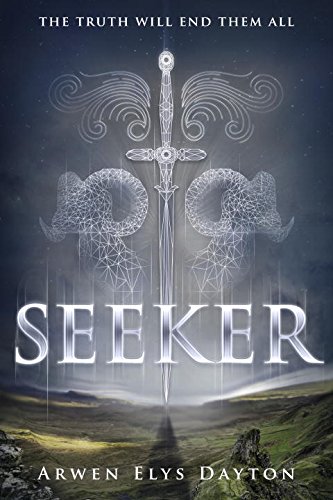
Quin Kincaid has spent her life training to take her Oath and join the Seekers, an ancient order sworn to protect the weak — but the night of her initiation reveals that her family, her order, and the boy she loves are not what she believed. Arwen Elys Dayton's trilogy (Seeker, Traveler, Disruptor) follows Quin and her companions as the order's true, morally compromised history comes into focus.
- Stephen King multiverse
universe46 books1967
Start hereThe Gunslinger · Start here
similar by+2 more
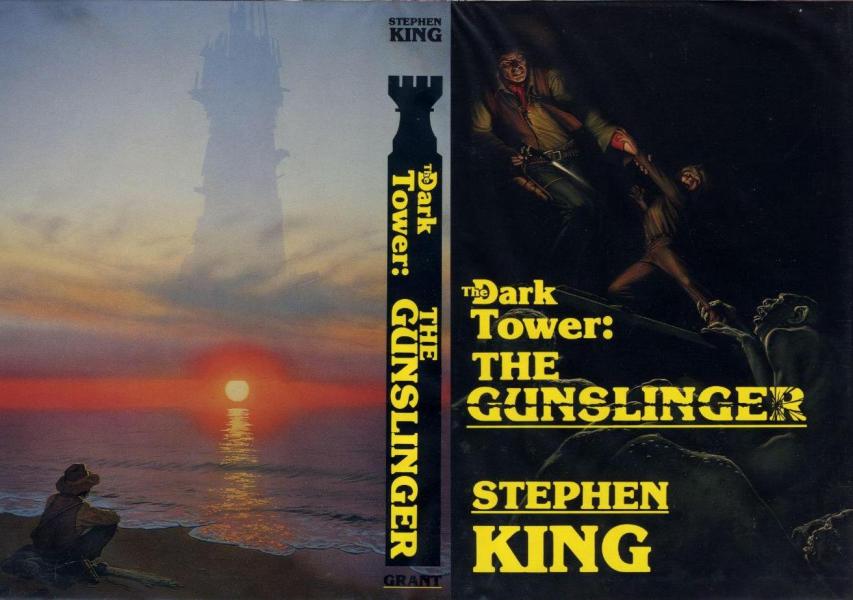
The man in black fled across the desert, and the gunslinger followed. So begins the long walk of Roland Deschain, last of an order of knight-errant pistoleers, across a land that has "moved on" — where the compass points drift, dead machines rot toward sentience, and the weave of what's real wears thin. His quest is the Dark Tower itself: a spire standing at the hub of every world that exists, the linchpin that holds all of them back from ruin. Roland's road runs eight volumes, from The Gunslinger through the closing Dark Tower, with the later, interleaved tale The Wind Through the Keyhole folding a story-within-a-story back into his youth. Along the way he draws a ka-tet — a fellowship bound by fate, not choosing — through doorways between worlds: a heroin-shackled New Yorker, a woman of two minds, a boy who dies twice. The Tower is also the secret axle around which the wider shelf of King's work turns; threads from The Stand, 'Salem's Lot and beyond wind quietly toward it. Expect a mongrel of Western, high fantasy, horror and decayed science fiction, told in a dusty, incantatory dialect all its own — ka, thankee-sai, the world that has moved on. This is King at his most mythic and most personal, a decades-spanning circle that rewards a patient reader. Begin at the beginning: The Gunslinger, then walk forward in publication order. There are other worlds than these — but this door opens first.
- The Heroic Adventures of Kate
series3 books1990
similar byour worldcontemporaryfantasy+2 more
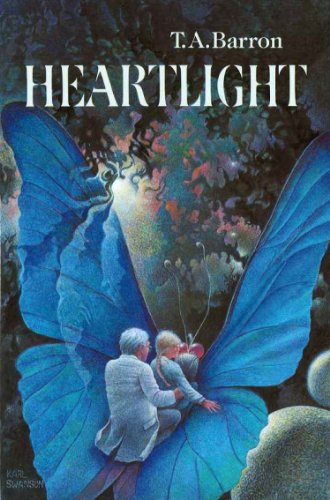
T. A. Barron links three standalone novels around a resourceful girl named Kate confronting environmental threats through fantastical means. In Heartlight, Kate and her inventor grandfather race across space to save a dying sun; in The Ancient One, she travels five centuries into the past to defend an old-growth forest from the destructive creature Gashra. The Merlin Effect completes the loosely connected set, published together as the omnibus The Heartlight Saga.
- Twilight Zone
universe40 books1960
Start hereStories from the Twilight Zone · Start here
similar byscience fictionour world+1 more
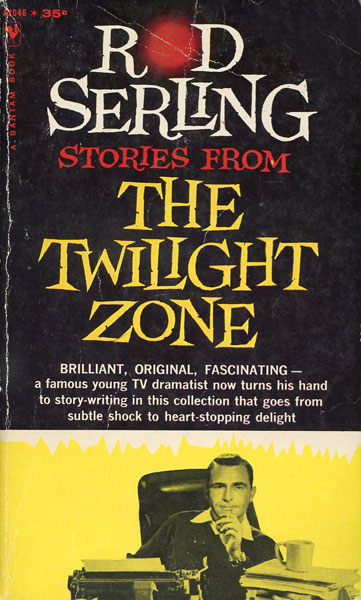
Picture, if you will, an ordinary person on an ordinary afternoon: a tired salesman, a frightened child, a man who wants only to be left alone. Somewhere between the streetlight and the front door, the rules quietly change. This is the Twilight Zone — not a place on any map but a middle ground between light and shadow, science and superstition, the pit of our fears and the summit of our knowledge. There is no continuing saga here, no cast to follow across the years. There is only the door, and the parable waiting on the far side of it. What the shelf holds is Rod Serling's anthology given the permanence of print. Serling turned his own teleplays into prose, the collections that open with Stories from the Twilight Zone, and the scripts survive alongside them — his and Richard Matheson's, the two hands that set the show's pulse. Around that core gather the story-collections of Walter B. Gibson, the volumes of new tales assembled by Carol Serling, standalone novels, and paired reissues: dozens of self-contained pieces, many writers under one banner. Read one or read forty. Each closes its own circle. The machinery is always the same and never predictable — a reasonable premise, a moral squeeze, a final turn that lands like a tap on the shoulder, sometimes cruel, sometimes merciful, always earned. Beneath the twist runs Serling's true subject: ordinary conscience under strain — prejudice, vanity, loneliness, the wish to go back. Begin where he began, with his own Stories from the Twilight Zone, then follow Matheson. There is no order to keep. You unlock this door with the key of imagination.
- Thursday Next
series8 books2001
similar byscience fictioncontemporaryfantasy
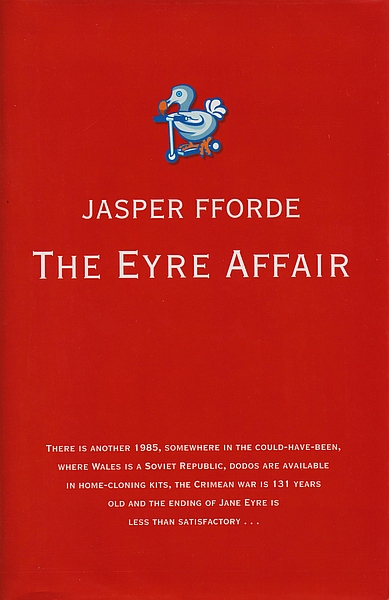
Jasper Fforde's Thursday Next novels follow a literary detective in an alternate England who can jump physically into the world of books to solve crimes against literature itself. Beginning with The Eyre Affair, the series mixes metafiction, wordplay and parody across increasingly personal plots as Thursday balances family life with adventures inside classic novels. Fforde has extended the sequence across eight books and several decades, with further installments in the works.
- Foundation Universe
universe123 books1940
Start hereFoundation · Start here
similar byscience fiction+1 more
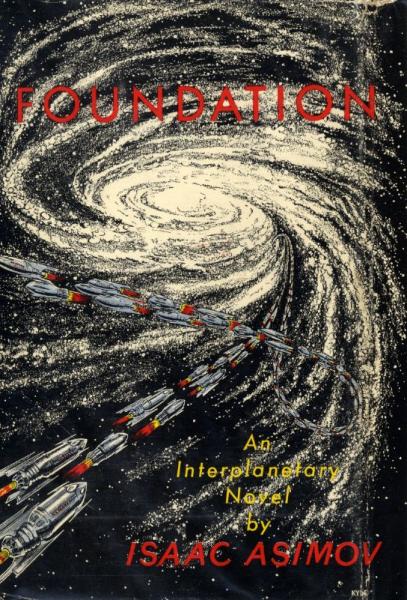
There is a science that reads the future of quadrillions the way an astronomer reads the orbits of stars. It is called psychohistory, and its equations foresee something the ruling Galactic Empire cannot admit: the throne is rotting, and thirty thousand years of barbarism are coming. One man, Hari Seldon, cannot stop the fall. He can only shorten it — by seeding a Foundation of scholars at the rim of the galaxy, a fragile institution built to carry knowledge across the dark and cut the interregnum to a single millennium. This is a universe told in the register of history itself: the long view, the calm of deep time, empires measured in centuries and men measured against them. The spine is Asimov's original trilogy — Foundation, Foundation and Empire, Second Foundation — followed decades later by the sequels Foundation's Edge and Foundation and Earth and the prequels Prelude to Foundation and Forward the Foundation. Late in life Asimov braided this in with his other future histories: the Robot novels of detective Elijah Baley and his humaniform partner R. Daneel Olivaw (The Caves of Steel, The Naked Sun, The Robots of Dawn, Robots and Empire) and the early Galactic Empire novels (Pebble in the Sky and its kin), until one continuous chronicle ran from the first thinking robots to the Second Empire. Other hands extend it — the Second Foundation Trilogy by Gregory Benford, Greg Bear, and David Brin, and shared-world spinoffs such as Robot City — so the corpus sprawls beyond a single author's tidy shelf. What distinguishes it is that the drama is intellectual: crises resolved by insight, nerve, and dialogue rather than fleets and blades, each turn hinging on the hidden logic of the Seldon Plan. Begin where readers have always begun — with Foundation, and the original trilogy in publication order. The rest opens outward from there.
- Midnighters
series3 books2004
similar byscience fictionour worldcontemporaryyoung adultfantasy
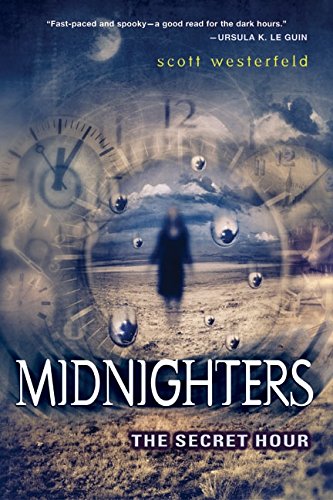
The Midnighters Trilogy is a science-fiction fantasy series written by Scott Westerfeld. It was published by Eos in 2004. It comprises three books: The Secret Hour, Touching Darkness. and Blue Noon. Over the course of the trilogy, Jessica encounters other Midnighters with whom she allies herself. The protagonists in the trilogy are the eponymous Midnighters Desdemona, Rex, Jonathan, and Melissa. The antagonists of the series are Darklings and Slithers, dangerous and powerful beings that created and live in the Blue Hour.
- The Missing
series10 books2008
similar byscience fictioncontemporaryyoung adult+2 more
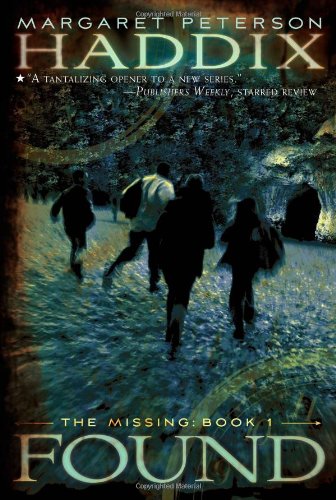
The Missing is a series of young adult novels written by Margaret Peterson Haddix. It tells the story of famous children from history stolen from their place in time by futuristic time travelers and accidentally sent to the 21st century as babies. Jonah Skidmore is one of the stolen children, and he, along with his non-adopted sister Katherine, must help return the missing kids to their rightful places in history and fix time before it is destroyed. The first book in the series, Found, was published on April 22, 2008. The series continued with book titles Sent, Sabotaged, Torn, Caught, Risked, and Revealed. The eighth and final book, Redeemed, was released on September 8, 2015. There are also two ebook short stories, Sought and Rescued . Haddix originally intended the series to consist of only seven books. However, she stated that she had trouble closing out the series in seven books; leading to her decision to write Redeemed.
- Richard Forthrast
series2 books2011
similar byscience fictionour world+2 more
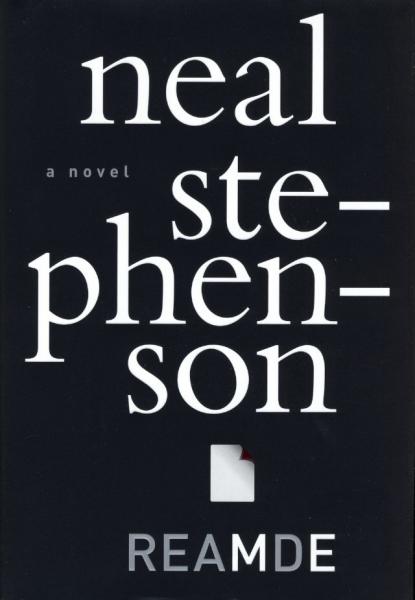
Neal Stephenson's Richard 'Dodge' Forthrast novels open with Reamde, a globe-spanning thriller that starts when ransomware inside an MMORPG economy pulls Richard's extended family into a real-world hostage crisis involving hackers, jihadists and Russian mobsters. The sequel Fall; or, Dodge in Hell shifts registers entirely, following Richard's digitally preserved mind after death into an afterlife simulation built from his scanned brain. The two books share a protagonist and family but differ sharply in genre and scale.
- Johnny Maxwell
series4 books1992
similar byour worldfantasy+2 more
The Johnny Maxwell trilogy follows an ordinary British teenager who keeps ending up at the center of small-scale, largely unglamorous brushes with the fantastic: an old arcade game that turns out to house a real alien fleet, a haunted cemetery, and a WWII bomb that displaces him in time. Terry Pratchett wrote it as a departure from Discworld, aiming his humor and social observation at a contemporary setting and a young teenage cast. Only You Can Save Mankind, Johnny and the Dead, and Johnny and the Bomb make up the sequence.
- Hitchhiker's Guide to the Galaxy
series16 books1979
part of The Hitchhiker's Guide to the Galaxy Universe
similar byscience fiction+1 more
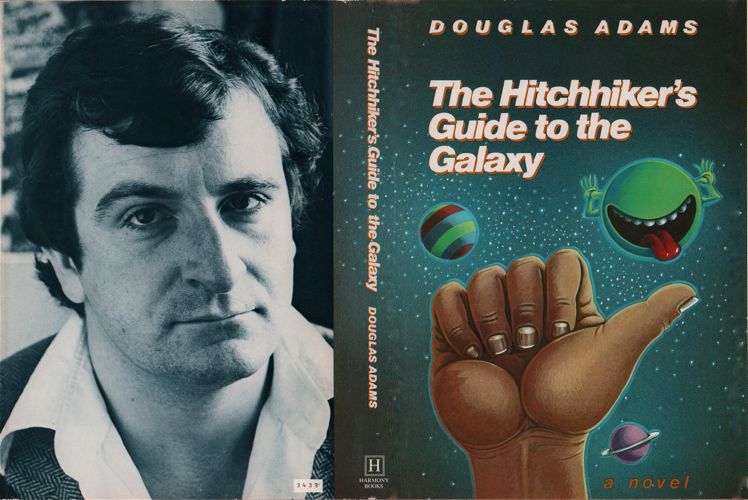
The Hitchhiker's Guide to the Galaxy is a comedy science fiction franchise created by Douglas Adams. Originally a radio sitcom broadcast over two series on BBC Radio 4 between 1978 and 1980, it was soon adapted to other formats, including both novels and comic books, a 1981 BBC television series, a 1984 text adventure game, stage shows and a 2005 feature film.
- Rosemary Reilly
series2 books1967
completed
similar by+4 more
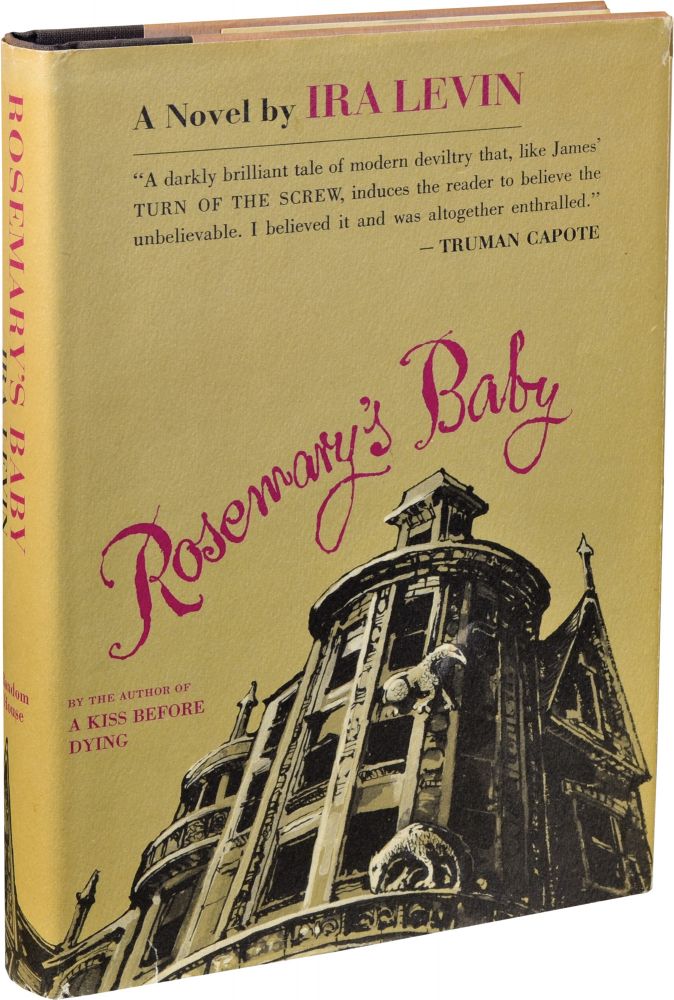
Rosemary's Baby follows a young wife in a Gothic Manhattan apartment building who grows increasingly convinced that her elderly neighbors, and even her own husband, are part of a conspiracy surrounding her pregnancy. Ira Levin returned to the character thirty years later in the 1997 sequel Son of Rosemary. Together the two novels form a short, self-contained horror series about faith, control, and motherhood.