More like The Waste Lands
anchored on:dark fantasyquestssecondary worldscience fantasyfound familyadventurous+4 more
but
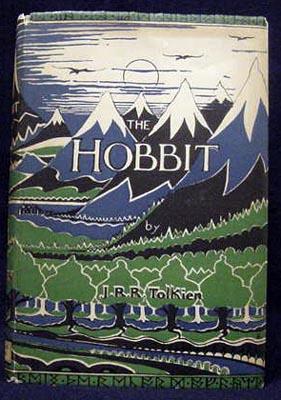
- The Hobbit
series2 books1937
completed
part of Tolkien's legendarium
similar bysecondary worldquestsadventurousfantasy+1 more
The Hobbit (1937) is J. R. R. Tolkien's children's fantasy novel following the reluctant burglar Bilbo Baggins, who joins a company of dwarves and the wizard Gandalf on a journey to reclaim treasure guarded by the dragon Smaug. It stands as a complete adventure on its own, but shares its setting with the rest of Tolkien's legendarium and leads into the events of The Lord of the Rings.
- The Devils
series1 book2025
similar bysecondary worldquestsfound familyadventurousdarkmultiple pov+1 more
Joe Abercrombie's The Devils (2025) opens a new grimdark fantasy series set in an alternate medieval Europe besieged by plague, famine, and monsters, following Brother Diaz as he's tasked by the Church with managing a squad of imprisoned monstrosities - a vampire, a werewolf, a cursed knight, a pirate, and others - for a mission nobody sane would volunteer for. Their job is to escort a former thief posing as a claimant to the throne of Troy safely to her coronation, through a landscape falling apart around them. It's Abercrombie's first work outside his First Law universe in a decade, pairing his usual morally compromised cast with a monster-squad premise.
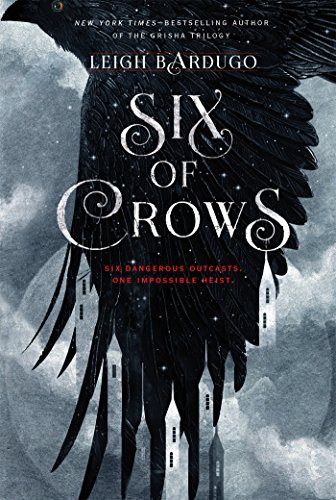
- Six of Crows
series3 books2015
part of Grishaverse
similar bysecondary worldfound familydarktensemultiple povfantasy
Leigh Bardugo's Six of Crows duology (2015-2016) follows a crew of six criminal teenagers in Ketterdam, a city modeled on the Dutch Republic, as they pull off a near-impossible heist and then deal with its fallout. Told from multiple points of view, the books lean on the found-family bond between the crew members as much as the caper plotting, and sit within Bardugo's wider Grishaverse alongside her Shadow and Bone books.
- The Lord of the Rings
series13 books1954
part of Tolkien's legendarium
similar bysecondary world+4 more
The Lord of the Rings is an epic high fantasy novel written by the English author and scholar J. R. R. Tolkien. Set in Middle-earth, the story began as a sequel to Tolkien's 1937 children's book The Hobbit but eventually developed into a much larger work. Written in stages between 1937 and 1949, The Lord of the Rings is one of the best-selling books ever written, with over 150 million copies sold.
- A Song of Ice and Fire
series14 books1996
part of World of Ice and Fire
similar bysecondary worlddarkmultiple povfantasy+2 more
A Song of Ice and Fire is a series of high fantasy novels by the American author George R. R. Martin. Martin began writing the first volume, A Game of Thrones, in 1991, and published it in 1996. Martin, who originally envisioned the series as a trilogy, has released five out of seven planned volumes. The most recent entry in the series, A Dance with Dragons, was published in 2011. Since then, Martin has been working on the sixth novel, titled The Winds of Winter. A seventh novel, A Dream of Spring, is planned to follow.
- Malazan Book of the Fallen
series20 books1999
part of Malazan
similar bysecondary worlddarkmultiple povdark fantasyfantasy+1 more
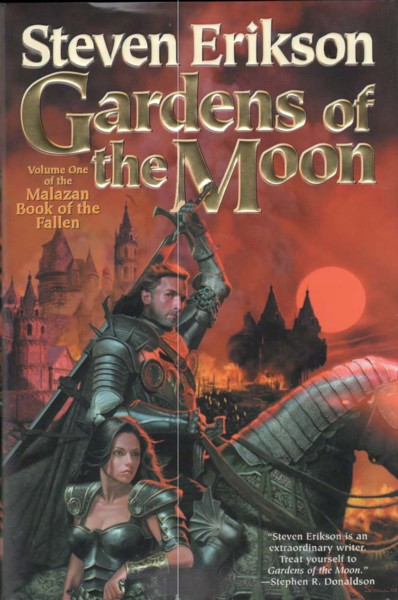
The Malazan Book of the Fallen is a series of epic fantasy novels written by the Canadian author Steven Erikson. The series, published by Bantam Books in the U.K. and Tor Books in the U.S., consists of ten volumes, beginning with Gardens of the Moon (1999) and concluding with The Crippled God (2011). Erikson's series presents the narratives of a large cast of characters spanning thousands of years across multiple continents.
- Elenium
series3 books1989
completed
part of Sparhawk
similar bysecondary worldquestsadventurousfantasy+2 more
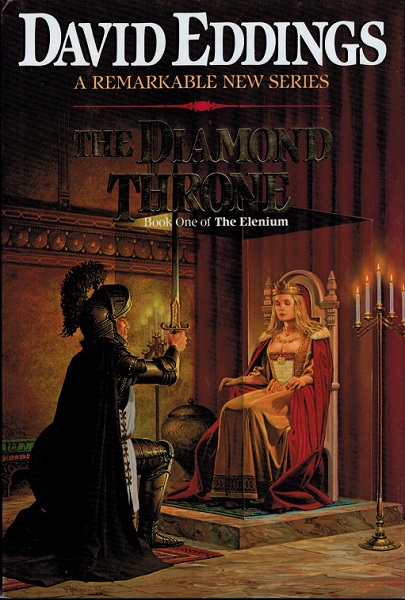
The Elenium is a series of fantasy novels by American writer David Eddings. The series consists of three volumes: The Diamond Throne, The Ruby Knight, and The Sapphire Rose. The series is followed by The Tamuli. The Elenium is Eddings' third fantasy series.
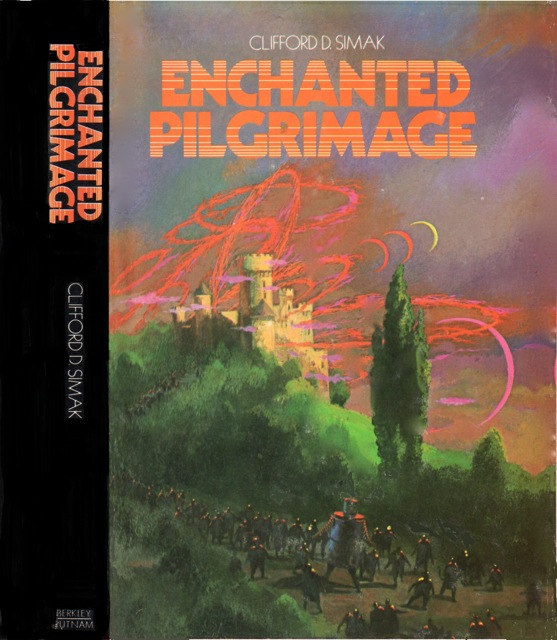
- Enchanted Pilgrimage
Clifford D. Simakstandalone novel1975
similar bysecondary worldquestsadventurousfantasy+2 more
A scholar at a remote university stumbles onto a manuscript that hints at forgotten secrets buried in the Wasteland, a blighted region where magic and monsters still linger at the edge of an otherwise rational world. Setting out to track the manuscript's truth to its source, he gathers a company of odd fellow travelers along the way -- the kind of companions a quest like this tends to attract -- each with their own stake in what they might find. Clifford D. Simak folds his familiar pastoral, faintly melancholy tone into a full-blown fantasy quest, blending scholarly curiosity with old magic. A standalone fantasy novel by Clifford D. Simak.
- Flightless Falcon
Mickey Zucker Reichertstandalone novel2000
similar bysecondary worldquestsfound familyadventurousfantasy+1 more
From the flaps of the DAW first edition: "Set in a land of scattered rival cities, this is the story of a poignant and dangerous quest, the tale of a man manipulated into a mission against his will in the hopes of regaining the only thing of importance in his life - his family. Tamison had been a miner until the cave-in which killed his brother and father, and left him trapped behind a wall of rubble, cut off from light and life for what seemed like eternity. When he was finally rescued, Tamison was so traumatized by the experience that he was left with a paralyzing fear of venturing underground. With the passing years and the growth of his new family, Tamison was willing to turn his hand to any trade that would feed his wife and children. But in a realm where guilds ruled - and where his own guild could no longer support him - Tamison became more and more desperate as even jobs for unskilled guildless laborers became impossible to obtain. Eventually Tamison was forced to what once would have been unimaginable to him. But he had no other choice. Either he must steal food of see his family starve. Caught in the act, Tamison is sentenced to a chain gang. And when he was finally released, he discovered that his family had vanished. Searching for them, Tamison became so despondent that when a guard named Dallan claimed to know of their fate he was only too ready to listen. And when Dallan said that he, too, had had someone taken by the same villains, Tamison agreed to join forces with him. But before setting out on their quest, Tamison visited a fortune-teller, hoping to be told that his mission would prove successful. Instead of learning about his own destiny, Tamison found himself acquiring a new alley as Rifkah, the fortune-teller, suddenly discovered a pressing need to leave the city. Together the three set out for the rival trading town where Dallan was certain the people they sought were being held. Tamison's initial search had led him into an encounter with a thief, who now seemed determined to attach himself to their group, and the unlikely foursome soon concocted a daring plan to break into the seemingly impenetrable city. Yet even if they succeeded in this venture it might well prove their doom, for gaining entrance to the town did not mean that they would find what they sought - or survive to win free of the place again!"
- Malazan
universe36 books1999
Start hereMalazan Book of the Fallen · Start here
similar bysecondary worlddarkmultiple pov+3 more
Pity the historian who tries to map this world; pity more the god who thinks he rules it. The Malazan Empire marches across continents on the boots of its common soldiers, and above them move Ascendants — mortals grown into something like gods, and gods worn thin as old coin. Magic is drawn from Warrens, roads of power threaded through reality; the dead keep their grudges; and every empire, however vast, is a wager against time. This is epic fantasy told from the mud, where a sapper cracking a joke weighs as much as an immortal settling a feud older than the human race. The world began as a tabletop campaign two friends built in the 1980s, and it still moves by two hands. Steven Erikson's ten-volume Malazan Book of the Fallen is the spine — Gardens of the Moon, Deadhouse Gates, Memories of Ice, on through The Crippled God — each book a near-standalone campaign that only later reveals how it locks together. Ian C. Esslemont walks the same years from a different vantage in his Novels of the Malazan Empire (Night of Knives, Return of the Crimson Guard onward). Around them stand the prequels: Erikson's Kharkanas Trilogy, archaic and elegiac, chronicling a doomed elder people, and Esslemont's brisker Path to Ascendancy, following two adventurers before they became legends. Erikson's Witness sequence carries the tale forward, and novellas of the genial necromancers Bauchelain and Korbal Broach supply the gallows comedy. Nothing is explained to you; comprehension is earned, and that is the pleasure. The themes run deep — compassion set against cruelty, the toll empires charge, civilizations that fall and are mourned. Begin where the saga does, with Erikson's Gardens of the Moon, and read the ten in publication order; the prequels are for the already-initiated. Trust that confusion is the price of entry.
- Thomas Covenant the Unbeliever
series11 books1977
similar bysecondary worldquestsdarkfantasy
The Chronicles of Thomas Covenant is a series of ten high fantasy novels written by American author Stephen R. Donaldson. The series began as a trilogy, The Chronicles of Thomas Covenant the Unbeliever. This was followed by another trilogy, The Second Chronicles of Thomas Covenant, and finally a tetralogy, The Last Chronicles of Thomas Covenant.
- Jack of Shadows
series4 books1971
similar bysecondary worldquestsadventurousscience fantasyfantasy
Roger Zelazny's Jack of Shadows (1971) is a single novel set on a tidally locked world split between a permanently lit hemisphere ruled by science and a permanently dark one ruled by magic. Its protagonist, Jack of Shadows, draws his power from shadow itself and is nearly helpless in full light or full darkness but formidable wherever shadows fall; the book follows his quest to recover a lost artifact, the Key called Kolwynia, and the power -- and responsibility -- that comes with finding it.
- The Princess and the Goblin
series2 books1871
completed
similar bysecondary worldquestsadventurousfantasy
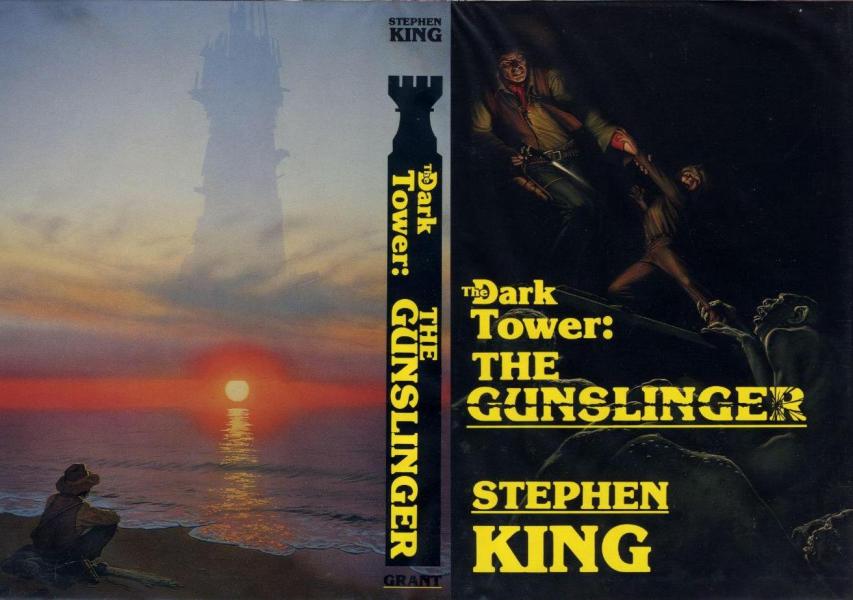
- Stephen King multiverse
universe46 books1967
Start hereThe Gunslinger · Start here
similar bydark+7 more
The man in black fled across the desert, and the gunslinger followed. So begins the long walk of Roland Deschain, last of an order of knight-errant pistoleers, across a land that has "moved on" — where the compass points drift, dead machines rot toward sentience, and the weave of what's real wears thin. His quest is the Dark Tower itself: a spire standing at the hub of every world that exists, the linchpin that holds all of them back from ruin. Roland's road runs eight volumes, from The Gunslinger through the closing Dark Tower, with the later, interleaved tale The Wind Through the Keyhole folding a story-within-a-story back into his youth. Along the way he draws a ka-tet — a fellowship bound by fate, not choosing — through doorways between worlds: a heroin-shackled New Yorker, a woman of two minds, a boy who dies twice. The Tower is also the secret axle around which the wider shelf of King's work turns; threads from The Stand, 'Salem's Lot and beyond wind quietly toward it. Expect a mongrel of Western, high fantasy, horror and decayed science fiction, told in a dusty, incantatory dialect all its own — ka, thankee-sai, the world that has moved on. This is King at his most mythic and most personal, a decades-spanning circle that rewards a patient reader. Begin at the beginning: The Gunslinger, then walk forward in publication order. There are other worlds than these — but this door opens first.
- Sparhawk
universe6 books1989
Start hereElenium · Start here
similar bysecondary worldquestsadventurousfantasy+1 more
Sir Sparhawk is not a young man, and he has little patience for the pageantry his order pretends to. A Pandion Knight of the militant Elene Church, he rides home from a long exile to find his kingdom rotten with intrigue and his young queen, Ehlana, poisoned — kept alive only inside a shell of living crystal. To wake her he must find Bhelliom, a jewel with the power to remake the world or unmake it. So begins a long ride across the continent of Eosia. This is warm, character-first epic fantasy from David Eddings, told across two trilogies. The Elenium — The Diamond Throne, The Ruby Knight, The Sapphire Rose — pits Sparhawk against a corrupt church and a hungry elder god. The Tamuli — Domes of Fire, The Shining Ones, The Hidden City — carries him east into the vast Tamul Empire, where older enemies stir. Around him gathers a quarrelsome company: the Styric sorceress Sephrenia, the thief-boy Talen, the plain-spoken squire Kurik, and a small, imperious goddess who plays a set of pipes and always, somehow, gets her way. The pleasure here is the talk — grizzled knights trading dry insults between miracles and murders, a hero who solves as many problems with patience as with a sword. It never reaches for grimness or grand obscurity; it wants your good company for a long journey. Newcomers begin with The Diamond Throne and read the six in order: the Elenium stands whole on its own before the Tamuli widens the map.
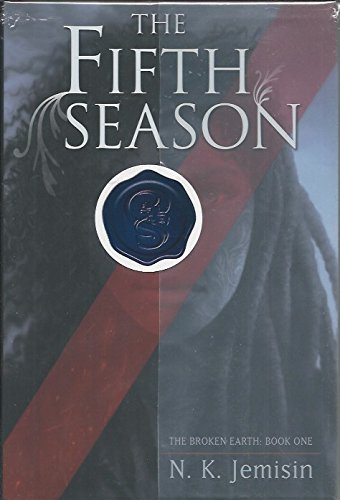
- The Broken Earth
series5 books2014
similar bysecondary worlddarkmultiple povscience fantasyfantasy+2 more
N. K. Jemisin's Broken Earth trilogy is set on the Stillness, a single supercontinent wracked every few centuries by civilization-ending climate catastrophes called Fifth Seasons. It follows orogenes, people born with the power to move earth and quell earthquakes, who are trained and controlled by the state even as they are feared and despised. The Fifth Season, the opening volume, traces three women revealed to be the same person at different stages of her life, setting up the two sequels that follow her search for her daughter after an orogene shatters the continent.
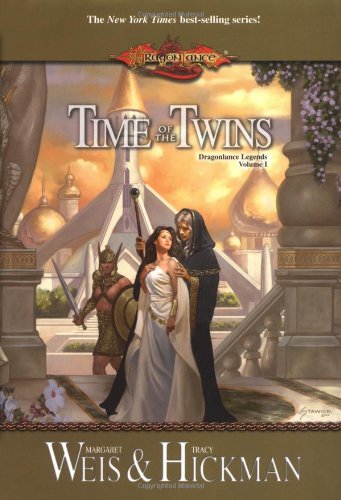
- Dragonlance: Legends Trilogy
series3 books1986
part of Dragonlance
similar bysecondary worldmultiple povfantasy+4 more
Dragonlance Legends is a trilogy of fantasy novels written by Margaret Weis and Tracy Hickman, which take place in the Dragonlance setting. This series is the sequel to the Dragonlance Chronicles, and focus on Raistlin and Caramon. The three books in the series are Time of the Twins, War of the Twins and Test of the Twins.
- The White Mists of Power
Kristine Kathryn Ruschstandalone novel1991
similar bysecondary worldquestsadventuroustensefantasy
Synopsis -An innocent excited boy, a prince and heir, takes his first journey to the city. It is like nothing he imagined. Hands pound against his carriage: voices call for a coin, Sir just one, spare me some money, sir, I haven’t eaten in days. The streets teem with merchants in velvet robes, magicians, half mad preachers, with life and colour and noise. He doesn’t want to miss any of it. But it is the last journey of his life as a prince. Soon he will be abandoned and declared dead. Soon with survival and what will be the driving force of his life: the quest to recover his stolen inheritance, his usurped throne. His home. A story of cities and palaces, of power hungry lords and ladies scheming inside a magically threatened land...Intricate, compelling.
- Spiderlight
Adrian Tchaikovskystandalone novel2016
similar bysecondary worldquestsadventurousdarkfantasy+1 more
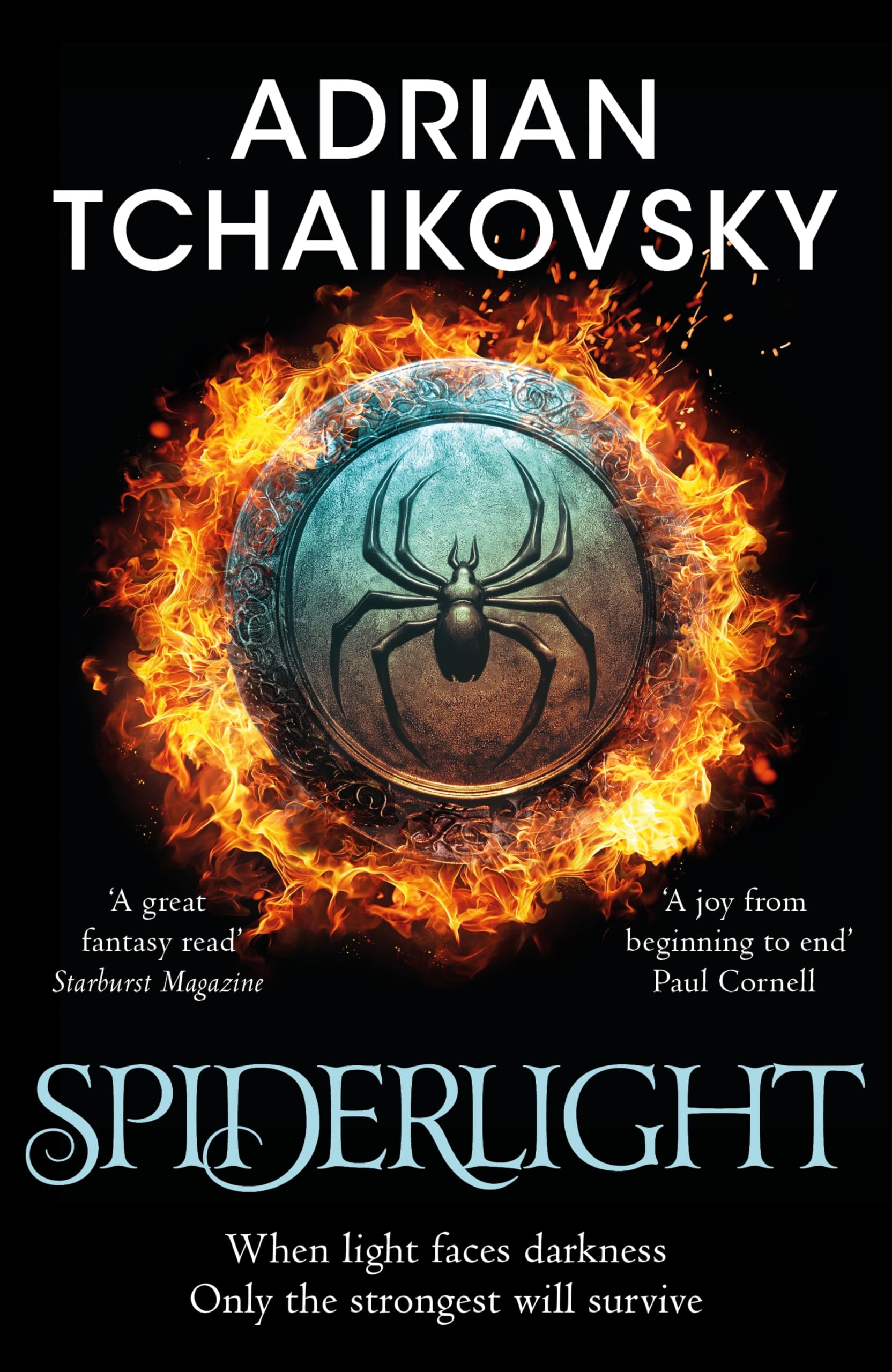
Spiderlight is a 2013 fantasy novel by Adrian Tchaikovsky. The novel tells the story of a group of humans and a giant spider who follow a prophecy to defeat the Dark Lord. The novel received critical praise for its exploration of the meaning of good and evil through the use of common fantasy tropes.
- Tailchaser's Song
Tad Williamsstandalone novel1985
similar bysecondary worldquestsadventurousfantasy+1 more
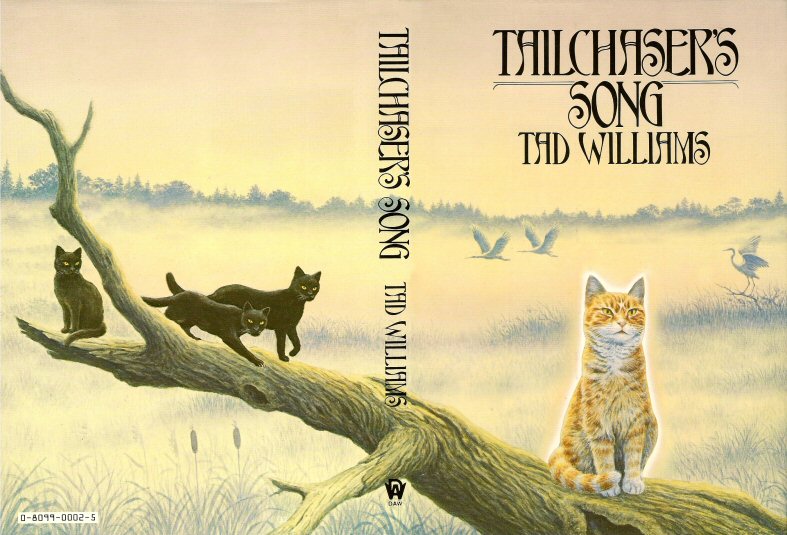
Tailchaser's Song is a fantasy novel by American writer Tad Williams. First released on November 21, 1985, it is Williams' first published work.
- The Well at the World's End
William Morrisstandalone novel1896
similar bysecondary worldquestsadventurousfantasy
The Well at the World's End is a high fantasy novel by the British textile designer, poet, and author William Morris. It was first published in 1896 and has been reprinted repeatedly since, most notably in two parts as the 20th and 21st volumes of the Ballantine Adult Fantasy series, in August and September 1970.
- Redwall
series22 books1986
completed
part of Redwall Universe
similar bysecondary worldquestsadventurousfantasy
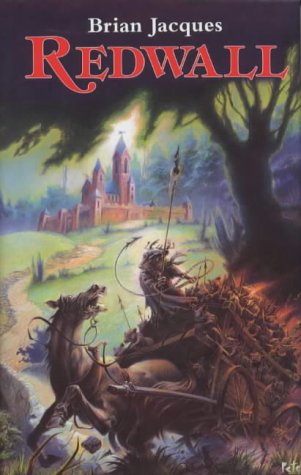
Redwall is Brian Jacques's long-running series of fantasy novels for young readers, set within the redwall-universe of Redwall Abbey and its community of anthropomorphic animals. It opened in 1986 with the mouse Matthias searching for the lost sword of the legendary Martin the Warrior to defend the abbey from the invading rat Cluny the Scourge, and grew across 22 largely stand-alone novels published through 2011, each set in a different generation of the abbey's history and following its mice, otters, badgers, and vermin adversaries.
- Fallen Gods / Godkiller
series3 books2023
similar bysecondary worldtensedarkmultiple pov+4 more
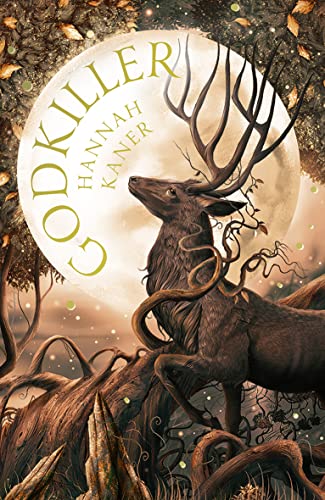
Hannah Kaner's Godkiller follows Kissen, who lost her family to zealots of a fire god and now kills gods for a living, until she meets Skedi, a small god of white lies bound against his will to a young noble and hunted by assassins. Joined by a disillusioned knight on his own secret errand, the mismatched trio travels to the ruined city of Blenraden, where the last wild gods linger, each seeking a favour amid a rising civil war. Sunbringer and Faithbreaker continue their story.