More like Turncoat
anchored on:science fictiontime travelnorth americaalternate historyassassinsadventurous+1 more
but
- 11/22/63
Stephen Kingstandalone novel2011
similar byassassinsnorth americatensescience fictiontime travelalternate history+1 more
11/22/63 is a novel by American author Stephen King about a time traveler who attempts to prevent the assassination of United States President John F. Kennedy, which occurred on November 22, 1963. It is the 60th book published by Stephen King, his 49th novel, and the 42nd under his own name. The novel required considerable research to accurately portray the late 1950s and early 1960s. King commented on the amount of research it required, saying, "I've never tried to write anything like this before. It was really strange at first, like breaking in a new pair of shoes."
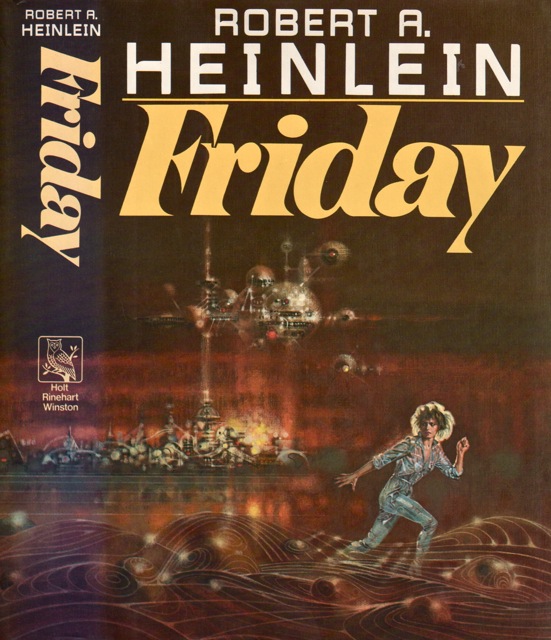
- Friday
Robert A. Heinleinstandalone novel1982
similar bynorth americaadventuroustenseidentityscience fiction
Friday is a 1982 science fiction novel by American writer Robert A. Heinlein. It is the story of a female "artificial person", the eponymous Friday, genetically engineered to be stronger, faster, smarter, and generally better than normal humans. Artificial humans are widely resented, and much of the story deals with Friday's struggle both against prejudice and to conceal her enhanced attributes from other humans. The story is set in a Balkanized 21st century, in which the nations of the North American continent have been split up into a number of smaller states.
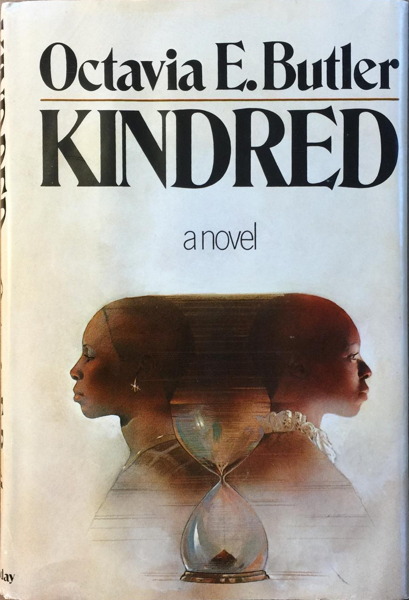
- Kindred
Octavia E. Butlerstandalone novel1979
similar bynorth americatensescience fictiontime travel+1 more
Kindred (1979) is a novel by American writer Octavia E. Butler that incorporates time travel and is modeled on slave narratives. Widely popular, it has frequently been chosen as a text by community-wide reading programs and book organizations, and for high school and college courses.
- The Door Into Summer
Robert A. Heinleinstandalone novel1957
similar bynorth americaadventurousscience fictiontime travel
From the first page of the Signet 6th printing: "An electronics engineer invents a wizard robot... only to find himself shanghaied by his ruthless partner and his gold-digging fiancee. The crafty pair forces him to submit to the "long sleep" - suspended animation for thirty years. But when he wakes up in the year 2000 A.D. the inventor makes a startling discovery. He learns that it is possible now to twist time forwards or backwards. And so he returns to the past bent on a mission... of revenge."
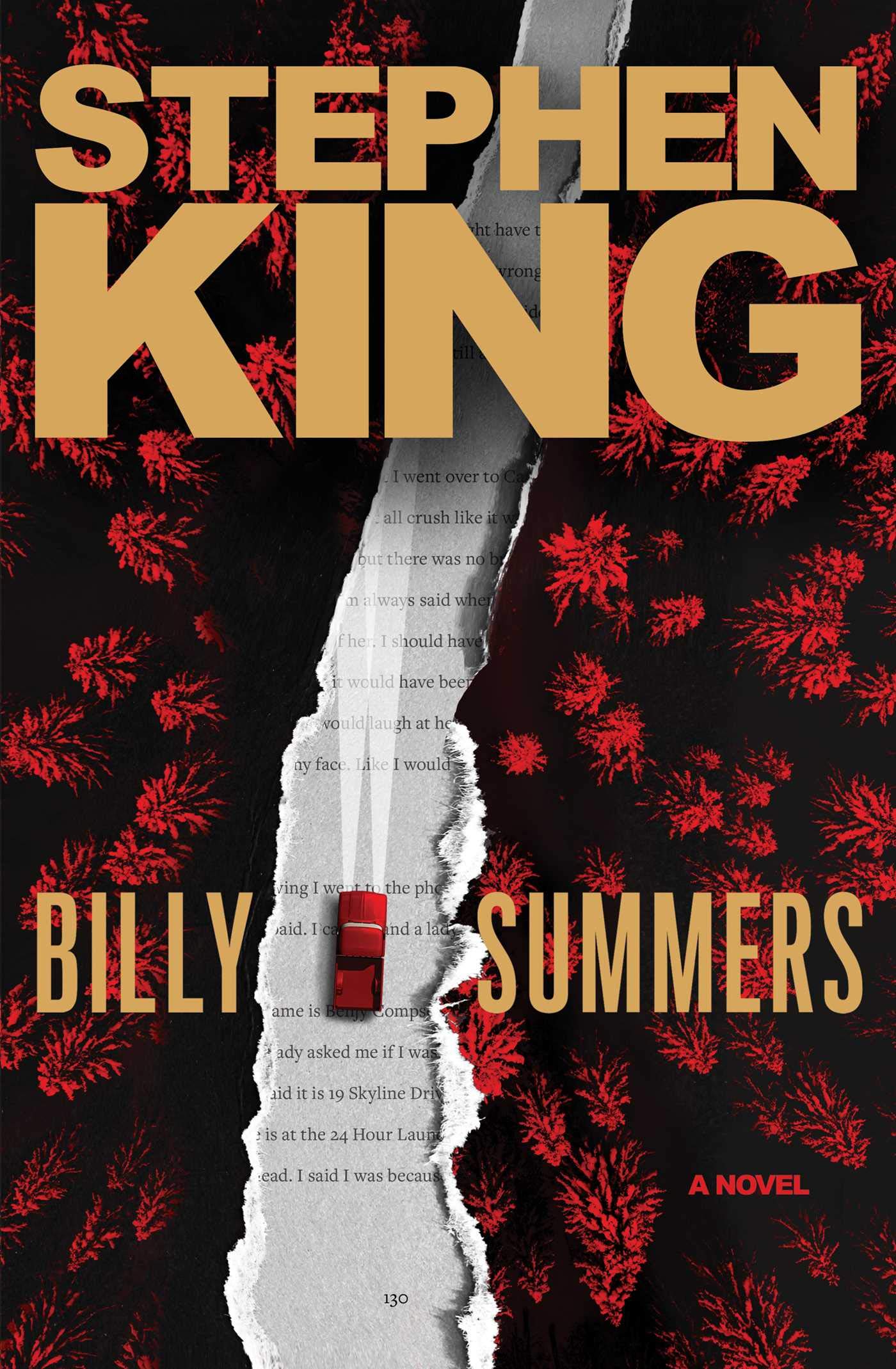
- Billy Summers
Stephen Kingstandalone novel2021
similar byassassinsnorth americatenseidentity
Billy Summers is a crime novel written by American author Stephen King, published by Scribner on August 3, 2021.
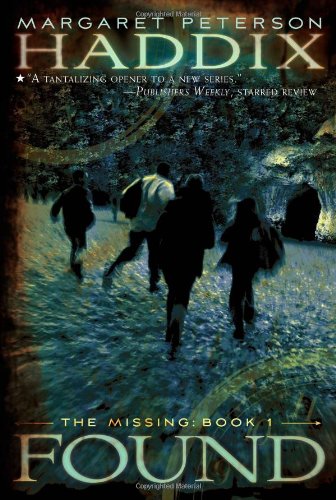
- The Missing
series10 books2008
similar byidentitynorth americascience fictiontime travel+2 more
The Missing is a series of young adult novels written by Margaret Peterson Haddix. It tells the story of famous children from history stolen from their place in time by futuristic time travelers and accidentally sent to the 21st century as babies. Jonah Skidmore is one of the stolen children, and he, along with his non-adopted sister Katherine, must help return the missing kids to their rightful places in history and fix time before it is destroyed. The first book in the series, Found, was published on April 22, 2008. The series continued with book titles Sent, Sabotaged, Torn, Caught, Risked, and Revealed. The eighth and final book, Redeemed, was released on September 8, 2015. There are also two ebook short stories, Sought and Rescued . Haddix originally intended the series to consist of only seven books. However, she stated that she had trouble closing out the series in seven books; leading to her decision to write Redeemed.
- Bring the Jubilee
Ward Moorestandalone novel1953
similar bynorth americascience fictiontime travelalternate history+1 more
From the flaps of the Farrar, Straus and Young first edition: ""Although I am writing this in the year 1877, I was not born until 1921." So Hodge Backmaker begins his story of the harsh and curious world he lived in, a world in which the South won the Civil War and the all-powerful Confederacy dominated the poor and backward North; a North that had neither a transcontinental railroad, and where television was undreamed of. Like most Northerners, Hodge was poor - but he had ambition. A printer's handyman in 1938, he had since become an eminent historian. Hodge's special interest was the American past, when the States had been united and had seemed to be on the brink of prosperity and technical progress. And then he was offered an opportunity no historian could resist - he could go back in time. Hodge chsoe to return to a certain field near Gettysburg on a day in July, 1863... Bring the Jubilee is a novel of curious events, of adventures and reflection, of passions and comment. It at time Hodge's world, its horse-carriages and gas-lights, minibles and tinugraphs and the Great Emperors' War of 1914 faintly resembles our own, it is perhaps, because that world might well become a reality: on the battlefield of Gettysburg there is a small hill called Little Round Top. One July morning in 1863 the Confederate Army made the tactical error of not occupying this hill. It was a mistake that cost them victory in a battle which - in the view of many historians - was the turning point of the Civil War."
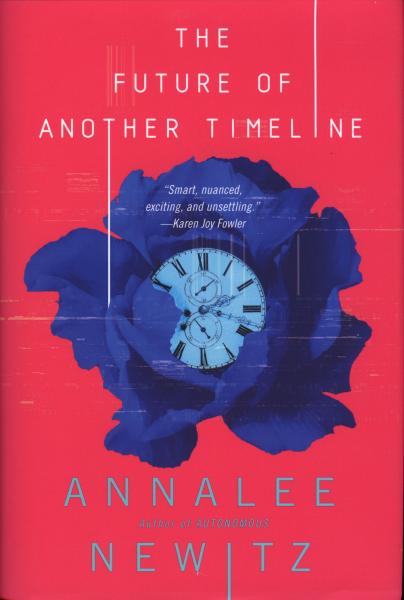
- The Future of Another Timeline
Annalee Newitzstandalone novel2019
similar bynorth americaadventuroustensescience fictiontime travel
The Future of Another Timeline is a 2019 science fiction novel by Annalee Newitz. The feminist time-travel adventure follows Tess, a professional time traveler, geoscientist, and secretly a member of the Daughters of Harriet (Tubman), who are working to make the future better for women.
- A Bridge of Years
Robert Charles Wilsonstandalone novel1991
similar bynorth americatensescience fictiontime travel+1 more
"Tom Winter thought the secluded cottage in the Pacific Northwest would be the perfect refuge--a place to nurse the wounds of lost love and happiness. But Tom soon discovers that his safe haven is the portal of a tunnel through time. At one end is the present. At the other end--New York City, 1963. His journey back to the early 1960s seems to offer him the chance to start over in a simpler, safer world. But he finds that the tunnel holds a danger far greater than anything he left behind: a human killing machine escaped from a bleak and brutal future, who will do anything to protect the secret passage that he thought was his alone. To preserve his worlds, past and present, Tom Winter must face the terrors of an unknown world to come. "--
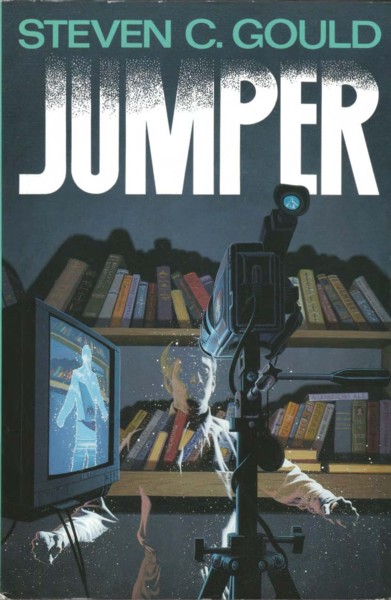
- Jumper
series6 books1992
similar byadventuroustensescience fiction+2 more
Jumper follows David Rice, a teenager who discovers he can teleport anywhere he's been and uses the power to escape an abusive home, only to find that ability alone doesn't solve the harder problems of finding his absent mother, building an honest relationship, or staying off the radar of people who'd exploit him. Steven Gould's series continues across Reflex, Impulse, and Exo, later following his and his wife's daughter as a second-generation jumper. A 2008 film loosely adapted the first novel.
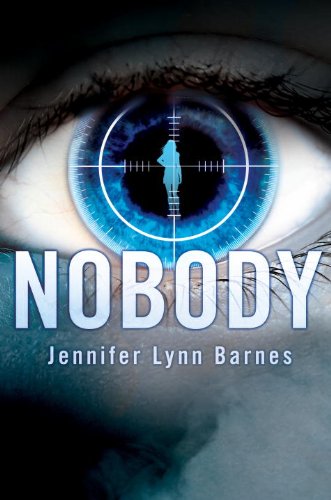
- Nobody
Jennifer Lynn Barnesstandalone novel2013
similar byassassinstensenorth americaidentityscience fiction
Fifteen-year-old Claire Ryan has always felt invisible, always lived beyond people's notice, which causes trouble when she instantly connects with seventeen-year-old Nix, who really can become invisible and has been sent to assassinate her.
- All Our Wrong Todays
Elan Mastaistandalone novel2017
similar bynorth americaidentityscience fictiontime travelalternate history+1 more
All Our Wrong Todays is a 2017 science fiction novel by Canadian screenwriter Elan Mastai. It is Mastai's debut novel and was first published in February 2017 in the United States by Dutton, in Canada by Doubleday Canada, and in the United Kingdom in March 2017 by Michael Joseph. The novel is about a man from a utopia in an alternate reality who finds himself stuck in our reality after a time travel accident.
- Libra
Don DeLillostandalone novel1988
similar byassassinsnorth americatenseidentity
Two disgruntled CIA agents decide that an unsuccessful assassination attempt on John F. Kennedy's life, one that can be linked to Fidel Castro, is the only way to put Cuba back into geopolitical play. They choose Lee Harvey Oswald as the instrument to put their plot in motion.
- Assassin (Robert Ferrigno)
series3 books2006
similar byassassinsnorth americatensescience fictionalternate history
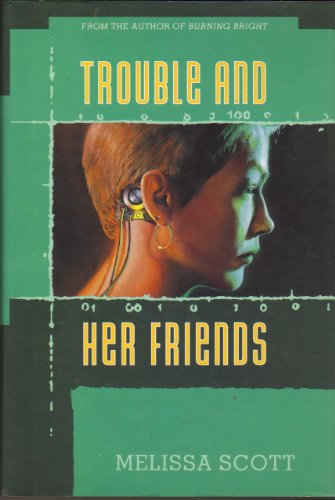
- Trouble and Her Friends
Melissa Scottstandalone novel1994
similar bynorth americatenseidentityscience fiction+1 more
Trouble and Her Friends is a science fiction novel by American writer Melissa Scott, first published in 1994. Set in the near future in the United States, the story follows India Carless, known as "Trouble" in her life as a criminal hacker, and her ex-lover Cerise. After leaving the underground scene three years earlier, they discover someone impersonating Trouble online, and decide to reunite to confront this impersonator, embarking on a cross-country journey. The novel features extensive use of virtual reality and neural implants, making it a solid example of cyberpunk; however, it is notable within the genre for its distinct feminist perspective and its focus on main characters who are gay or lesbian, reflecting themes common in much of Scott's work.
- Restoree
Anne McCaffreystandalone novel1967
similar byadventuroustensescience fiction+1 more
Torn from Earth by a bizarre and nameless black force, Sara has no idea where she is or why she inhabits a beautiful new body. Controlled by brutal guards and tamed by terror, she can not comprehend her role as a nurse for a man who appears to be an idiot. She discovers that the planet she had been brought to was Lothar and that the man she was caring for was its Regent, Sara knows the restorees had to escape. When they do, they become fugitives on a world of multiple evils. (adapted from the back cover of the Baen edition)
- 88
Michael R. Fletcherstandalone novel2013
similar byassassinsnorth americatensescience fiction+1 more
"The dream of Artificial Intelligence is dead and the human mind is now the ultimate processing machine. Demand is high, but few are willing to sacrifice their lives to become computers. Black-market creches, struggling to meet the ever-increasing demand, deal in the harvested brains of stolen children. But there is a digital snake in that fractally modelled garden; some brains make better computers than others. 88, a brilliant autistic girl, has been genetically engineered and raised from birth to serve one purpose: become a human computer. Plagued by memories of a mother she never knew and a desire for freedom she barely understands, she sets herself against those who would be her masters. Unfortunately for 88, the Cuntrera-Caruana Mafia clan have other plans for her. Griffin Dickinson, a Special Investigator for the North American Trade Union, has been tasked with shutting down the black market creches. Joined by Nadia, a state-sanctioned reporter and Abdul, the depressed ghost of a dead Marine inhabiting a combat chassis, Griffin is drawn deep into the shady underbelly of the brain trade. Every lead brings him one step closer to an age-old truth: corruption runs deep. An army of dead children, brainwashed for loyalty and housed in state of the art military chassis, stand between Griffin and the answers he seeks. But one in particular, Archaeidae, a 14-year old Mafia assassin obsessed with Miyamoto Musashi, Sun Tzu, and Machiavelli, is truly worthy of fear. Archaeidae is the period at the end of a death sentence"--Back cover.
- Heavy Weather
Bruce Sterlingstandalone novel1994
similar bynorth americaadventuroustensescience fiction
Set in 2031 when global climatology has significantly changed the world's weather patterns, Jane Unger "rescues" her brother Alex from a Mexican clinic and takes him to the Storm Troupe. The troupe, under the leadership of Dr. Jerry Mulcahey, chases tornadoes primarily across northern Texas, gathering data in preparation for tracking the mythical F-6 tornado.
- Have Space Suit - Will Travel
Robert A. Heinleinstandalone novel1958
similar byadventuroustensenorth americascience fiction
From the back cover of the Del Rey 9th printing: "Skyjacked - Everything happened at once. One minute Kip Russell was walking about in his own backyard, testing out an old space suit and dreaming about going to the moon - and the next he was out cold and the captive of an insidious space pirate. The whole thing seemed like a very bad dream until he discovered he wasn't the only prisoner on board. Then the reality of the situation became inescapable. He - along with the daughter of a world-renowned scientist and a beautiful creature from an alien planet - had been skyjacked by a monstrous extraterrestrial and they were on their way to the Moon... a journey toward a fate worse than death!"
- Reckoners
series6 books2013
similar bynorth americaadventuroustensescience fiction
The Reckoners is a series of young adult superhero novels written by American author Brandon Sanderson. The series consists of Steelheart (2013), Firefight (2015), Calamity (2016) and Lux (2021). The series depicts a post-apocalyptic world in which the appearance of an orbiting cosmic phenomenon known as Calamity has given random people superhuman powers in apparent defiance of known physical laws, turning them into "Epics". These Epics prey upon or enslave the rest of humanity, causing the collapse of traditional governments. One young man orphaned by a High Epic joins a group that is killing Epics.
- Beyond the Barrier
Damon Knightstandalone novel1964
similar bytensenorth americaidentityscience fictiontime travel
From the front flap of the Doubleday first edition: "Gordon Naismith was a physics professor at a large California university. The year was 1980, and by means of the university's duplicator he could personally teach in nine different classrooms simultaneously. Naismith was an average man in all but two respects: the reflexes were extraordinarily quick, and four years before in a plane crash he had lost all memory of his earlier life. Neither difference seemed important until one day a very unusual student in one of his classes asked a disturbing, extracurricular question: "Professor, what is a zug?" The question triggered a series of violent incidents, and soon Naismith himself, as well as the police, were beginning to wonder if the duplicator had reproduced him a tenth time. The answer lay ten thousand years in the future."
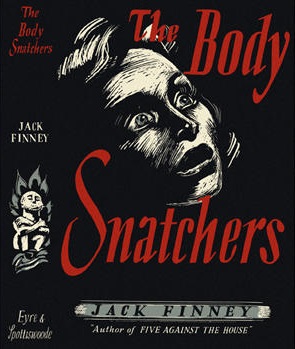
- The Body Snatchers
Jack Finneystandalone novel1955
similar bynorth americatenseidentityscience fiction
The Body Snatchers is a science fiction horror novel by American writer Jack Finney, originally serialized in Collier's magazine in November–December 1954 and published in book form the following year.
- Watchers
Dean R. Koontzstandalone novel1987
similar bynorth americaadventuroustensescience fiction
This probably qualifies as a science-based adventure rather than a science fiction novel. The premise, and only speculative fiction element, is that a U.S. government funded laboratory creates a golden retriever that's as intelligent as a human for use in intelligence gathering and also creates a monkey hybrid that's intended for a military police dog role and as a killing machine on battlefields. The animals escape and the story plays out as a straight adventure novel with a good chunk of romance thrown in.