More like Two to Conquer
anchored on:science fantasysecondary worldpsychic powerspolitical intriguewaradventurous+1 more
but
- The Stormlight Archive
series15 books2010
part of Cosmere
similar bysecondary worldadventurouswarfantasy+2 more
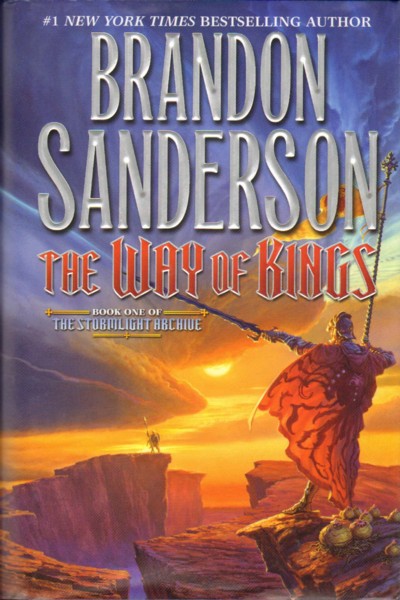
The Stormlight Archive is a high fantasy novel series written by American author Brandon Sanderson, planned to consist of ten novels. As of 2024, the series comprises five published novels and two novellas, set within Sanderson's broader Cosmere universe. The first novel, The Way of Kings, was published on August 31, 2010. The second novel, Words of Radiance, was published on March 4, 2014 and debuted at number one on The New York Times Best Seller List. This was repeated by Oathbringer and Rhythm of War. The fifth novel, Wind and Truth, was released December 6, 2024. Sanderson has indicated that he will start drafting the latter half of the series after he finishes writing the upcoming Era Three Mistborn trilogy and the two Elantris sequels. The series has been adapted as a VR Experience and a tabletop roleplaying game.
- The Codex Alera
series6 books2004
similar byadventuroussecondary worldpolitical intriguewarfantasy
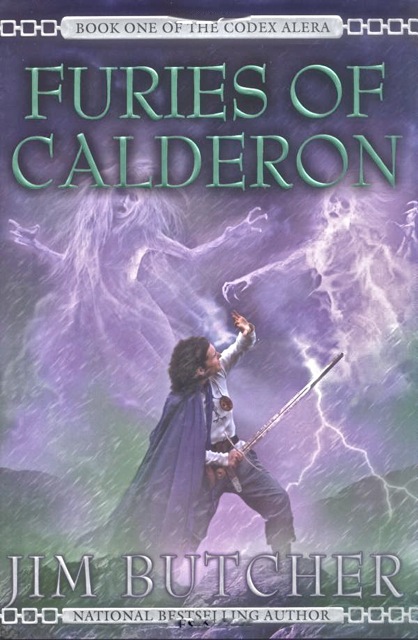
Furies of Calderon opens The Codex Alera in a Rome-flavored fantasy world where nearly everyone commands elemental spirits called furies, except Tavi, a teenager with none, whose resourcefulness becomes the series' recurring answer to raw magical power. Jim Butcher's six-book series, continuing through Academ's Fury, Cursor's Fury, Captain's Fury, Princeps' Fury, and First Lord's Fury, builds from small-scale political maneuvering into full-scale war.
- A Song of Ice and Fire
series14 books1996
part of World of Ice and Fire
similar bysecondary worldpolitical intriguewarfantasy
A Song of Ice and Fire is a series of high fantasy novels by the American author George R. R. Martin. Martin began writing the first volume, A Game of Thrones, in 1991, and published it in 1996. Martin, who originally envisioned the series as a trilogy, has released five out of seven planned volumes. The most recent entry in the series, A Dance with Dragons, was published in 2011. Since then, Martin has been working on the sixth novel, titled The Winds of Winter. A seventh novel, A Dream of Spring, is planned to follow.
- A Song for Arbonne
Guy Gavriel Kaystandalone novel1992
similar bysecondary worldpolitical intriguewaremotionalfantasy
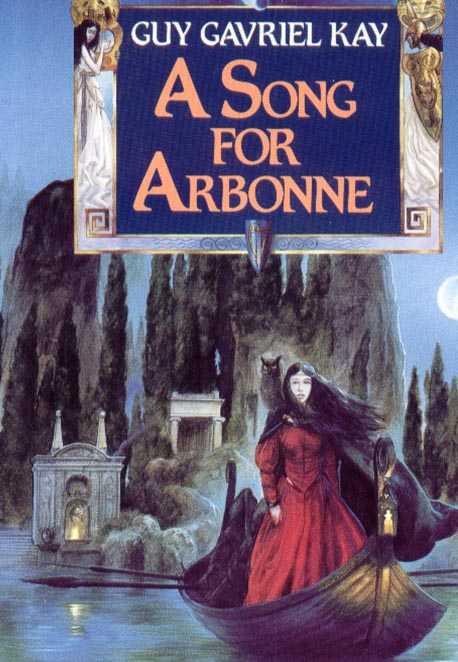
A Song for Arbonne is a novel by Canadian writer Guy Gavriel Kay published in 1992. It is set in a fantasy world with two moons and is loosely based on 12th-century Provence and the Albigensian Crusade.
- The Hobbit
series2 books1937
completed
part of Tolkien's legendarium
similar byadventuroussecondary worldfantasy
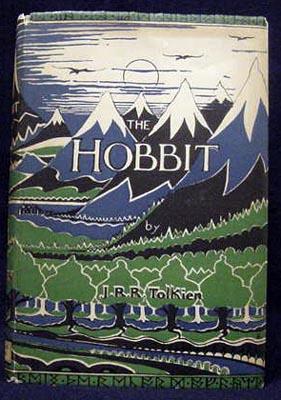
The Hobbit (1937) is J. R. R. Tolkien's children's fantasy novel following the reluctant burglar Bilbo Baggins, who joins a company of dwarves and the wizard Gandalf on a journey to reclaim treasure guarded by the dragon Smaug. It stands as a complete adventure on its own, but shares its setting with the rest of Tolkien's legendarium and leads into the events of The Lord of the Rings.
- The Dark World
Henry Kuttnerstandalone novel1965
similar byadventuroussecondary worldscience fantasyfantasy+1 more
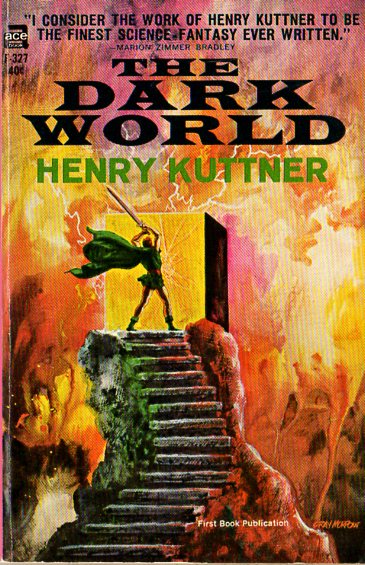
The Dark World is a science fantasy novel credited to Henry Kuttner, although his wife C. L. Moore may have been an uncredited collaborator, or possibly even the author. The novel was first published in the July 1946 issue of Startling Stories, then reprinted in the Winter 1954 issue of Fantastic Story Magazine. Its first book edition was issued by Ace in 1965, followed by a British edition by Mayflower Books in 1966. A French translation appeared in 1972. The novel was reprinted in full in Issue #5 of Amberzine in 1992, and also collected in a 1997 paperback omnibus, The Startling Worlds of Henry Kuttner. Roger Zelazny, author of The Chronicles of Amber, credits this book as being one of his primary influences during his youth.
- Sparhawk
universe6 books1989
Start hereElenium · Start here
similar byadventuroussecondary worldfantasy+2 more
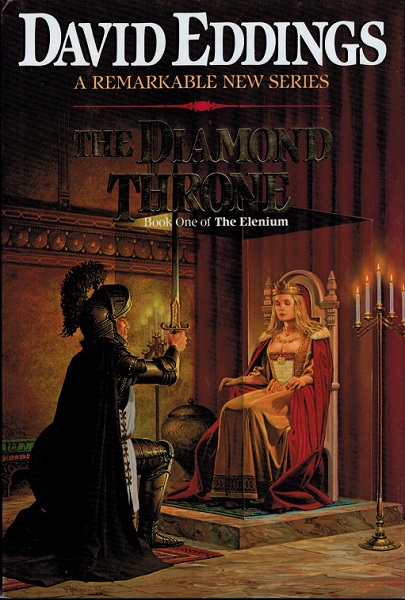
Sir Sparhawk is not a young man, and he has little patience for the pageantry his order pretends to. A Pandion Knight of the militant Elene Church, he rides home from a long exile to find his kingdom rotten with intrigue and his young queen, Ehlana, poisoned — kept alive only inside a shell of living crystal. To wake her he must find Bhelliom, a jewel with the power to remake the world or unmake it. So begins a long ride across the continent of Eosia. This is warm, character-first epic fantasy from David Eddings, told across two trilogies. The Elenium — The Diamond Throne, The Ruby Knight, The Sapphire Rose — pits Sparhawk against a corrupt church and a hungry elder god. The Tamuli — Domes of Fire, The Shining Ones, The Hidden City — carries him east into the vast Tamul Empire, where older enemies stir. Around him gathers a quarrelsome company: the Styric sorceress Sephrenia, the thief-boy Talen, the plain-spoken squire Kurik, and a small, imperious goddess who plays a set of pipes and always, somehow, gets her way. The pleasure here is the talk — grizzled knights trading dry insults between miracles and murders, a hero who solves as many problems with patience as with a sword. It never reaches for grimness or grand obscurity; it wants your good company for a long journey. Newcomers begin with The Diamond Throne and read the six in order: the Elenium stands whole on its own before the Tamuli widens the map.
- The Broken Earth
series5 books2014
similar bysecondary worldscience fantasyfantasy+3 more
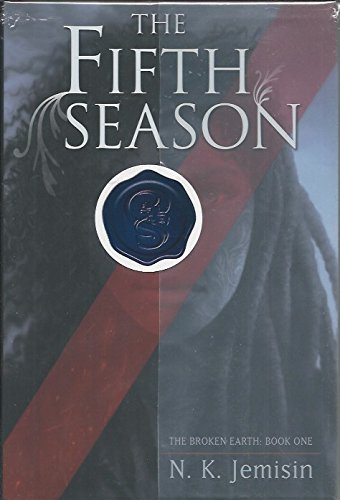
N. K. Jemisin's Broken Earth trilogy is set on the Stillness, a single supercontinent wracked every few centuries by civilization-ending climate catastrophes called Fifth Seasons. It follows orogenes, people born with the power to move earth and quell earthquakes, who are trained and controlled by the state even as they are feared and despised. The Fifth Season, the opening volume, traces three women revealed to be the same person at different stages of her life, setting up the two sequels that follow her search for her daughter after an orogene shatters the continent.
- City of Bones
Martha Wellsstandalone novel1995
similar byadventuroussecondary worldscience fantasyfantasy+1 more
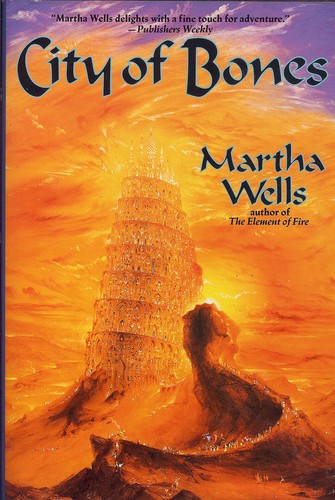
From the dust jacket laps of the Tor first edition: "....With City of Bones, Wells shapes a fabled and mysterious Arabian Nights wonderland in which science and magic meet in a head-on clash. it is a place that has been devastated by an ancient holocaust, and where not of the world's water has evaporated. But out of the ashes, a bizarre and wonderful civilization arises. Sand ship now traverse the routes once used by the great war galleons, and a glittering chain of city-states dot the Great Waste. And the greatest of them all is Charisat. Charisat, Imperial seat and wonder of wonders, a great monolithic structure towering over the desert. Charisat, a phantasmagorical place where silken courtesans and beggars weave lies side by side, where any man's dreams can be fulfilled at the whisper of a genie, and where the tier that you live on determines how high up the food (or more importantly, water) chain you are. Charisat, the goal of every schemer, treasure hunter, and madman intent on finding his hearts content. For if it can't be had in Charisat, it's not worth having. A beautiful woman and a handsome thief try to unravel the mysteries of an age-old technology to stop a fanatical cult before its members unleash an evil that will topple Charisat. And destroy all the water in the world."
- Riftwar Saga
series7 books1982
part of The Riftwar Universe
similar byadventuroussecondary worldwarfantasy
The Riftwar Saga is Raymond E. Feist's debut fantasy trilogy, opening with Magician, in which an orphaned apprentice named Pug is swept up when otherworldly invaders emerge through a dimensional rift into the frontier kingdom of Midkemia. Silverthorn and A Darkness at Sethanon carry the resulting war to its close, and the trilogy became the founding entry of Feist's much larger Riftwar Cycle.
- The Riftwar Universe
universe44 books1982
Start hereRiftwar Saga · Start here
similar bysecondary worldfantasy+3 more
On the world of Midkemia a tear opens in the air itself, a rift hung between stars, and through it march the armies of an empire from another world entirely. So begins the chronicle Raymond E. Feist has kept for three decades: the tale of Pug, a castle kitchen boy apprenticed to a magician on the very day the invasion lands, and of Tomas, his friend, who inherits the armor and the ancient fury of a dead dragon-lord. Around these two the Riftwar Cycle turns, widening book by book from one besieged frontier keep into the whole history of a world of kingdoms, guilds, thieves' dens and mage-towers. The cycle runs to roughly thirty novels, gathered into arcs a newcomer can enter and finish on their own. The founding Riftwar Saga (Magician, Silverthorn, A Darkness at Sethanon) sets the board; the Serpentwar Saga, Krondor's Sons and the Conclave of Shadows carry the story down the generations; the Darkwar, Demonwar and Chaoswar sagas bring it toward its close. Crossing the rift to the rival world of Kelewan, Feist and Janny Wurts wrote the Empire trilogy, opening with Daughter of the Empire, a court intrigue told wholly from the invaders' side and for many the finest thing here. Shorter Legends of the Riftwar and the game-born Riftwar Legacy fill the corners; later still, Feist opens an altogether new world in the Firemane books. Feist writes fantasy in its most companionable key: apprentices who grow into archmages, tavern boys who become spies and dukes, a world you return to the way you return to an old inn. The mood is adventure before dread, friendship and rank and hard-won craft, wars that cost something, all of it rendered plainly and at a gallop. Begin where it began, with Magician, then follow the arcs in the order they were written, and the rift will carry you the rest of the way.
- Narnia
series26 books1950
part of Narnia Universe
similar byadventuroussecondary worldfantasy+1 more
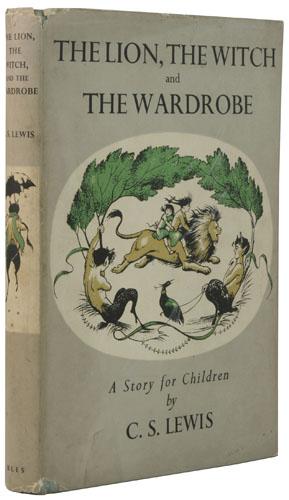
The Chronicles of Narnia is a series of seven portal fantasy novels by British author C. S. Lewis. Illustrated by Pauline Baynes and originally published between 1950 and 1956, the series is set in the fictional realm of Narnia, a fantasy world of magic, mythical beasts, and talking animals. It narrates the adventures of various children who play central roles in the unfolding history of the Narnian world. Except in The Horse and His Boy, the protagonists are all children from the real world who are magically transported to Narnia, where they are sometimes called upon by the lion Aslan to protect Narnia from evil. The books span the entire history of Narnia, from its creation in The Magician's Nephew to its eventual destruction in The Last Battle.
- Jack of Shadows
series4 books1971
similar byadventuroussecondary worldscience fantasyfantasy
Roger Zelazny's Jack of Shadows (1971) is a single novel set on a tidally locked world split between a permanently lit hemisphere ruled by science and a permanently dark one ruled by magic. Its protagonist, Jack of Shadows, draws his power from shadow itself and is nearly helpless in full light or full darkness but formidable wherever shadows fall; the book follows his quest to recover a lost artifact, the Key called Kolwynia, and the power -- and responsibility -- that comes with finding it.
- A Heroine of the World
Tanith Leestandalone novel1989
similar bysecondary worldpolitical intriguewarfantasy+2 more
The fortune teller had spoken the words, shown her the cards that predicted she would become the focal point of great events. But now, a captive of those who had invaded her land, Ara could only wait, hoping to discover the true path of her destiny. But in a world ruled by the war, what chance did Ara have to attain her heart's desire? Carried far from her home, alone among strangers, only the will of the goddess, the Lady Vulmardra, could protect and guide her. Yet the path the Lady had set her upon would lead Ara to the very heart of conflict. And though she might gain great wealth or lose it, become both pawn and player in the power games of princes and warlords, there was only one for whom she would risk everything, a soldier who some named traitor and others liberator, the man for whom she would strive to become a heroine. (adapted from the back cover of the first edition)
- Redwall
series22 books1986
completed
part of Redwall Universe
similar byadventuroussecondary worldfantasy+1 more
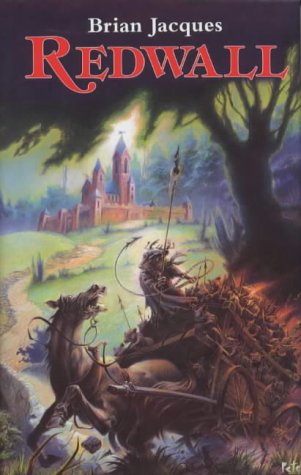
Redwall is Brian Jacques's long-running series of fantasy novels for young readers, set within the redwall-universe of Redwall Abbey and its community of anthropomorphic animals. It opened in 1986 with the mouse Matthias searching for the lost sword of the legendary Martin the Warrior to defend the abbey from the invading rat Cluny the Scourge, and grew across 22 largely stand-alone novels published through 2011, each set in a different generation of the abbey's history and following its mice, otters, badgers, and vermin adversaries.
- The Grisha
series9 books2012
part of Grishaverse
similar byadventuroussecondary worldfantasy+2 more
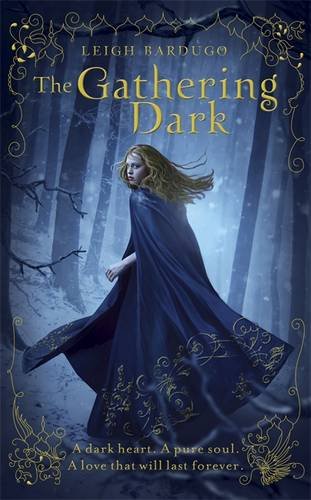
Leigh Bardugo is an American fantasy author. She is best known for her young adult Grishaverse novels, which include the Shadow and Bone trilogy and the Six of Crows and King of Scars duologies. She also received acclaim for her paranormal fantasy adult debut, Ninth House. The Shadow and Bone and Six of Crows series have been adapted into Shadow and Bone by Netflix, and Ninth House will be adapted by Amazon Studios; Bardugo is an executive producer on both works.
- The Immortals
series6 books1992
part of Tortall
similar byadventuroussecondary worldfantasy+1 more
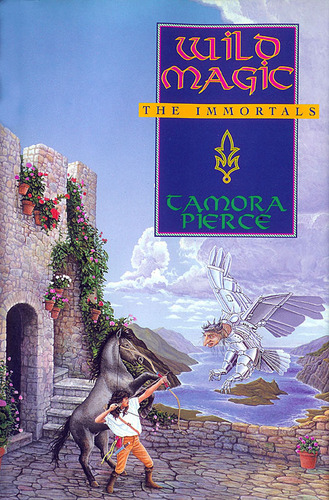
Tamora Pierce's Immortals quartet follows Daine, a young woman whose 'wild magic' lets her communicate with and shapeshift among animals, as she's drawn into the kingdom of Tortall's defense against immortal creatures -- griffins, dragons and darker things -- released back into the world after centuries sealed away. Beginning with Wild Magic, the four books pair Daine's personal coming-of-age with an escalating magical threat, and connect to Pierce's earlier Song of the Lioness quartet through several shared characters.
- The Lord of the Rings
series13 books1954
part of Tolkien's legendarium
similar bysecondary world+3 more
The Lord of the Rings is an epic high fantasy novel written by the English author and scholar J. R. R. Tolkien. Set in Middle-earth, the story began as a sequel to Tolkien's 1937 children's book The Hobbit but eventually developed into a much larger work. Written in stages between 1937 and 1949, The Lord of the Rings is one of the best-selling books ever written, with over 150 million copies sold.
- The Saga of Recluce
series48 books1991
similar bysecondary worldpolitical intriguefantasy+2 more
The Saga of Recluce is a series of fantasy novels written by L. E. Modesitt Jr. The initial novel in the series, The Magic of Recluce, was published in 1991. The series is still in publication with the latest novel published in June 2026. In 2015 Modesitt stated that the (then) 20 novels in the Recluce series had sold nearly three million copies.
- The Powder Mage
universe19 books2013
Start hereThe Powder Mage Trilogy · Start here
similar bysecondary worldwarpolitical intriguefantasy+1 more
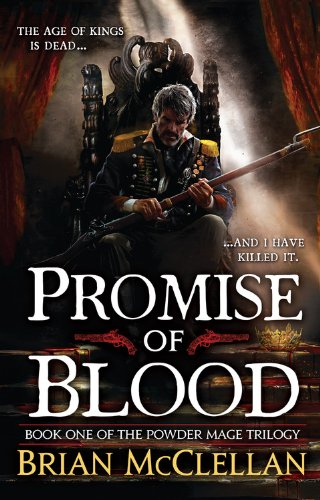
Load your powder, and pray your sorcery outruns their cannon. Here the age of kings is ending at musket-point: a world where black powder is not merely fired but eaten, and the men and women called powder mages snort a pinch of it to burn a trance across the battlefield — igniting an enemy's cartridges from a mile off, bending a bullet mid-flight, reading a room by the taste of the air. Against them stand the Privileged, glove-fingered sorcerers of the old order who summon fire and frost, and above both, gods who have not finished walking the earth. Brian McClellan builds this flintlock world across two linked trilogies. The Powder Mage Trilogy — Promise of Blood, The Crimson Campaign, The Autumn Republic — opens with a field marshal's coup against a rotten monarchy and the invasion, revolution, and divine reckoning that follow. Gods of Blood and Powder — Sins of Empire, Wrath of Empire, Blood of Empire — crosses the ocean a decade on to the colonial frontier of Fatrasta, where old soldiers, spies, and a heretic goddess collide. A run of novellas and short stories fills the corners between. Expect grapeshot and gunsmoke, siege lines and back-alley intrigue, generals and con men given equal weight. Begin at Promise of Blood and read in publication order — the trilogies run in sequence, and the short work is seasoning, not prerequisite.
- Dragon Trilogies
series6 books1988
similar bysecondary worldpolitical intriguefantasy+2 more
The Dragon Prince and Dragon Star trilogies comprise six connected fantasy novels written by Melanie Rawn. The Dragon Prince trilogy focuses on Prince Rohan of the Desert and his Sunrunner wife, Sioned, while the Dragon Star trilogy focuses on their son, Pol. The Dragon Prince trilogy consists of novels Dragon Prince, The Star Scroll, and Sunrunner's Fire. The books in the Dragon Star trilogy are Stronghold, The Dragon Token, and Skybowl.
- Guardians of Ga'hoole
series17 books2003
similar byadventuroussecondary worldwarfantasy
Guardians of Ga'Hoole is a fantasy book series written by Kathryn Lasky and published by Scholastic. The series contains a total of 16 books, and although it was originally intended to conclude with the 2008 publication of The War of the Ember, it has a prequel, The Rise of a Legend, published in 2013. Apart from the main series, there are a few more books and spin-offs set in the same universe. The first three books of the series were adapted into the 2010 animated 3D film Legend of the Guardians: The Owls of Ga'Hoole, directed by Zack Snyder.
- The Cinder Spires
series3 books2015
similar bysecondary world+6 more
Jim Butcher's Cinder Spires series opens with The Aeronaut's Windlass (2015), a steampunk fantasy set among tower-dwelling city-states where airships duel with etheric weapons and intelligent cats share the world with humans. Continuing with Warriorborn and The Olympian Affair, it marks a departure in setting from Butcher's contemporary-fantasy Dresden Files while keeping his fast-paced adventure style.
- Books of Bayern
series4 books2003
similar byadventuroussecondary worldfantasy+1 more
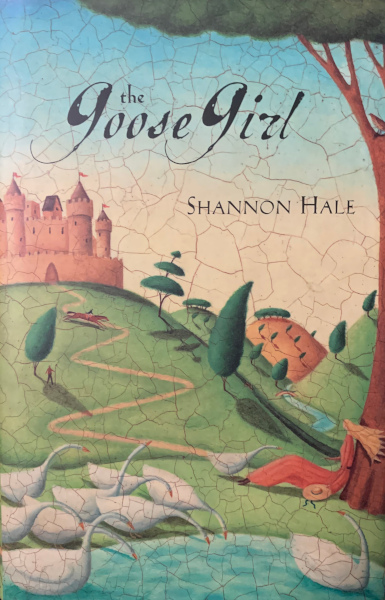
Shannon Hale's Books of Bayern reimagine Grimm fairy tales as YA fantasy, opening with The Goose Girl's story of a crown princess who loses her identity to a treacherous companion and must reclaim her place while working as a goose girl in a foreign kingdom. Later volumes, including Enna Burning and River Secrets, follow other members of her found family through their own magical talents.