More like Ultimate Conclusions
anchored on:science fictionfar futureshort story cyclemind uploadingspacereflective
but
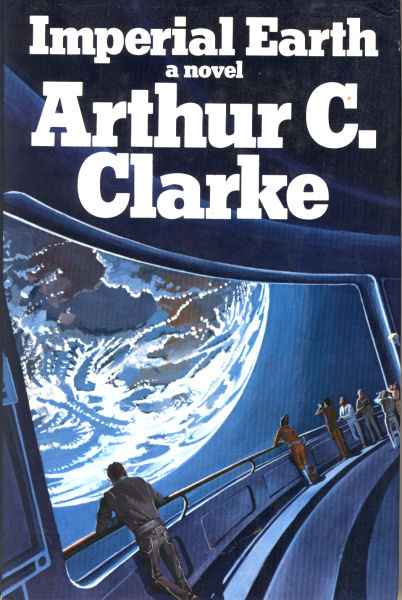
- Imperial Earth
Arthur C. Clarkestandalone novel1975
similar byreflectivescience fictionspacefar futurespace exploration
Imperial Earth is a science fiction novel by British writer Sir Arthur C. Clarke, published in 1975 by Gollancz Books. The plot follows the protagonist, Duncan Makenzie, on a trip to Earth from his home on Titan, in large part as a diplomatic visit to the U.S. for its quincentennial in 2276, but also to have a clone of himself produced. The book was published in time for the U.S. bicentennial in 1976.
- 2312
Kim Stanley Robinsonstandalone novel2012
similar byreflectivescience fictionspacefar future+1 more
In the eponymous year, when Earth's ecology is degraded and humanity has settled throughout the solar system by terraforming and genetic engineering, mysterious disasters strike some human communities and an assortment of human types from throughout the system seek to find and eliminate the cause.
- The City and the Stars
Arthur C. Clarkestandalone novel1956
similar byreflectivescience fictionfar futurespace exploration+1 more
The City and the Stars is a science fiction novel by British writer Arthur C. Clarke, published in 1956. This novel is a complete rewrite of Clarke's earlier Against the Fall of Night, his first novel, which had been published in Startling Stories magazine in 1948 after being rejected by the editor of Astounding Science-Fiction, according to the author.
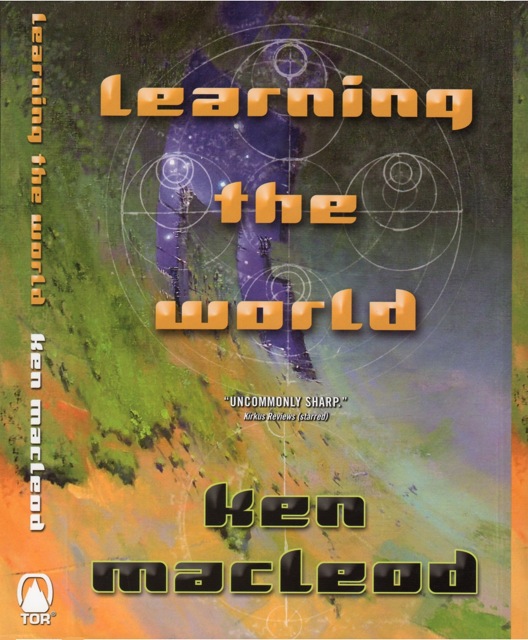
- Learning the World
Ken MacLeodstandalone novel2005
similar byreflectivescience fictionspacefar futurefirst contactspace exploration
From the front flap of the Tor first printing: "Humanity has spread to every star within 500 light-years of its half-forgotten origin, coloring the sky with a haze of habitats. Societies rise and fall. Incautious experiments burn fast and fade. On the fringes, less modified humans get on with the job of settling a universe that has, so far, been empty of intelligent life. The ancient starship But the Sky, My Lady! The Sky! is entering orbit around a promising new system after a four hundred year journey. For its long-lived inhabitants, the centuries have been busy. Now a younger generation is eager to settle the system. The ship is a seed-pod ready to burst. Then they detect curious electromagnetic emissions from the system's Earth-like world. As the nature of the signals becomes clear, the choices facing the humans become stark. On Ground, second world from the sun, a young astronomer searches for his system's outermost planet. A moving point of light thrills, then disappoints him. It's only a comet. His physicist colleague Orro takes time off from trying to invent a flying-machine to calculate the comet's trajectory. Something is very odd about that comet's path. They are not the only ones for whom the world has changed. "We are not living in the universe we thought we lived in yesterday. We have to start learning the world all over again.""
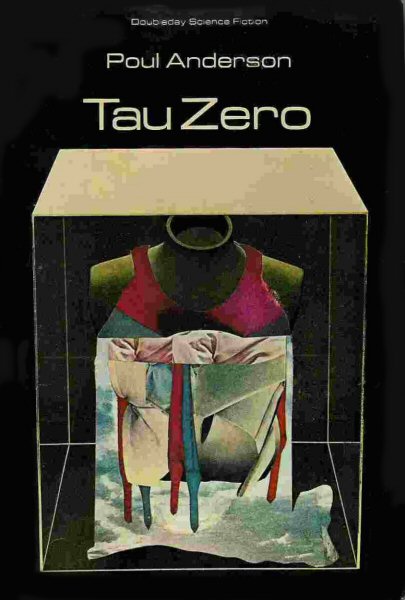
- Tau Zero
Poul Andersonstandalone novel1970
similar byreflectivescience fictionfar futurespace explorationsurvival
During an epic voyage to a planet 30 light years away, the engines of the starship the 'Leonora Christine' are damaged. Unable to slow down, it attains light speed (the tau zero of the title). The disparity between time for those on board and external time becomes impossibly great. Eons and galaxies hurtle by, as the crew speed helplessly into the great unknown.
- David Ryerson
series2 books1958
completed
similar byscience fictionspacefar futurespace explorationsurvival+2 more
The Enemy Stars follows the crew of a faster-than-light survey ship stranded far from home after their matter-transmission drive is damaged, forced to keep the vessel and each other going across a voyage that will outlast some of them. Poul Anderson's 1959 novel was originally serialized as We Have Fed Our Sea-, a title drawn from Kipling. It stands alone rather than part of a series; David Ryerson is one of the ship's crew.
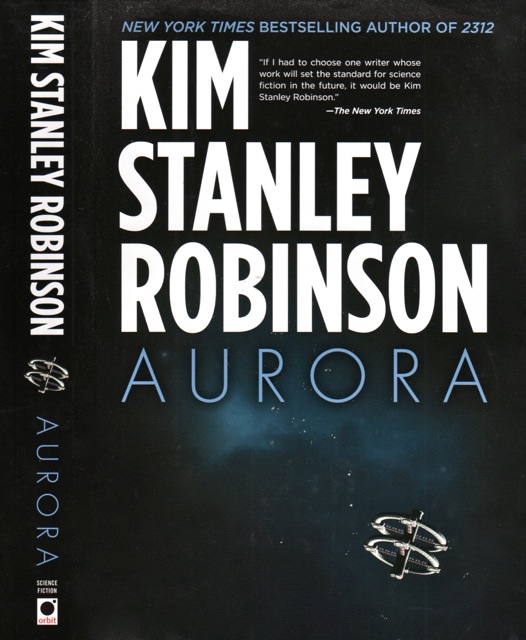
- Aurora
Kim Stanley Robinsonstandalone novel2015
similar byreflectivescience fictionfar futureartificial intelligencesurvival+1 more
Aurora is a 2015 novel by American science fiction author Kim Stanley Robinson. The novel concerns a generation ship built in the style of a Stanford torus, traveling to Tau Ceti to start a human colony. The novel's primary narrative voice is that of the starship's artificial intelligence. Aurora was well received by critics.
- A Different Light
Elizabeth A. Lynnstandalone novel1978
similar byreflectivescience fictionspacefar futurespace exploration
Jimson had twenty years to live. Or one. Twenty if he stayed in space-normal, where his disease could be treated. One year if he followed the Starcaptain into the Hype - the "not-space" that trip was the only way to the stars, where jeweled voyagers sailed the light-centuries in color-shifting ships; humankind's outriders, star-burned lovers to a Universe heavy with stars... This is the story of that year. (from the back cover of the first edition)
- Imperial Radch
series7 books2012
part of Radchaai Universe
similar byscience fictionfar futurespaceartificial intelligence+1 more
Ann Leckie's Imperial Radch trilogy (Ancillary Justice, Ancillary Sword, Ancillary Mercy, 2013-2015) follows Breq, the sole surviving fragment of an AI that once inhabited both a troop-transport starship and dozens of soldier bodies, now alone and hunting for revenge inside the vast, expansionist Radch empire. Breq's quest widens across the trilogy into a conflict with the empire's own fractured ruler, and the books use her alien difficulty perceiving gender to unsettle the space-opera conventions around her.
- The Chrysalids
John Wyndhamstandalone novel1955
similar byreflectivescience fictionfar futuresurvival
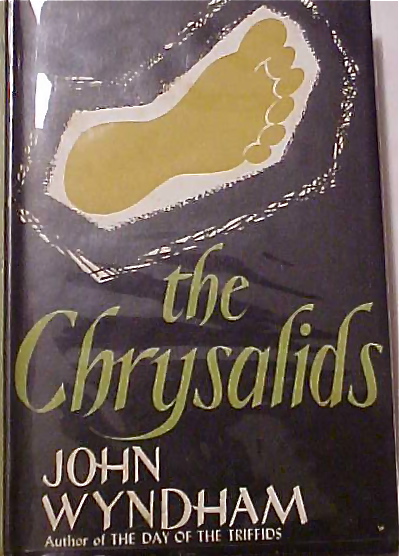
The Chrysalids is a science fiction novel by British writer John Wyndham, first published in 1955 by Michael Joseph. It is the least typical of Wyndham's major novels, but regarded by some as his best. An early manuscript version was entitled Time for a Change.
- Hainish
series33 books1964
completed
similar byreflectivescience fictionfar future+1 more
The Hainish Cycle consists of a number of science fiction novels and stories by Ursula K. Le Guin. The cycle is set in a future history that features civilizations of human beings on planets orbiting a number of nearby stars, including Terra ("Earth"); these humans are contacting each other for the first time and establishing diplomatic relations, as well as setting up a confederacy under the guidance of the oldest of the human worlds, the peaceful planet Hain. In this history, human beings did not evolve on Earth, but they were instead the result of interstellar colonies planted by Hain in the distant past, after which interstellar travel ceased for an extended period. Some of the human races have new genetic traits, a result of ancient Hainish experiments in genetic engineering; this includes people who can dream while awake, and a world of hermaphroditic people who only enter active sexuality once per month, not knowing which sex will manifest in them. In keeping with Le Guin's narrative approach, she uses varied social and environmental settings to explore the anthropological and sociological outcomes of human evolution in those environments. The author often discounted the characterization of a so-called "Hainish Cycle".
- Icehenge
Kim Stanley Robinsonstandalone novel1984
similar byreflectivescience fictionfar futurespace exploration+1 more
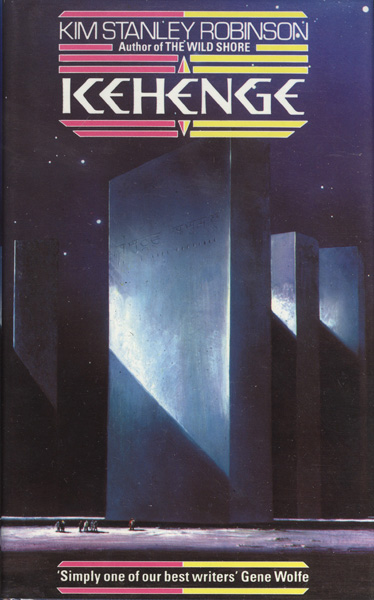
Icehenge unfolds in three parts, narrated years or centuries apart by different investigators piecing together the same facts. The first is the diary of Emma Weil, an engineer swept into a Martian revolution in 2248, conscripted onto a rebel starship fitted for a voyage beyond the solar system, and forced to decide how far her sympathy for the uprising extends. Generations later, other narrators pick up the thread of what became of her and the ship, drawn toward a stone monument on a moon of Pluto that should not exist. An early standalone novel by Kim Stanley Robinson, revisiting the Martian-revolution material he later expanded into the Mars trilogy.
- Memoirs of a Spacewoman
Naomi Mitchisonstandalone novel1962
similar byreflectivescience fictionspacefar futurespace exploration
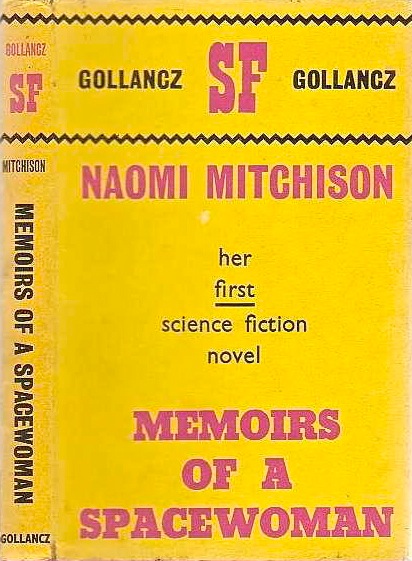
Memoirs of a Spacewoman is a science fiction novel by Scottish novelist and poet Naomi Mitchison published in 1962 by Victor Gollancz Ltd.
- The Memory of Whiteness
Kim Stanley Robinsonstandalone novel1985
similar byreflectivescience fictionspacefar futurespace exploration
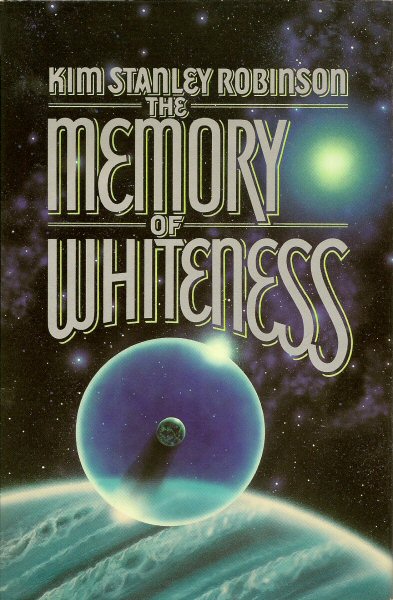
The Memory of Whiteness is a science fiction novel by Kim Stanley Robinson, published in September 1985.
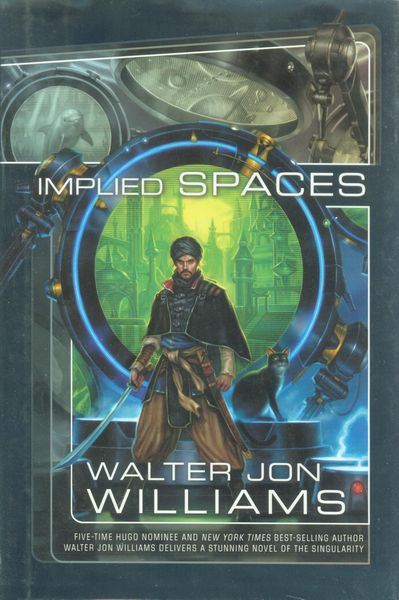
- Implied Spaces
Walter Jon Williamsstandalone novel2008
similar byreflectivescience fictionspacefar futureartificial intelligence
Implied Spaces is a 2008 space opera novel by American author Walter Jon Williams. It explores themes of transhumanism, artificial intelligence and ontology.
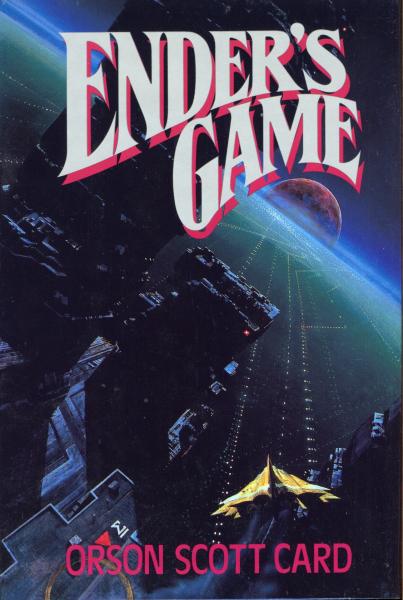
- Ender Wiggin
series14 books1977
part of Ender's Game Universe
similar byscience fictionfar future+3 more
Orson Scott Card's Ender's Game (1985, expanded from his 1977 novella) follows child prodigy Andrew "Ender" Wiggin as he is recruited into a military training program built to prepare Earth's defenses for an anticipated third war against an insectoid alien species known as the Formics. The saga continues years later through Speaker for the Dead and Xenocide, following an older Ender as he confronts the moral weight of his role in that earlier conflict, and concludes the core arc in Children of the Mind, with Ender in Exile filling in the years between the first two books. Set within the wider Ender's Game universe, the series shifts from military coming-of-age story to slower, more philosophical science fiction as it progresses.
- Between the Strokes of Night
Charles Sheffieldstandalone novel1985
similar byreflectivescience fictionspacefar future+1 more
Between the Strokes of Night (1985) is a science fiction novel by English-American writer Charles Sheffield. It first appeared in the March to June 1985 issues of Analog Science Fiction/Science Fact before being published by Baen Books in July 1985. The story is divided into two vastly separated periods: the near future of 2010, and the far future of 29,000 AD. Owing to the unique technological mechanisms of the novel, the same cast of characters appears in both parts, though it is not a time travel story.
- A Meeting with Medusa
series2 books1971
similar byreflectivescience fictionspacefar futurespace exploration+1 more
Arthur C. Clarke's A Meeting with Medusa follows an astronaut, badly injured in an earlier disaster, on a solo balloon expedition into Jupiter's atmosphere, where he encounters vast floating lifeforms unlike anything previously catalogued. Decades later, Stephen Baxter and Alastair Reynolds continued the story in The Medusa Chronicles, following the same protagonist across a much longer span of future history. The original novella won the 1972 Nebula Award.
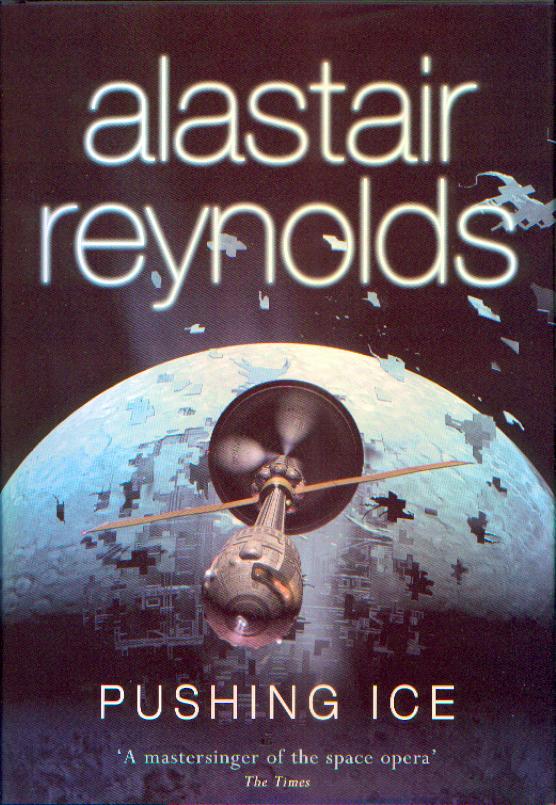
- Pushing Ice
Alastair Reynoldsstandalone novel2005
similar byscience fictionspacefar futurefirst contactspace explorationsurvival
When Saturn's moon Janus suddenly takes off into interstellar space, an ice mining spaceship sent to investigate finds itself swept along into distant space until it ends up trapped in a gigantic alien structure, wherein the crew must prepare to reside for the foreseeable future.
- Diaspora
Greg Eganstandalone novel1997
similar byscience fictionspacefar futuremind uploadingartificial intelligencespace exploration
Diaspora is a hard science fiction novel by the Australian writer Greg Egan which first appeared in print in 1997. It originated as the short story "Wang's Carpets" which originally appeared in the Greg Bear-edited anthology New Legends. The story appears as a chapter of the novel.
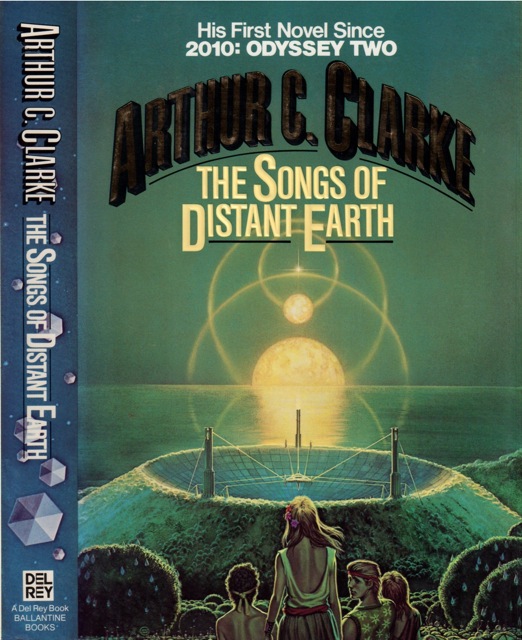
- The Songs of Distant Earth
Arthur C. Clarkestandalone novel1986
similar byreflectivescience fictionfar futuresurvival+1 more
The Songs of Distant Earth is a 1986 science fiction novel by British writer Arthur C. Clarke, based upon his 1958 short story of the same title. Of all of his novels, Clarke stated that this was his favourite. Prior to the publishing of the novel, Clarke also wrote a short step outline with the same title, published in Omni magazine and anthologised in The Sentinel in 1983.
- Moties
series4 books1974
part of CoDominium
similar byscience fictionspacefar futurefirst contact+1 more
Larry Niven and Jerry Pournelle's The Mote in God's Eye (1974) depicts humanity's first contact with an alien species, the Moties, set within the far-future interstellar setting of Pournelle's codominium future history. The Gripping Hand continues that first-contact crisis years later, and Outies, written by J. R. Pournelle, carries the story forward into a new generation. Together the three books trace an escalating encounter between human and Motie civilizations within the codominium universe.
- Saint Leibowitz
series6 books1955
completed
similar byscience fictionfar future+2 more
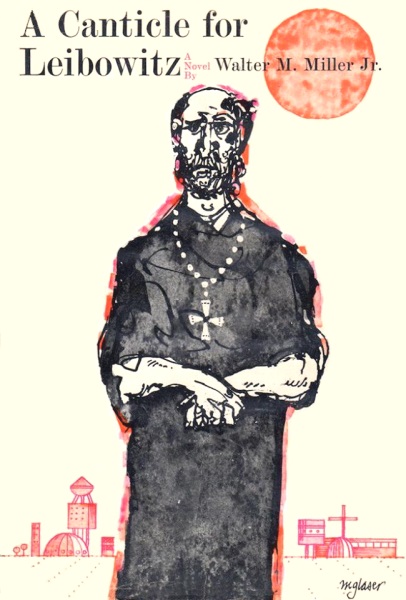
Walter M. Miller Jr.'s A Canticle for Leibowitz (1959), assembled from three novellas he had published earlier in the decade, follows the monks of a Catholic monastery in the post-nuclear American Southwest as they preserve fragments of scientific knowledge across centuries, watching civilization slowly rebuild itself and edge back toward the mistakes that destroyed it. Miller's posthumous sequel, Saint Leibowitz and the Wild Horse Woman, completed by Terry Bisson from his notes after his death and published in 1997, returns to the same abbey and its world decades later. Together the two novels form a sparse, decades-spanning series about memory, faith, and the cycles of civilization.
- Heechee
series19 books1972
completed
similar byscience fictionspacefar futurespace exploration
The Heechee Saga, also known as the Gateway series, is a series of science fiction novels and short stories by Frederik Pohl. The Heechee are an advanced alien race that visited the Solar System hundreds of millennia ago and then mysteriously disappeared. They left behind bases containing artifacts, including working starships, which are discovered and exploited by humanity.