More like Dissidence
anchored on:science fictionrobotsfar futurespace operaartificial intelligencerebellion and revolution+3 more
but
- Berserker (Fred Saberhagen)
series59 books1963
similar byfar futurescience fictionrobotsspace operaspaceother star systemsartificial intelligencetense+2 more
The Berserker series is a series of space opera science fiction short stories and novels by Fred Saberhagen, in which robotic self-replicating machines strive to destroy all life.
- Dune
series20 books1963
part of Dune Universe
similar byfar futurescience fictionother star systemsspace operapolitical intrigue+3 more
Frank Herbert's Dune Chronicles opens with 1965's Dune, set on the desert planet Arrakis where House Atreides takes control of the only source of the vital spice melange and young Paul Atreides is pulled into a struggle over its politics and religion. Herbert carried the story forward across five further novels — Dune Messiah, Children of Dune, God Emperor of Dune, Heretics of Dune, and Chapterhouse: Dune — following Paul's line over the following millennia, before Brian Herbert and Kevin J. Anderson later extended the saga. Many other editions of these six novels are omnibus and box-set repackagings rather than separate stories.
- Singularity Sky
series2 books2003
similar byfar futurechallengingscience fictionspace operaartificial intelligencespaceother star systemstense+1 more
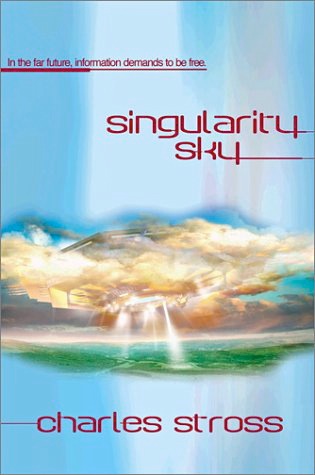
Singularity Sky and its sequel Iron Sunrise are collectively known as the Eschaton novels, after the godlike posthuman intelligence that seeded human colonies across space on the condition they never attempt time travel or threaten causality - rules tested when a low-tech colony world is destabilized by a group calling itself the Festival. Charles Stross uses the setup for a mix of space opera, economics, and diplomatic intrigue.
- Dune Universe
universe78 books1963
Start hereDune · Start here
similar byfar futurescience fictionspace operaother star systemspolitical intrigue+2 more
Arrakis. Dune. The desert planet, where empire runs on a single substance: the spice melange, which folds space, prolongs life, and unlocks prescience, and which exists nowhere else in the known universe. Frank Herbert's saga is a meditation dressed as an adventure — feudal houses and a secret sisterhood, engineered messiahs and the patient ecology of a world without water, all turning on the terrible gravity of who commands the spice. It reads like scripture and schemes like a war room, ten thousand years hence, among people who have outlawed the thinking machine and made instruments of themselves instead. At its heart stand Herbert's original six — Dune, Dune Messiah, Children of Dune, God Emperor of Dune, Heretics of Dune, Chapterhouse: Dune — a single deepening arc across millennia, arguing the whole way between prophecy and free will. Around that spine his son Brian Herbert and Kevin J. Anderson have raised a vast prequel architecture: Prelude to Dune, tracing the great houses a generation before Paul; Legends of Dune, reaching back to the crusade that broke the machines; the Schools of Dune cycle on the founding of Bene Gesserit, Mentat, and Navigator; the Caladan Trilogy and Heroes of Dune filling years the originals left in shadow. Many hands, dozens of volumes, one desert. What sets Dune apart is its refusal of the simple: religion is manufactured, heroes are hazards, and the sand itself — worm, water, ecology — acts as a political power. Begin where the universe did, with Frank Herbert's Dune (1965), and read the original six in order; you need nothing else to feel the full weight. The prequels are a country to explore afterward, taken by era. Beginnings are delicate times.
- Moties
series4 books1974
part of CoDominium
similar byfar futurescience fictionspace operaspaceother star systemspolitical intrigue+1 more
Larry Niven and Jerry Pournelle's The Mote in God's Eye (1974) depicts humanity's first contact with an alien species, the Moties, set within the far-future interstellar setting of Pournelle's codominium future history. The Gripping Hand continues that first-contact crisis years later, and Outies, written by J. R. Pournelle, carries the story forward into a new generation. Together the three books trace an escalating encounter between human and Motie civilizations within the codominium universe.
- Ian Cormac
series6 books2001
part of Polity
similar byfar futurescience fictionspace operaartificial intelligencespaceother star systemstense+1 more
Neal Asher's Ian Cormac novels (Gridlinked, The Line of Polity, Brass Man, Polity Agent, Line War, plus the earlier-set prequel Shadow of the Scorpion) follow Ian Cormac, an agent of Earth Central Security in Asher's Polity universe. Gridlinked opens with Cormac investigating a destroyed matter-transmitter on a remote colony while wrestling with the personality erosion caused by long-term neural linkage to the Polity's AI network; the following novels escalate into interstellar conflict with the alien Prador. Together they form the core action sequence of Asher's wider Polity series.
- Jean le Flambeur
series3 books2010
similar byfar futurescience fictionchallengingspaceother star systemsspace operaartificial intelligence+1 more
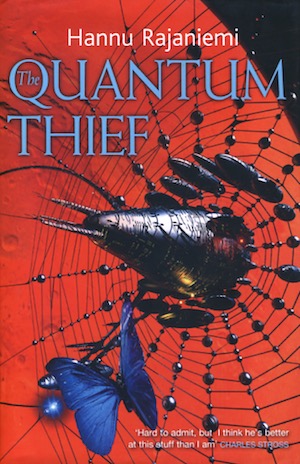
Jean le Flambeur is a master thief broken out of a virtual prison to pull off one more impossible heist, in a solar system reshaped by uploaded minds, post-human factions, and economies built on memory and privacy themselves. Hannu Rajaniemi's trilogy - The Quantum Thief, The Fractal Prince, The Causal Angel - is dense, idea-heavy hard SF that trusts readers to piece its future together from context rather than exposition.
- Imperial Radch
series7 books2012
part of Radchaai Universe
similar byfar futurescience fictionspace operaother star systemsspaceartificial intelligence+2 more
Ann Leckie's Imperial Radch trilogy (Ancillary Justice, Ancillary Sword, Ancillary Mercy, 2013-2015) follows Breq, the sole surviving fragment of an AI that once inhabited both a troop-transport starship and dozens of soldier bodies, now alone and hunting for revenge inside the vast, expansionist Radch empire. Breq's quest widens across the trilogy into a conflict with the empire's own fractured ruler, and the books use her alien difficulty perceiving gender to unsettle the space-opera conventions around her.
- Old Man's War
series16 books2005
similar byfar futurescience fictionspaceother star systemsspace operamilitary science fiction+2 more
The Old Man's War series is a series of science fiction novels by John Scalzi. The first book in the series, Old Man's War, was first published in 2005 by Tor Books, and was nominated for the Hugo Award for Best Novel in 2006. In 2026 it was a finalist for the Hugo Award for Best Series.
- Red Rising
series13 books2014
similar byfar futurescience fictionrebellion and revolutionspace operadarktense+3 more
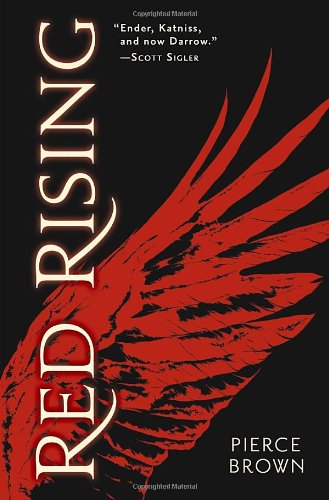
Pierce Brown's Red Rising follows Darrow, a lowborn 'Red' miner on a colonized Mars who discovers his caste's suffering is a lie sustained by the ruling Gold elite, and infiltrates their ranks to destroy the system from within. The series expands from a single-protagonist revenge story into a sprawling multi-book war across the solar system, eventually following an ensemble cast beyond Darrow alone, and combines Roman-inspired factional politics with brutal, competition-driven action set pieces.
- Transformation
series3 books2015
part of Polity
similar byfar futurescience fictionspace operaartificial intelligencespacetense+4 more
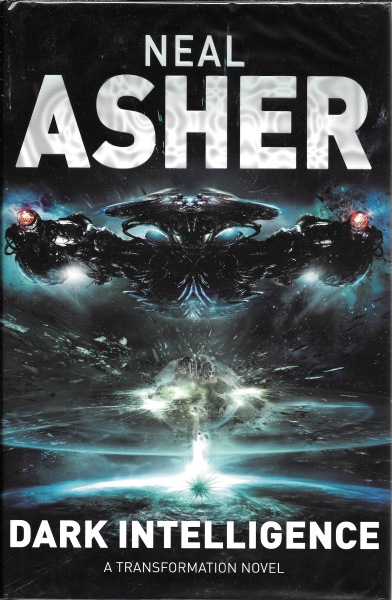
Neal Asher's Transformation trilogy, set within his wider Polity universe, follows an AI mind investigating a black-ops project gone wrong, opening with Dark Intelligence. War Factory and Infinity Engine escalate the search into a hunt across a mechanized alien warzone left behind by an earlier conflict. As with Asher's other Polity fiction, the story favors large-scale, hard-edged space combat over character-driven drama.
- Culture
series15 books1987
completed
part of The Culture
similar byfar futurescience fictionspace operaartificial intelligence+4 more
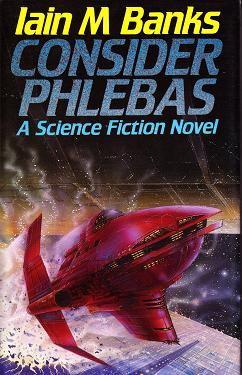
The Culture series is a science fiction series written by Scottish author Iain M. Banks and released from 1987 until 2012. The stories centre on The Culture, a utopian, post-scarcity space society of humanoid aliens and advanced superintelligent artificial intelligences living in artificial habitats spread across the Milky Way galaxy. The main themes of the series are the dilemmas that an idealistic, more-advanced civilization faces in dealing with smaller, less-advanced civilizations that do not share its ideals, and whose behaviour it sometimes finds barbaric. In some of the stories, action takes place mainly in non-Culture environments, and the leading characters are often on the fringes of the Culture, sometimes acting as agents of the Culture in its plans to civilize the galaxy. Each novel is a self-contained story with new characters, although reference is occasionally made to the events of previous novels.
- Honor Harrington
series14 books1993
part of Honorverse
similar byfar futurescience fictionspace operaspaceother star systemstensemilitary science fictionpolitical intrigue
David Weber's Honor Harrington novels follow the title character's rise through the Manticoran navy in the 'Honorverse,' a space-opera setting built around Age-of-Sail-style naval combat, interstellar politics and a decades-long war between rival star nations. Beginning with On Basilisk Station, the core series runs to fourteen books, alongside spin-off subseries, prequels and shared-world anthologies also set in the Honorverse. It's one of the longest-running modern military science fiction series, published by Baen.
- Honorverse
universe83 books1993
Start hereHonor Harrington · Start here
similar byfar futurescience fictionspace operaother star systemsspacemilitary science fiction+2 more
The wedge comes up, the sidewalls burn to life, and two walls of battle close across light-minutes of empty vacuum trading missile broadsides — because in the Honorverse, war is still fought by the doctrine of the age of sail, only the ocean is the interstellar void and the ships-of-the-line are dreadnoughts. This is David Weber's future, two millennia on: a galaxy of star nations bound by treaty, trade, and old grudges, where the small, wealthy Star Kingdom of Manticore holds a wormhole junction the commerce of humanity runs through, and the expansionist People's Republic of Haven means to take it. At the center stands one officer, Honor Harrington — captain, then something far larger — and the six-limbed empathic treecat who rides her shoulder. The spine is the Honor Harrington novels, more than a dozen books that carry her from an overlooked frontier picket up through fleet command and the knife-politics of a monarchy at war. Around that spine branch parallel lines, several written with collaborators: the Saganami Island books follow a younger generation of officers in the contested Talbott Cluster; the Wages of Sin novels, with Eric Flint, chase the genetic-slave trade to its source on Mesa; Manticore Ascendant, with Timothy Zahn, reaches back centuries to the Navy's shaky founding; and the Star Kingdom books, with Jane Lindskold, tell how humans and treecats first met. Anthologies fill the seams. Weber writes competence and consequence — dense hardware, denser politics, victories that cost, and a heroine whose defining virtue is her refusal to spend lives cheaply or duck the ones she must. Begin with On Basilisk Station: one ship, one thankless posting, one impossible situation. Read the main line in publication order; the collaborating branches reward you later, once the map of Manticore is yours.
- The Sardonyx Net
Elizabeth A. Lynnstandalone novel1981
similar byfar futurescience fictionspace operarebellion and revolutionspaceother star systemsdarktense+1 more
From the flaps of the Putnam first edition: "The Sardonyx Net, also known as the Yago Net: a vast starship owned and operated by the Family Yago, captained by Zed Yago. It visits all planets in the Sardonyx Sector of space, picking up special cargo - convicted felons who will serve our their terms as dorazine-drugged slaves to the wealthy land and factory owners on the planet Chabad. But often their ordeal begins even before the are sold, for Zed Yago is a man with a taste for sadism. The slave trade is the most lucrative business on Chabad. It is controlled totally by the Family Yago, headed by Zed's older sister Rhani, who is the only woman Zed has truly loved. Rhani is a shrewd businesswoman with only one weakness: a heart as compassionate as her brother's is perverse. While the authorities of the Sector's other planets look away, the Families of Chabad purchase dorazine from representatives of a secret, unlocatable source known as The Pharmacy, and use it to keep their slave-based economy healthy. Not one protests, for Chabad's illegal and inhumane activities keep prisons empty, criminals under control, and Chabad's valuable exports flowing. Despite constant underground revolutionary activity, the situation has maintained. But he long-lived stability of this sanctioned trade in illegal drugs and human beings is now threatened by two unexpected events: a worsening shortage of dorazine which is sparking more rebellion, and the arrival of Starcaptain Dana Ikoro. Dana, as drug smuggler, is captured by the Net and delivered from Zed's hands to Rhani. He is to be her bodyguard, but becomes much more. Against this incredible background, Lynn tells an irresistible story of adventure, intrigue, revolution and romance. It is a story of people snared in a net of warring passions, a net which will prove to be even stronger than the power of the Sardonyx Net."
- The Dosadi Experiment
Frank Herbertstandalone novel1977
similar byfar futurescience fictionspace operaother star systemstensepolitical intrigue+2 more
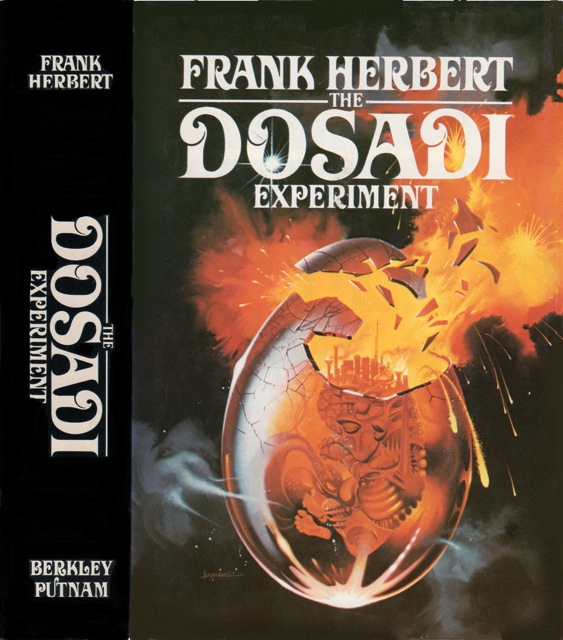
From the flaps of the Berkley Putnam first edition: "In his first new work of science fiction since the best-selling Children of Dune, Frank Herbert returns to his world of Whipping Star, and involves Jorj X. McKie, Saboteur Extraordinary, in a new intrigue. In Whipping Star, McKie discovered that some of the stars in the universe are actually intelligent, super-powerful beings, and was able to befriend one of them, the star Alcyone - affectionately known as Fannie Mae. As The Dosadi Experiment opens, McKie is assigned to investigate the planet Dosadi, which is isolated from the rest of the galaxy by a "god-wall," a barrier set up by one of the intelligent stars. Dosadi is rumored to be an experimental planet, and the experimenters are the froglike Gowachin, whose culture is founded upon a strange legal system in which McKie is the only human ever trained. He learns that humans and Gowachin have been placed on Dosadi, without their consent, for an experiment that could last centuries: an experiment in extreme overcrowding. But this monstrous plot is apparently out of control, and it seems the Gowachin may be prepared to destroy Dosadi rather than expose its secret, thus breaking the peace among the races, and starting the first interstellar war. But this is just the beginning. When McKie finally reaches Dosadi he discovers that the Dosadis have taken control of their own evolution and produced a competitive, highly evolved elite, of both humans and Gowachin, who have been able to extrapolate the existence of a universe beyond the god-wall and hate whoever has imprisoned them like this. They plan to break out and avenge themselves on the galaxy."
- Vatta's War
series6 books2003
part of Vatta
similar byfar futurescience fictionspace operaspaceother star systemstensemilitary science fictionpolitical intrigue
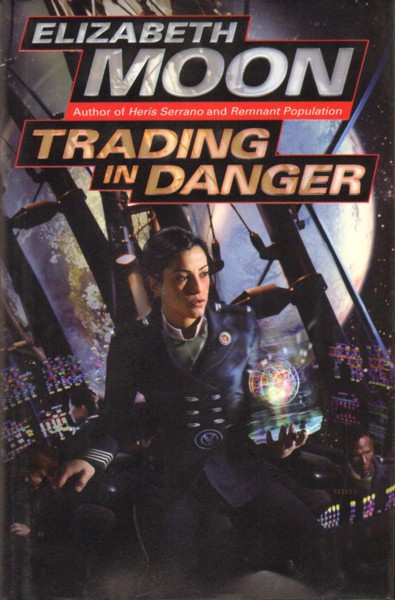
Vatta's War is a science fiction series by American writer Elizabeth Moon, comprising five books: Trading in Danger (2003), Marque and Reprisal, Engaging the Enemy (2006), Command Decision (2007), and Victory Conditions (2008). They have been characterized as military science fiction similar in style to the works of Lois McMaster Bujold, David Weber and Walter Jon Williams.
- Vatta
universe10 books2003
Start hereVatta's War · Start here
similar byfar futurescience fictionspace operaspaceother star systemstensemilitary science fiction+1 more
Get kicked out of the Academy and the family still hands you a ship. That is the arithmetic Kylara Vatta lives by. Born into Vatta Transport, Ltd. — a dynasty of interstellar traders who reckon their honor in delivered cargo and honored contracts — Ky wants a soldier's commission and gets a merchant hull instead. Then someone starts murdering her relatives and burning the ledgers, and the daughter learns that a trade fleet, armed and angry, is its own kind of war. This is military science fiction run on a merchant's books. The core cycle, Vatta's War, moves in five volumes — Trading in Danger, Marque and Reprisal, Engaging the Enemy, Command Decision, Victory Conditions — as piracy, a sabotaged faster-than-light communications network, and a scattered family push Ky from cautious captain to fleet commander. The later duology Vatta's Peace (Cold Welcome, Into the Fire) drops her, older and decorated, into a colder survival ordeal on her own homeworld. Moon writes clean, competent, procedural: supply lines and boarding actions, chains of command, the cost of a signature on a bad contract. Expect capable women, hard decisions costed to the last credit, and space combat that respects physics and paperwork alike. Begin at the beginning — Trading in Danger — and read straight through in publication order; the arc is chronological and cumulative, no side doors required.
- Rise of the Jain
series3 books2018
part of Polity
similar byfar futurescience fictionspace operaartificial intelligencespaceother star systemstensemilitary science fiction+1 more
- Pandora
series4 books1966
similar byfar futurescience fictionartificial intelligenceother star systems+3 more
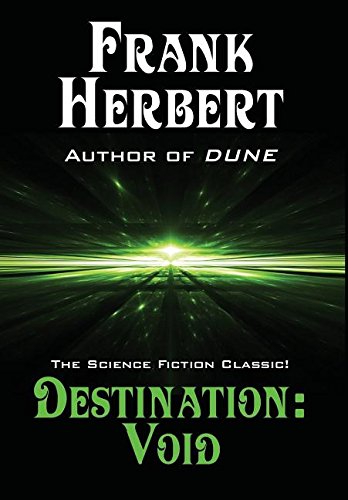
The Pandora Sequence opens with Frank Herbert's solo novel Destination: Void, in which a starship crew must jury-rig a working artificial consciousness after their vessel's control systems fail. Bill Ransom co-writes the three novels that follow, carrying the survivors to the world Pandora, where they must contend with both a manipulative machine intelligence and the planet's own hostile ecology. Across its four books the series moves from a claustrophobic ship-bound crisis to a generations-long struggle over faith, control, and survival on a dangerous new world.
- Ender Wiggin
series14 books1977
part of Ender's Game Universe
similar byfar futurescience fictionother star systems+4 more
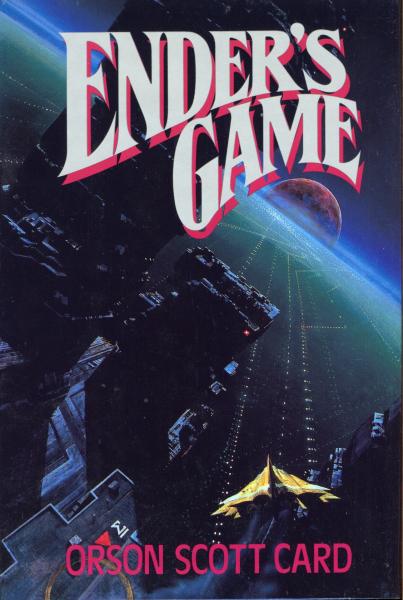
Orson Scott Card's Ender's Game (1985, expanded from his 1977 novella) follows child prodigy Andrew "Ender" Wiggin as he is recruited into a military training program built to prepare Earth's defenses for an anticipated third war against an insectoid alien species known as the Formics. The saga continues years later through Speaker for the Dead and Xenocide, following an older Ender as he confronts the moral weight of his role in that earlier conflict, and concludes the core arc in Children of the Mind, with Ender in Exile filling in the years between the first two books. Set within the wider Ender's Game universe, the series shifts from military coming-of-age story to slower, more philosophical science fiction as it progresses.
- Forever War
series10 books1972
similar byfar futurescience fictionspacemilitary science fiction+4 more
Joe Haldeman's The Forever War (1974) follows a soldier conscripted into a centuries-long interstellar war against the alien Taurans, using relativistic space travel so that months spent in transit correspond to years or decades passing back on Earth. Haldeman later returned to the same conflict in Forever Peace (1997), a thematically connected but separate story, and Forever Free (1999), a direct sequel set years after the original war's end. The first novel won the Hugo, Nebula, and Locus awards and is considered a foundational work of military science fiction.
- Forbidden Borders
series3 books1991
similar byfar futurescience fictionspace operaspaceother star systemstensemilitary science fiction+3 more
William Michael Gear, better known as W. Michael Gear, is an American writer and archaeologist. He is the author of North America's Forgotten Past series, co-written with his wife Kathleen O'Neal Gear. His novels have been published in 29 languages.