More like Fool's War
anchored on:science fictionartificial intelligencespaceshipfar futurespace operapolitical intrigue+2 more
but
- Dune Universe
universe78 books1963
Start hereDune · Start here
similar byfar futurescience fictionpolitical intriguespace opera+1 more
Arrakis. Dune. The desert planet, where empire runs on a single substance: the spice melange, which folds space, prolongs life, and unlocks prescience, and which exists nowhere else in the known universe. Frank Herbert's saga is a meditation dressed as an adventure — feudal houses and a secret sisterhood, engineered messiahs and the patient ecology of a world without water, all turning on the terrible gravity of who commands the spice. It reads like scripture and schemes like a war room, ten thousand years hence, among people who have outlawed the thinking machine and made instruments of themselves instead. At its heart stand Herbert's original six — Dune, Dune Messiah, Children of Dune, God Emperor of Dune, Heretics of Dune, Chapterhouse: Dune — a single deepening arc across millennia, arguing the whole way between prophecy and free will. Around that spine his son Brian Herbert and Kevin J. Anderson have raised a vast prequel architecture: Prelude to Dune, tracing the great houses a generation before Paul; Legends of Dune, reaching back to the crusade that broke the machines; the Schools of Dune cycle on the founding of Bene Gesserit, Mentat, and Navigator; the Caladan Trilogy and Heroes of Dune filling years the originals left in shadow. Many hands, dozens of volumes, one desert. What sets Dune apart is its refusal of the simple: religion is manufactured, heroes are hazards, and the sand itself — worm, water, ecology — acts as a political power. Begin where the universe did, with Frank Herbert's Dune (1965), and read the original six in order; you need nothing else to feel the full weight. The prequels are a country to explore afterward, taken by era. Beginnings are delicate times.
- Chanur
series7 books1982
part of Alliance-Union Universe
similar bytensefar futurepolitical intriguescience fictionspace operaspacespaceship
The Chanur novels are a series of five science fiction novels, forming three separate stories, written by American author C. J. Cherryh and published by DAW Books between 1982 and 1992. The first novel in the series is The Pride of Chanur (1982), which was nominated for both the Hugo and Locus Awards in 1983. The Pride of Chanur, originally a stand-alone story, was followed by the Chanur's Venture trilogy, Chanur's Venture (1984), which was shortlisted for a Locus Award in 1985; The Kif Strike Back (1985) and Chanur's Homecoming (1986). These were followed by a later sequel, Chanur's Legacy (1992). The five novels were also published in two omnibus editions: the first three in The Chanur Saga in 2000 and the next two in Chanur's Endgame in 2007.
- Dune
series20 books1963
part of Dune Universe
similar byfar futurepolitical intriguescience fictionspace opera+1 more
Frank Herbert's Dune Chronicles opens with 1965's Dune, set on the desert planet Arrakis where House Atreides takes control of the only source of the vital spice melange and young Paul Atreides is pulled into a struggle over its politics and religion. Herbert carried the story forward across five further novels — Dune Messiah, Children of Dune, God Emperor of Dune, Heretics of Dune, and Chapterhouse: Dune — following Paul's line over the following millennia, before Brian Herbert and Kevin J. Anderson later extended the saga. Many other editions of these six novels are omnibus and box-set repackagings rather than separate stories.
- The Moon Is a Harsh Mistress
Robert A. Heinleinstandalone novel1966
similar byartificial intelligencefar futurepolitical intriguescience fiction+1 more
A technician discovers that the massive computer that operates everything on Luna (a prison colony) has become self-aware. He befriends it, but when he accompanied a beautiful girl to a dissident meeting, he encounters people who want to throw off the yoke of their Earth rulers.
- Company Wars
series7 books1981
part of Alliance-Union Universe
similar bytensefar futurescience fictionpolitical intriguespace operaspace+1 more
Company Wars gathers the novels C. J. Cherryh set during the breakaway conflict between Earth's colonial Company and the newly independent Union, within her wider Alliance-Union future history. Anchored by the Hugo Award-winning Downbelow Station, the books follow different ships, stations, and crews caught on either side, from merchanter traders to military spacers, rather than a single continuing cast. Read in any order, they build up a picture of the political and economic pressure that reshapes Cherryh's larger Alliance-Union universe.
- Singularity Sky
series2 books2003
similar byfar futureartificial intelligencescience fictiontensespace operaspace+2 more
Singularity Sky and its sequel Iron Sunrise are collectively known as the Eschaton novels, after the godlike posthuman intelligence that seeded human colonies across space on the condition they never attempt time travel or threaten causality - rules tested when a low-tech colony world is destabilized by a group calling itself the Festival. Charles Stross uses the setup for a mix of space opera, economics, and diplomatic intrigue.
- Honor Harrington
series14 books1993
part of Honorverse
similar bytensefar futurescience fictionpolitical intriguespace operaspace
David Weber's Honor Harrington novels follow the title character's rise through the Manticoran navy in the 'Honorverse,' a space-opera setting built around Age-of-Sail-style naval combat, interstellar politics and a decades-long war between rival star nations. Beginning with On Basilisk Station, the core series runs to fourteen books, alongside spin-off subseries, prequels and shared-world anthologies also set in the Honorverse. It's one of the longest-running modern military science fiction series, published by Baen.
- Moties
series4 books1974
part of CoDominium
similar byfar futurescience fictionpolitical intriguespace operaspace+1 more
Larry Niven and Jerry Pournelle's The Mote in God's Eye (1974) depicts humanity's first contact with an alien species, the Moties, set within the far-future interstellar setting of Pournelle's codominium future history. The Gripping Hand continues that first-contact crisis years later, and Outies, written by J. R. Pournelle, carries the story forward into a new generation. Together the three books trace an escalating encounter between human and Motie civilizations within the codominium universe.
- Imperial Radch
series7 books2012
part of Radchaai Universe
similar byfar futurescience fictionartificial intelligencespace operaspace+3 more
Ann Leckie's Imperial Radch trilogy (Ancillary Justice, Ancillary Sword, Ancillary Mercy, 2013-2015) follows Breq, the sole surviving fragment of an AI that once inhabited both a troop-transport starship and dozens of soldier bodies, now alone and hunting for revenge inside the vast, expansionist Radch empire. Breq's quest widens across the trilogy into a conflict with the empire's own fractured ruler, and the books use her alien difficulty perceiving gender to unsettle the space-opera conventions around her.
- Culture
series15 books1987
completed
part of The Culture
similar byfar futurescience fictionartificial intelligencespace opera+2 more
The Culture series is a science fiction series written by Scottish author Iain M. Banks and released from 1987 until 2012. The stories centre on The Culture, a utopian, post-scarcity space society of humanoid aliens and advanced superintelligent artificial intelligences living in artificial habitats spread across the Milky Way galaxy. The main themes of the series are the dilemmas that an idealistic, more-advanced civilization faces in dealing with smaller, less-advanced civilizations that do not share its ideals, and whose behaviour it sometimes finds barbaric. In some of the stories, action takes place mainly in non-Culture environments, and the leading characters are often on the fringes of the Culture, sometimes acting as agents of the Culture in its plans to civilize the galaxy. Each novel is a self-contained story with new characters, although reference is occasionally made to the events of previous novels.
- Ian Cormac
series6 books2001
part of Polity
similar byfar futuretenseartificial intelligencescience fictionspace operaspace
Neal Asher's Ian Cormac novels (Gridlinked, The Line of Polity, Brass Man, Polity Agent, Line War, plus the earlier-set prequel Shadow of the Scorpion) follow Ian Cormac, an agent of Earth Central Security in Asher's Polity universe. Gridlinked opens with Cormac investigating a destroyed matter-transmitter on a remote colony while wrestling with the personality erosion caused by long-term neural linkage to the Polity's AI network; the following novels escalate into interstellar conflict with the alien Prador. Together they form the core action sequence of Asher's wider Polity series.
- Berserker (Fred Saberhagen)
series59 books1963
similar bytensefar futurescience fictionartificial intelligencespace operaspace
The Berserker series is a series of space opera science fiction short stories and novels by Fred Saberhagen, in which robotic self-replicating machines strive to destroy all life.
- Heaven Chronicles / Zones of Thought
series8 books1976
similar byfar futurescience fictionspace operaspace+4 more
- Transformation
series3 books2015
part of Polity
similar byartificial intelligencetensefar futurescience fictionspace operaspace
Neal Asher's Transformation trilogy, set within his wider Polity universe, follows an AI mind investigating a black-ops project gone wrong, opening with Dark Intelligence. War Factory and Infinity Engine escalate the search into a hunt across a mechanized alien warzone left behind by an earlier conflict. As with Asher's other Polity fiction, the story favors large-scale, hard-edged space combat over character-driven drama.
- The Gap
series5 books1990
similar bytensefar futurepolitical intriguescience fictionspace operaspacespaceship
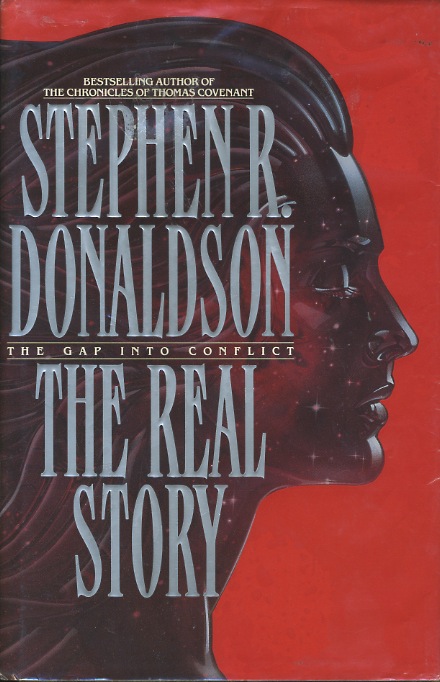
The Gap Cycle is a series of science fiction novels by Stephen R. Donaldson, more usually known for his works of epic fantasy. The series was originally published between 1991 and 1996 by Bantam Books and was reprinted by Gollancz in 2008 in the UK. Here, Donaldson gave a loose retelling of Wagner's Ring cycle.
- Vatta's War
series6 books2003
part of Vatta
similar bytensefar futurescience fictionpolitical intriguespace operaspace
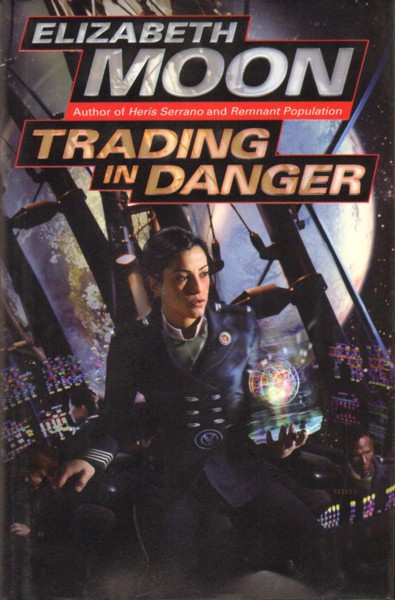
Vatta's War is a science fiction series by American writer Elizabeth Moon, comprising five books: Trading in Danger (2003), Marque and Reprisal, Engaging the Enemy (2006), Command Decision (2007), and Victory Conditions (2008). They have been characterized as military science fiction similar in style to the works of Lois McMaster Bujold, David Weber and Walter Jon Williams.
- Golden Fleece
Robert J. Sawyerstandalone novel1990
similar byartificial intelligencetensefar futurescience fictionspaceshipmysterious+1 more
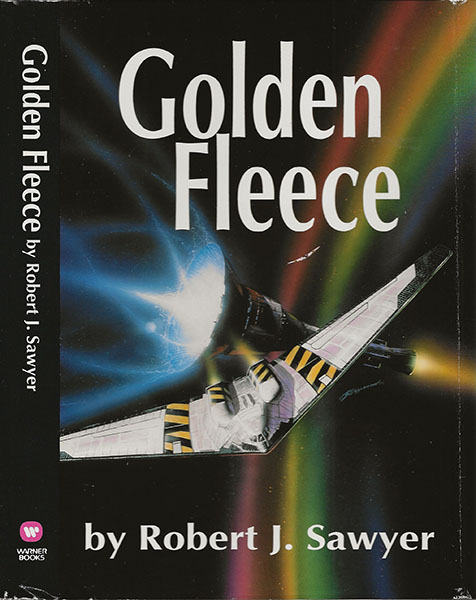
From the back cover of the Questar first edition: "Murder in space - Starcolony Argo. A superstarship on a mission to a distant world. Controlled by a monumental computer named Jason, the Argo proceeds flawlessly... until death strikes its sleek decks with sudden and mysterious precision. Astrophysicist Diana Chandler is dead of radiation. Her body lies in Argo's ramfield - where hydrogen ions are funneled into the engines. Chandler's death has been deemed suicide. But her ex-husband, Aaron Rossman, is so sure. As the probes further, he becomes certain that Diana's death is a matter of murder - and that the murderer is Jason! Now Rossman must face the unthinkable; why would an artificial intelligence conceive and execute the most heinous of human crimes? And if so, can a mortal mind take on a cunning computer... and survive?"
- Quadrail
series5 books2005
similar byfar futurescience fictionpolitical intriguespace operamysteriousspace+1 more
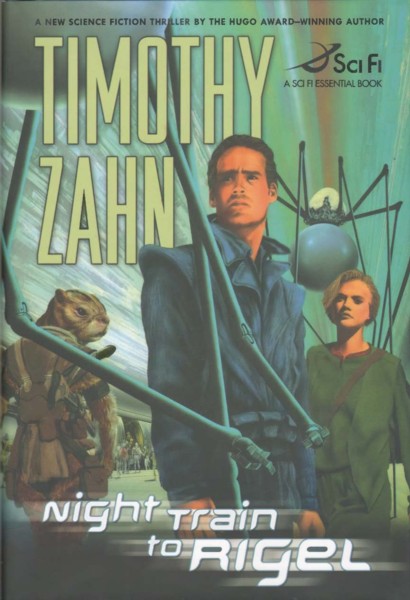
Timothy Zahn's Quadrail series follows ex-intelligence operative Frank Compton, recruited by the enigmatic Spider caretakers of the Quadrail, an interstellar train network that lets a dozen alien empires travel between worlds at a light-year a minute. Paired with the telepathically gifted Bayta, Compton investigates and fights the Modhri, a parasitic group-mind quietly seizing control of galactic leaders from within. The five novels, published 2005-2012, follow one continuous investigation from first contact with the threat to its final confrontation.
- Commonwealth Saga
series2 books2004
part of Commonwealth Universe
similar byfar futurescience fictiontensepolitical intriguespace opera+2 more
The Commonwealth Saga is a series of science fiction novels by British science fiction writer Peter F. Hamilton. This saga consists of the novels Pandora's Star (2004) and Judas Unchained (2005). Hamilton has also written several books set in the same literary universe. Misspent Youth (2002) takes place 340 years before the events of Pandora's Star. The Void Trilogy, consisting of The Dreaming Void (2008), The Temporal Void (2009), and The Evolutionary Void (2010), takes place 1,200 years after the events of Judas Unchained; several of the main characters from Judas Unchained and Pandora's Star also appear in the Void trilogy.
- The Sardonyx Net
Elizabeth A. Lynnstandalone novel1981
similar bytensefar futurepolitical intriguescience fictionspace operaspacespaceship
From the flaps of the Putnam first edition: "The Sardonyx Net, also known as the Yago Net: a vast starship owned and operated by the Family Yago, captained by Zed Yago. It visits all planets in the Sardonyx Sector of space, picking up special cargo - convicted felons who will serve our their terms as dorazine-drugged slaves to the wealthy land and factory owners on the planet Chabad. But often their ordeal begins even before the are sold, for Zed Yago is a man with a taste for sadism. The slave trade is the most lucrative business on Chabad. It is controlled totally by the Family Yago, headed by Zed's older sister Rhani, who is the only woman Zed has truly loved. Rhani is a shrewd businesswoman with only one weakness: a heart as compassionate as her brother's is perverse. While the authorities of the Sector's other planets look away, the Families of Chabad purchase dorazine from representatives of a secret, unlocatable source known as The Pharmacy, and use it to keep their slave-based economy healthy. Not one protests, for Chabad's illegal and inhumane activities keep prisons empty, criminals under control, and Chabad's valuable exports flowing. Despite constant underground revolutionary activity, the situation has maintained. But he long-lived stability of this sanctioned trade in illegal drugs and human beings is now threatened by two unexpected events: a worsening shortage of dorazine which is sparking more rebellion, and the arrival of Starcaptain Dana Ikoro. Dana, as drug smuggler, is captured by the Net and delivered from Zed's hands to Rhani. He is to be her bodyguard, but becomes much more. Against this incredible background, Lynn tells an irresistible story of adventure, intrigue, revolution and romance. It is a story of people snared in a net of warring passions, a net which will prove to be even stronger than the power of the Sardonyx Net."
- Starstream
series2 books1989
completed
similar byfar futurescience fictiontensespace operaspace+2 more
Starstream groups Jeffrey A. Carver's two linked science-fiction novels, From a Changeling Star (1989) and its direct sequel Down the Stream of Stars (1990). The two were published within a year of each other under the same author.
- Fifth Imperium
series3 books1991
similar bytensefar futurescience fictionartificial intelligencespace operaspace
David Weber's Fifth Imperium series opens with the discovery that Earth's Moon is in fact a disguised alien starship, the Dahak, that has orbited undetected for tens of thousands of years - a relic of the fallen Fourth Imperium, a multi-star civilization destroyed while defending against the genocidal Achuultani. Mutineers' Moon follows humanity's first contact with Dahak and the mutineers still aboard it; The Armageddon Inheritance and Heirs of Empire escalate from that discovery into interstellar war and dynastic politics as humanity inherits the old empire's legacy and its enemies. The three novels were later collected as the omnibus Empire from the Ashes.
- Teixcalaan
series2 books2019
similar byfar futurepolitical intriguescience fictiontensespace opera+2 more
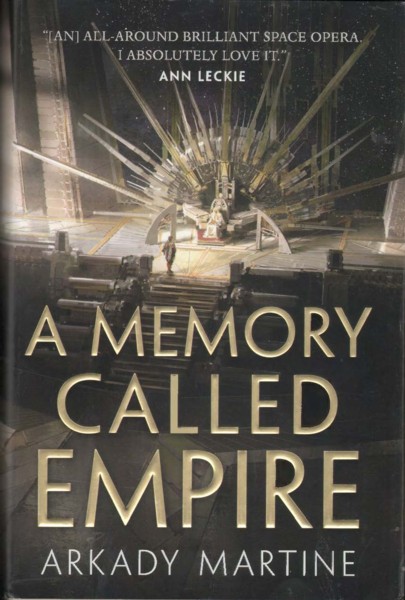
Arkady Martine's space opera duology follows Mahit Dzmare, ambassador from the small, independent Lsel Station, as she arrives in the vast Teixcalaanli Empire to investigate her predecessor's death and finds herself caught up in the empire's own succession crisis. A Memory Called Empire and A Desolation Called Peace pair court intrigue with Mahit's conflicted, outsider fascination with an empire she can't help admiring.
- Janissaries
series4 books1979
similar bytensefar futurepolitical intriguescience fiction+2 more
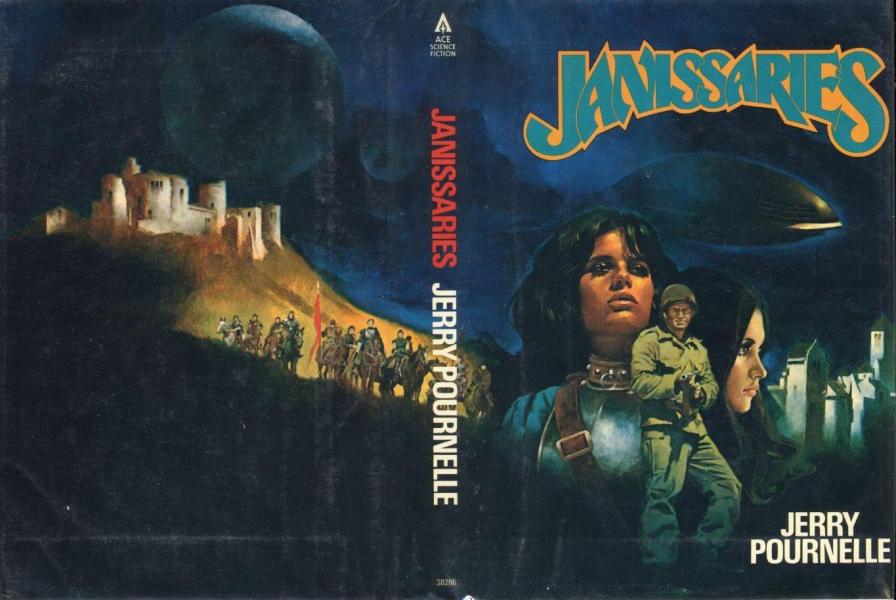
Janissaries are an American series of military and political-based science fiction novels are set in an interstellar confederation of races, in which humans are a slave race entrusted with military affairs and law enforcement. They were written by Jerry Pournelle, with Roland J. Green co-authoring the second two books.