Loreful
HomeDiscover
Search series, authors…⌘K
Loreful

Reading orders for SF/F series and shared universes — with your place kept in every one.

Explore

UniversesSeriesWorksAuthorsAtlas

Help

FAQAboutSite map

Account & legal

Sign inCreate accountPrivacyTerms

Data

Built on ISFDB, Wikipedia, Wikidata and Open Library. Curated reading orders carry their reasoning on the page; the rest follow publication order. Data sources & licenses

© Loreful · data: ISFDB · CC BY

More like Impossible?

anchored on:science fictionmid 20th centuryfunnyshort story cyclehumoraliens+2 more

but

Mood

The mood the book leaves you in.

  • The reading experience is propelled by journeys, exploration, and physical risk; excitement and forward momentum dominate over dread or introspection.
  • Joy and loss are deliberately mixed; the resolution grants characters something real while taking something else away, leaving warmth and sorrow together.
  • The book demands work from the reader — dense prose, difficult structure, unfamiliar ideas, or morally uncomfortable material — as part of its intended effect.
  • Grim events, cruelty, or despair dominate the atmosphere, and the book does not soften them with comfort or comic relief.
  • The atmosphere is quietly unsettling — wrongness, unease, and the uncanny pervade the book without necessarily escalating into overt horror.
  • The book is built to move the reader; character feeling is foregrounded and major scenes aim at a strong emotional response.
  • Humor is a primary aim and the prose plays for laughs — comic situations, wit, or dialogue produce sustained comedy, not occasional levity.
  • The book insists that things can improve; effort and decency are shown to matter, and the arc bends toward better outcomes even through hardship.
  • The book teaches as it goes — real facts, history, science, or craft are conveyed in enough depth that learning is part of the reading experience.
  • The book is designed to uplift and motivate, presenting perseverance or achievement in a way that invites the reader to aspire or act.
  • The overall register is cheerful and easygoing; stakes are kept gentle and the book avoids dwelling on pain or dread.
  • Withheld information drives the experience; the book sustains enigmas and secrets the reader wants resolved, whatever its genre.
  • The book is contemplative and inward-looking, giving more weight to thought, memory, and meaning than to external events.
  • The book works as comfort reading — low tension, a soothing pace, and an atmosphere the reader can unwind in.
  • Grief, loss, or melancholy set the dominant register, and the book lets sorrow stand rather than resolving it into comfort.
  • Sustained suspense is the point; the book keeps the reader braced for what happens next through danger, pressure, or impending revelation.
  • Playful invention and charm define the register — fanciful conceits, light absurdity, and a narration that delights in its own oddity.

About

What the story runs on.

  • Stories in which extraterrestrial beings are central — as characters, cultures, or the object of the plot.
  • Stories about venturing into space to explore — survey missions, astronauts, and the frontier of the unknown beyond Earth.
  • Stories centered on wizards, mages, and other learned practitioners of magic as protagonists or masters.
  • Stories structured as a quest — a journey undertaken to find, deliver, or destroy something of great import.
  • Stories in which staying alive against nature, catastrophe, or scarcity is the central problem.
  • Stories in which a friendship — its making, testing, or loss — is the emotional center.
  • Stories of growing up — a young protagonist crossing from childhood into adult knowledge and responsibility.
  • Stories about who a character truly is — self-discovery, doubled lives, and the search for a self.
  • Stories driven by maneuvering for power — factions, conspiracies, and statecraft conducted in shadow.
  • Stories about rising against rulers — uprisings, resistance movements, and revolutions and their aftermaths.
  • Stories in which war itself is the subject — combat, occupation, and what warfare does to soldiers and civilians.
  • Stories organized around investigating a killing — the case, the clues, and the pursuit of the killer, in any genre's clothing.

Shelf

Where it sits in the library.

    • Fiction built on magic or other supernatural elements that have no scientific explanation.
    • Secondary-world fantasy at large scale, where the fate of nations or the world turns on the protagonists' struggle.
    • Fantasy set in a recognizably modern city or contemporary world where the supernatural intrudes on everyday life.
    • Fantasy that blends in horror's atmosphere and imagery, keeping a fantastical frame around grim or frightening material.
    • Action-driven fantasy following warriors or rogues with personal stakes against sorcerous threats, rather than world-spanning conflicts.
    • Fantasy set in a real historical period or a close analogue of one, with magic woven into the era.
    • Fantasy in which protagonists cross from the ordinary world into another world through a portal or similar passage.
    • Fiction that retells or reworks a traditional fairy tale in a new form or setting.
    • Fantasy drawing directly on myths, legends, and folklore, retelling them or building on their figures and logic.
    • Fantasy of ghosts, vampires, shapeshifters, psychics, and similar phenomena, usually set in an otherwise ordinary world.
    • Fiction mixing science-fictional trappings with overtly magical or impossible elements in one setting.
    • Low-stakes fantasy emphasizing comfort, community, and everyday pleasures over conflict and peril.
    • Speculative fiction of pervasive moral ambiguity, violence, and cynicism that rejects heroic conventions — fantasy and SF alike.
      • Fiction that extrapolates from science and technology — future societies, space travel, or speculative inventions — within at least nominally natural laws.
      • Science fiction of interstellar scope — starships, galactic polities, and adventure across star systems.
      • Science fiction committed to scientific rigor, where technical plausibility constrains the story.
      • Science fiction centered on armed forces and warfare, told largely from a military point of view.
      • Science fiction of networked, corporate-dominated near futures, pairing high technology with social decay.
      • Science fiction styled on nineteenth-century steam-powered technology, often in a Victorian or pseudo-Victorian setting.
      • Fiction depicting an oppressive or catastrophic society, presented as a warning.
      • Fiction set after civilization's collapse, following survivors in the ruins of the old world.
      • Fiction in which characters move between past and future, and the mechanics or consequences of that travel drive the plot.
      • Fiction exploring a world where a historical event went differently and history diverged from ours.
      • Science fiction about humanity's first encounter and communication with an alien intelligence.
      • Science fiction in which extraterrestrial forces attack or occupy Earth and humanity resists.
      • Fiction whose primary aim is to frighten or unsettle the reader through dread, menace, or the monstrous.
      • Horror of vast, indifferent, incomprehensible entities before which humanity is insignificant, in the Lovecraft tradition.
      • Horror of decaying houses, buried family secrets, and oppressive atmosphere in the Gothic literary tradition.
      • Horror centered on hauntings and the returning dead.
      • Horror located in the mind — paranoia, obsession, and unreliable perception rather than external monsters.
      • Horror built around the reanimated dead and survival amid their outbreaks.
      • Horror defined by explicit, transgressive gore that refuses to cut away from violence.
      • Speculative fiction of the strange and uncanny that resists both natural explanation and standard genre categories.
      • Fiction organized around solving a crime or puzzle, typically following an investigator toward the identification of a culprit.
      • A puzzle-first mystery that lays out clues so the culprit's identity can be deduced before the reveal.
      • Crime fiction of moral ambiguity, fatalism, and hard-edged style, set among the corrupt and the doomed.
      • A mystery following the realistic routines of police work — forensics, interviews, and case-building.
      • A gentle mystery with an amateur sleuth, a small community, and violence kept off the page.
      • A mystery set in a past era, where the investigation works within that period's methods and society.
      • Fast-paced fiction driven by imminent danger, pursuit, or high-stakes conspiracy, built to sustain tension.
      • A thriller of espionage — agents, tradecraft, and intelligence services in conflict.
      • A thriller centered on lawyers and the courtroom, where litigation carries the suspense.
      • A thriller driven by detailed contemporary or near-future technology, often military or scientific.
      • A thriller whose tension comes from mental states and manipulation between characters rather than external action.
      • Fiction whose central plot is a romantic relationship and its development toward an emotionally satisfying resolution.
      • Romance in which one or both partners are supernatural beings, blending fantasy elements into the love story.
      • A fantasy-romance hybrid in which the romantic arc and the fantasy plot carry equal weight.
      • Romance set in a past era, with courtship shaped by the period's society and manners.
      • Romance set in the present day, without supernatural or historical elements.
      • Fiction set in a real past period, where the historical setting materially shapes characters and events.
        • General and literary fiction emphasizing prose style, character interiority, or formal ambition over genre plot conventions.
        • Fiction in a realistic world where magical events occur and are treated as ordinary, in the tradition of Latin American literature.
        • Fiction that ridicules people, institutions, or society in order to criticize them.
        • Fiction of dreamlike, irrational imagery and logic that breaks from realistic representation.
        • Fiction that plays with narrative convention through metafiction, fragmentation, and self-reference.
        • Fiction propelled by journeys, exploration, and physical peril, where action and survival carry the plot.
        • Adventure fiction of ships and seafaring — naval engagements, voyages, and life at sea.
        • Fiction of the American frontier West — gunmen, ranchers, and lawmen, typically in the late nineteenth century.
        • Fiction centered on soldiers, campaigns, and the experience of warfare, historical or imagined.
          • Fiction written primarily to amuse, using comedic situations, wit, or parody as its organizing principle.
            • Multi-generational fiction following a family or dynasty across decades, with inheritance and kinship as the through-line.
              • Fiction whose world runs on explicit game mechanics — levels, stats, and skills that characters can see and exploit.
                • Fiction about costumed or superpowered heroes and their conflicts with comparable villains.

                Practical

                How long a commitment, whether it stands alone, and whether it has finished.

                Tap a chip to ask for it · tap again to rule it out · once more to clear. Numbers show what would be left.

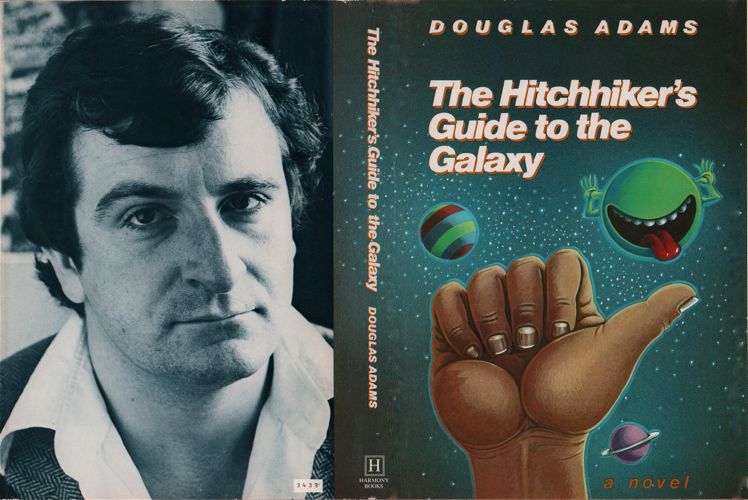
                • Cover of Hitchhiker's Guide to the Galaxy
                  Hitchhiker's Guide to the Galaxy

                  series · 16 books · 1979

                  part of The Hitchhiker's Guide to the Galaxy Universe

                  similar byscience fictionspacefunnyhumor+4 more

                  The Hitchhiker's Guide to the Galaxy is a comedy science fiction franchise created by Douglas Adams. Originally a radio sitcom broadcast over two series on BBC Radio 4 between 1978 and 1980, it was soon adapted to other formats, including both novels and comic books, a 1981 BBC television series, a 1984 text adventure game, stage shows and a 2005 feature film.

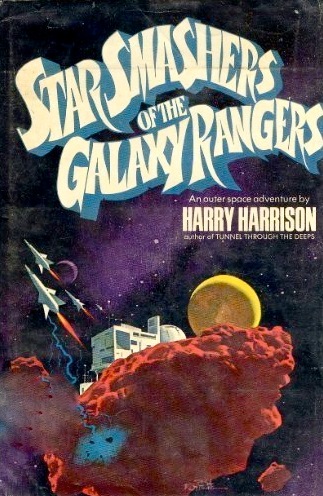
                • Cover of Star Smashers of the Galaxy Rangers
                  Star Smashers of the Galaxy Rangers

                  Harry Harrison · standalone novel · 1973

                  similar byscience fictionfunnyhumorwhimsicalspacespace explorationother star systems+1 more

                  Star Smashers of the Galaxy Rangers is a 1973 comic science fiction novel by American writer Harry Harrison. It is a parody of the space opera genre and in particular, the Lensman and Skylark series of E. E. "Doc" Smith. The main characters are homages to Tom Swift Jr. and his buddy, Bud Barclay. It also includes a homage to Larry Niven's Ringworld (1970).

                • Cover of Fifth Planet
                  Fifth Planet

                  Fred Hoyle & Geoffrey Hoyle · standalone novel · 1963

                  similar bymid 20th centuryaliensscience fictionspacespace explorationother star systems

                  Fifth Planet is a science fiction novel written by astrophysicist Sir Fred Hoyle and his son Geoffrey Hoyle.

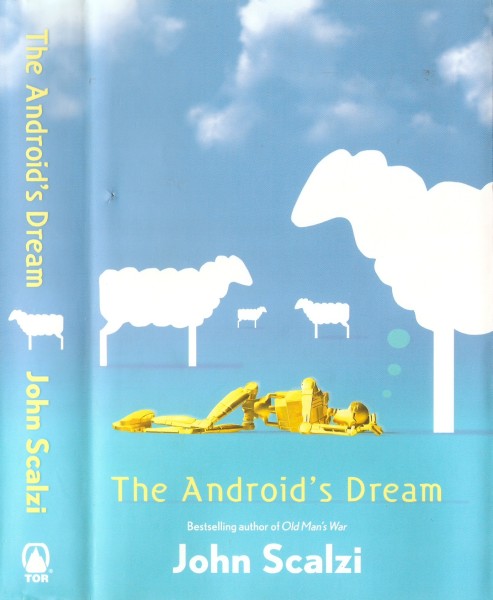
                • Cover of The Android's Dream
                  The Android's Dream

                  series · 2 books · 2006

                  similar byaliensscience fictionfunnyhumorspaceother star systems

                  A minor diplomatic insult with a genetically engineered sheep breed spirals into a full interstellar crisis when the last surviving specimen of the 'Android's Dream' breed, needed for a critical ceremony with the alien Nidu, turns out to have been hunted to extinction by a Nidu faction bent on provoking war. John Scalzi's The Android's Dream follows ex-soldier Harry Creek as the hunt for a replacement leads him to Robin Baker, an ordinary woman carrying hidden sheep DNA that makes her the key to avoiding a war. It's a standalone comic space opera rather than an ongoing series.

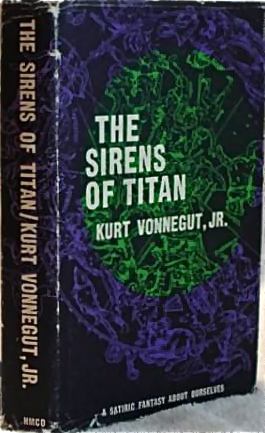
                • Cover of The Sirens of Titan
                  The Sirens of Titan

                  Kurt Vonnegut & Jr. · standalone novel · 1959

                  similar byaliensscience fictionfunnyspace+1 more

                  The Sirens of Titan is a comic science fiction novel by Kurt Vonnegut Jr., first published in 1959. His second novel, it involves issues of free will, omniscience, and the overall purpose of human history, with much of the story revolving around a Martian invasion of Earth.

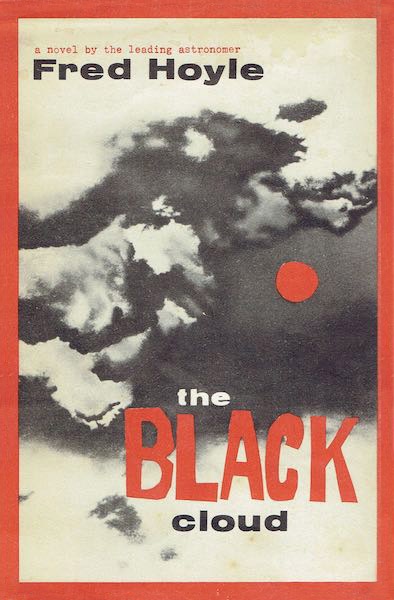
                • Cover of The Black Cloud
                  The Black Cloud

                  Fred Hoyle · standalone novel · 1957

                  similar bymid 20th centuryaliensscience fiction+2 more

                  The Black Cloud is a 1957 science fiction novel by British astrophysicist Fred Hoyle. It details the arrival of an enormous cloud of gas that enters the Solar System and appears about to destroy most of the life on Earth by blocking the Sun's radiation.

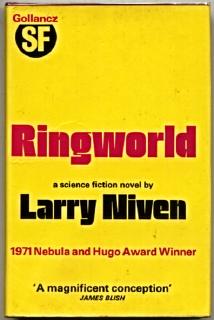
                • Cover of Ringworld
                  Ringworld

                  series · 5 books · 1970

                  part of Known Space

                  similar byscience fictionaliensspacespace explorationother star systems

                  The Ringworld series is a series of science fiction novels written by American author Larry Niven. It is part of his Known Space series of stories. Its backdrop is the Ringworld, a giant artifact 3 million times the surface area of Earth circling a star. The series is composed of four standalone science fiction novels, the original award-winning book and its three sequels:1970: Ringworld 1979: The Ringworld Engineers 1996: The Ringworld Throne 2004: Ringworld's Children

                • Cover of The Crimson Deathbringer
                  The Crimson Deathbringer

                  series · 1 book · 2019

                  similar byaliensscience fictionfunnyspaceother star systems+1 more

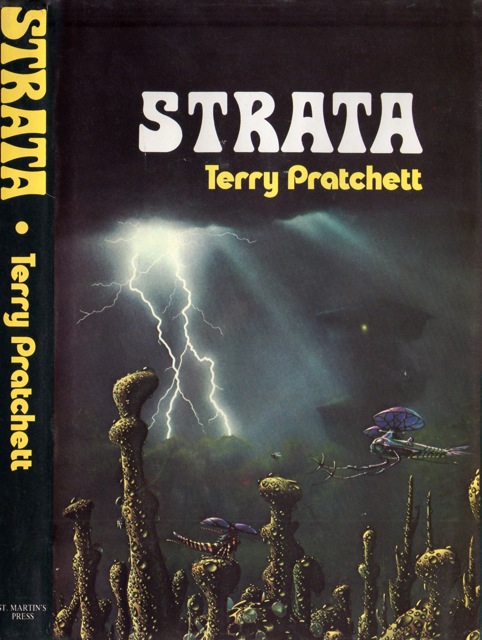
                • Cover of Strata
                  Strata

                  Terry Pratchett · standalone novel · 1981

                  similar byscience fictionhumorfunnyspacespace explorationother star systems

                  Strata is a 1981 science fiction comedy novel by English writer Terry Pratchett. It is one of Pratchett's first novels and among the few science fiction novels he wrote, along with The Dark Side of the Sun, Only You Can Save Mankind, The Nome Trilogy and the co-authored The Long Earth.

                • Cover of The Secret of the Ninth Planet
                  The Secret of the Ninth Planet

                  Donald A. Wollheim · standalone novel · 1959

                  similar bymid 20th centuryaliensscience fictionspacespace exploration

                  The Secret of the Ninth Planet is a science-fiction novel written by Donald A. Wollheim and first published in the United States in 1959 by the John C. Winston Co. Wollheim takes his heroes on a grand tour of the Solar System as that team struggles to prevent an alien force from Pluto from blowing up the Sun. This is the last of three juvenile novels that Wollheim wrote for Winston, the other two being The Secret of Saturn's Rings and The Secret of the Martian Moons.

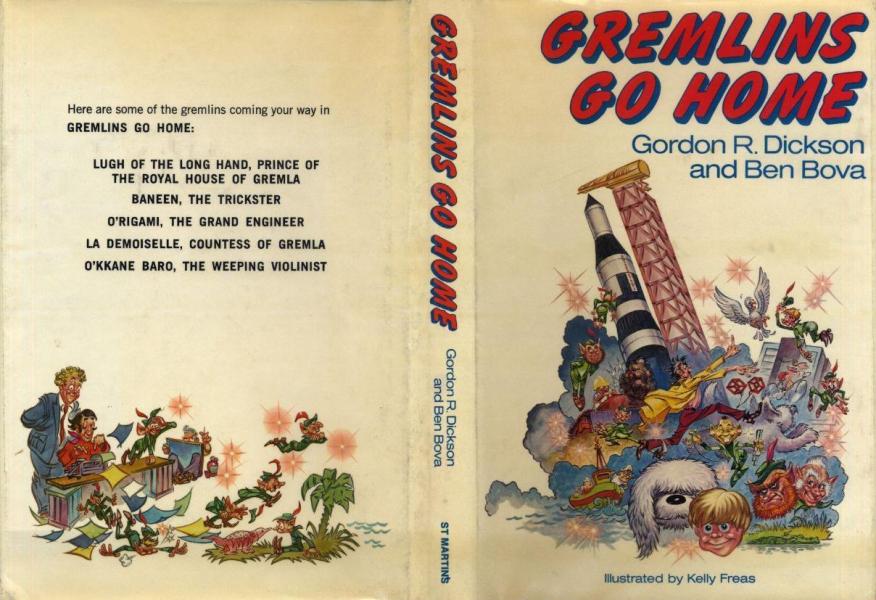
                • Cover of Gremlins, Go Home!
                  Gremlins, Go Home!

                  Gordon R. Dickson & Ben Bova · standalone novel · 1974

                  similar byaliensscience fictionfunnyhumorwhimsical+1 more

                  Gremlins stranded on earth centuries ago hit on a scheme to hitch a ride on a space rocket to Mars, hoping to get back to their own planet.

                • Cover of Moties
                  Moties

                  series · 4 books · 1974

                  part of CoDominium

                  similar byaliensscience fictionspaceother star systems+1 more

                  Larry Niven and Jerry Pournelle's The Mote in God's Eye (1974) depicts humanity's first contact with an alien species, the Moties, set within the far-future interstellar setting of Pournelle's codominium future history. The Gripping Hand continues that first-contact crisis years later, and Outies, written by J. R. Pournelle, carries the story forward into a new generation. Together the three books trace an escalating encounter between human and Motie civilizations within the codominium universe.

                • Cover of Cosmic Trilogy (C. S. Lewis)
                  Cosmic Trilogy (C. S. Lewis)

                  series · 4 books · 1938

                  completed

                  similar byaliensscience fictionother star systems+3 more

                  The Space Trilogy is a series of science fiction novels by British writer C. S. Lewis. The trilogy consists of Out of the Silent Planet (1938), Perelandra (1943), and That Hideous Strength (1945). A philologist named Elwin Ransom is the protagonist of the first two novels and an important character in the third.

                • Cover of Heechee
                  Heechee

                  series · 19 books · 1972

                  completed

                  similar byaliensscience fictionspacespace explorationother star systems

                  The Heechee Saga, also known as the Gateway series, is a series of science fiction novels and short stories by Frederik Pohl. The Heechee are an advanced alien race that visited the Solar System hundreds of millennia ago and then mysteriously disappeared. They left behind bases containing artifacts, including working starships, which are discovered and exploited by humanity.

                • Cover of The Man Who Fell to Earth
                  The Man Who Fell to Earth

                  Walter Tevis · standalone novel · 1963

                  similar bymid 20th centuryaliensscience fiction+1 more

                  The Man Who Fell to Earth is a 1963 science-fiction novel by American writer Walter Tevis. Published by Gold Medal Books as a paperback original, it was Tevis's second novel, following The Hustler. The novel follows Thomas Jerome Newton, an extraterrestrial from the drought-stricken planet Anthea, who comes to Earth hoping to build a spacecraft that can save the surviving members of his species.

                • Cover of Way Station
                  Way Station

                  Clifford D. Simak · standalone novel · 1963

                  similar bymid 20th centuryaliensscience fictionspace exploration

                  The human operator of a transfer station for aliens traveling between planets, kept secret from the human race, deals with discovery by the US government and interplanetary political crisis, as well as his own emotional issues.

                • Cover of Uplift Universe
                  Uplift Universe

                  universe · 13 books · 1980

                  Start hereUplift · Start here

                  similar byscience fictionaliensspaceother star systems+1 more

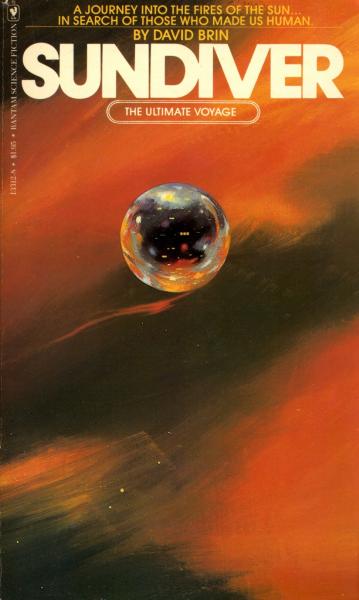
                  No species, the Galactics insist, ever climbs to sapience alone. For a billion years the elder races have "uplifted" their chosen clients — reshaping some promising animal, gene by patient gene, into a thinking being, then binding it through long ages of indenture. Patron lifts client; client one day becomes patron; and every lineage traces back through the vast Galactic Library to the vanished Progenitors who began it all. Then a ragged band of primates arrives at the stars with no patron to claim them — wolflings, self-made, an affront to a hundred thousand years of law — and worse, these humans have already started uplifting neighbors of their own: the neo-dolphins and neo-chimpanzees of Earthclan. David Brin builds this galaxy across two trilogies. The first — Sundiver, the Hugo- and Nebula-winning Startide Rising, and the Hugo-winning The Uplift War — sends an expedition into the Sun, then follows the dolphin-crewed survey ship Streaker as it flees a discovery that sets fanatical star-clans at war, and a chimp-led resistance on an invaded colony world. The second sequence, Uplift Storm — Brightness Reef, Infinity's Shore, Heaven's Reach — descends to Jijo, a forbidden world where six fallen races hide as illegal settlers, and draws every loose thread toward a reckoning. Short fiction fills the margins. This is space opera with an ecologist's conscience: teeming with invented biologies, wry cross-species banter, and real unease about what we owe the minds we make. Begin with Startide Rising — the saga's beating heart, and readable on its own — or take Sundiver first and read straight through in publication order.

                • Cover of Dimensions of Miracles
                  Dimensions of Miracles

                  series · 3 books · 1968

                  completed

                  similar byscience fictionspacefunny+4 more

                  Dimension of Miracles is Robert Sheckley's satirical account of Tom Carmody, an ordinary and thoroughly unlucky man who wins first prize in an alien lottery he was never eligible for, and is then left to find his own way home across an endless sequence of near-identical, subtly wrong Earths, hunted along the way by a creature created specifically to kill him. It's a standalone comic SF novel rather than an ongoing series, in the vein of Sheckley's other absurdist odysseys.

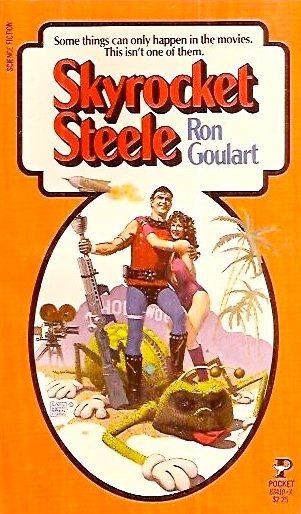
                • Cover of Skyrocket Steele
                  Skyrocket Steele

                  series · 2 books · 1980

                  completed

                  similar byaliensscience fictionfunnyhumorspace+1 more

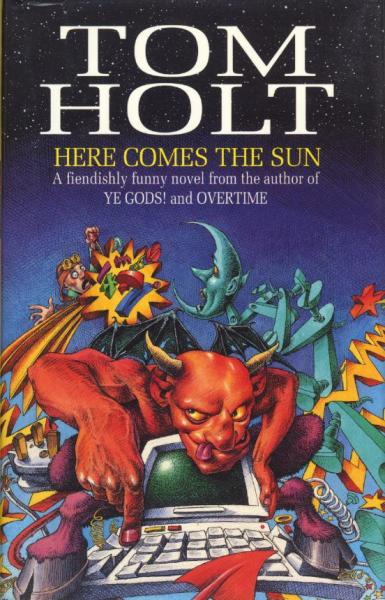
                • Cover of Here Comes the Sun
                  Here Comes the Sun

                  Tom Holt · standalone novel · 1993

                  similar byscience fictionfunnyhumorwhimsicalspacespace exploration

                  Here Comes the Sun is a 1993 science-fiction comedy novel by Tom Holt. The book was published in the UK by Orbit Books and is Holt's first comic science fiction novel.

                • Cover of Have Space Suit - Will Travel
                  Have Space Suit - Will Travel

                  Robert A. Heinlein · standalone novel · 1958

                  similar byaliensscience fictionspacespace exploration+1 more

                  From the back cover of the Del Rey 9th printing: "Skyjacked - Everything happened at once. One minute Kip Russell was walking about in his own backyard, testing out an old space suit and dreaming about going to the moon - and the next he was out cold and the captive of an insidious space pirate. The whole thing seemed like a very bad dream until he discovered he wasn't the only prisoner on board. Then the reality of the situation became inescapable. He - along with the daughter of a world-renowned scientist and a beautiful creature from an alien planet - had been skyjacked by a monstrous extraterrestrial and they were on their way to the Moon... a journey toward a fate worse than death!"

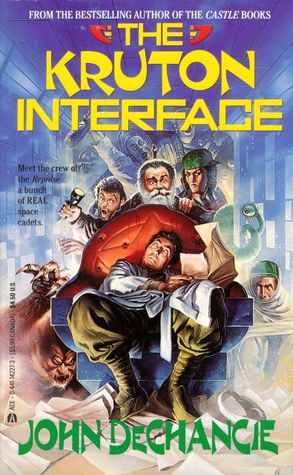
                • Cover of The Kruton Interface
                  The Kruton Interface

                  John DeChancie · standalone novel · 1993

                  similar byaliensscience fictionfunnyhumorspace+1 more

                  Think you're spaced out? Climb aboard the U.S.S. Repulse... Captain David Wanker thought his career had hit rock bottom. The he was assigned to the Repulse... It's the lowest-rated ship in the Space Forces. The navigator get lost. The engineer is incomprehensible. Security can't stay awake. And the doctor needs medication. But... When an army of alien lawyers sues the entire human race, only this captain and this crew can save humanity from terminal litigation. The repulsive adventures begin! God help us all. (from the back cover of the Ace Books first edition)

                • Cover of Mindswap
                  Mindswap

                  Robert Sheckley · standalone novel · 1966

                  similar byaliensscience fictionfunnyspaceother star systems

                  "In the future, interstellar travel to alien worlds will be too expensive for most ordinary people. It certainly is for Marvin, a college student who wants to take a really good vacation. And so he signs up for what he can afford, a mindswap, in which a persons consciousness is swapped into the body of an alien lifeform. But Marvin is unlucky, and finds himself in the body of an interstellar criminal, a body that he has to vacate fast. But that criminal consciousness has stolen Marvins earthly body, and Marvin has to find a body on the black market. Travel from world to world with Marvin, each one crazier than the last, as he keeps finding far-from-ideal bodies in awful situations, just to stay alive"--Cover p. [4].

                • Cover of Buddy Holly Is Alive and Well on Ganymede
                  Buddy Holly Is Alive and Well on Ganymede

                  Bradley Denton · standalone novel · 1991

                  similar byaliensscience fictionfunnyhumorother star systems+1 more

                  Buddy Holly is Alive and Well on Ganymede is a 1991 comedic science fiction novel by Bradley Denton.