More like MindSighted
but
- Dune
series20 books1963
part of Dune Universe
similar byfar futurescience fictionspace opera+1 more
Frank Herbert's Dune Chronicles opens with 1965's Dune, set on the desert planet Arrakis where House Atreides takes control of the only source of the vital spice melange and young Paul Atreides is pulled into a struggle over its politics and religion. Herbert carried the story forward across five further novels — Dune Messiah, Children of Dune, God Emperor of Dune, Heretics of Dune, and Chapterhouse: Dune — following Paul's line over the following millennia, before Brian Herbert and Kevin J. Anderson later extended the saga. Many other editions of these six novels are omnibus and box-set repackagings rather than separate stories.
- Solar Queen
series7 books1955
similar byfar futurescience fictionspace operaspacespaceship+1 more
Andre Norton's Solar Queen novels follow the crew of a free-trader starship under Captain Jellico as they scrape by hauling cargo and making first contact on the fringes of settled space. The first three books appeared in the 1950s; Norton returned to the series decades later and, from the 1990s on, completed it in collaboration with P. M. Griffin and Sherwood Smith. Across its seven novels the series keeps its ensemble trading-crew premise rather than following one continuous plot.
- Company Wars
series7 books1981
part of Alliance-Union Universe
similar byfar futurescience fictionspace operaspace+1 more
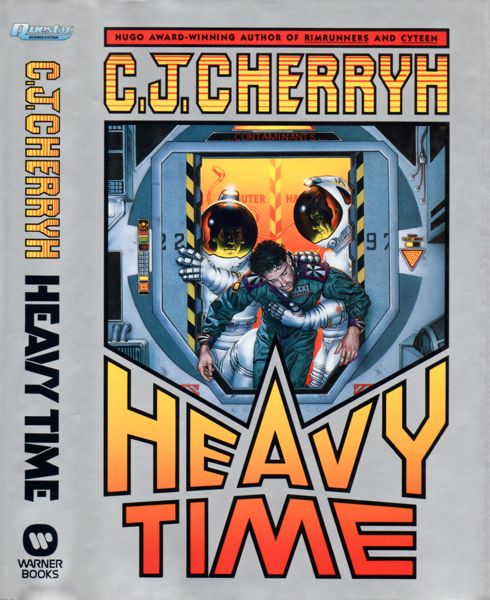
Company Wars gathers the novels C. J. Cherryh set during the breakaway conflict between Earth's colonial Company and the newly independent Union, within her wider Alliance-Union future history. Anchored by the Hugo Award-winning Downbelow Station, the books follow different ships, stations, and crews caught on either side, from merchanter traders to military spacers, rather than a single continuing cast. Read in any order, they build up a picture of the political and economic pressure that reshapes Cherryh's larger Alliance-Union universe.
- Dune Universe
universe78 books1963
Start hereDune · Start here
similar byfar futurescience fictionspace opera
Arrakis. Dune. The desert planet, where empire runs on a single substance: the spice melange, which folds space, prolongs life, and unlocks prescience, and which exists nowhere else in the known universe. Frank Herbert's saga is a meditation dressed as an adventure — feudal houses and a secret sisterhood, engineered messiahs and the patient ecology of a world without water, all turning on the terrible gravity of who commands the spice. It reads like scripture and schemes like a war room, ten thousand years hence, among people who have outlawed the thinking machine and made instruments of themselves instead. At its heart stand Herbert's original six — Dune, Dune Messiah, Children of Dune, God Emperor of Dune, Heretics of Dune, Chapterhouse: Dune — a single deepening arc across millennia, arguing the whole way between prophecy and free will. Around that spine his son Brian Herbert and Kevin J. Anderson have raised a vast prequel architecture: Prelude to Dune, tracing the great houses a generation before Paul; Legends of Dune, reaching back to the crusade that broke the machines; the Schools of Dune cycle on the founding of Bene Gesserit, Mentat, and Navigator; the Caladan Trilogy and Heroes of Dune filling years the originals left in shadow. Many hands, dozens of volumes, one desert. What sets Dune apart is its refusal of the simple: religion is manufactured, heroes are hazards, and the sand itself — worm, water, ecology — acts as a political power. Begin where the universe did, with Frank Herbert's Dune (1965), and read the original six in order; you need nothing else to feel the full weight. The prequels are a country to explore afterward, taken by era. Beginnings are delicate times.
- Lucky Starr
series8 books1952
completed
similar byadventurousfar futurescience fiction+3 more
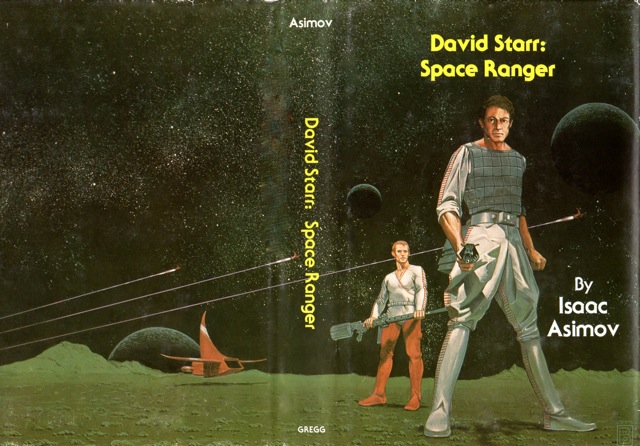
The Lucky Starr books, published under the pseudonym Paul French, are Isaac Asimov's juvenile science-fiction series following David "Lucky" Starr, an agent of an interplanetary Council of Science, as he and his sidekick Bigman Jones investigate crimes and conspiracies across the solar system — starting with a poisoned-food-shipment plot from Mars in the debut, David Starr: Space Ranger. Conceived partly as a science-fictional take on the Lone Ranger, the six-book series lets Asimov work real planetary science into old-fashioned adventure plots.
- Karres
series5 books1949
similar byfar futurespace operaspace+2 more
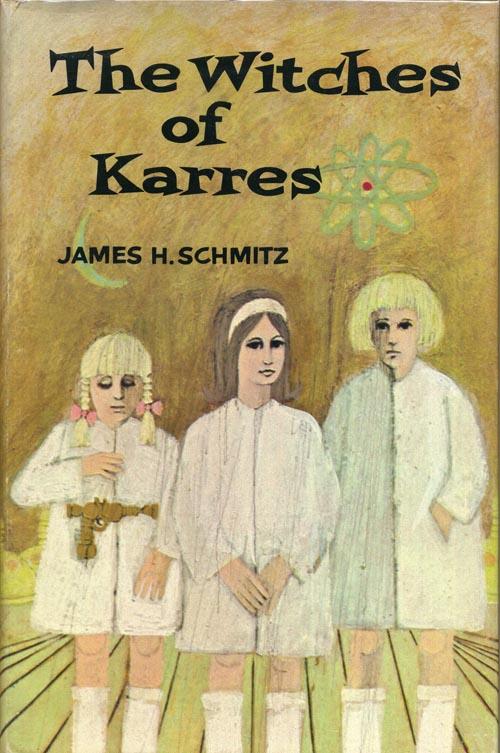
The Witches of Karres, James H. Schmitz's 1966 space opera, follows a young merchant-ship captain who impulsively frees three strange sisters from indentured servitude and finds himself dragged into interdimensional invaders, space pirates, and magic far stranger than his cargo runs prepared him for. Schmitz never wrote a follow-up himself, but the story was continued decades later by other hands — The Wizard of Karres, The Sorceress of Karres, The Shaman of Karres — carrying Captain Pausert and the Karres witches forward.
- Ender's Shadow
series5 books1999
part of Ender's Game Universe
similar byfar futurescience fiction+1 more
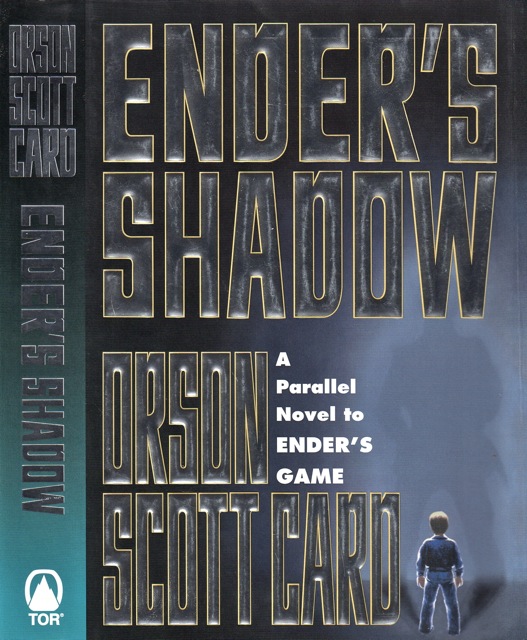
Orson Scott Card's Ender's Shadow retells the events of Ender's Game from the perspective of Bean, a physically stunted but ferociously intelligent street child recruited into the same Battle School program as Ender Wiggin. It launches the Shadow series, which follows Bean and other secondary Battle School characters into the political aftermath of the Formic Wars back on Earth, running parallel to and eventually past the timeline of Card's main Ender Quintet.
- Arcot, Morey and Wade
series7 books1930
completed
similar byadventurousfar futurescience fictionspace operaspace+1 more
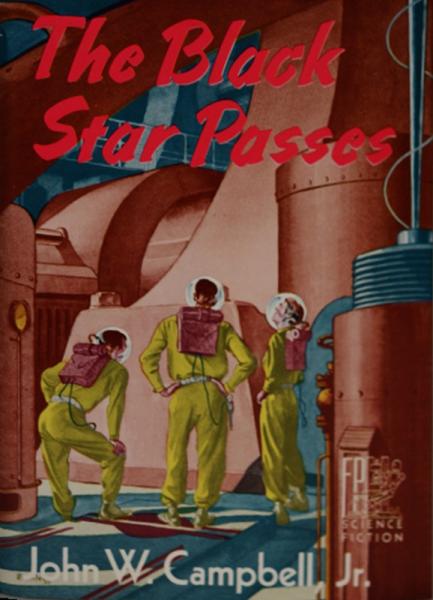
Arcot, Morey and Wade collects John W. Campbell Jr.'s pulp-era stories, starting with The Black Star Passes, a fixup built from stories originally serialized in Amazing Stories during the early 1930s. The books follow the same trio of scientist-adventurers through escalating, gadget-driven space adventures typical of early Golden Age SF, continuing through Islands of Space and Invaders from the Infinite. It's foundational pulp science fiction, heavier on speculative engineering than characterization by later standards.
- Forever War
series10 books1972
similar byfar futurescience fictionspace+1 more
Joe Haldeman's The Forever War (1974) follows a soldier conscripted into a centuries-long interstellar war against the alien Taurans, using relativistic space travel so that months spent in transit correspond to years or decades passing back on Earth. Haldeman later returned to the same conflict in Forever Peace (1997), a thematically connected but separate story, and Forever Free (1999), a direct sequel set years after the original war's end. The first novel won the Hugo, Nebula, and Locus awards and is considered a foundational work of military science fiction.
- Tom Corbett Space Cadet
series11 books1952
similar byscience fictionspace operaspace+3 more
The Tom Corbett, Space Cadet novels (eight books published 1952-1956 by Grosset & Dunlap) follow cadets training at the Space Academy for the Solar Guard, moving between the academy, their training ship the Polaris, and assorted alien worlds. The books were ghostwritten under the house name Carey Rockwell, with rocket scientist Willy Ley credited as technical advisor, tying the series to the 1950s Tom Corbett television franchise it was spun off from.
- The Stars My Destination
Alfred Besterstandalone novel1956
similar byadventurousfar futurescience fictionspace operaspace+1 more
When a passing spaceship refuses to rescue the lone survivor from the drifting wreck of another ship, he dedicates his life to discovering who made that decision and exacting his revenge, in the process altering human history and his own character.
- Pip & Flinx
series18 books1972
part of Humanx Commonwealth
similar byadventurousfar futurescience fictionspace operaspace+1 more
The Pip & Flinx novels follow Flinx, a young man with an unusual, mysterious origin, and his ever-present animal companion Pip, across Alan Dean Foster's Humanx Commonwealth setting. Beginning with The Tar-Aiym Krang (1972) — chronologically the second entry, since Foster later filled in Flinx's earlier life — the series grew to fifteen novels published between 1972 and 2017, mixing planetary adventure with a slowly unfolding personal mystery.
- Foundation Universe
universe123 books1940
Start hereFoundation · Start here
similar byfar futurescience fiction
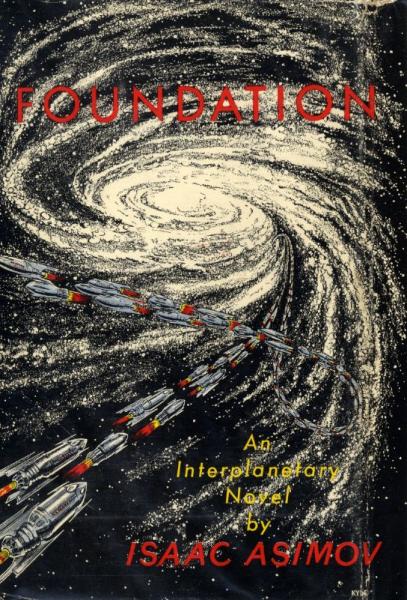
There is a science that reads the future of quadrillions the way an astronomer reads the orbits of stars. It is called psychohistory, and its equations foresee something the ruling Galactic Empire cannot admit: the throne is rotting, and thirty thousand years of barbarism are coming. One man, Hari Seldon, cannot stop the fall. He can only shorten it — by seeding a Foundation of scholars at the rim of the galaxy, a fragile institution built to carry knowledge across the dark and cut the interregnum to a single millennium. This is a universe told in the register of history itself: the long view, the calm of deep time, empires measured in centuries and men measured against them. The spine is Asimov's original trilogy — Foundation, Foundation and Empire, Second Foundation — followed decades later by the sequels Foundation's Edge and Foundation and Earth and the prequels Prelude to Foundation and Forward the Foundation. Late in life Asimov braided this in with his other future histories: the Robot novels of detective Elijah Baley and his humaniform partner R. Daneel Olivaw (The Caves of Steel, The Naked Sun, The Robots of Dawn, Robots and Empire) and the early Galactic Empire novels (Pebble in the Sky and its kin), until one continuous chronicle ran from the first thinking robots to the Second Empire. Other hands extend it — the Second Foundation Trilogy by Gregory Benford, Greg Bear, and David Brin, and shared-world spinoffs such as Robot City — so the corpus sprawls beyond a single author's tidy shelf. What distinguishes it is that the drama is intellectual: crises resolved by insight, nerve, and dialogue rather than fleets and blades, each turn hinging on the hidden logic of the Seldon Plan. Begin where readers have always begun — with Foundation, and the original trilogy in publication order. The rest opens outward from there.
- Vatta
universe10 books2003
Start hereVatta's War · Start here
similar byadventurousfar futurescience fictionspace operaspace+1 more
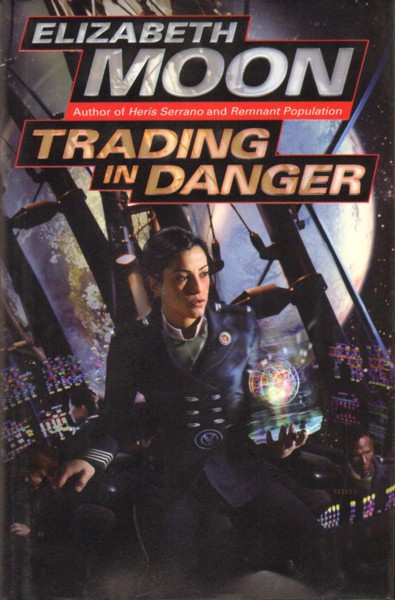
Get kicked out of the Academy and the family still hands you a ship. That is the arithmetic Kylara Vatta lives by. Born into Vatta Transport, Ltd. — a dynasty of interstellar traders who reckon their honor in delivered cargo and honored contracts — Ky wants a soldier's commission and gets a merchant hull instead. Then someone starts murdering her relatives and burning the ledgers, and the daughter learns that a trade fleet, armed and angry, is its own kind of war. This is military science fiction run on a merchant's books. The core cycle, Vatta's War, moves in five volumes — Trading in Danger, Marque and Reprisal, Engaging the Enemy, Command Decision, Victory Conditions — as piracy, a sabotaged faster-than-light communications network, and a scattered family push Ky from cautious captain to fleet commander. The later duology Vatta's Peace (Cold Welcome, Into the Fire) drops her, older and decorated, into a colder survival ordeal on her own homeworld. Moon writes clean, competent, procedural: supply lines and boarding actions, chains of command, the cost of a signature on a bad contract. Expect capable women, hard decisions costed to the last credit, and space combat that respects physics and paperwork alike. Begin at the beginning — Trading in Danger — and read straight through in publication order; the arc is chronological and cumulative, no side doors required.
- Tower and the Hive
series7 books1959
completed
part of The Talents
similar bypsychic powersfar futurescience fictionspace operaspace+1 more
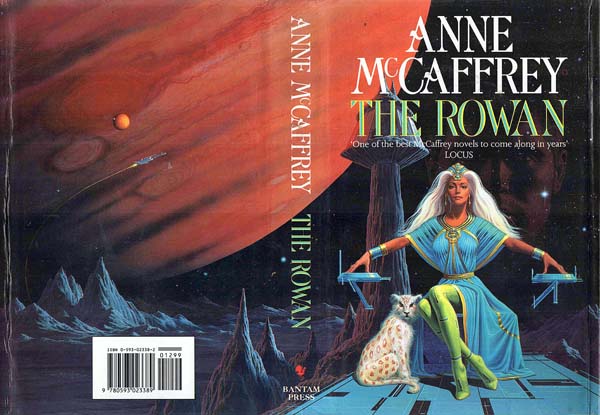
The Tower and the Hive series opens with The Rowan (1990), following an isolated but powerful telepath who is drawn out of her loneliness by a psychic call for help from a distant Talent facing an alien threat. Anne McCaffrey continued the story across four more novels, Damia, Damia's Children, Lyon's Pride, and the concluding The Tower and the Hive (1999), following later generations of a telepathic family staffing the Prime Towers that give a starfaring human civilization instant communication. The series is set later in the same Talents universe as McCaffrey's earlier Pegasus books.
- Vatta's War
series6 books2003
part of Vatta
similar byadventurousfar futurescience fictionspace operaspace+1 more
Vatta's War is a science fiction series by American writer Elizabeth Moon, comprising five books: Trading in Danger (2003), Marque and Reprisal, Engaging the Enemy (2006), Command Decision (2007), and Victory Conditions (2008). They have been characterized as military science fiction similar in style to the works of Lois McMaster Bujold, David Weber and Walter Jon Williams.
- Moties
series4 books1974
part of CoDominium
similar byfar futurescience fictionspace operaspace+1 more
Larry Niven and Jerry Pournelle's The Mote in God's Eye (1974) depicts humanity's first contact with an alien species, the Moties, set within the far-future interstellar setting of Pournelle's codominium future history. The Gripping Hand continues that first-contact crisis years later, and Outies, written by J. R. Pournelle, carries the story forward into a new generation. Together the three books trace an escalating encounter between human and Motie civilizations within the codominium universe.
- Honor Harrington
series14 books1993
part of Honorverse
similar byfar futurescience fictionspace operaspace+1 more
David Weber's Honor Harrington novels follow the title character's rise through the Manticoran navy in the 'Honorverse,' a space-opera setting built around Age-of-Sail-style naval combat, interstellar politics and a decades-long war between rival star nations. Beginning with On Basilisk Station, the core series runs to fourteen books, alongside spin-off subseries, prequels and shared-world anthologies also set in the Honorverse. It's one of the longest-running modern military science fiction series, published by Baen.
- Variable Star
Robert A. Heinlein & Spider Robinsonstandalone novel2006
similar byadventurousfar futurescience fictionspace operaspacespaceship+1 more
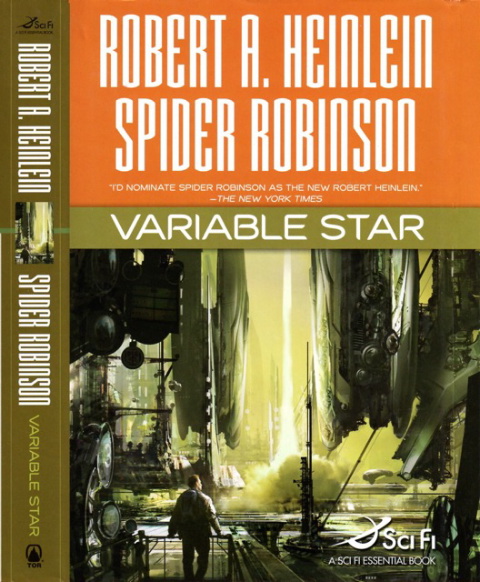
Variable Star is a 2006 science fiction novel by American author Spider Robinson, based on the surviving seven pages of an eight-page 1955 novel outline by Robert A. Heinlein, who died in 1988. The book is set in a divergent offshoot of Heinlein's Future History and contains many references to works by Heinlein and other authors. It describes the coming of age of a young musician who signs on to the crew of a starship as a way of escaping from a failed romance. Robinson posted a note on his website in 2009 noting that his agent had sold a trilogy of sequels based on the novel and its characters.
- Starman Jones
Robert A. Heinleinstandalone novel1953
similar byadventurousfar futurescience fictionspace operaspacespaceship
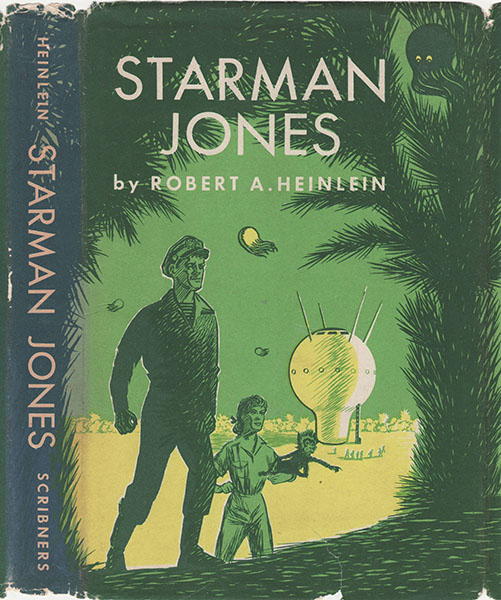
Starman Jones, a 1953 science fiction novel by Robert A. Heinlein, features a farm boy who wants to go to the stars. Charles Scribner's Sons published the book as part of the Heinlein juveniles series.
- Deathworld
series4 books1960
completed
similar byadventurousfar futurescience fiction+2 more
Deathworld is the name of a series of science fiction novels by American writer Harry Harrison, including the books Deathworld, Deathworld 2 and Deathworld 3, plus the short story "The Mothballed Spaceship". The central hero is a gambler who becomes involved with colonists of an extremely hostile planet.
- Hitchhiker's Guide to the Galaxy
series16 books1979
part of The Hitchhiker's Guide to the Galaxy Universe
similar byfar futurescience fictionspace+1 more
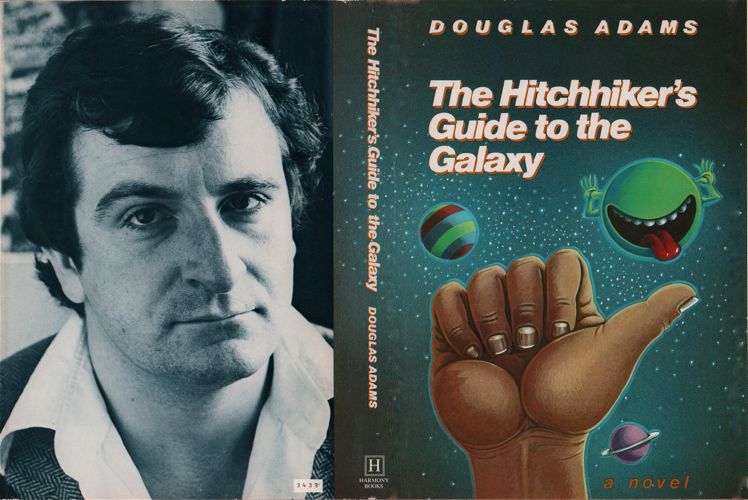
The Hitchhiker's Guide to the Galaxy is a comedy science fiction franchise created by Douglas Adams. Originally a radio sitcom broadcast over two series on BBC Radio 4 between 1978 and 1980, it was soon adapted to other formats, including both novels and comic books, a 1981 BBC television series, a 1984 text adventure game, stage shows and a 2005 feature film.
- Future History
series42 books1939
completed
similar byscience fiction+3 more
The Future History is a series of science fiction stories written by American author Robert A. Heinlein (1907–1988). It describes a projected future of the human race from the middle of the 20th century through the early 23rd century. The term Future History was coined by John W. Campbell Jr. in the February 1941 issue of Astounding Science Fiction. Campbell published an early draft of Heinlein's chart of the series in the May 1941 issue.