More like Recursion
anchored on:science fictionother star systemsfar futuremystery & detectiveartificial intelligencerobots+3 more
but
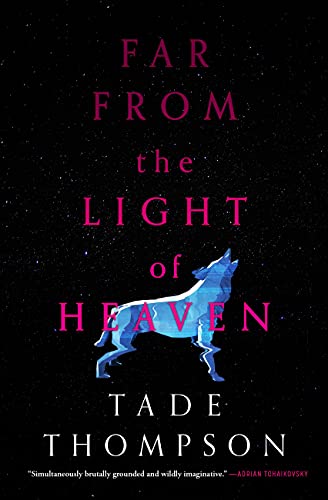
- Far from the Light of Heaven
Tade Thompsonstandalone novel2021
similar byfar futuremysterioustenseother star systemsscience fictionmurder investigationmystery & detective+2 more
Far from the Light of Heaven is a 2021 science fiction mystery novel by Tade Thompson. It was a finalist for the 2022 Philip K. Dick Award and 2022 Nommo Award for Best Novel.
- Berserker (Fred Saberhagen)
series59 books1963
similar byfar futuretenseother star systemsscience fictionrobotsartificial intelligencespace opera
The Berserker series is a series of space opera science fiction short stories and novels by Fred Saberhagen, in which robotic self-replicating machines strive to destroy all life.
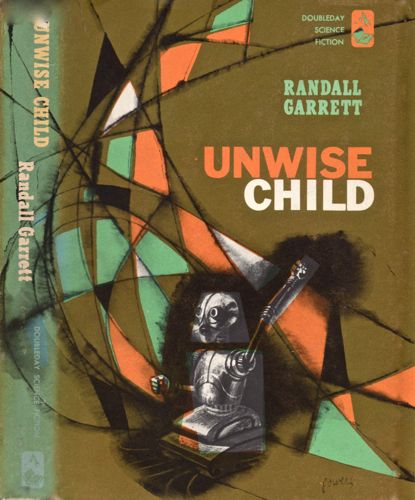
- Unwise Child
Randall Garrettstandalone novel1962
similar bymysterioustensescience fictionartificial intelligencerobotsmurder investigationmystery & detective
"When a super-robot named Snookums discovers how to build his own superbombs, it becomes obvious that Earth is by no means the safest place for him to be. And so Dr. Fitzhugh, his designer, and Leda Crannon, a child psychologist acting as Snookums' nursemaid, agree to set up Operation Brainchild, a plan to transport the robot to a far distant planet. "... once into space, the Branchell becomes the scene of some frightening events—the medical officer is murdered, and Snookums appears to be the culprit. Mike the Angel indulges himself in a bit of sleuthing, and the facts he turns up lead to a most unusual climax." (From Project Gutenberg's version of the 1962 Doubleday edition, published 2007.)
- Hellspark
Janet Kaganstandalone novel1988
similar byother star systemsfar futuremysterioustensescience fictionmurder investigationmystery & detective
Lassti, a newly discovered planet, is the center of political intrigue. Recently, Oloitokitok, the planet survey team's physicist was found dead. Was he killed? If so, by who? One of his fellow surveyors? Or by one of the Sprookjes, the birdlike natives of Lassti? Are the Sprookjes intelligent? If so, then parties that want the planet for development will lose it. Why is the survey team having so much trouble finding out? Into this situation arrives Tocohl, a Hellspark trader who just wanted to have a vacation on Sheveschke at the St. Veschke festival. After being attacked, rescuing a young woman, and going before a judge, Tocohl has learned all she ever wanted to know about being in the wrong place at the wrong time. Now she is on her way to find Lasti to find answers to the mysteries there.
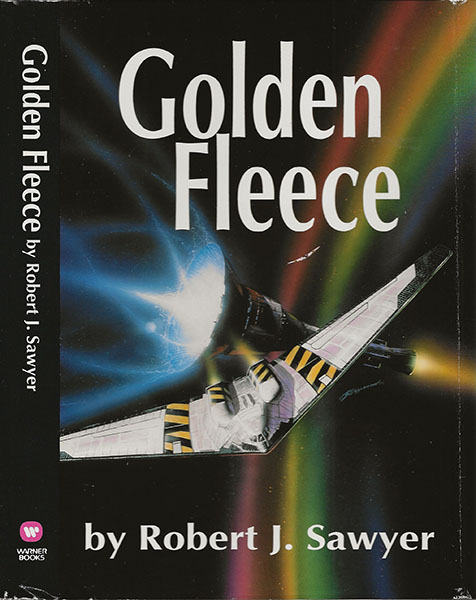
- Golden Fleece
Robert J. Sawyerstandalone novel1990
similar byfar futuremysterioustensescience fictionartificial intelligencemurder investigationmystery & detective
From the back cover of the Questar first edition: "Murder in space - Starcolony Argo. A superstarship on a mission to a distant world. Controlled by a monumental computer named Jason, the Argo proceeds flawlessly... until death strikes its sleek decks with sudden and mysterious precision. Astrophysicist Diana Chandler is dead of radiation. Her body lies in Argo's ramfield - where hydrogen ions are funneled into the engines. Chandler's death has been deemed suicide. But her ex-husband, Aaron Rossman, is so sure. As the probes further, he becomes certain that Diana's death is a matter of murder - and that the murderer is Jason! Now Rossman must face the unthinkable; why would an artificial intelligence conceive and execute the most heinous of human crimes? And if so, can a mortal mind take on a cunning computer... and survive?"
- Dune Universe
universe78 books1963
Start hereDune · Start here
similar byfar futureother star systemsscience fictionspace opera+1 more
Arrakis. Dune. The desert planet, where empire runs on a single substance: the spice melange, which folds space, prolongs life, and unlocks prescience, and which exists nowhere else in the known universe. Frank Herbert's saga is a meditation dressed as an adventure — feudal houses and a secret sisterhood, engineered messiahs and the patient ecology of a world without water, all turning on the terrible gravity of who commands the spice. It reads like scripture and schemes like a war room, ten thousand years hence, among people who have outlawed the thinking machine and made instruments of themselves instead. At its heart stand Herbert's original six — Dune, Dune Messiah, Children of Dune, God Emperor of Dune, Heretics of Dune, Chapterhouse: Dune — a single deepening arc across millennia, arguing the whole way between prophecy and free will. Around that spine his son Brian Herbert and Kevin J. Anderson have raised a vast prequel architecture: Prelude to Dune, tracing the great houses a generation before Paul; Legends of Dune, reaching back to the crusade that broke the machines; the Schools of Dune cycle on the founding of Bene Gesserit, Mentat, and Navigator; the Caladan Trilogy and Heroes of Dune filling years the originals left in shadow. Many hands, dozens of volumes, one desert. What sets Dune apart is its refusal of the simple: religion is manufactured, heroes are hazards, and the sand itself — worm, water, ecology — acts as a political power. Begin where the universe did, with Frank Herbert's Dune (1965), and read the original six in order; you need nothing else to feel the full weight. The prequels are a country to explore afterward, taken by era. Beginnings are delicate times.
- Wrapt in Crystal
Sharon Shinnstandalone novel1999
similar byother star systemsfar futuremysterioustensescience fictionmurder investigationmystery & detective
On a planet of barren beauty, two religions--as different as sun and shadow, joy and grief--are bound together by death... A serial killer is stalking the priestesses of both sects--and Interfed Agent Cowen Drake must immerse himself in an unfamiliar world of stark spirituality to catch the killer. As world that will trap him between opulence and sacrifice, between desire and duty, and between two extraordinary women--one who could become the killer's ultimate victim... "A convincing view of human impulses toward both worldly and unworldly passions, with a touch of the otherworldly to bring it into the realm of science fiction." --Locus "Taut, realistic police work, an involving love story, and a fetching backdrop...well up to Shinn's previous high standards."--Kirkus Reviews This description comes from the publisher.
- Ian Cormac
series6 books2001
part of Polity
similar byfar futureother star systemstensescience fictionartificial intelligencespace opera
Neal Asher's Ian Cormac novels (Gridlinked, The Line of Polity, Brass Man, Polity Agent, Line War, plus the earlier-set prequel Shadow of the Scorpion) follow Ian Cormac, an agent of Earth Central Security in Asher's Polity universe. Gridlinked opens with Cormac investigating a destroyed matter-transmitter on a remote colony while wrestling with the personality erosion caused by long-term neural linkage to the Polity's AI network; the following novels escalate into interstellar conflict with the alien Prador. Together they form the core action sequence of Asher's wider Polity series.
- Dune
series20 books1963
part of Dune Universe
similar byfar futureother star systemsscience fictionspace opera+1 more
Frank Herbert's Dune Chronicles opens with 1965's Dune, set on the desert planet Arrakis where House Atreides takes control of the only source of the vital spice melange and young Paul Atreides is pulled into a struggle over its politics and religion. Herbert carried the story forward across five further novels — Dune Messiah, Children of Dune, God Emperor of Dune, Heretics of Dune, and Chapterhouse: Dune — following Paul's line over the following millennia, before Brian Herbert and Kevin J. Anderson later extended the saga. Many other editions of these six novels are omnibus and box-set repackagings rather than separate stories.
- The Demolished Man
Alfred Besterstandalone novel1953
similar byfar futuretensescience fictionmurder investigationmystery & detective
In the year 2301, guns are only museum pieces and benign telepaths sweep the minds of the populace to detect crimes before they happen. In 2301 murder is virtually impossible, but one man is about to change that..
- Alex Benedict
series13 books1987
similar byfar futuremysteriousother star systemsscience fictionmystery & detective+2 more
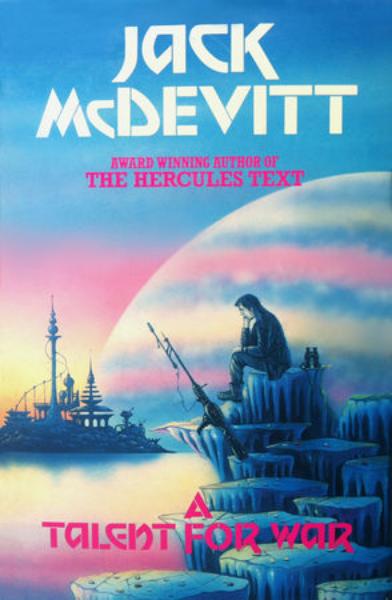
Alex Benedict is an antiques dealer and part-time interstellar investigator, generations removed from Earth's first starfaring age, who keeps stumbling into forgotten history through the objects and ruins he trades in. A Talent for War opens the series with his search for what his vanished uncle was really investigating before a doomed voyage, uncovering a buried chapter of an old human-alien war. Jack McDevitt built a long-running series, narrated by Benedict's pilot and partner Chase Kolpath, around this mix of archaeology, mystery, and deep time.
- Deadman Switch
Timothy Zahnstandalone novel1988
similar byother star systemsfar futuremysterioustensescience fictionspace opera
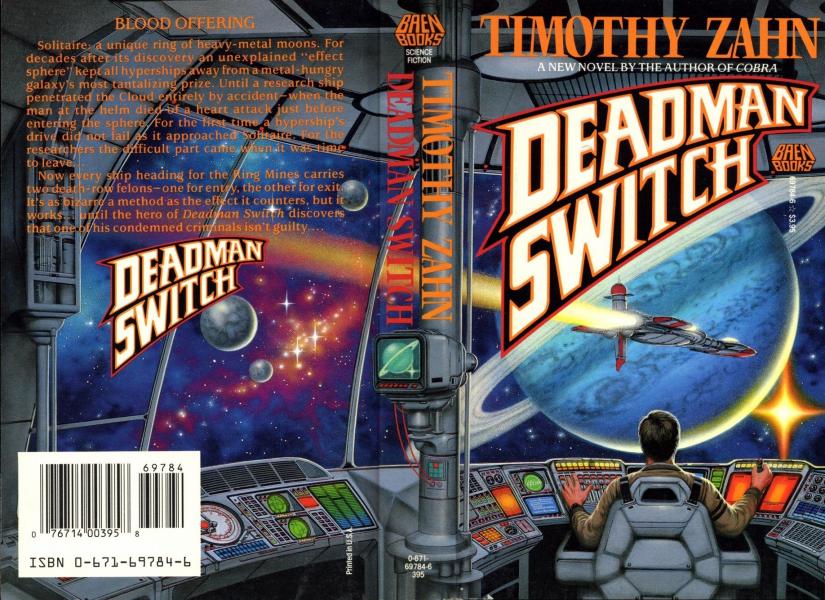
From the back cover of the Baen second printing: "Blood offering - Solitaire: a unique ring of heavy-metal moons. For decades after its discovery and unexplained "effect sphere" kept all hyperships away from a metal-hungry galaxy's most tantalizing prize. Until a research ship penetrated the Cloud entirely by accident - when the man at the helm died of a heart attack just before entering the sphere. For the first time, a hypership's drive did not fail as it approached Solitaire. For the researchers the difficult part came when it was time to leave... Now, every ship heading for the Ring Mines carries two death-row felons - one for entry, the other for exit. It's as bizarre a method as the effect it counters, but it works... until the hero of Deadman Switch discovers that one of his condemned criminals isn't guilty..."
- Against a Dark Background
Iain M. Banksstandalone novel1993
similar byother star systemsfar futuretensescience fictionspace opera+1 more
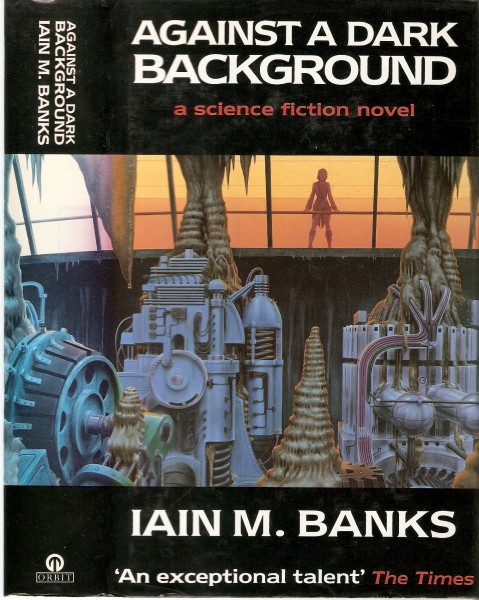
The daughter of an impoverished noble house and her squad of soldiers become thieves of antiquities; long after their retirement and separation she must assemble them again in order to find and steal the most powerful weapon ever created, or pay with her life.
- Shakespeare's Planet
Clifford D. Simakstandalone novel1976
similar byother star systemsfar futuremysteriousscience fictionrobots
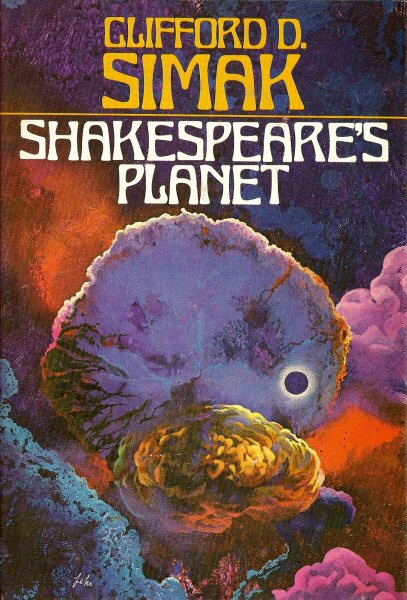
Woken after a thousand-year voyage meant to find humanity a new home, Carter Horton finds his ship stranded for good, tended by the disembodied minds of three volunteers who gave up their bodies to fly it. Outside waits a world already crowded with strangers: a robot named Nicodemus, and an alien called the Carnivore who claims to have known a human, once, called Shakespeare, and to have arrived here through a tunnel across time. As more travelers arrive through that same tunnel, Horton has to work out what kind of planet he has actually landed on. A standalone novel from Clifford D. Simak.
- Great North Road
Peter F. Hamiltonstandalone novel2012
similar bymysterioustenseother star systemsscience fictionmurder investigationmystery & detective
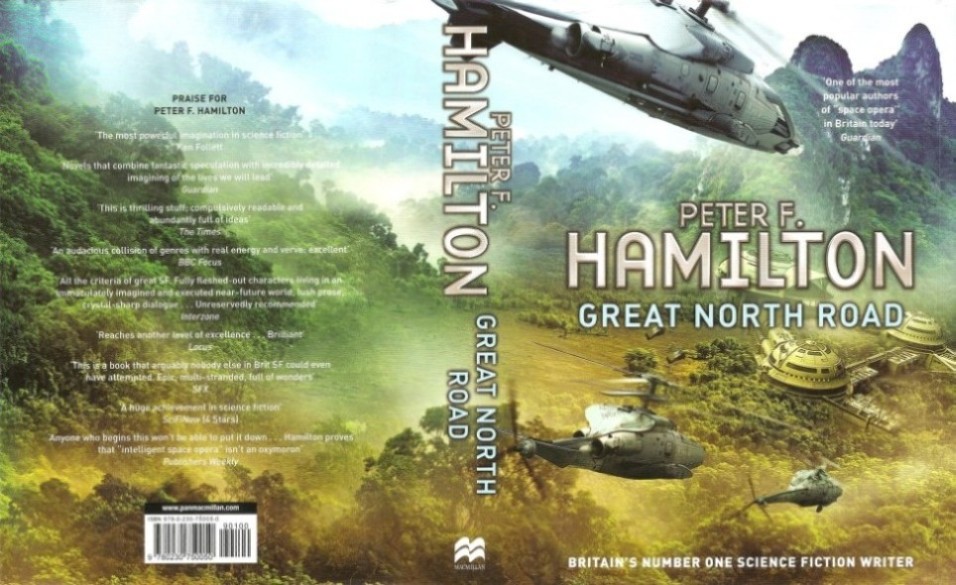
Great North Road is a science fiction novel by Peter F. Hamilton. It was first published in 2012 by Macmillan. Jonathan Wright of SFX magazine said, "Peter F Hamilton’s latest novel may be a standalone tale, but it’s a thuddingly imposing 1,100 pages in length. Not that it seems that way when you’re reading it. Balancing a multi-stranded plot, different exotic locales and a huge cast of characters, Hamilton plunges us straight into a murder mystery set in a near-future Newcastle, a city now adjacent to a portal to another world, the tropical St Libra."
- Naked to the Stars
Gordon R. Dicksonstandalone novel1961
similar byother star systemsfar futuremysterioustensescience fiction
The subject of the cosmic soldier has become a matter of concern for the science fiction reader. With the award-winning success of The Forever War, and with the great classic novels of Gordon R. Dickson's genetically bred mercenaries, the Dorsai, it is clear that the role of a fighter in a universe of expanding technology and competing alien intelligences is on science fiction's orders of the day. Gordon R. Dickson has been the master of that field, and his novel, Naked to the Stars, is one of his masterpieces. Long out of print, it is the story of a star soldier who, during a battle against a non-human foe on a far planet, somehow lost sixteen hours from his memory. Discharged for the potential danger those lost hours might have programmed, Cal Truant made it his fixation to uncover the mystery buried in his mind - to find out what had happened in those missing hours - and block the peril it might present to his fellow troopers, to his war command, and to the planet for which they fought - Earth.
- Teixcalaan
series2 books2019
similar byother star systemsfar futurescience fictiontensespace opera+2 more
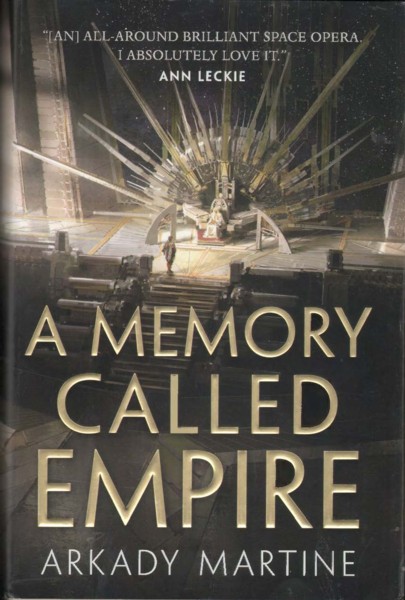
Arkady Martine's space opera duology follows Mahit Dzmare, ambassador from the small, independent Lsel Station, as she arrives in the vast Teixcalaanli Empire to investigate her predecessor's death and finds herself caught up in the empire's own succession crisis. A Memory Called Empire and A Desolation Called Peace pair court intrigue with Mahit's conflicted, outsider fascination with an empire she can't help admiring.
- Moties
series4 books1974
part of CoDominium
similar byfar futureother star systemsscience fictionspace opera+1 more
Larry Niven and Jerry Pournelle's The Mote in God's Eye (1974) depicts humanity's first contact with an alien species, the Moties, set within the far-future interstellar setting of Pournelle's codominium future history. The Gripping Hand continues that first-contact crisis years later, and Outies, written by J. R. Pournelle, carries the story forward into a new generation. Together the three books trace an escalating encounter between human and Motie civilizations within the codominium universe.
- Foundation Universe
universe123 books1940
Start hereFoundation · Start here
similar byscience fictionfar futurerobots+3 more
There is a science that reads the future of quadrillions the way an astronomer reads the orbits of stars. It is called psychohistory, and its equations foresee something the ruling Galactic Empire cannot admit: the throne is rotting, and thirty thousand years of barbarism are coming. One man, Hari Seldon, cannot stop the fall. He can only shorten it — by seeding a Foundation of scholars at the rim of the galaxy, a fragile institution built to carry knowledge across the dark and cut the interregnum to a single millennium. This is a universe told in the register of history itself: the long view, the calm of deep time, empires measured in centuries and men measured against them. The spine is Asimov's original trilogy — Foundation, Foundation and Empire, Second Foundation — followed decades later by the sequels Foundation's Edge and Foundation and Earth and the prequels Prelude to Foundation and Forward the Foundation. Late in life Asimov braided this in with his other future histories: the Robot novels of detective Elijah Baley and his humaniform partner R. Daneel Olivaw (The Caves of Steel, The Naked Sun, The Robots of Dawn, Robots and Empire) and the early Galactic Empire novels (Pebble in the Sky and its kin), until one continuous chronicle ran from the first thinking robots to the Second Empire. Other hands extend it — the Second Foundation Trilogy by Gregory Benford, Greg Bear, and David Brin, and shared-world spinoffs such as Robot City — so the corpus sprawls beyond a single author's tidy shelf. What distinguishes it is that the drama is intellectual: crises resolved by insight, nerve, and dialogue rather than fleets and blades, each turn hinging on the hidden logic of the Seldon Plan. Begin where readers have always begun — with Foundation, and the original trilogy in publication order. The rest opens outward from there.
- Quadrail
series5 books2005
similar byfar futuremysteriousscience fictionspace opera+4 more
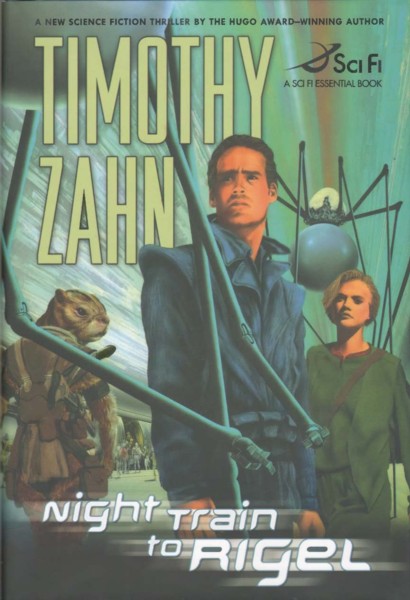
Timothy Zahn's Quadrail series follows ex-intelligence operative Frank Compton, recruited by the enigmatic Spider caretakers of the Quadrail, an interstellar train network that lets a dozen alien empires travel between worlds at a light-year a minute. Paired with the telepathically gifted Bayta, Compton investigates and fights the Modhri, a parasitic group-mind quietly seizing control of galactic leaders from within. The five novels, published 2005-2012, follow one continuous investigation from first contact with the threat to its final confrontation.
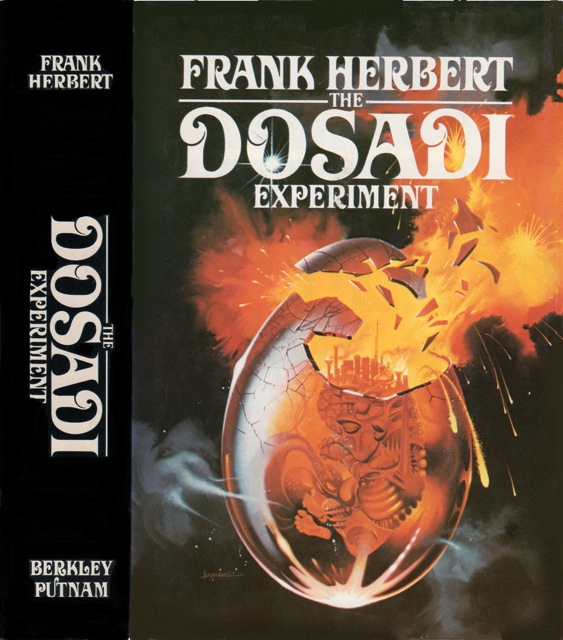
- The Dosadi Experiment
Frank Herbertstandalone novel1977
similar byother star systemsfar futuretensescience fictionspace opera
From the flaps of the Berkley Putnam first edition: "In his first new work of science fiction since the best-selling Children of Dune, Frank Herbert returns to his world of Whipping Star, and involves Jorj X. McKie, Saboteur Extraordinary, in a new intrigue. In Whipping Star, McKie discovered that some of the stars in the universe are actually intelligent, super-powerful beings, and was able to befriend one of them, the star Alcyone - affectionately known as Fannie Mae. As The Dosadi Experiment opens, McKie is assigned to investigate the planet Dosadi, which is isolated from the rest of the galaxy by a "god-wall," a barrier set up by one of the intelligent stars. Dosadi is rumored to be an experimental planet, and the experimenters are the froglike Gowachin, whose culture is founded upon a strange legal system in which McKie is the only human ever trained. He learns that humans and Gowachin have been placed on Dosadi, without their consent, for an experiment that could last centuries: an experiment in extreme overcrowding. But this monstrous plot is apparently out of control, and it seems the Gowachin may be prepared to destroy Dosadi rather than expose its secret, thus breaking the peace among the races, and starting the first interstellar war. But this is just the beginning. When McKie finally reaches Dosadi he discovers that the Dosadis have taken control of their own evolution and produced a competitive, highly evolved elite, of both humans and Gowachin, who have been able to extrapolate the existence of a universe beyond the god-wall and hate whoever has imprisoned them like this. They plan to break out and avenge themselves on the galaxy."
- Takeshi Kovacs
series3 books2002
similar byfar futuretensescience fictionother star systems+3 more
Takeshi Kovacs is a former elite soldier turned freelance troubleshooter in a future where human consciousness can be digitized and transferred between bodies, or sleeves, making death an inconvenience for those who can afford new ones. Richard Morgan's trilogy - Altered Carbon, Broken Angels, Woken Furies - moves Kovacs through noir-inflected mysteries on different worlds, using the resleeving premise to interrogate class, violence, and what, if anything, survives a person's original body. It became the basis for a Netflix series.
- Ender Wiggin
series14 books1977
part of Ender's Game Universe
similar byfar futureother star systemsscience fiction+3 more
Orson Scott Card's Ender's Game (1985, expanded from his 1977 novella) follows child prodigy Andrew "Ender" Wiggin as he is recruited into a military training program built to prepare Earth's defenses for an anticipated third war against an insectoid alien species known as the Formics. The saga continues years later through Speaker for the Dead and Xenocide, following an older Ender as he confronts the moral weight of his role in that earlier conflict, and concludes the core arc in Children of the Mind, with Ender in Exile filling in the years between the first two books. Set within the wider Ender's Game universe, the series shifts from military coming-of-age story to slower, more philosophical science fiction as it progresses.
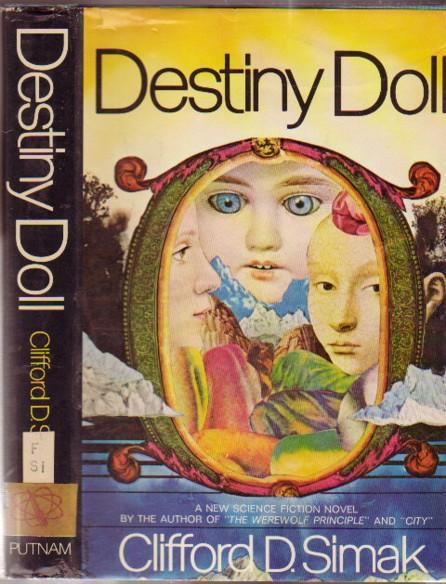
- Destiny Doll
Clifford D. Simakstandalone novel1971
similar byother star systemsfar futuremysteriousscience fictionrobots
A group of space travelers is trapped on a planet that lured them to land. The story involves their adventures on the planet and the discovery of friendly aliens, robots, and not-so-friendly life forms. There is the alternate reality possibility toward the end of the story.