More like Synthium
anchored on:science fiction
but
- Dune Universe
universe78 books1963
Start hereDune · Start here
similar byscience fictionfar futureother star systemsspace opera+1 more
Arrakis. Dune. The desert planet, where empire runs on a single substance: the spice melange, which folds space, prolongs life, and unlocks prescience, and which exists nowhere else in the known universe. Frank Herbert's saga is a meditation dressed as an adventure — feudal houses and a secret sisterhood, engineered messiahs and the patient ecology of a world without water, all turning on the terrible gravity of who commands the spice. It reads like scripture and schemes like a war room, ten thousand years hence, among people who have outlawed the thinking machine and made instruments of themselves instead. At its heart stand Herbert's original six — Dune, Dune Messiah, Children of Dune, God Emperor of Dune, Heretics of Dune, Chapterhouse: Dune — a single deepening arc across millennia, arguing the whole way between prophecy and free will. Around that spine his son Brian Herbert and Kevin J. Anderson have raised a vast prequel architecture: Prelude to Dune, tracing the great houses a generation before Paul; Legends of Dune, reaching back to the crusade that broke the machines; the Schools of Dune cycle on the founding of Bene Gesserit, Mentat, and Navigator; the Caladan Trilogy and Heroes of Dune filling years the originals left in shadow. Many hands, dozens of volumes, one desert. What sets Dune apart is its refusal of the simple: religion is manufactured, heroes are hazards, and the sand itself — worm, water, ecology — acts as a political power. Begin where the universe did, with Frank Herbert's Dune (1965), and read the original six in order; you need nothing else to feel the full weight. The prequels are a country to explore afterward, taken by era. Beginnings are delicate times.
- Foundation Universe
universe123 books1940
Start hereFoundation · Start here
similar byscience fictionfar future+2 more
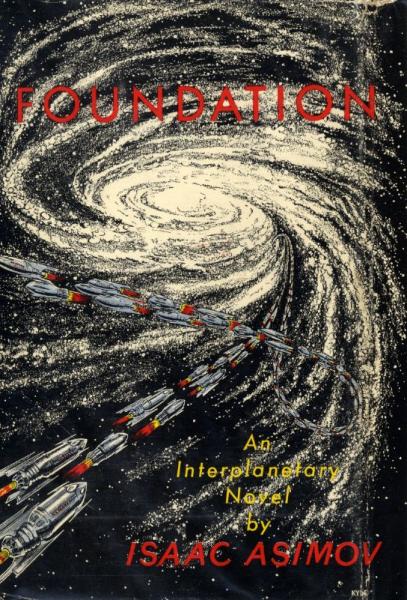
There is a science that reads the future of quadrillions the way an astronomer reads the orbits of stars. It is called psychohistory, and its equations foresee something the ruling Galactic Empire cannot admit: the throne is rotting, and thirty thousand years of barbarism are coming. One man, Hari Seldon, cannot stop the fall. He can only shorten it — by seeding a Foundation of scholars at the rim of the galaxy, a fragile institution built to carry knowledge across the dark and cut the interregnum to a single millennium. This is a universe told in the register of history itself: the long view, the calm of deep time, empires measured in centuries and men measured against them. The spine is Asimov's original trilogy — Foundation, Foundation and Empire, Second Foundation — followed decades later by the sequels Foundation's Edge and Foundation and Earth and the prequels Prelude to Foundation and Forward the Foundation. Late in life Asimov braided this in with his other future histories: the Robot novels of detective Elijah Baley and his humaniform partner R. Daneel Olivaw (The Caves of Steel, The Naked Sun, The Robots of Dawn, Robots and Empire) and the early Galactic Empire novels (Pebble in the Sky and its kin), until one continuous chronicle ran from the first thinking robots to the Second Empire. Other hands extend it — the Second Foundation Trilogy by Gregory Benford, Greg Bear, and David Brin, and shared-world spinoffs such as Robot City — so the corpus sprawls beyond a single author's tidy shelf. What distinguishes it is that the drama is intellectual: crises resolved by insight, nerve, and dialogue rather than fleets and blades, each turn hinging on the hidden logic of the Seldon Plan. Begin where readers have always begun — with Foundation, and the original trilogy in publication order. The rest opens outward from there.
- Heechee
series19 books1972
completed
similar byscience fictionfar futurespaceother star systemsspace opera+1 more
The Heechee Saga, also known as the Gateway series, is a series of science fiction novels and short stories by Frederik Pohl. The Heechee are an advanced alien race that visited the Solar System hundreds of millennia ago and then mysteriously disappeared. They left behind bases containing artifacts, including working starships, which are discovered and exploited by humanity.
- Heaven Chronicles / Zones of Thought
series8 books1976
similar byscience fictionfar futurespacespace opera+3 more
- Culture
series15 books1987
completed
part of The Culture
similar byartificial intelligencescience fictionfar futurespace opera+3 more
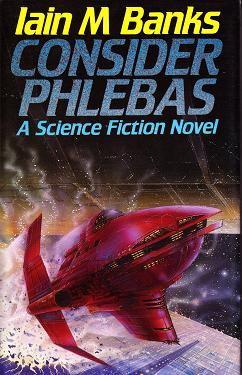
The Culture series is a science fiction series written by Scottish author Iain M. Banks and released from 1987 until 2012. The stories centre on The Culture, a utopian, post-scarcity space society of humanoid aliens and advanced superintelligent artificial intelligences living in artificial habitats spread across the Milky Way galaxy. The main themes of the series are the dilemmas that an idealistic, more-advanced civilization faces in dealing with smaller, less-advanced civilizations that do not share its ideals, and whose behaviour it sometimes finds barbaric. In some of the stories, action takes place mainly in non-Culture environments, and the leading characters are often on the fringes of the Culture, sometimes acting as agents of the Culture in its plans to civilize the galaxy. Each novel is a self-contained story with new characters, although reference is occasionally made to the events of previous novels.
- Ender Wiggin
series14 books1977
part of Ender's Game Universe
similar byscience fictionfar futureother star systems+4 more
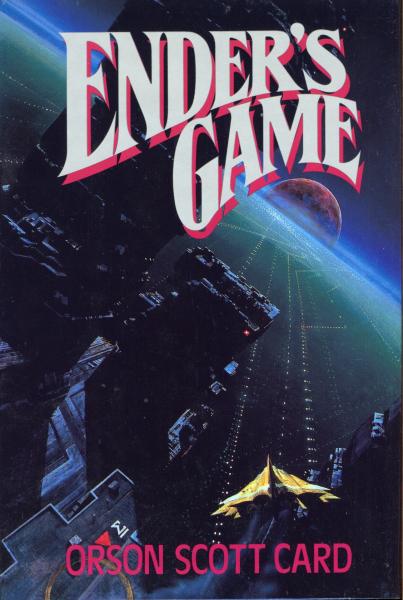
Orson Scott Card's Ender's Game (1985, expanded from his 1977 novella) follows child prodigy Andrew "Ender" Wiggin as he is recruited into a military training program built to prepare Earth's defenses for an anticipated third war against an insectoid alien species known as the Formics. The saga continues years later through Speaker for the Dead and Xenocide, following an older Ender as he confronts the moral weight of his role in that earlier conflict, and concludes the core arc in Children of the Mind, with Ender in Exile filling in the years between the first two books. Set within the wider Ender's Game universe, the series shifts from military coming-of-age story to slower, more philosophical science fiction as it progresses.
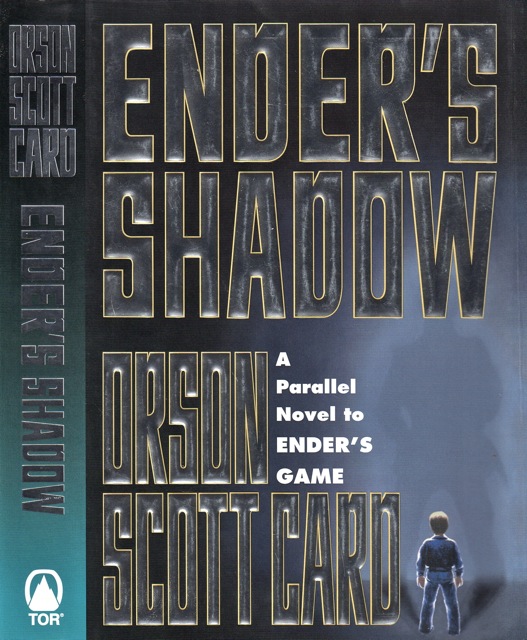
- Ender's Shadow
series5 books1999
part of Ender's Game Universe
similar byscience fictionfar futuretense+2 more
Orson Scott Card's Ender's Shadow retells the events of Ender's Game from the perspective of Bean, a physically stunted but ferociously intelligent street child recruited into the same Battle School program as Ender Wiggin. It launches the Shadow series, which follows Bean and other secondary Battle School characters into the political aftermath of the Formic Wars back on Earth, running parallel to and eventually past the timeline of Card's main Ender Quintet.
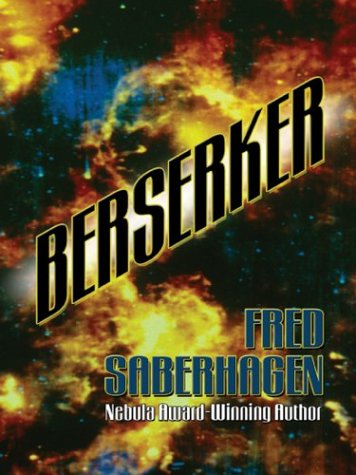
- Berserker (Fred Saberhagen)
series59 books1963
similar byartificial intelligencescience fictionfar futuretensespaceother star systemsspace opera
The Berserker series is a series of space opera science fiction short stories and novels by Fred Saberhagen, in which robotic self-replicating machines strive to destroy all life.
- Commonwealth Saga
series2 books2004
part of Commonwealth Universe
similar byscience fictionfar futuretensespace opera+4 more
The Commonwealth Saga is a series of science fiction novels by British science fiction writer Peter F. Hamilton. This saga consists of the novels Pandora's Star (2004) and Judas Unchained (2005). Hamilton has also written several books set in the same literary universe. Misspent Youth (2002) takes place 340 years before the events of Pandora's Star. The Void Trilogy, consisting of The Dreaming Void (2008), The Temporal Void (2009), and The Evolutionary Void (2010), takes place 1,200 years after the events of Judas Unchained; several of the main characters from Judas Unchained and Pandora's Star also appear in the Void trilogy.
- Ian Cormac
series6 books2001
part of Polity
similar byartificial intelligencescience fictionfar futuretensespaceother star systemsspace opera+1 more
Neal Asher's Ian Cormac novels (Gridlinked, The Line of Polity, Brass Man, Polity Agent, Line War, plus the earlier-set prequel Shadow of the Scorpion) follow Ian Cormac, an agent of Earth Central Security in Asher's Polity universe. Gridlinked opens with Cormac investigating a destroyed matter-transmitter on a remote colony while wrestling with the personality erosion caused by long-term neural linkage to the Polity's AI network; the following novels escalate into interstellar conflict with the alien Prador. Together they form the core action sequence of Asher's wider Polity series.
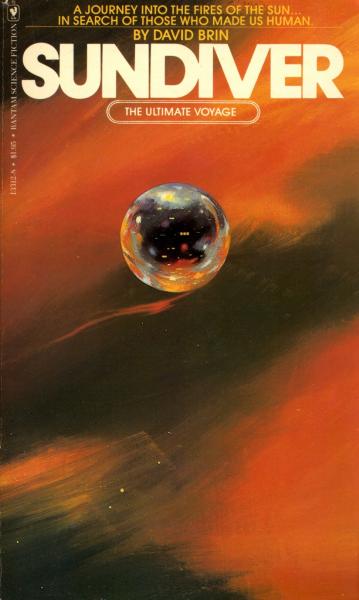
- Uplift
series5 books1980
part of Uplift Universe
similar byscience fictionfar futureadventurousspaceother star systemsspace opera+1 more
David Brin's Uplift trilogy opens with Sundiver, sending human explorers into the Sun itself, then follows a dolphin-crewed starship on the run from hostile aliens in Startide Rising and a fight over the colony world Garth in The Uplift War. The books sit inside Brin's wider Uplift Universe, built on the idea that spacefaring "patron" species genetically engineer younger "client" species into full sapience, with humanity an anomaly that reached the stars without a patron of its own.
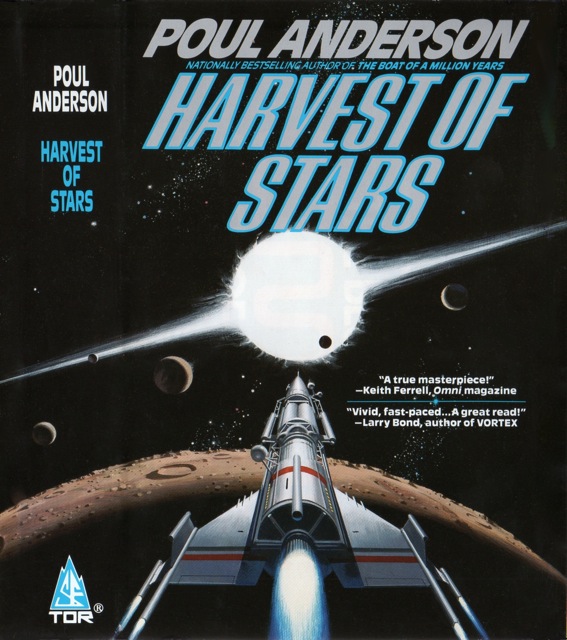
- Harvest of Stars
series5 books1993
completed
similar byscience fictionfar futurespace+5 more
Harvest of Stars follows a spaceship captain and an interstellar power struggle across a near-future solar system where an authoritarian Earth government is losing its grip on off-world colonies and artificial intelligences with their own agendas. Poul Anderson's four-book sequence - Harvest of Stars, The Stars Are Also Fire, Harvest the Fire, The Fleet of Stars - was one of his last major works, extending across generations as its opening characters are succeeded by their descendants.
- Fifth Imperium
series3 books1991
similar byartificial intelligencescience fictionfar futureadventuroustensespacespace opera+1 more
David Weber's Fifth Imperium series opens with the discovery that Earth's Moon is in fact a disguised alien starship, the Dahak, that has orbited undetected for tens of thousands of years - a relic of the fallen Fourth Imperium, a multi-star civilization destroyed while defending against the genocidal Achuultani. Mutineers' Moon follows humanity's first contact with Dahak and the mutineers still aboard it; The Armageddon Inheritance and Heirs of Empire escalate from that discovery into interstellar war and dynastic politics as humanity inherits the old empire's legacy and its enemies. The three novels were later collected as the omnibus Empire from the Ashes.
- The Moon Is a Harsh Mistress
Robert A. Heinleinstandalone novel1966
similar byartificial intelligencescience fictionfar futureadventurous+1 more
A technician discovers that the massive computer that operates everything on Luna (a prison colony) has become self-aware. He befriends it, but when he accompanied a beautiful girl to a dissident meeting, he encounters people who want to throw off the yoke of their Earth rulers.
- Salvation
series3 books2018
similar byscience fictionspaceother star systemsspace opera+3 more
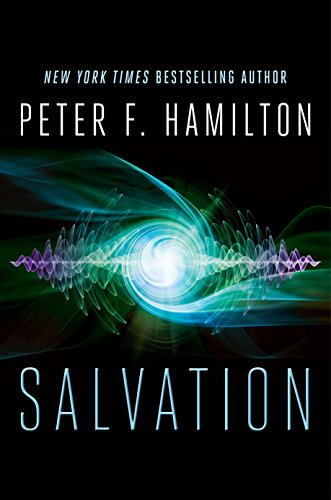
By 2204, instantaneous jump-gate travel has made distance nearly meaningless, connecting Earth to its scattered colonies in a single step -- until a crashed alien ship of unknown origin turns up on a world eighty-nine light years away, carrying something far more dangerous than wreckage. Peter F. Hamilton's Salvation follows the investigation team sent to assess the find, one of whom may not be who they claim, while a second timeline set generations later shows the far-future fallout of what they discover. The trilogy continues through Salvation Lost and The Saints of Salvation.
- Spatterjay
series3 books2002
part of Polity
similar byscience fictionfar futureother star systemsspace opera+3 more
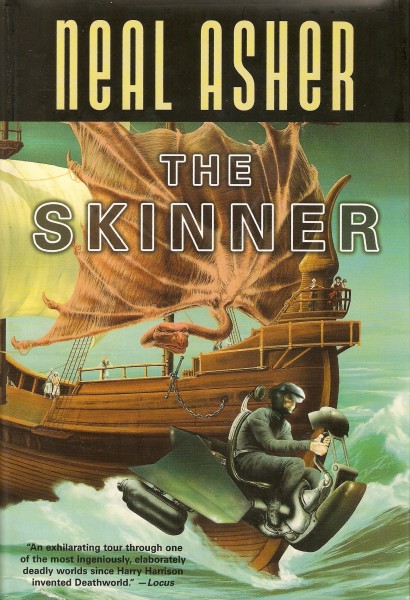
Spatterjay is set on the ocean world of the same name within Neal Asher's Polity future history: a planet whose ecology is uniquely dangerous, drawing soldiers, monsters, and old enemies of the Polity into its waters across the trilogy's three books (The Skinner, The Voyage of the Sable Keech, Orbus). It continues Asher's interest in body horror and extreme biology set against a backdrop of AI-run human space.
- Starstream
series2 books1989
completed
similar byscience fictionfar futuretensespaceother star systemsspace opera+2 more
Starstream groups Jeffrey A. Carver's two linked science-fiction novels, From a Changeling Star (1989) and its direct sequel Down the Stream of Stars (1990). The two were published within a year of each other under the same author.
- Homecoming (Orson Scott Card)
series5 books1992
similar byscience fictionfar futureother star systems+4 more
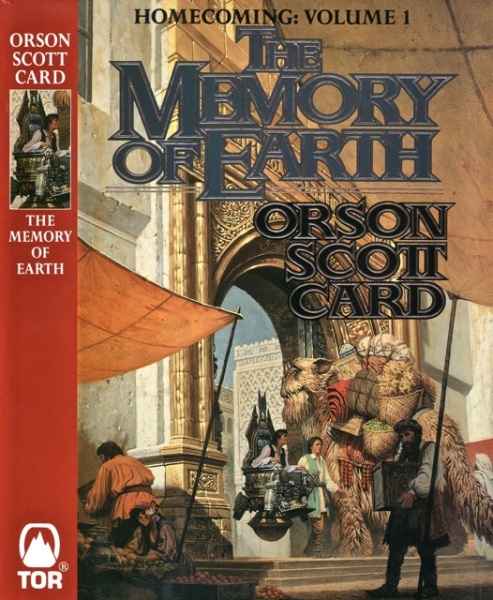
The Homecoming Saga is a science fiction series by Orson Scott Card. The series is patterned on the Book of Mormon. Some of the names also come from the Book of Mormon.
- Void Trilogy
series4 books2007
part of Commonwealth Universe
similar byscience fictionfar futureadventurousspace opera+3 more
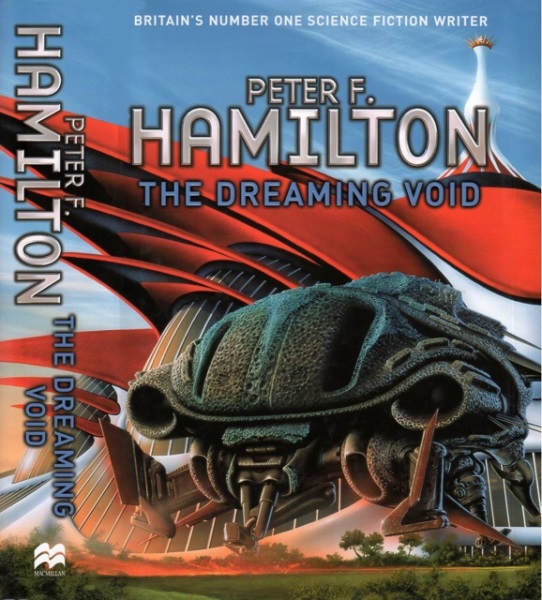
The Void Trilogy is a space opera series by British author Peter F. Hamilton. The series is set in the same universe as The Commonwealth Saga, 1,200 years after the end of Judas Unchained.
- Terro-Human Future History
universe48 books1952
Start hereFuzzy Sequence · Start here
similar byscience fictionfar futureother star systems+3 more
History does not repeat, Piper's chroniclers are fond of saying — it rhymes, and it rhymes in iron. Reckon the years from the first atomic pile, 1942, Year One of the Atomic Era, and follow the ledger forward some six thousand years: out of a nuclear war that nearly ended everything, up through the Terran Federation and its reach into the stars, down again through collapse and a long neobarbaric dark, and back up into the enlightened empires that rise from the ruins. It is one continuous future history — not a plot but a chronicle, worlds and centuries sharing a single unbroken timeline. H. Beam Piper assembled it in pieces through the 1950s and 60s, novels and novellas bound by chronology rather than by recurring heroes. The anchors are Little Fuzzy, a courtroom argument over whether a small golden native of Zarathustra is a person; Space Viking, raid and revenge amid the wreckage of the interregnum; and the Federation-era Four-Day Planet, The Cosmic Computer, and Uller Uprising. The eras sort cleanly — Federation, the System States War, the Space Vikings of the long dark, the Empire. After Piper's death in 1964 other hands took up the ledger: John F. Carr, who arranged the short fiction into the chronological Federation and Empire collections and carried on the Tanith and Space Viking line, plus Wolfgang Diehr's Fuzzy sequels and Dietmar Arthur Wehr's additions. The register is sober and engineer-eyed — competent men solving hard problems, empires ruled by benign despots, the cool conviction that civilizations rise and fall to the same recurring script. It ranges from the sunlit warmth of the Fuzzy books to the cold steel of a Viking raid. Newcomers start with Little Fuzzy, the warmest and most self-contained, or with Space Viking.
- The Lightspeed Trilogy
series4 books2016
similar byscience fictionspaceother star systemsspace opera+3 more
Ken MacLeod's recent trilogy imagines the accidental discovery of faster-than-light travel by a present-day physicist and the political fallout once humanity gets access to a wider galaxy that turns out not to be empty. Beyond the Hallowed Sky opens on an Earth still riven by bloc politics as the discovery becomes a new front in great-power rivalry, with the sequels carrying the consequences off-world. It treats first contact as a geopolitical problem as much as a scientific one.
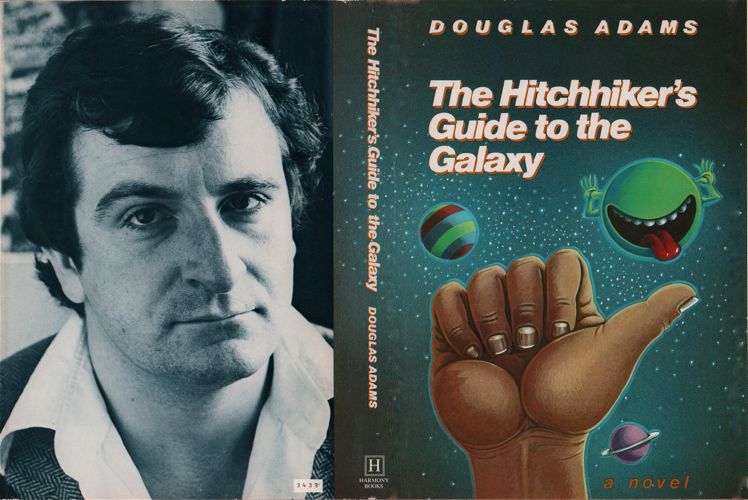
- Hitchhiker's Guide to the Galaxy
series16 books1979
part of The Hitchhiker's Guide to the Galaxy Universe
similar byscience fictionfar futurespace+2 more
The Hitchhiker's Guide to the Galaxy is a comedy science fiction franchise created by Douglas Adams. Originally a radio sitcom broadcast over two series on BBC Radio 4 between 1978 and 1980, it was soon adapted to other formats, including both novels and comic books, a 1981 BBC television series, a 1984 text adventure game, stage shows and a 2005 feature film.
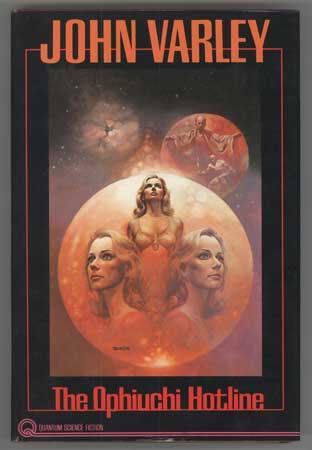
- Eight Worlds
series24 books1974
completed
similar byscience fictionfar future+2 more
The Eight Worlds is the fictional setting of a series of science fiction novels and short stories by John Varley, in which the Solar System has been colonized by human refugees fleeing an alien invasion of the Earth. Earth and Jupiter are off-limits to humanity, but Earth's Moon and the other worlds and moons of the Solar System have all become heavily populated. There are also minor colonies set in the Oort cloud at the edge of the Solar System. Faster than light travel is not possible, though it is mentioned that test-flights will begin soon at the end of The Golden Globe, and the species has not as yet managed to extend itself to other stars.