More like Tane
but
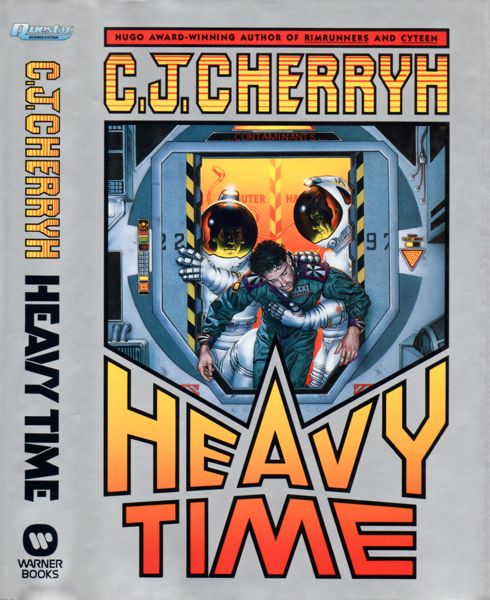
- Company Wars
series7 books1981
part of Alliance-Union Universe
similar byfar futurescience fictiontense+2 more
Company Wars gathers the novels C. J. Cherryh set during the breakaway conflict between Earth's colonial Company and the newly independent Union, within her wider Alliance-Union future history. Anchored by the Hugo Award-winning Downbelow Station, the books follow different ships, stations, and crews caught on either side, from merchanter traders to military spacers, rather than a single continuing cast. Read in any order, they build up a picture of the political and economic pressure that reshapes Cherryh's larger Alliance-Union universe.
- Forever War
series10 books1972
similar byfar futurescience fictionmilitary science fiction+3 more
Joe Haldeman's The Forever War (1974) follows a soldier conscripted into a centuries-long interstellar war against the alien Taurans, using relativistic space travel so that months spent in transit correspond to years or decades passing back on Earth. Haldeman later returned to the same conflict in Forever Peace (1997), a thematically connected but separate story, and Forever Free (1999), a direct sequel set years after the original war's end. The first novel won the Hugo, Nebula, and Locus awards and is considered a foundational work of military science fiction.
- Berserker (Fred Saberhagen)
series59 books1963
similar byother star systemsfar futurescience fictiontensewar+2 more
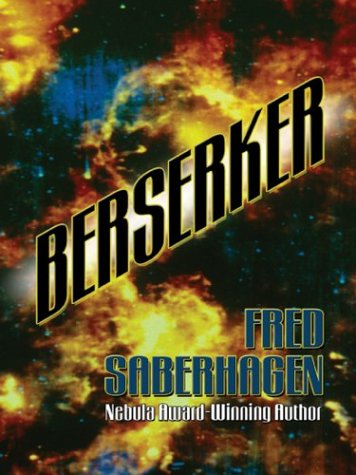
The Berserker series is a series of space opera science fiction short stories and novels by Fred Saberhagen, in which robotic self-replicating machines strive to destroy all life.
- Terro-Human Future History
universe48 books1952
Start hereFuzzy Sequence · Start here
similar byother star systemsfar futurescience fiction+1 more
History does not repeat, Piper's chroniclers are fond of saying — it rhymes, and it rhymes in iron. Reckon the years from the first atomic pile, 1942, Year One of the Atomic Era, and follow the ledger forward some six thousand years: out of a nuclear war that nearly ended everything, up through the Terran Federation and its reach into the stars, down again through collapse and a long neobarbaric dark, and back up into the enlightened empires that rise from the ruins. It is one continuous future history — not a plot but a chronicle, worlds and centuries sharing a single unbroken timeline. H. Beam Piper assembled it in pieces through the 1950s and 60s, novels and novellas bound by chronology rather than by recurring heroes. The anchors are Little Fuzzy, a courtroom argument over whether a small golden native of Zarathustra is a person; Space Viking, raid and revenge amid the wreckage of the interregnum; and the Federation-era Four-Day Planet, The Cosmic Computer, and Uller Uprising. The eras sort cleanly — Federation, the System States War, the Space Vikings of the long dark, the Empire. After Piper's death in 1964 other hands took up the ledger: John F. Carr, who arranged the short fiction into the chronological Federation and Empire collections and carried on the Tanith and Space Viking line, plus Wolfgang Diehr's Fuzzy sequels and Dietmar Arthur Wehr's additions. The register is sober and engineer-eyed — competent men solving hard problems, empires ruled by benign despots, the cool conviction that civilizations rise and fall to the same recurring script. It ranges from the sunlit warmth of the Fuzzy books to the cold steel of a Viking raid. Newcomers start with Little Fuzzy, the warmest and most self-contained, or with Space Viking.
- Dune Universe
universe78 books1963
Start hereDune · Start here
similar byother star systemsfar futurescience fiction+1 more
Arrakis. Dune. The desert planet, where empire runs on a single substance: the spice melange, which folds space, prolongs life, and unlocks prescience, and which exists nowhere else in the known universe. Frank Herbert's saga is a meditation dressed as an adventure — feudal houses and a secret sisterhood, engineered messiahs and the patient ecology of a world without water, all turning on the terrible gravity of who commands the spice. It reads like scripture and schemes like a war room, ten thousand years hence, among people who have outlawed the thinking machine and made instruments of themselves instead. At its heart stand Herbert's original six — Dune, Dune Messiah, Children of Dune, God Emperor of Dune, Heretics of Dune, Chapterhouse: Dune — a single deepening arc across millennia, arguing the whole way between prophecy and free will. Around that spine his son Brian Herbert and Kevin J. Anderson have raised a vast prequel architecture: Prelude to Dune, tracing the great houses a generation before Paul; Legends of Dune, reaching back to the crusade that broke the machines; the Schools of Dune cycle on the founding of Bene Gesserit, Mentat, and Navigator; the Caladan Trilogy and Heroes of Dune filling years the originals left in shadow. Many hands, dozens of volumes, one desert. What sets Dune apart is its refusal of the simple: religion is manufactured, heroes are hazards, and the sand itself — worm, water, ecology — acts as a political power. Begin where the universe did, with Frank Herbert's Dune (1965), and read the original six in order; you need nothing else to feel the full weight. The prequels are a country to explore afterward, taken by era. Beginnings are delicate times.
- Empire of Man
series4 books2001
similar bysurvivalother star systemsfar futurescience fictionmilitary science fictionadventuroustensewar+1 more
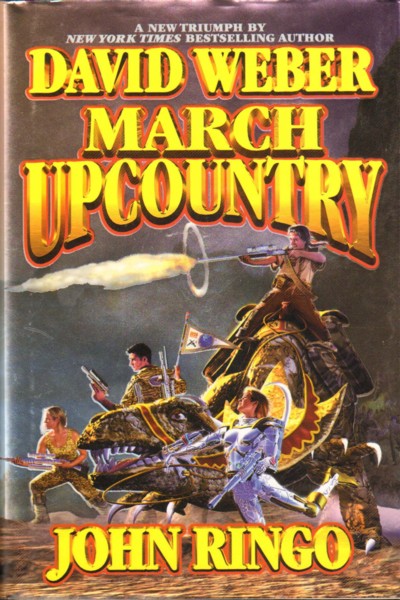
The Empire of Man is a series of science fiction books by David Weber and John Ringo published by Baen Books. It combines elements of space opera and military science fiction.
- Dune
series20 books1963
part of Dune Universe
similar byother star systemsfar futurescience fiction+1 more
Frank Herbert's Dune Chronicles opens with 1965's Dune, set on the desert planet Arrakis where House Atreides takes control of the only source of the vital spice melange and young Paul Atreides is pulled into a struggle over its politics and religion. Herbert carried the story forward across five further novels — Dune Messiah, Children of Dune, God Emperor of Dune, Heretics of Dune, and Chapterhouse: Dune — following Paul's line over the following millennia, before Brian Herbert and Kevin J. Anderson later extended the saga. Many other editions of these six novels are omnibus and box-set repackagings rather than separate stories.
- Blackcollar
series3 books1983
similar byfar futurescience fictionmilitary science fictiontensewar+4 more
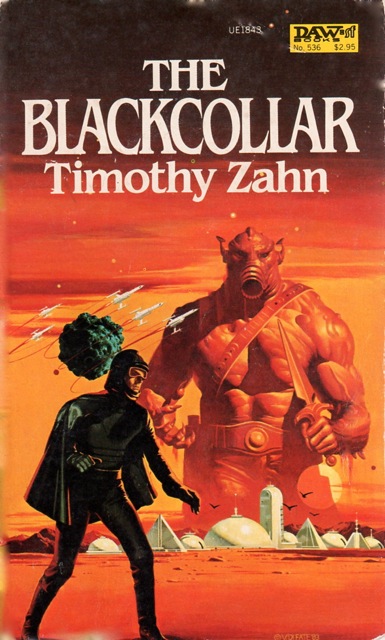
Timothy Zahn's Blackcollar trilogy, his debut work, follows survivors of Earth's underground resistance against the Ryqril, an alien empire that conquered the planet a generation earlier. The Blackcollars themselves are elite commando-agents trained before the invasion, presumed a spent, aging force until circumstances pull survivors back into action against their occupiers. The Backlash Mission and The Judas Solution continue the resistance's fight as the underground network is drawn deeper into interstellar politics beyond Earth.
- Moties
series4 books1974
part of CoDominium
similar byother star systemsfar futurescience fictionaliens+3 more
Larry Niven and Jerry Pournelle's The Mote in God's Eye (1974) depicts humanity's first contact with an alien species, the Moties, set within the far-future interstellar setting of Pournelle's codominium future history. The Gripping Hand continues that first-contact crisis years later, and Outies, written by J. R. Pournelle, carries the story forward into a new generation. Together the three books trace an escalating encounter between human and Motie civilizations within the codominium universe.
- Alliance-Union Universe
universe173 books1976
Start hereCompany Wars · The central sequence
similar byfar futurescience fiction+4 more
The dark between the stars belongs to no one, and everyone who lives out here knows it: the merchanter Families hauling cargo between stations that cannot feed themselves, the Earth Company clutching at colonies it can no longer supply, the Union breeding its cloned azi to settle worlds faster than birth allows. C. J. Cherryh's Alliance-Union is a future history of humankind's spread across the third and fourth millennia, told from inside the pressure — no clean empires, only stations, ships, treaties, and the people caught in the machinery of who holds the jump-points. The sequence runs from the first laborious pre-FTL stations through the Company Wars, the independence struggle that breaks over Pell in Downbelow Station (Hugo, 1981), to the genetics and cold politics of Union's homeworld in Cyteen (Hugo, 1988) and its sequel Regenesis. Around that spine cluster the merchanter novels of trader Families, the Faded Sun trilogy of human envoys among the martial alien Mri, and the Chanur books, narrated from the hierarchical, whiskered viewpoint of the hani. On the isolated world of Merovin, the Merovingen Nights anthologies open the setting to other hands — Mercedes Lackey, Janet and Chris Morris, Nancy Asire — a shared world braided into the whole. What sets it apart is intimacy at scale. Cherryh drops you without a map into a single skull and lets you assemble the politics from what that person fears and bargains for; the aliens are genuinely alien, loyalty is always provisional, and the real antagonist is usually logistics. Most books stand alone, in her words, "like real history." The surest way in is Downbelow Station — the war seen from one besieged station — then Cyteen, for the mind that shaped the other side.
- Ender's Shadow
series5 books1999
part of Ender's Game Universe
similar byfar futurescience fictiontensewar+2 more
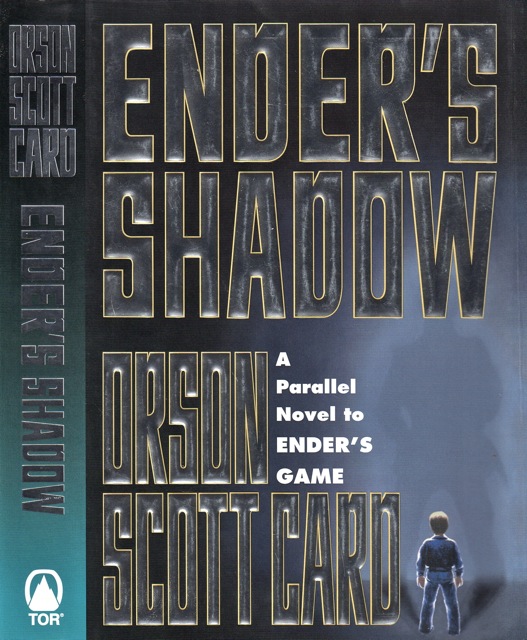
Orson Scott Card's Ender's Shadow retells the events of Ender's Game from the perspective of Bean, a physically stunted but ferociously intelligent street child recruited into the same Battle School program as Ender Wiggin. It launches the Shadow series, which follows Bean and other secondary Battle School characters into the political aftermath of the Formic Wars back on Earth, running parallel to and eventually past the timeline of Card's main Ender Quintet.
- Central Control
series2 books1953
completed
similar byother star systemsfar futurescience fictionadventurous+3 more
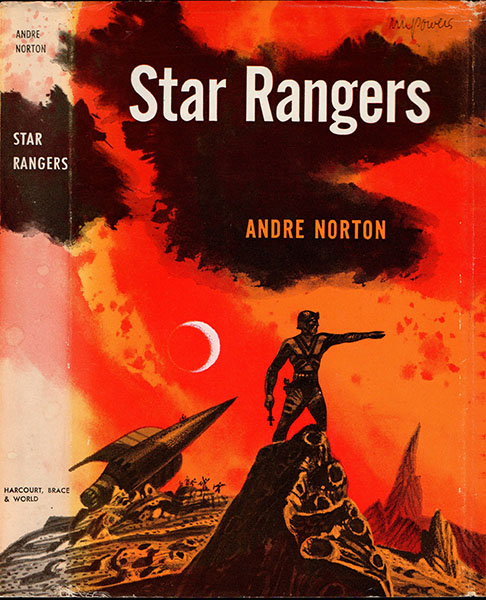
Andre Norton's Central Control novels are a loose future history that sketches the rise of a galactic empire through events echoing Norton's own reading of Terran history rather than following one continuing cast. Star Rangers follows the crew of a crashed Stellar Patrol scoutship who, after entangling themselves in a local rebellion on what seems an unknown world, discover they have found humanity's long-lost original homeworld, Terra. Star Guard and Star Soldiers extend the same shared background with their own separate stories.
- Ender Wiggin
series14 books1977
part of Ender's Game Universe
similar byother star systemsfar futurescience fictionaliens+1 more
Orson Scott Card's Ender's Game (1985, expanded from his 1977 novella) follows child prodigy Andrew "Ender" Wiggin as he is recruited into a military training program built to prepare Earth's defenses for an anticipated third war against an insectoid alien species known as the Formics. The saga continues years later through Speaker for the Dead and Xenocide, following an older Ender as he confronts the moral weight of his role in that earlier conflict, and concludes the core arc in Children of the Mind, with Ender in Exile filling in the years between the first two books. Set within the wider Ender's Game universe, the series shifts from military coming-of-age story to slower, more philosophical science fiction as it progresses.
- Old Man's War
series16 books2005
similar byother star systemsfar futurescience fictionmilitary science fictionadventurouswar+2 more
The Old Man's War series is a series of science fiction novels by John Scalzi. The first book in the series, Old Man's War, was first published in 2005 by Tor Books, and was nominated for the Hugo Award for Best Novel in 2006. In 2026 it was a finalist for the Hugo Award for Best Series.
- Halo
series66 books2001
part of Halo Universe
similar byother star systemsfar futurescience fictionmilitary science fiction+3 more
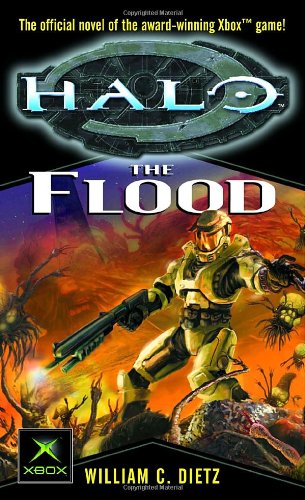
Halo's tie-in novels expand the video-game franchise's war between humanity and the alien Covenant, and later the ancient Forerunners, across dozens of books by a rotating slate of authors overseen by the franchise's owner (Bungie, then 343 Industries). Eric Nylund's The Fall of Reach, chronicling the Master Chief's childhood conscription into the Spartan program, launched the line alongside the first game in 2001, and it has since grown to cover side characters, prequels, and new eras of the setting. It's licensed franchise fiction rather than a single authored series.
- Vatta
universe10 books2003
Start hereVatta's War · Start here
similar byother star systemsfar futurescience fictionmilitary science fictionadventuroustense+2 more
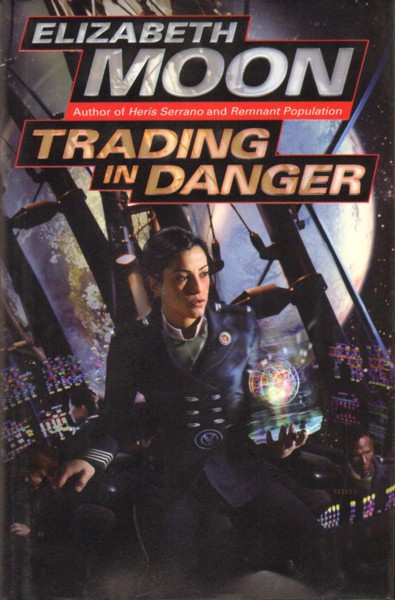
Get kicked out of the Academy and the family still hands you a ship. That is the arithmetic Kylara Vatta lives by. Born into Vatta Transport, Ltd. — a dynasty of interstellar traders who reckon their honor in delivered cargo and honored contracts — Ky wants a soldier's commission and gets a merchant hull instead. Then someone starts murdering her relatives and burning the ledgers, and the daughter learns that a trade fleet, armed and angry, is its own kind of war. This is military science fiction run on a merchant's books. The core cycle, Vatta's War, moves in five volumes — Trading in Danger, Marque and Reprisal, Engaging the Enemy, Command Decision, Victory Conditions — as piracy, a sabotaged faster-than-light communications network, and a scattered family push Ky from cautious captain to fleet commander. The later duology Vatta's Peace (Cold Welcome, Into the Fire) drops her, older and decorated, into a colder survival ordeal on her own homeworld. Moon writes clean, competent, procedural: supply lines and boarding actions, chains of command, the cost of a signature on a bad contract. Expect capable women, hard decisions costed to the last credit, and space combat that respects physics and paperwork alike. Begin at the beginning — Trading in Danger — and read straight through in publication order; the arc is chronological and cumulative, no side doors required.
- Catteni Sequence
series5 books1970
completed
similar byother star systemsfar futurescience fictionadventurousaliens+2 more
The Catteni series is a tetralogy of science fiction novels by American writer Anne McCaffrey. In this universe, humans are slaves of aliens, the humanoid Catteni. Woven through all four of the books are details of the relationship between Kristin Bjornsen, a former slave, and Zainal, a renegade Catteni.
- The Great Migration Duology
series2 books2005
part of Liaden
similar byother star systemsfar futurescience fictionadventuroustense+4 more
- Tunnel in the Sky
Robert A. Heinleinstandalone novel1955
similar bysurvivalother star systemsfar futurescience fictionadventuroustense+1 more
As the final test of a survivalist/explorer class, teenagers are dumped on an alien planet to use their skills while awaiting pickup. But something has gone wrong, and they find they are on their own.
- Skyward
series9 books2018
part of Cytoverse
similar byother star systemsfar futurescience fiction+4 more
On the ruined world of Detritus, humanity lives underground beneath near-constant aerial bombardment from an alien force called the Krell, and Spensa Nightshade wants nothing more than to fly a starfighter, despite her father's reputation as a coward who fled battle. Brandon Sanderson's Skyward follows her fight to earn her wings and clear her father's name, uncovering secrets about her own strange abilities and the planet's buried past across Starsight, Cytonic, and Defiant. Co-author Janci Patterson contributes companion novellas that widen the view to supporting characters.
- Man-Kzin Wars
series84 books1986
part of Known Space
similar byother star systemsfar futurescience fictionmilitary science fictiontensealienswar+1 more
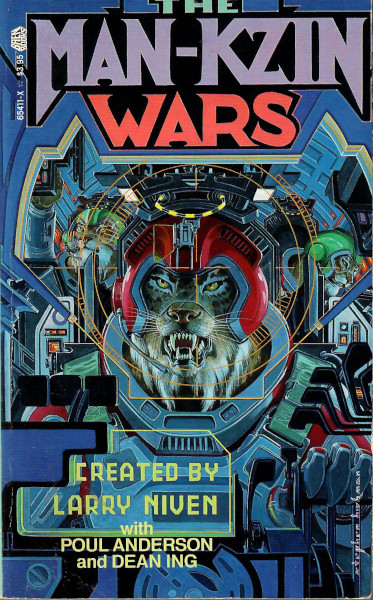
The Man–Kzin Wars is the name of a series of military science fiction anthologies as well as the name of the first book in the series. The short stories detail the eponymous conflicts between mankind and the Kzinti, set in Larry Niven's Known Space universe. However, Niven himself has written only a small number of the stories; most were written by other science fiction writers, as Niven opened this part of the Known Space to collaboration in the form of a shared universe. The cover art for the books in the series is created by Stephen Hickman.