More like Techno-Tabby Engineer
anchored on:science fictionspaceshipfar futureshort story cycleartificial intelligencerobots+2 more
but
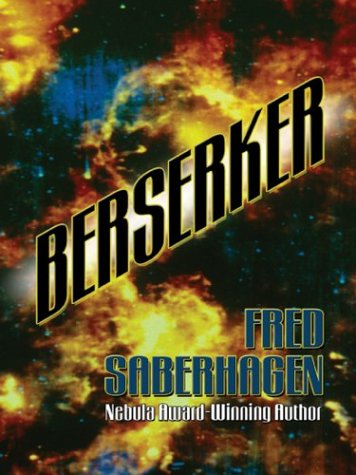
- Berserker (Fred Saberhagen)
series59 books1963
similar byscience fictionrobotsfar futureartificial intelligencespacespace opera
The Berserker series is a series of space opera science fiction short stories and novels by Fred Saberhagen, in which robotic self-replicating machines strive to destroy all life.
- Douglas Adams's Starship Titanic
Terry Jonesstandalone novel1997
similar byscience fictionartificial intelligencerobotsfar futurespaceshipspacespace opera
At the heart of a galaxy of which we know nothing, the greatest, most advanced starship ever known has been built -- the Starship Titanic. It is fabulous, beautiful and technologically miraculous. On its maiden voyage it crashes into hyperspace and vanishes. The first you know of it is when you are sitting at home having a quiet evening in front of the TV and the most fabulous starship in the galaxy crashes into your home. You find your way on board (or not, if you just want to play the two min ute version of the game) and are confronted with an interior which resembles a mixture of the Ritz, the Chrysler Building, Tutankhamen’s tomb, and Venice. The ship is inhabited by traumatized robots, a lobotomized cyberintelligence, a frankly unhinged parrot and, as the ship takes off, taking you deep into unknown interstellar space, you realize that life on board as a third class passenger is going to be tough going. You find yourself in the grip of one of the most powerful forces known to modern man -- the desire for a free upgrade. Your task is to discover what has happened here, to reveal the deep conspiracy that lies behind this catastrophic failure, to repair the ship’s intelligence and guide the ship back home. To do this you will have to gain the trust of the robots, which you do the same way you would with anybody else -- by talking to them. State-of-the-art language technology lets you do this.
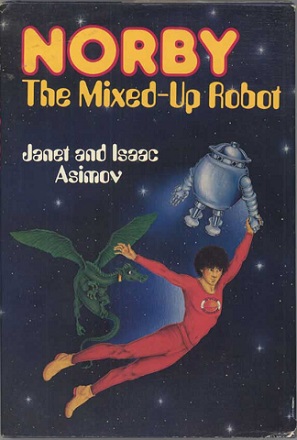
- Norby Chronicles
series22 books1983
completed
similar bylightheartedscience fictionrobotsfar futurespace
Norby is a fictional robot created by Janet Asimov and Isaac Asimov who stars in his own series of children's science fiction books, The Norby Chronicles. His first appearance was in the 1983 book Norby, the Mixed-Up Robot, in total he appeared in 11 novels in the 'Norby' series. According to Isaac Asimov, although Janet Asimov did 90% of the work, his "name was wanted on the book for the betterment of sales [and he] went over the manuscript and polished it a bit."
- Ian Cormac
series6 books2001
part of Polity
similar byscience fictionartificial intelligencefar futurespacespace opera
Neal Asher's Ian Cormac novels (Gridlinked, The Line of Polity, Brass Man, Polity Agent, Line War, plus the earlier-set prequel Shadow of the Scorpion) follow Ian Cormac, an agent of Earth Central Security in Asher's Polity universe. Gridlinked opens with Cormac investigating a destroyed matter-transmitter on a remote colony while wrestling with the personality erosion caused by long-term neural linkage to the Polity's AI network; the following novels escalate into interstellar conflict with the alien Prador. Together they form the core action sequence of Asher's wider Polity series.
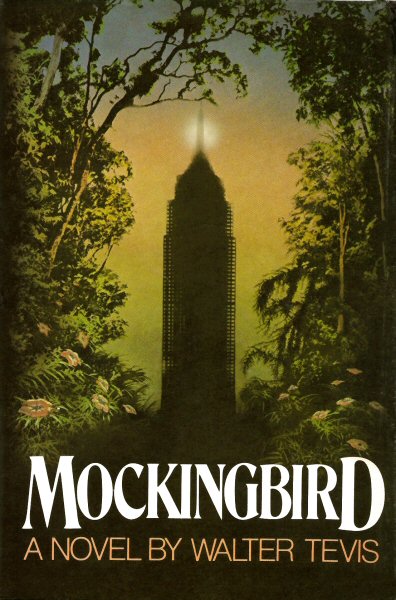
- Mockingbird
Walter Tevisstandalone novel1980
similar byscience fictionartificial intelligencerobotsfar future
WorldCat: In a future world where mankind is dying, humans wander through life in a drugged electronic bliss. Quick sex is the norm, and some people would rather commit suicide than live in hopelessness. Humanity's salvation rests with an android who has no desire to live, and a man and a woman who must discover love, hope, and dreams of a world reborn.
- Maradia's Robot Emporium
series24 books2011
part of Wespirtech
similar byscience fictionartificial intelligencerobotsfar futureshort story cyclespace
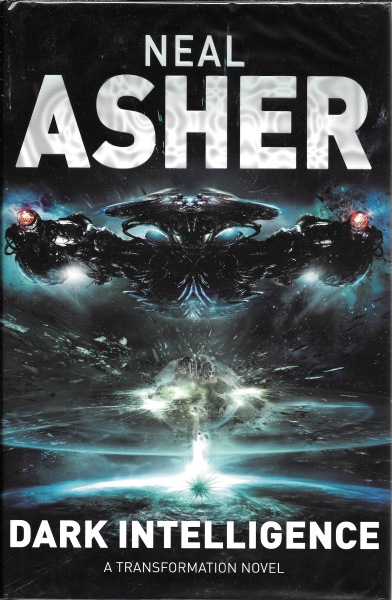
- Transformation
series3 books2015
part of Polity
similar byscience fictionartificial intelligencefar futurespacespace opera+1 more
Neal Asher's Transformation trilogy, set within his wider Polity universe, follows an AI mind investigating a black-ops project gone wrong, opening with Dark Intelligence. War Factory and Infinity Engine escalate the search into a hunt across a mechanized alien warzone left behind by an earlier conflict. As with Asher's other Polity fiction, the story favors large-scale, hard-edged space combat over character-driven drama.
- Foundation Universe
universe123 books1940
Start hereFoundation · Start here
similar byscience fictionrobotsfar future+1 more
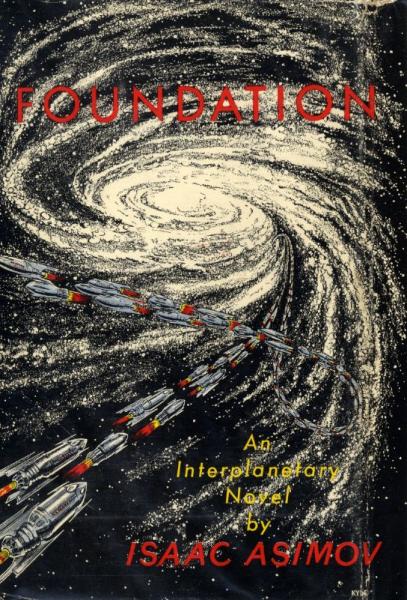
There is a science that reads the future of quadrillions the way an astronomer reads the orbits of stars. It is called psychohistory, and its equations foresee something the ruling Galactic Empire cannot admit: the throne is rotting, and thirty thousand years of barbarism are coming. One man, Hari Seldon, cannot stop the fall. He can only shorten it — by seeding a Foundation of scholars at the rim of the galaxy, a fragile institution built to carry knowledge across the dark and cut the interregnum to a single millennium. This is a universe told in the register of history itself: the long view, the calm of deep time, empires measured in centuries and men measured against them. The spine is Asimov's original trilogy — Foundation, Foundation and Empire, Second Foundation — followed decades later by the sequels Foundation's Edge and Foundation and Earth and the prequels Prelude to Foundation and Forward the Foundation. Late in life Asimov braided this in with his other future histories: the Robot novels of detective Elijah Baley and his humaniform partner R. Daneel Olivaw (The Caves of Steel, The Naked Sun, The Robots of Dawn, Robots and Empire) and the early Galactic Empire novels (Pebble in the Sky and its kin), until one continuous chronicle ran from the first thinking robots to the Second Empire. Other hands extend it — the Second Foundation Trilogy by Gregory Benford, Greg Bear, and David Brin, and shared-world spinoffs such as Robot City — so the corpus sprawls beyond a single author's tidy shelf. What distinguishes it is that the drama is intellectual: crises resolved by insight, nerve, and dialogue rather than fleets and blades, each turn hinging on the hidden logic of the Seldon Plan. Begin where readers have always begun — with Foundation, and the original trilogy in publication order. The rest opens outward from there.
- Aurora
Kim Stanley Robinsonstandalone novel2015
similar byscience fictionartificial intelligencefar futurespaceship+1 more
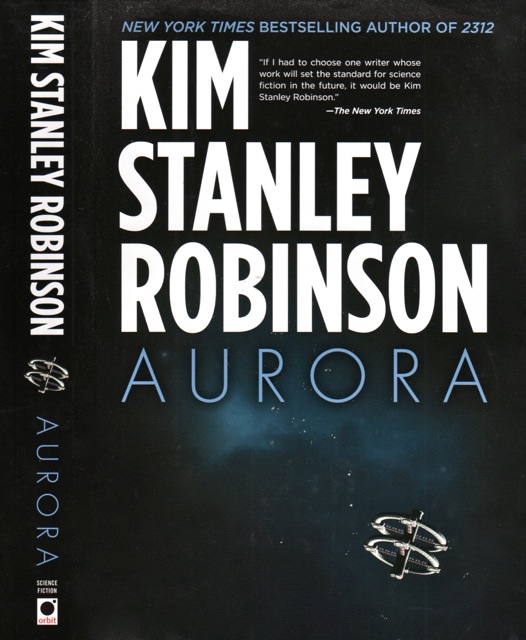
Aurora is a 2015 novel by American science fiction author Kim Stanley Robinson. The novel concerns a generation ship built in the style of a Stanford torus, traveling to Tau Ceti to start a human colony. The novel's primary narrative voice is that of the starship's artificial intelligence. Aurora was well received by critics.
- Fool's War
Sarah Zettelstandalone novel1997
similar byscience fictionartificial intelligencefar futurespaceshipspacespace opera
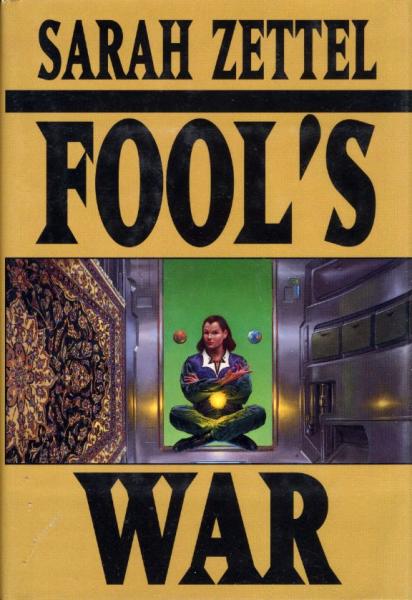
The Pasadena is a mail-packet ship, time-shared by two owners who alternate missions: the devout Muslim Al Shei, and her database hacker brother-in-law. While on a data-freight mission, Al Shei finds herself with a crew preoccupied by artificial intelligence: her comm chief Lipinksi has a deep fear and hatred for AI's as one of the few survivors of the rogue AI which devistated Kerensk; the new pilot Jemina Yerusha is a Freer who believes that rogue AIs form when a simple AI program captures a human soul; Master Fool Evelyn Dobbs is a Fools Guild member who has a secret agenda concerning rogue AIs; and Al Shei's brother-in-law, wanted by authorities concerning his last mission, may have accidentally left something dangerous in the data hold.
- Culture
series15 books1987
completed
part of The Culture
similar byscience fictionartificial intelligencefar futurespace opera+1 more
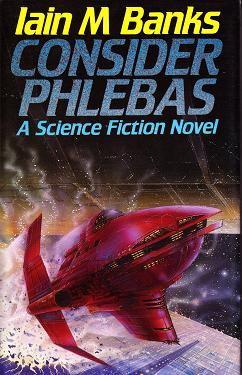
The Culture series is a science fiction series written by Scottish author Iain M. Banks and released from 1987 until 2012. The stories centre on The Culture, a utopian, post-scarcity space society of humanoid aliens and advanced superintelligent artificial intelligences living in artificial habitats spread across the Milky Way galaxy. The main themes of the series are the dilemmas that an idealistic, more-advanced civilization faces in dealing with smaller, less-advanced civilizations that do not share its ideals, and whose behaviour it sometimes finds barbaric. In some of the stories, action takes place mainly in non-Culture environments, and the leading characters are often on the fringes of the Culture, sometimes acting as agents of the Culture in its plans to civilize the galaxy. Each novel is a self-contained story with new characters, although reference is occasionally made to the events of previous novels.
- Imperial Radch
series7 books2012
part of Radchaai Universe
similar byscience fictionfar futureartificial intelligencespacespace opera
Ann Leckie's Imperial Radch trilogy (Ancillary Justice, Ancillary Sword, Ancillary Mercy, 2013-2015) follows Breq, the sole surviving fragment of an AI that once inhabited both a troop-transport starship and dozens of soldier bodies, now alone and hunting for revenge inside the vast, expansionist Radch empire. Breq's quest widens across the trilogy into a conflict with the empire's own fractured ruler, and the books use her alien difficulty perceiving gender to unsettle the space-opera conventions around her.
- Singularity Sky
series2 books2003
similar byscience fictionartificial intelligencefar futurespacespace opera
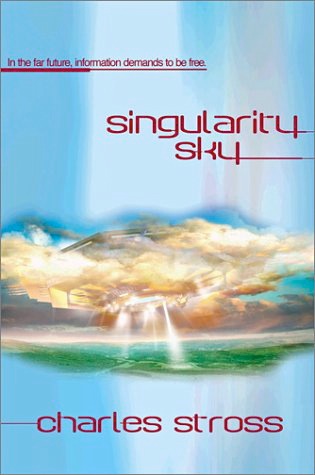
Singularity Sky and its sequel Iron Sunrise are collectively known as the Eschaton novels, after the godlike posthuman intelligence that seeded human colonies across space on the condition they never attempt time travel or threaten causality - rules tested when a low-tech colony world is destabilized by a group calling itself the Festival. Charles Stross uses the setup for a mix of space opera, economics, and diplomatic intrigue.
- 2312
Kim Stanley Robinsonstandalone novel2012
similar byscience fictionfar futurespace+3 more
In the eponymous year, when Earth's ecology is degraded and humanity has settled throughout the solar system by terraforming and genetic engineering, mysterious disasters strike some human communities and an assortment of human types from throughout the system seek to find and eliminate the cause.
- Fifth Imperium
series3 books1991
similar byscience fictionfar futureartificial intelligencespacespace opera
David Weber's Fifth Imperium series opens with the discovery that Earth's Moon is in fact a disguised alien starship, the Dahak, that has orbited undetected for tens of thousands of years - a relic of the fallen Fourth Imperium, a multi-star civilization destroyed while defending against the genocidal Achuultani. Mutineers' Moon follows humanity's first contact with Dahak and the mutineers still aboard it; The Armageddon Inheritance and Heirs of Empire escalate from that discovery into interstellar war and dynastic politics as humanity inherits the old empire's legacy and its enemies. The three novels were later collected as the omnibus Empire from the Ashes.
- Nova
Samuel R. Delanystandalone novel1968
similar byscience fictionfar futurespacespace opera+1 more
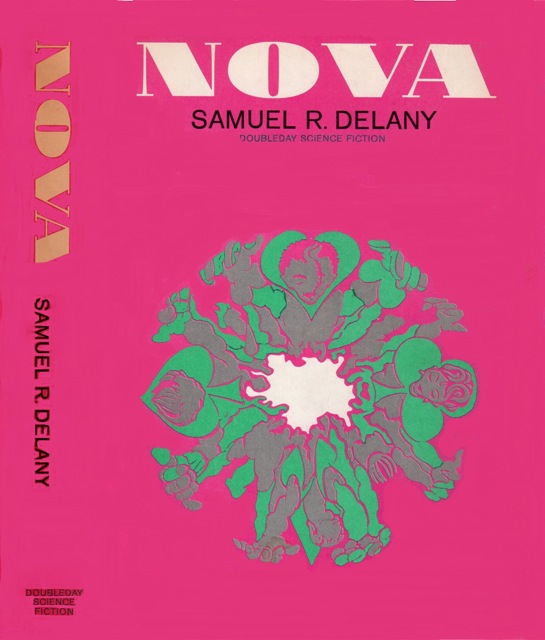
Nоva is a science fiction novel by American writer Samuel R. Delany published in 1968. The plot concerns the spaceship captain Lorq Von Ray's search for a nova, which will produce the essential power source Illyrion, and his vendetta with the Red family, who seek to kill him. Nominally space opera, it explores the politics and culture of a future where cyborg technology is universal, yet making major decisions can involve using tarot cards. It has strong mythological overtones, relating to both the Grail Quest and Jason's quest for the Golden Fleece.
- Project Pope
Clifford D. Simakstandalone novel1981
similar byscience fictionartificial intelligencerobotsfar future
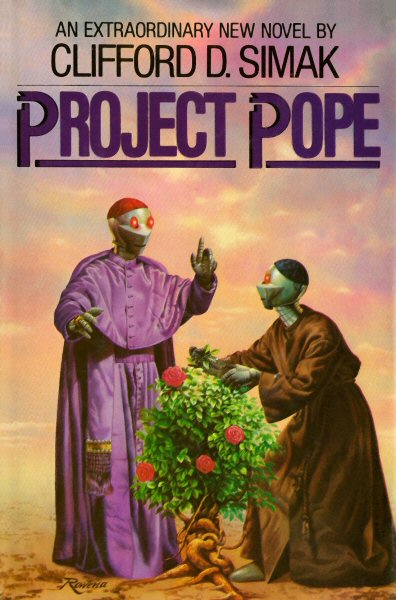
Project Pope is a science fiction novel by the American author Clifford Simak, published in 1981 by Ballantine Books. The novel is about a group of robots and humans living on a planet called the End of Nothing. Their mission is to search the universe and other dimensions to seek out true religion and knowledge. They add the information they gather to their Pope, a robotic supercomputer, in order to make an infallible authority of all knowledge and religion. The novel was nominated for both a Hugo Award for Best Novel and a Locus Award for Best SF novel in 1982.
- Starman Jones
Robert A. Heinleinstandalone novel1953
similar byscience fictionfar futurespacespaceshipspace opera
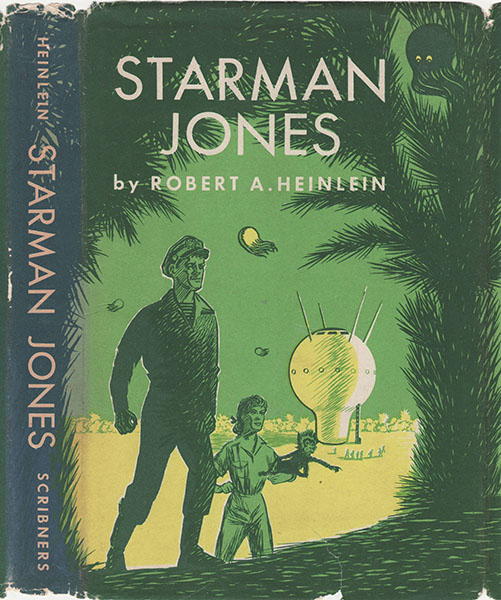
Starman Jones, a 1953 science fiction novel by Robert A. Heinlein, features a farm boy who wants to go to the stars. Charles Scribner's Sons published the book as part of the Heinlein juveniles series.
- Saturn's Children
series3 books2008
similar byscience fictionrobotsfar futurespacespace opera
Charles Stross's Saturn's Children (2008) is a space-opera tribute to late-period Robert A. Heinlein, set millennia after humanity has quietly gone extinct, in a solar system still run by the sentient robots humans left behind - including Freya, an android originally built for companionship who is pulled into interstellar intrigue. Neptune's Brood (2013) returns to the same posthuman-robot universe thousands of years later with an entirely new cast, shifting focus to the mechanics of slower-than-light interstellar finance and banking fraud. The two books share continuity rather than characters.
- In the Lives of Puppets
TJ Klunestandalone novel2023
similar byscience fictionartificial intelligencerobotsfar future
In a strange little home built into the branches of a grove of trees, live three robots--fatherly inventor android Giovanni Lawson, a pleasantly sadistic nurse machine, and a small vacuum desperate for love and attention. Victor Lawson, a human, lives there too. They're a family, hidden and safe. The day Vic salvages and repairs an unfamiliar android labelled "HAP," he learns of a shared dark past between Hap and Gio-a past spent hunting humans. When Hap unwittingly alerts robots from Gio's former life to their whereabouts, the family is no longer hidden and safe. Gio is captured and taken back to his old laboratory in the City of Electric Dreams. So together, the rest of Vic's assembled family must journey across an unforgiving and otherworldly country to rescue Gio from decommission, or worse, reprogramming. Along the way to save Gio, amid conflicted feelings of betrayal and affection for Hap, Vic must decide for himself: Can he accept love with strings attached?
- Jean le Flambeur
series3 books2010
similar byscience fictionfar futureartificial intelligencespacespace opera
Jean le Flambeur is a master thief broken out of a virtual prison to pull off one more impossible heist, in a solar system reshaped by uploaded minds, post-human factions, and economies built on memory and privacy themselves. Hannu Rajaniemi's trilogy - The Quantum Thief, The Fractal Prince, The Causal Angel - is dense, idea-heavy hard SF that trusts readers to piece its future together from context rather than exposition.
- Ender Wiggin
series14 books1977
part of Ender's Game Universe
similar byscience fictionfar future+3 more
Orson Scott Card's Ender's Game (1985, expanded from his 1977 novella) follows child prodigy Andrew "Ender" Wiggin as he is recruited into a military training program built to prepare Earth's defenses for an anticipated third war against an insectoid alien species known as the Formics. The saga continues years later through Speaker for the Dead and Xenocide, following an older Ender as he confronts the moral weight of his role in that earlier conflict, and concludes the core arc in Children of the Mind, with Ender in Exile filling in the years between the first two books. Set within the wider Ender's Game universe, the series shifts from military coming-of-age story to slower, more philosophical science fiction as it progresses.
- The Moon Is a Harsh Mistress
Robert A. Heinleinstandalone novel1966
similar byscience fictionartificial intelligencefar future
A technician discovers that the massive computer that operates everything on Luna (a prison colony) has become self-aware. He befriends it, but when he accompanied a beautiful girl to a dissident meeting, he encounters people who want to throw off the yoke of their Earth rulers.