The Diplomacy Guild 1990
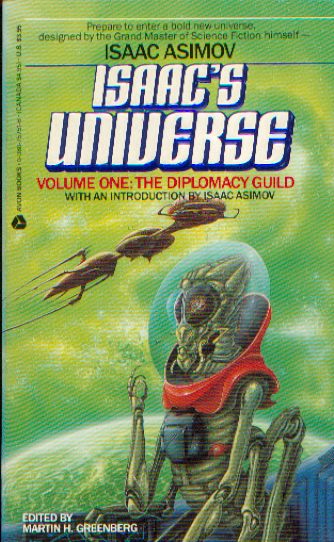
The first shared-world anthology, which introduces the six starfaring species and the Diplomacy Guild that keeps them talking.
Open book →
Universe
Hal Clement, Harry Turtledove, Martin H. Greenberg, George Alec Effinger, Janet Kagan, Karen Haber, Lawrence Watt-Evans, Poul Anderson, Allen Steele, David Brin, Janet Asimov, Rebecca Ore, Robert Sheckley & Robert Silverberg · 0 series · 2 novels · 7 novellas · 9 novelettes · 4 short stories · 3 anthologies · 1990–1995
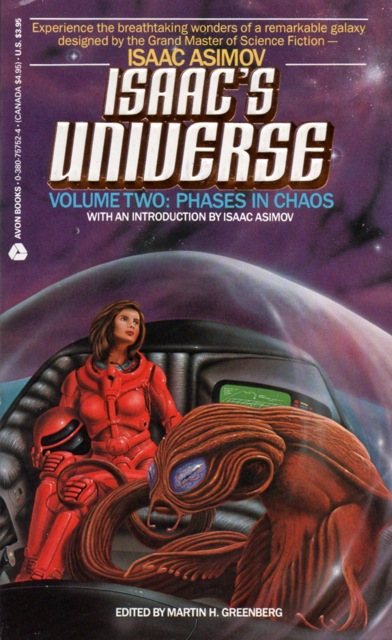
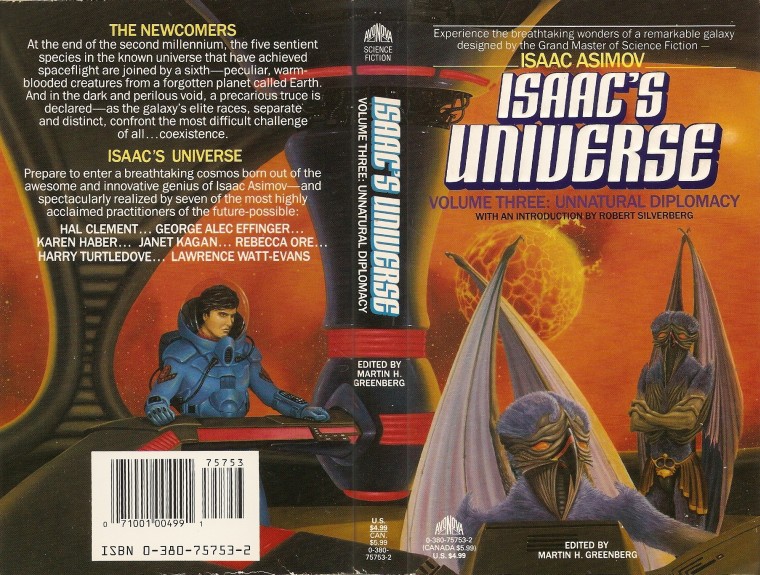
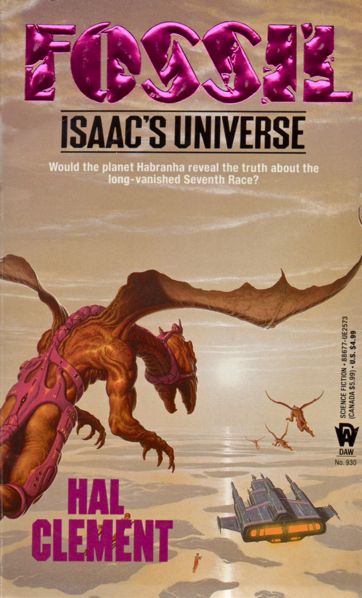
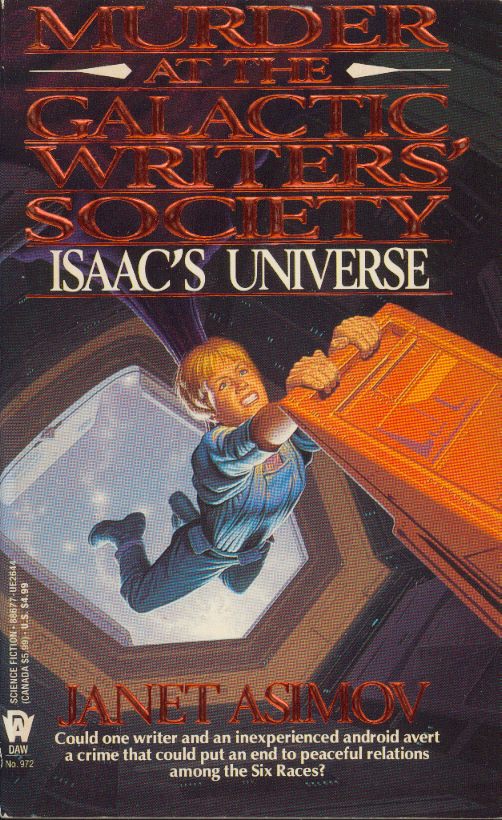
Six intelligent species have the run of this galaxy and not one of them enjoys the company. Humans — Erthumoi, to everybody else — share it with the winged Crotonites, the aquatic Cephallonians, the sonar-sighted Locrians, the serpentine Naxians who read your emotional state at a glance, and the silicon-bodied Samians, who think on a geological schedule. Nobody is the villain. Everybody is exasperating. Between them stands the Diplomacy Guild, which exists because six species who cannot share a room still have to share a galaxy. Isaac Asimov designed the frame and then handed it to other writers. Three anthologies — The Diplomacy Guild, Phases in Chaos and Unnatural Diplomacy — collect the stories that grew inside it, and two novels carry the setting further: Hal Clement's Fossil, and Janet Asimov's Murder at the Galactic Writers' Society. This is old-fashioned puzzle science fiction in the best sense — alien biology worked out properly, then a problem that can only be cracked by several incompatible kinds of mind arguing about it. The fun is watching each writer take Asimov's six species and invent a fresh way for them to misunderstand one another. Start with The Diplomacy Guild, which lays down the rules; after that the volumes stand perfectly well on their own.
Summary by Loreful, from public sources
Three ways in. Pick the one that sounds like you.
2 novels · 3 anthologies
✦ Curated by the Loreful team
The line was published as three shared-world anthologies followed by two novels, and the anthologies carry continuing threads (Hal Clement's and Poul Anderson's later stories pick up from their earlier ones), so publication order is the natural sequence. No series record exists, so nothing else shows this order.
What this universe published, when, and what it is made of.
25 works · 1990–1995 · busiest 1991 (9 works)
Empty columns are silent years — nothing published.
See every work ↓2 novels · 7 novellas · 9 novelettes · 4 short stories · 3 anthologies
14 authors
reads like:science fictionaliensother star systemsfar futuremysteriousadult
This universe sits where the catalog sits — its mood is the corpus average.
this universe · the catalog · one dot = one book10 of 25 works carry a tone
25 works, filterable.
25 of 25 works
Series and publication data from ISFDB, CC BY 4.0. Branch grouping is derived, not curated.